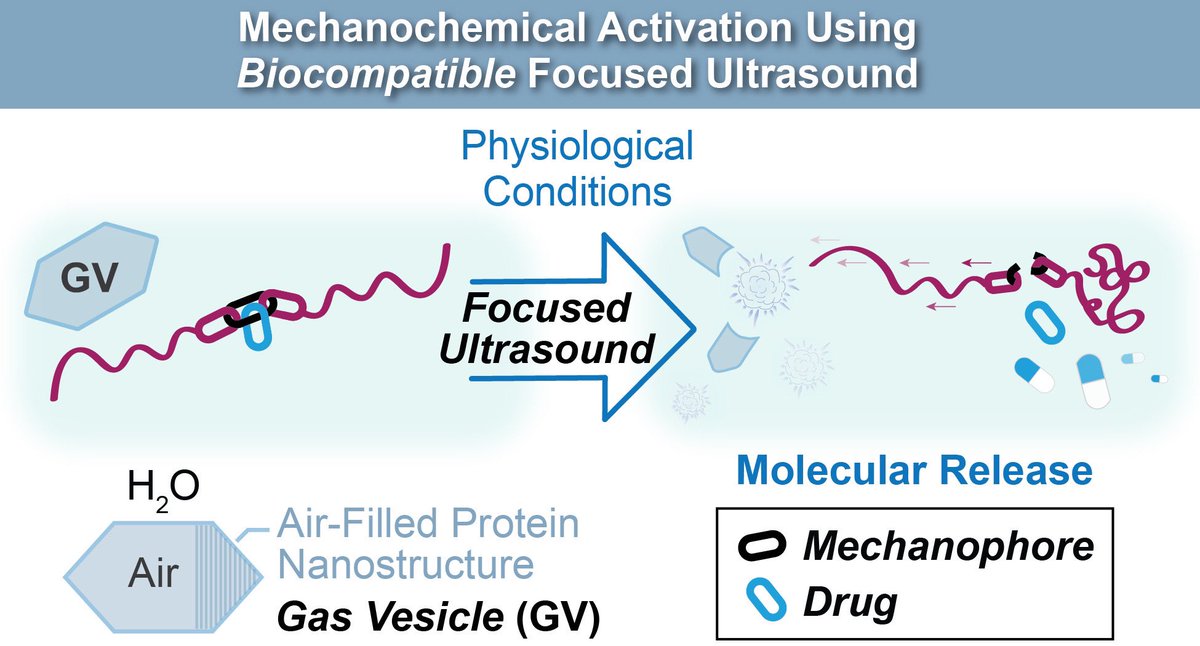
The Role of Torsion on the Force-Coupled Reactivity of a Fluorenyl Naphthopyran Mechanophore | Journal of the American Chemical Society @Maxwell_Robb@TheRobbGroup@CaltechCCE@Caltech https://t.co/NHjuyUz6MG
Unraveling diarylethene #photochromism🔍Hu @XiaoranSean & co-workers have developed a mechanical approach to convert a diarylethene #atropisomer, regulating its properties. This noncovalent, irreversible process enables high-sensitivity stress-sensing.
👉 https://t.co/yj6FYuRBCd
.@zac_iton's last paper 🥲 in @The_See_Group just came out in @acsJACS today! A beautiful paper on the MPS3 framework as a modular host for mobile, solvated ions (incl aprotic solv!). He interrogates many structure-property relationships. #proudadvisor
https://t.co/Yhm41xfDVa
Check out Michelle's paper! She studies LiNaFeS2 in both Li and Na half cells to compare anion redox mechanisms when Li vs Na is the majority charge carrier in the electrolyte. The charge compensation is the same, but the structural implications are not.
https://t.co/rLQZZNzUlK
I am thrilled to announce that I will be joining @Caltech@CaltechCCE as an Assistant Professor in Summer 2025! The Morstein Lab will develop chemical tools to study, target, and reprogram the human lipidome. (1/3)
https://t.co/lgGXKpsWlM
Today we report in @J_A_C_S a novel and highly modular platform for mechanically triggered chemiluminescence (bright light emission) from polymers. Congrats to @PengLiuChem, Yu-Ling (Debbie), and coworkers! Collab with @ShabatGroup. @CaltechCCE@Caltech
https://t.co/KaLR8x93gr
I'm so excited that this is out! Huge congrats to Steve and co, especially Daniil and Anton! We clearly show that cation vacancies enable anion oxidation using Steve's clever set of materials based on LiTiS2 and Li2TiS3. Vacancy = space and S nb states.
https://t.co/mYFFDyn1pC
Check out Steve's paper looking at isostructural mats that undergo anion redox, but with metals of different d band positions. The anion oxidation potential is unchanged - confirming that anion oxidation occurs from nonbonding S p states. #battchat
https://t.co/HC84dUOhh5
Check out Steven's paper that investigates the dual-ion Mg|MClx battery chemistries! Conversion of metal chlorides (even w/Fe and Cu!) can have quite high CEs, but fade is an issue. Watch out for chemical reduction by the electrolyte and crossover!
https://t.co/Ff0owl8YjP
Sarah Reisman, the Bren Professor of Chemistry and a leader in the area of natural product synthesis has been selected as the new chair of Caltech's Division of Chemistry and Chemical Engineering (CCE).
https://t.co/1YKjwC4wqH
If anyone is interested in a postdoc position studying the effect of electrolyte composition on electrochemical CO2 reduction in @LiSA_Hub_DOE, please send me an email with your CV with a subject line: "CO2R postdoc." We have some cool results to understand!
Check out @Xiaotong__Li paper that highlights the effect of metal substitution on voltage hysteresis in anion redox materials in @ChemMater ! Even rxns that form persulfides can get away with a 50 mV hysteresis if the right metal is in there!
https://t.co/knmCQr5ydJ
Very sad news. I was fortunate to have met and interacted with Prof. Michl on a visit to @CUBoulderCHEM in fall 2022. He was a legendary scientist and was very gracious to me.
It is with great sadness that we announce the sudden passing of Prof. Josef Michl, world-renowned Czech chemist. Prof. Michl led research groups at @IOCBPrague and, from 1991, at the University of Colorado in Boulder.
Prof. Michl was a distinguished figure in the field of chemistry with an extremely wide range of professional interests in which he achieved significant results and worldwide renown. He excelled as both a theoretician and an experimentalist, devoted to macromolecular chemistry, photochemistry, molecular electronics, research towards the development of efficient solar cells, and the creation of molecular "building blocks" enabling, for example, the creation of nanorotors and nanomotors.
"He was one of the few true geniuses I have had the honor to meet,” says Prof. @konvalinka_jan, director of @IOCBPrague. “He mastered several world languages, had extensive knowledge of history and culture, and a deep understanding of the natural sciences. The science he did was not only brilliant but also beautiful, playful, and witty. Besides that, and above all, he was a kind and generous man. We will miss him dearly."
Dr. Zdeněk Havlas, Vice President of @CzechAcademy and a long-time friend and colleague of Josef Michl, responded to the news of his passing: "The passing of Prof. Michl is a great loss both professionally and personally. He knew everything there was to know about chemistry and science in general. It was a joy to discuss with him. For the past 20 years, I traveled to Boulder annually for a month, not because of a lack of computing technology, but for discussions about work and life in general. This often took place while enjoying a plum cake, which he loved and which I baked for him at their home."
https://t.co/UVEmldXtUp