1/3
✅QmaX Signer completed a security audit of its cryptographic core today.
QmaX Signer is a local, isolated module for generating, signing, and sending a completed signed transaction to the network via the Cypher transport protocol.
How does the entire process of signing and sending a transaction work?
In the first stage, Signer is only allowed to access the network via the Cypher protocol and only to collect relevant information from RPC providers to generate and prepare the transaction for signing.
To do this, it requests (example for the ETH network):
• chain_id
• nonce
• gas estimate
• fee estimate
The user enters the sender and recipient addresses and also controls the gas value.
😎 QmaX Signer knows:
✅ that the transaction was created and sent;
🤐 QmaX Signer does not know:
❌ the tx_hash;
❌ which block the transaction was included in;
❌ whether it was confirmed by the network;
❌ the current transaction status.
As a result, the Signer cannot build a history of your activity and cannot link your signed transactions together.
Most traditional wallets work differently: they receive the tx_hash, track transaction status, confirmations, and activity history.
QmaX Signer follows a simple principle:
🔒 Write ≠ Read
Transaction signing and broadcasting are separated from transaction tracking and monitoring.
🚀 QmaX Signer‼️
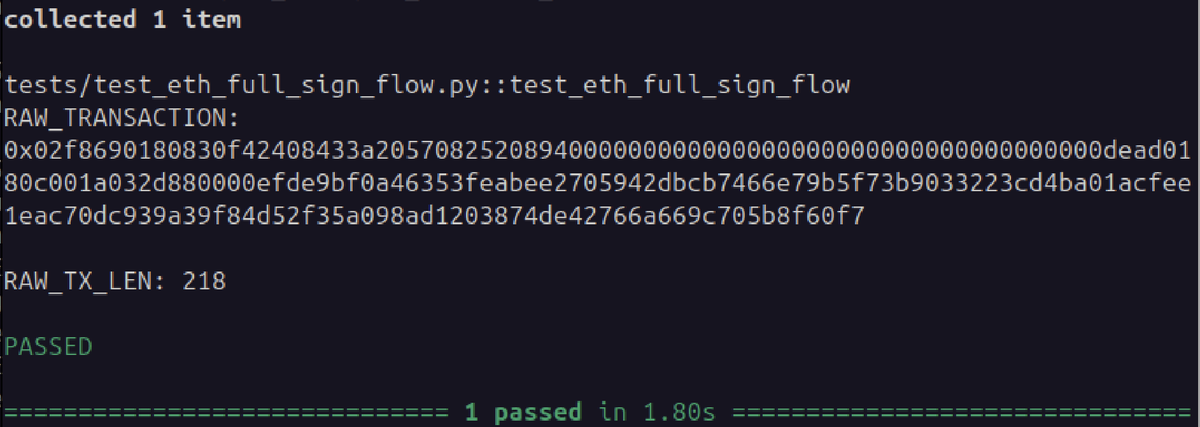
📥The first full Ethereum Sign Flow has successfully completed 📤
✅ Network parameters retrieved through Cypher
✅Transaction built locally
✅Transaction signed locally
✅Key material wiped after signing
Private Key❌≠❌Network
Signer❌≠❌Transport
Quantum computers can't break your crypto yet.
We want to make sure it stays that way.
We assembled a board of researchers from Stanford, UT Austin, and the Ethereum Foundation to figure this out years before it matters.
Their first paper is out now ↓