Esp. en Comunicación Pública de la Ciencia y la Tecnología.
/viajar /leer /escribir
/soñar: la fraternidad universal
/love @nicocarbone
/work @FCEx_UNICEN
No dejen de ver este documental sobre Los Redondos que es una belleza total. El detrás de escena de la banda, algunas de sus canciones y abundante material de archivo para comprender lo que fue este fenómeno 100% argentino.
https://t.co/m7qRTWCcqN
EL EMOTIVO VIDEO DE LA MUNICIPALIDAD DE AVELLANEDA
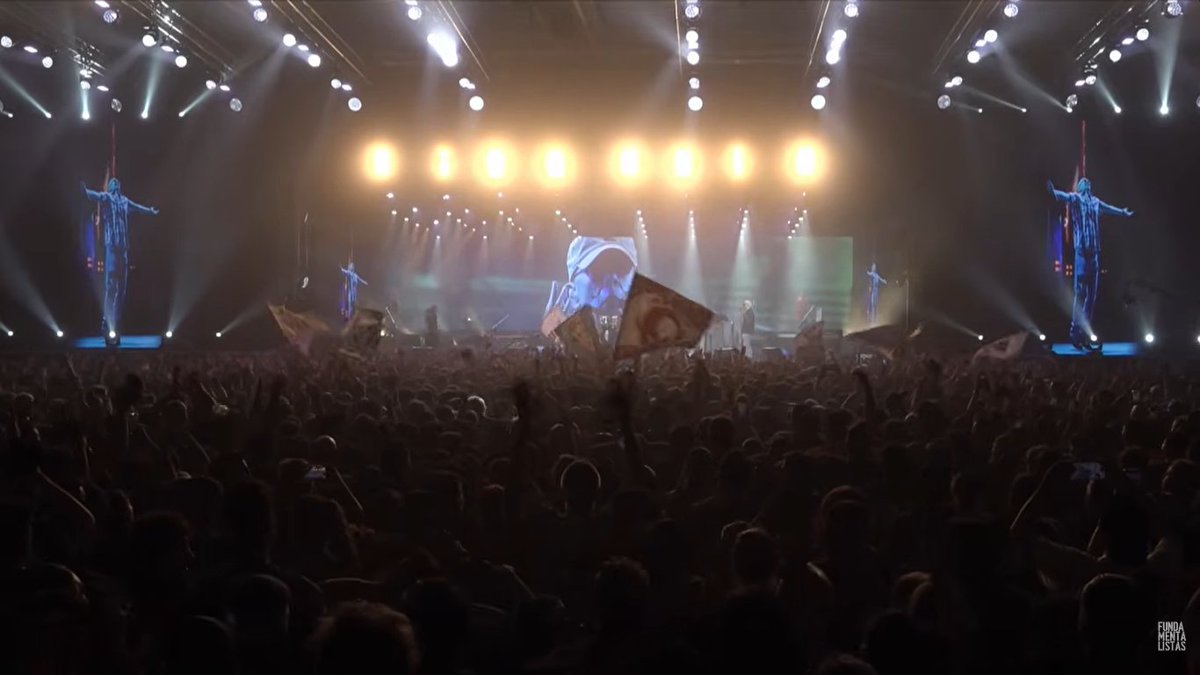
«Nunca olvidaremos esta misa ricotera»: Así resumió el intendente de Avellaneda, @jorgeferraresi, la histórica despedida a Carlos «Indio» Solari que reunió a cientos de miles de personas en el Polideportivo José María Gatica.
💬 «Estamos agradecidos de ser el lugar donde se concentró tanto amor y fraternidad en esta despedida histórica. Nunca olvidaremos esta misa ricotera», expresó.
Además, destacó el trabajo de quienes participaron del operativo para garantizar que la jornada se desarrollara en paz y con normalidad.
👏 Ferraresi agradeció especialmente a Bomberos, Defensa Civil, Cruz Roja, personal de salud, seguridad, tránsito e higiene urbana, así como a los cientos de voluntarios que colaboraron para hacer posible una despedida que ya forma parte de la historia cultural y popular de Avellaneda.
❤️ Una jornada multitudinaria, cargada de emoción, que quedará para siempre en la memoria de miles de seguidores del Indio y de toda la ciudad.
📲 Más información en https://t.co/Uze8bSuUB9
#IndioSolari #Avellaneda #JorgeFerraresi #LosRedondos #RockNacional MisaRicotera AgenciaElVigía CarlosSolari
📚 ¡Todavía estás a tiempo de inscribirte en los cursos de la XXI RAO!
Las actividades presenciales se realizarán:
🗓️ 3 de agosto: Curso de anillado (únicamente).
🗓️ 4 de agosto: Todos los demás cursos.
👉 Mirá la oferta e inscribirte : https://t.co/lsMYEzVsyr
Como el mainstream mediático nunca difunde ni difundirá estos rios subterráneos que discurren igual pero ocultan (por ejemplo este Tecnopolis 2023 con pibes de orquestas juveniles), es lógico que después muchos no comprendan y sorprendan xq los 10 km de pueblo para despedirlo.
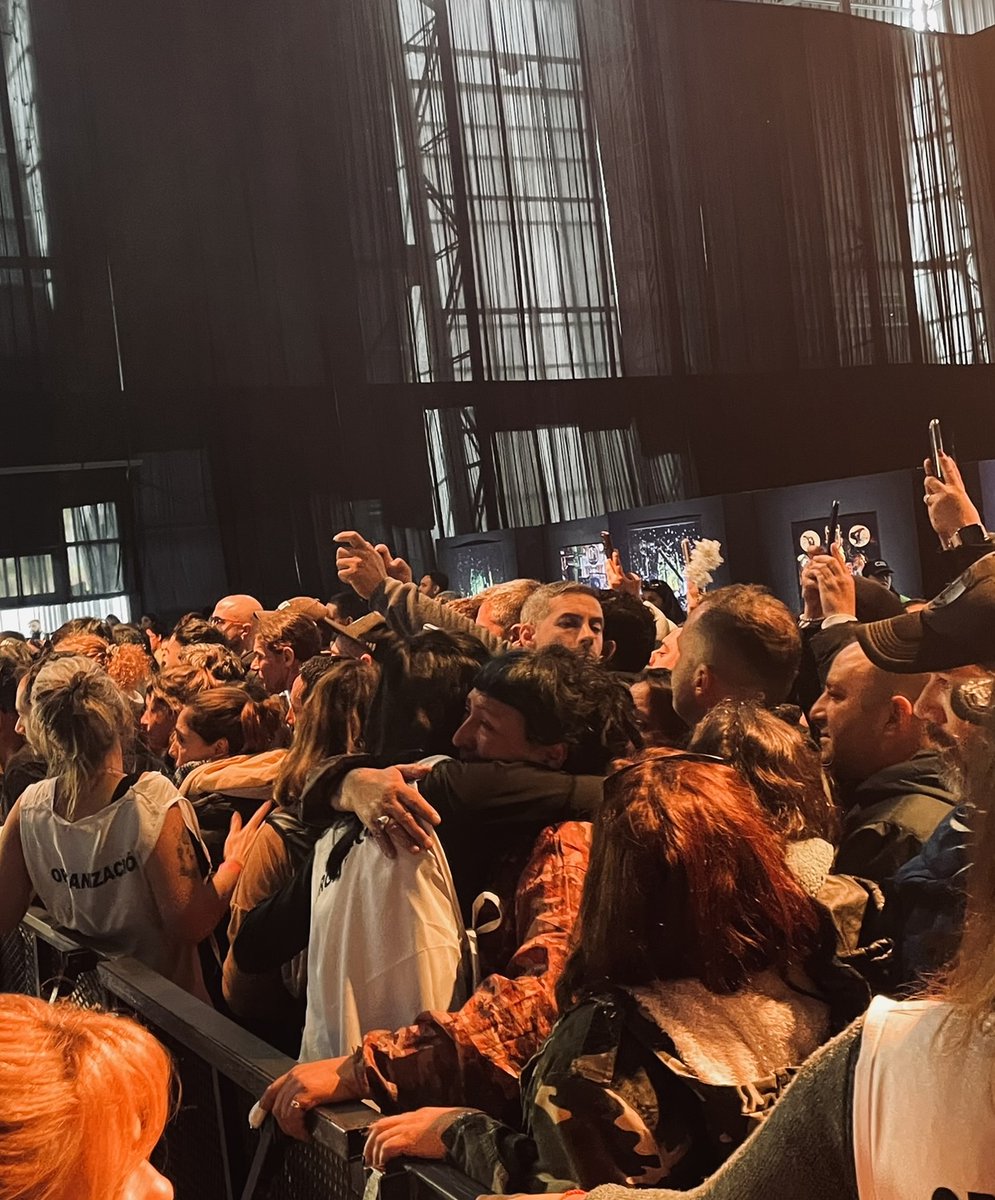
@NicolasFioren La gente de la organización nos recibió a todos con total amor. Para destacar que además de organizar y preocuparse por tema salud, te abrazaban y lloraban con vos. Genias y genios.
Del otro lado de esa valla está el féretro del Indio. Una chica de la organización ve a una mujer que llega llorando. No para de llorar. La abraza. No la apura, la abraza.
Porque eso también nos enseñó el mister: a cuidarnos entre nosotros.
Así fue el mensaje de confirmación y un poco del detrás de escena de la nota que el Indio le concedió amablemente a Gelatina.
Eternamente gracias, Carlos.
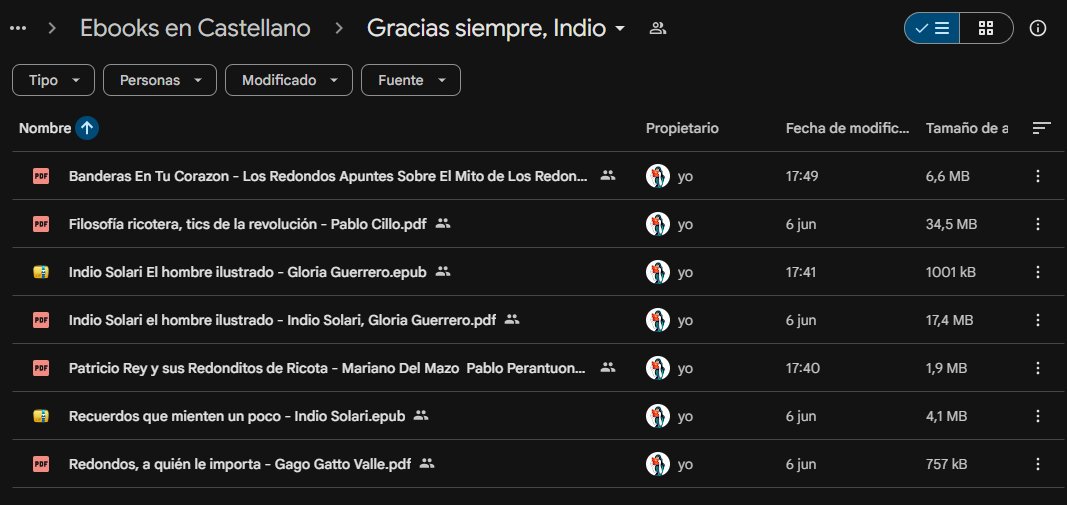
Bueno, esto es lo que llevo recopilado hasta ahora. Con este link cualquiera puede acceder a la carpeta, no hace falta el cafecito pero si quieren colaborar, se agradece.
https://t.co/cERBBRDFCT
“El lujo es vulgaridad”
La frase se volvió popular por una canción de los Redondos.
Pero antes fue prólogo, cuento, entrevista, conversación y mirada ética.
Borges la escribió, la narró y la dijo con distintas formas.
¿La exploramos juntos?
Abro hilo. 🧵
@FCEx_UNICEN@fcv_unicen@UNICEN_Oficial Actividad enmarcada en la Semana del Ambiente, una propuesta orientada a la toma de conciencia sobre el cuidado de los pastizales serranos y la preservación de especies nativas.
https://t.co/XOKHB7EWxt
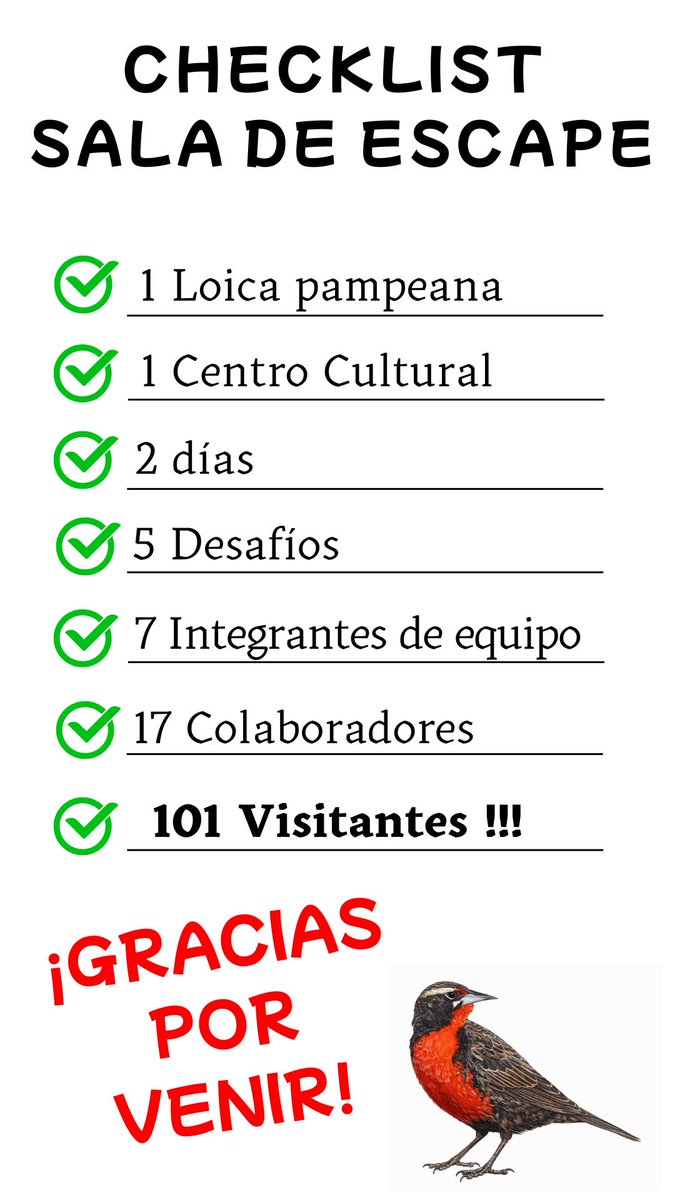
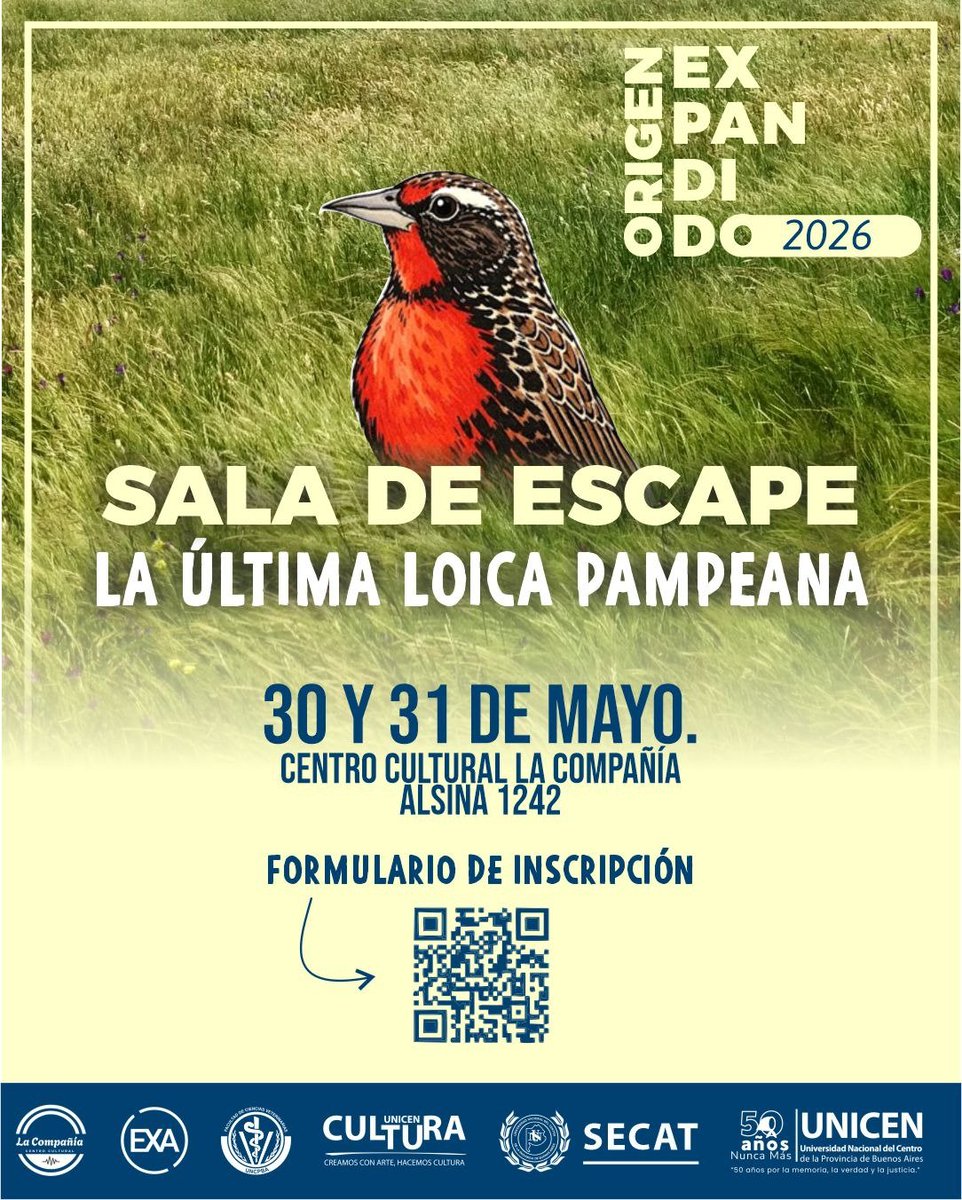
Hoy inauguramos esta sala de escape en el Centro Cultural La Compañía. Más de 300 personas anotadas para participar!!
Una experiencia diseñada a partir del trabajo interdisciplinario de investigadores y docentes de la @UNICEN_Oficial@FCEx_UNICEN@fcv_unicen y Facultad de Arte
🚨 Abrió la convocatoria a las Becas de Entrenamiento 2027
Una oportunidad para quienes quieren dar sus primeros pasos en investigación científica y tecnológica en la Provincia de Buenos Aires.
She was rejected 15 times, dismissed as unruly, and largely written out of the conversation. Then the science proved she was right — and changed everything we thought we knew about life itself.
In 1966, a twenty-eight-year-old biologist named Lynn Margulis sat down and wrote a paper that contradicted one of the most fundamental assumptions in all of science.
She was not a tenured professor. She was not working at a prestigious research institution. She was a young mother of two, recently divorced, completing her PhD while raising her sons largely on her own. The scientific establishment had no particular category for her and no particular interest in what she was proposing.
She proposed it anyway.
Her idea was this: that the story of evolution told through competition and conquest was incomplete. That somewhere in the deep history of life on Earth — billions of years ago, long before anything with a spine had appeared — something had happened that was not a battle but a merger. Two separate organisms, each unable to survive alone, had come together and become something neither could have been independently.
The mitochondria in every one of your cells — the structures that convert food into energy, the engine that powers every thought you are having right now — were once free-living bacteria. They did not evolve gradually inside cells. They moved in. They formed a partnership so deep and so permanent that over billions of years they became indistinguishable from the cell itself.
She called the theory endosymbiosis. She called the process symbiogenesis. What she was really saying was that cooperation, not just competition, was one of the engines of evolution — that life's greatest leaps forward had sometimes come not from one organism defeating another, but from two organisms becoming one.
Fifteen scientific journals rejected the paper before it was published in 1967.
Fifteen.
To understand what she was working against, you need to understand the scientific culture of the 1960s. Neo-Darwinism — the synthesis of Darwin's evolution with Mendelian genetics — was the reigning framework, and it was defended with the particular intensity of a field that had recently achieved hard-won consensus. The idea that a bacterium had simply moved inside another cell and stayed there, permanently, was considered not just wrong but somewhat absurd. Evolution happened through random mutation and natural selection, slowly, over generations. Not through dramatic mergers. Not through cooperation.
The reviewers who rejected her paper used words like speculative and insufficiently rigorous. One described the idea as the sort of thing that was interesting to think about but impossible to prove.
She was also described, more than once, as unruly.
It was the specific word that followed women who challenged scientific consensus — not wrong, not misguided, but unruly, as though the problem were her manner rather than her method.
She had been exceptional from the beginning in ways that made people uncomfortable. Born Lynn Petra Alexander in Chicago on March 5, 1938, she entered the University of Chicago at sixteen — intellectually restless, reading at a level that outpaced her coursework, drawn to the questions at the edges of what science had settled. At nineteen she married a young astronomer named Carl Sagan, who would go on to become one of the most famous scientists of the twentieth century. She would later say, without particular bitterness, that during their marriage she was primarily considered someone's wife rather than someone in her own right.
They divorced in 1964. She raised their sons — including Dorion Sagan, who would become her longtime collaborator — while completing her doctorate in genetics from the University of California, Berkeley. She did the work that would change biology while managing the entire domestic architecture of a life that offered her very little structural support.
When molecular biology caught up with her theory in the 1970s — when DNA sequencing technology became sophisticated enough to actually test what she had proposed — the results were unambiguous. Mitochondria contained their own DNA. That DNA was bacterial. The evidence was not suggestive. It was definitive.
The fifteen journals that had rejected her paper were now looking at proof.
The scientific establishment did what establishments eventually do when reality forces their hand — it incorporated her theory, celebrated it as a cornerstone of modern evolutionary biology, and credited her in terms that ranged from gracious to slightly grudging depending on who was doing the crediting. E.O. Wilson, the legendary sociobiologist, called her the most successful synthetic thinker in modern biology. Richard Dawkins — who disagreed with her on multiple other scientific questions — praised her sheer courage in holding to the endosymbiotic theory through years of institutional resistance until the evidence made denial impossible.
Science magazine, the most prestigious journal in American science, called her science's unruly earth mother.
They still couldn't let go of the word.
She was elected to the National Academy of Sciences in 1983. She received the National Medal of Science in 1999 from President Clinton — the highest scientific honor the United States government bestows. She collaborated with British scientist James Lovelock on the Gaia hypothesis — the provocative and still-debated theory that Earth itself, its atmosphere and oceans and living systems, functions as a single self-regulating organism maintaining the conditions necessary for life. It was another idea that the mainstream received with raised eyebrows, and another idea that has proven more durable than its critics expected.
She wrote books with her son Dorion that translated complex scientific concepts for general readers — believing that science belonged to everyone and that the story of life was too extraordinary to be locked inside academic journals. She co-founded a publishing imprint. She taught at the University of Massachusetts Amherst for decades and trained a generation of scientists who carried her framework into fields she never lived to see it reach.
She died on November 22, 2011, from a hemorrhagic stroke. She was seventy-three years old.
What she left behind was a redrawn map of life itself.
Every complex cell on Earth — every cell in your body, every cell in every plant, every cell in every animal that has ever lived — is a collaboration. It contains within it the descendants of bacteria that chose, billions of years ago, to stop competing and start cooperating. The boundary between self and other is not where we thought it was. It never was.
Lynn Margulis saw that when almost no one else did.
Fifteen journals said no.
The universe had been saying yes for two billion years.
En #Tandil lo estamos haciendo !!
Desde un proyecto de Extensión de la @UNICEN_Oficial armamos un cantero modelo de plantas nativas y lo replicamos en diferentes instituciones.
También armamos un manual que en breve va a estar disponible online !!! ☘️🌿🌾🪻🌼🐝🦋
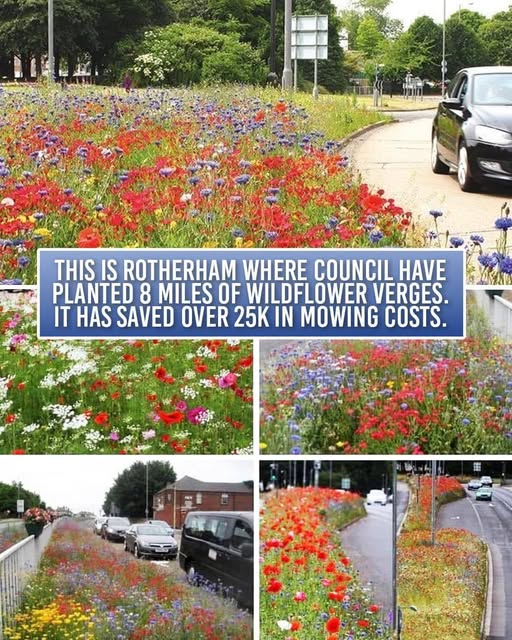
En algunas ciudades se comenzo a plantar vegetacion nativa que atraen abejas, insectos beneficiosos, algunas aves y reducen asi el costo de mantenimiento del "pasto". Ademas claro que embellece los caminos y reduce contaminacion.
Imaginate rutas y autopistas asi.
Todo mi apoyo a la Lof Inalef que está siendo hostigada por un nuevo intento de desalojo.
La sentencia pretende desconocer su existencia histórica y calificarlos como “ocupantes”, práctica repetida en distintos territorios y comunidades de Río Negro y el país.
No podemos permitir que avancen contra los derechos de las comunidades reconocidos en la Constitución Nacional y la Ley Nacional 23.302.