Just published in JPCC! 🎉 We unveil the crystal structure of DNA-stabilized Ag₁₆Cl₂ clusters and show how it drives their unique optical response. #DFT#TDDFT@JPhysChem
https://t.co/1zlirGoQh4
Our study reveals how bonding & stability differ in boron-group nanoclusters — published in a special issue of Centenary of sir John Pople's Birth. #nanocluster#DFT@A_Anoop_A
https://t.co/6FIIVsooXN
Happy to share recently published work on ultraviolet photo-activation at the metal-ligand interface #DFT#Experiment@ChemCommun https://t.co/THinG93rbq
I’m excited to share that I delivered an oral talk at Asia Nano 2024, hosted by IIT Madras! It was a great opportunity to present my research and engage with leading experts in the field of nanotechnology. #AsiaNano2024#IITMadras
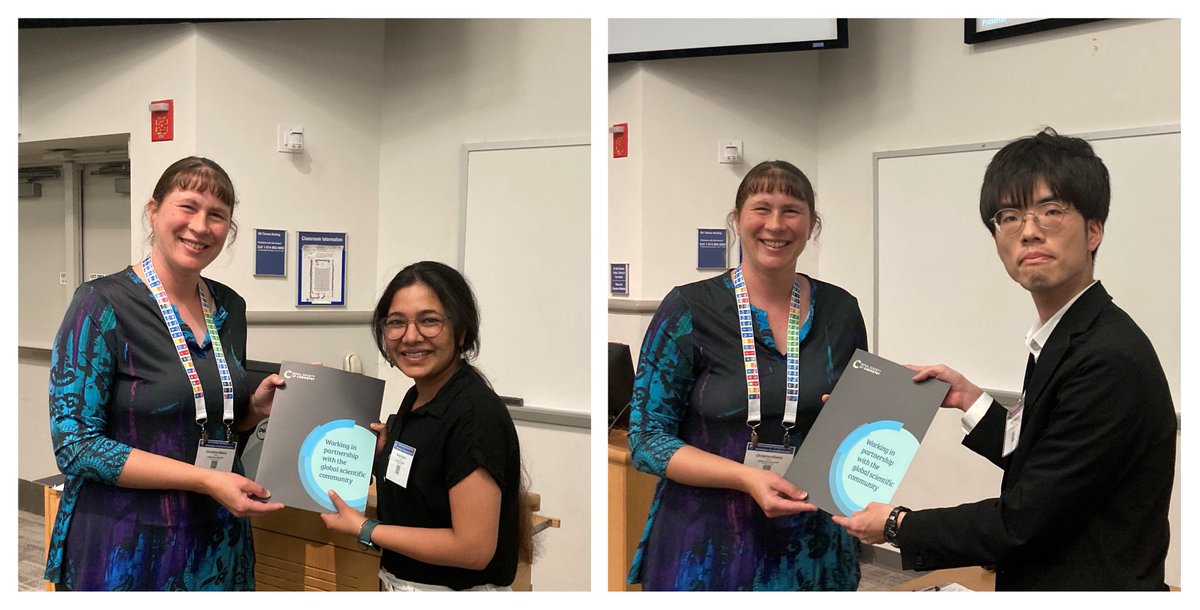
Join us in congratulating Maya Khatun @mayachemie and Yuto Fukumoto for winning our poster pirzes at ISMPC 2024 at @psu_chemistry@penn_state! Find out about the winners in our latest blog https://t.co/EykHJCVgty @RSC_Japan
We are looking for a research associate with expertise in molecular dynamics simulation, enhanced sampling simulations of biophysical systems (Additional Expertise in ML would be great). Interested candidates may apply by 22nd August. Here is link.
https://t.co/UrS1hzJxEX
Reposting is appreciated.
Open #postdoc positions in our group @biotech_joshi at @IITHyderabad. Do you like computer simulations of biosystems, this is your opportunity to join a dynamic and interdisciplinary team in the city of Pearl.
@HiHyderabad@AcademicChatter
Having 2-3 PhD Vacancies in our lab for projects based on
a) Nucleoside/nucleotide modifications and application into protein sensing
b) ex-situ and in-situ generation of gaseous reactants and applications for the construction of complex synthetic structures
This is how I advise my #PhD students to write research manuscripts (in case someone finds it helpful).
General points:
1. Research questions addressed by your manuscript are key and should guide you.
2. Don’t view your manuscript as an article. See it as a STORY.
3. Pick the writing style that is easily understood by a broader community. Make reading easy.
4. Most of data should get into the paper. If some doesn’t support the hypothesis, it still must be in the Suppl. Information. It must show the reproducibility limits.
5. Make the paper shorter, not longer. Cut out things that may sound like ‘bluff’ or ‘decoration’ of the story. Use well-defined terminology, don’t invent it unless clearly necessary.
6. Focus on reporting & explaining the numbers. Minimize discussions of qualitative outcomes and your imagination.
▫️
Specific steps:
1️⃣ First, formulate and polish the key questions that your study addresses. It may take hours or even days (even though you've been doing research in this area for years). A single study should address no more than 1-3 key questions. It’s your perfect start for writing.
2️⃣ Write down the structure of your STORY first: Sections and Subsections that will answer those questions. Into each subsection, put 1-2 sentences that formulate the message(s) from this subsection. It will hugely help you navigate the manuscript later and save a lot of time.
3️⃣ Write approximate messages in the conclusion section. Usually, no more than 1-4 sentences.
▫️
At this point, SHARE your [structure+questions+messages] document with your advisor for feedback. Toss it back and forth until you both converge. You can also include major collaborators if needed.
▫️
4️⃣ Write the introduction part. Put down the paragraphs that introduce a reader into the key question(s) of the manuscript and the background of your story.
5️⃣ Write the main text for each section, smoothly and firmly. Each paragraph should add a separate value and end with a message-like sentence. Follow the “First… Second… Third…” structure for paragraphs when possible, it gives rigor and readability to your story.
6️⃣ Write the conclusions. Add a broader perspective that is justified and not generic.
7️⃣ Write the abstract. It must have simple terminology and clearly explain what readers can find inside the paper. It also should contain the key conclusions.
8️⃣ Write up 4-5 different titles and spend >30 mins with your team discussing which title sounds best.
Finally, iterate on the resulting draft within your team.
The number of drafts can easily exceed 20.
▫️
❗In addition, I always emphasize that a high quality of your research paper:
- sharpen your writing and analytical skills.
- shapes your reputation.
- shows who you are as a researcher and communicator.
▫️
p.s. Everyone has a different style of advising and writing. You can adopt only some specific steps if you find them helpful.
p.p.s. Another way that we sometimes use is by starting with figures ('story in figures' style).
#AcademicTwitter #AcademicChatter
Our efforts to explore the chemistry of life’s origins continue with our latest #compchem study on C2H3NO isomers and their reactions. We've identified key molecules that may be crucial in prebiotic chemistry. https://t.co/qvfFrErWLj @SunandaPan9411@acrenderix@Subhasghosal1
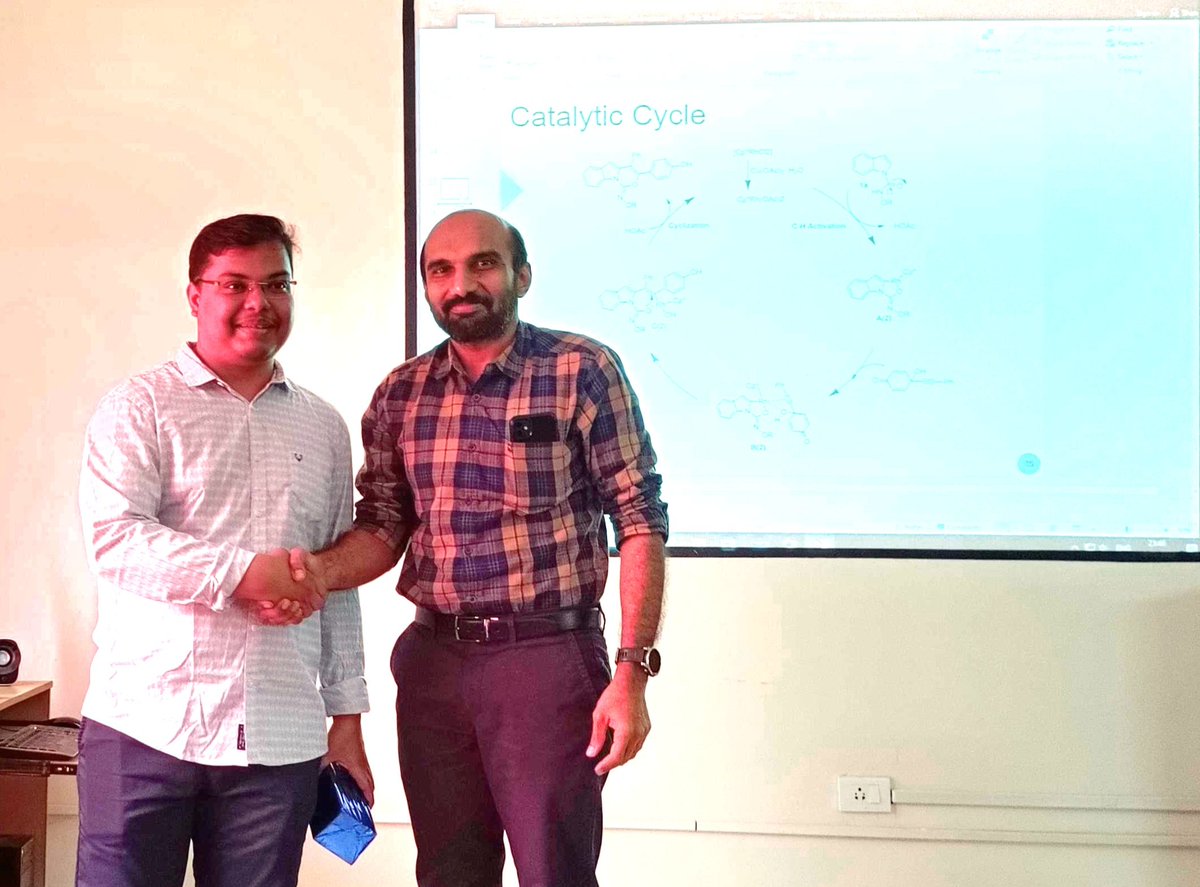
Great news! We're delighted to share that Saikat Roy and Maya Khatun have successfully defended there theses. Join us in extending our heartfelt congratulations on this significant achievement. We wish continued success and fulfillment in their future endeavours.
1 JRF (chemistry) position is available in my group @ TIFR Hyderabad @TIFRH_buzz starting June,2023
please write to [email protected]
Eligibility: NET/LS/GATE, Period: 1 Y, on porous organic polymer, membrane-based separation