Human beings have the right to become whatever they choose.
They may call themselves wise, civilized, enlightened, democratic, revolutionary, spiritual, superior, or just. History is filled with individuals and nations crowning themselves with such titles.
But perhaps the one right humanity should never possess is the right to rewrite its own deeds after they have been done.
The greatest manipulations in history are not always committed through weapons, but through memory. Facts are edited. Motives are purified. Violence is renamed necessity. Oppression becomes civilization. Betrayal becomes diplomacy. And with time, the guilty often become historians of their own crimes.
I sometimes imagine a future technology capable of recording human actions with terrifying fidelity; not merely conversations or images, but the moral atmosphere surrounding actions themselves. A system that preserves events beyond propaganda, beyond selective memory, beyond political convenience. Not necessarily to punish, but to prevent reality from being murdered after the event itself has already occurred.
Even intimacy, secrecy, and private life (though deserving protection) would still leave traces, hints, and echoes. Because no action exists in isolation. Human conduct always spills into consequences.
Such a system would transform everything: interpersonal relationships, families, communities, religious institutions, governments, nations, and international politics.
Many of the heroes of history might collapse under transparent memory. Many villains may turn out more human than mythology allowed. Entire civilizations would lose the luxury of self-manufactured innocence.
Perhaps this is why human beings fear perfect remembrance.
Forgetting is not always mercy; sometimes it is strategy.
And maybe one of humanity’s deepest instincts is not merely the desire to survive, but the desire to control the narrative of survival.
Fact: During Peter Obi's tenure as governor of Anambra State, 78 out of 179 communities were left completely without a functional public primary school.
I don't mind political opposition but the one riddled with hypocrisy, emotional blackmail, selective amnesia, manipulation of facts etc is where I draw the line
A group of people that elevate themselves to the gatekeepers of what "political morality" should be, everybody is bad except them, everyone is evil except them, that I won't accept
We are 50!!!!!!!
In 1976, when the old Western State was split into Oyo, Ondo and Ogun States, our leaders made a defining decision.
Rather than divide our region’s assets, they established Odu’a Investment Company Limited to preserve, manage and grow them for the benefit of our region.
Fifty years later, while many of the regional conglomerates of that era have faded, Odu’a has endured, evolved and continues to make impact.
Here’s to five decades of legacy, resilience and shared prosperity, and to the next 50 years of even greater accomplishments.
Happy 50th Anniversary, @oduainvestment
If you think we have olodo uprising now, wait till 20yrs later
Primary and secondary education is a complete mess, 70% of community schools are dilapidated, in very bad shape, with the dumbest people as teachers and no technology at all, subnational governments led by the ever incompetent state governors are quietly destroying Nigeria while we argue everyday about Tinubu and FG
I have watched Opposition leaders being interviewed (Atiku, Ṣoworẹ, Makinde and Obi).
No one has told me how they are going to change the system or what they're doing differently; all they have told me is how they want to change the President.
Unserious people.
From 1999 till now, you cannot recall a time when Lagos State Government owed its workers even one month salary, let alone the 13 months salaries owed to Anambra State Water Corporation staffs under Mr. Peter Obi's administration.
Go and verify!
Records from Anambra State Ministry of Health showed that between 2007 to 2014, when Mr. Peter Obi was governor of Anambra State, 14 out of the 21 local governments did not have an active, accredited public General Hospital or comprehensive health facility. Meanwhile, Mr. Obi heavily subsidised voluntary agencies and faith-based (Catholic) health networks, such as Iyienu Hospital in Ogidi and St. Charles Borromeo in Onitsha. He left public infrastructure in remote and non-urban areas severely underinvested.
One of the beautiful things about a new morning is that yesterday’s disappointments do not get to decide everything about today. You can try again with more wisdom, love again with better boundaries, dream again with greater courage and begin again without apologising for needing another chance.
University students, don't allow people lie to you, NELFUND and the total elimination of ASUU strike is more than enough reason to vote this president to continue, there's always been hardship in Nigeria but there's never been a time we didn't have ASUU strikes alongside it
NELFUND and NO ASUU strike represents undisrupted education, if you had to stay at home for 10 months with no idea what to do with your life, you will appreciate it better
Peter Gringory Obi may go down in history as the first and last presidential candidate to successfully fake a good heart until many Nigerians discovered that the smile was the packaging, not the product.
But we still have a shovel full of Nigerians suffering from his charm 😔.
A nation is not built by the greatness of its leaders alone, but by the character of its people, the sacrifices they are willing to make and their commitment to a future greater than their present interests.
As Progressives we must recognise that millions of Nigerians are going through a difficult phase, and young people are searching for opportunities.
As we campaign for President Bola Ahmed Tinubu, our message must not be rooted in arrogance. It must be rooted in empathy. We must listen to the pain of the people, acknowledge their challenges, and communicate hope with sincerity.
If we want Nigerians to trust our message, we must first show that we understand their realities and stand with them through difficult times.
Let our campaign be defined by compassion and a genuine commitment to a better future for Nigerians. #ReElectPresidentTinubu
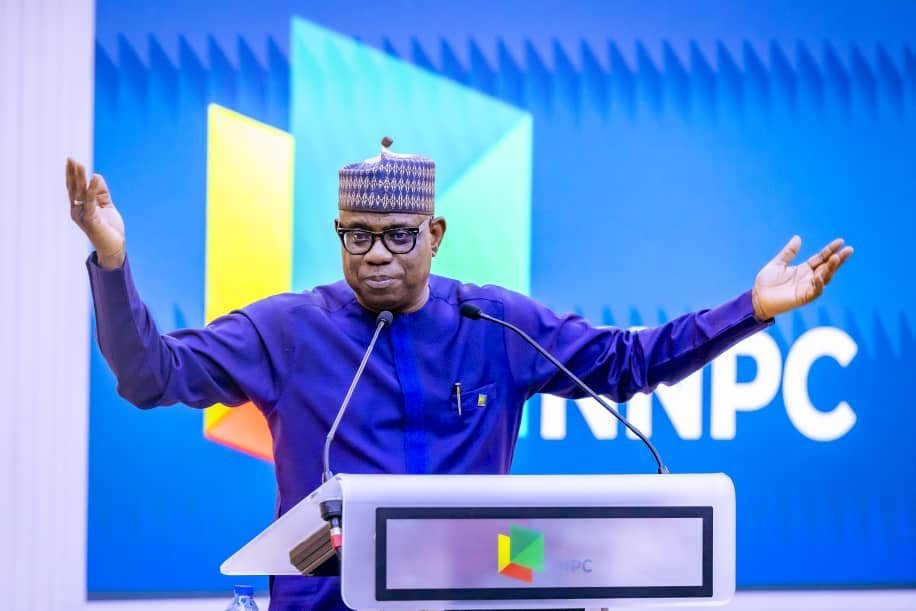
Rep. Philip Agbese said it perfectly at the House of Lords in Westminster: "@BBOjulari has migrated NNPCL from elites' conspiracy of corruption to saving grace of common citizens." That one sentence captures what many Nigerians are now seeing at the Nigerian National Petroleum Company Limited.
For years, NNPCL was seen as opaque, wasteful and captured by a privileged few. Contracts were inflated, cash-call obligations were delayed, refineries drained resources without results, and remittances to the Federation Account were inconsistent. The ordinary Nigerian never felt the wealth from oil.
What Engr. Bashir Bayo Ojulari is doing is different. It is not cosmetic. Under his leadership, we are witnessing real commercial discipline. Production has recovered, with output from NNPC E&P Limited rising to multi-decade highs. Costs have been significantly reduced through rigorous contract reviews that cut waste. Transparency has been restored with the return of monthly financial and operational reporting and public disclosure of audited results. Most importantly, remittances to the Federation Account are now consistent, providing resources that fund infrastructure, security, schools and hospitals for ordinary citizens.
Investor confidence is also back. Timely cash-call payments and improved transparency have restored trust among joint venture partners and international investors, unlocking tens of billions of dollars in gas supply and deepwater projects. Progress on critical infrastructure like the Ajaokuta-Kaduna-Kano gas pipeline further demonstrates this renewed focus.
This aligns perfectly with the Petroleum Industry Act and the reform agenda of President Bola Ahmed Tinubu. Mr. President provided the political will to end patronage and dismantle entrenched interests, while Ojulari is providing the technical courage to implement it by taking hard decisions on loss-making assets and insisting on value for money.
CONFIRMED 📢
Wère ló pọ jù nínú àwon Obidients.
They are full of misinformation, lies and crooked behavior online. One said, one of Tinubu hand is paralyzed. He cannot raise it.
These are adults with 32 teeth.
Adults with children at home 😭🤡
Kaduna was on a total lockdown yesterday as the APC Presidential Campaign Mega Rally was officially flagged off!
I joined my colleagues in anchoring the programme as we continue to work together towards the victory of His Excellency President Bola Ahmed Tinubu GCFR and His Excellency, the Vice President, Senator Kashim Shettima, GCON. in the January 16, 2027 elections.
The energy, excitement, and commitment were truly remarkable as we move forward together!
ILE-IFE THE CAPITAL OF THE AFRICAN SPIRITUALITY; A SPIRITUAL EMPIRE
The Yoruba, and the tens of millions across the Atlantic who still call on the Orisa, have Ile-Ife.
Yet Ile-Ife is rarely spoken of in those terms. To most Nigerians it is a university town in Osun State, a royal seat, a place of festivals and occasional headlines. Few see it for what it once was: the spiritual capital of an empire that ruled not through soldiers but through legitimacy, ritual and the authority to say who was truly a king.
This essay makes a simple argument. Ile-Ife was, and could again be, the Vatican of the Black world. Whether it becomes that depends less on history than on whether the Yoruba choose to remake it.
Where the world began
In Yoruba cosmology, Ile-Ife is not just an old city; it is the place where the earth itself was created. The name says so. Ile-Ife is usually rendered as “the land of expansion” or “the place of spreading”, where solid ground was first spread over primordial water.
The traditions differ in detail. In one, Olodumare sent Obatala down a chain from the sky with a snail shell of earth, a hen and a chameleon. The hen scattered the soil, and dry land spread outward from Ife. In another, Oduduwa completed the task after Obatala faltered, and became the first ruler of the new world. The rivalry between the two figures echoes in Ife’s festivals to this day.
What the traditions share is the claim that matters politically. All Yoruba kingdoms trace their royal lines to Oduduwa and his descendants, who left Ife to found new kingdoms. Ife is therefore Orirun, the source. Every Yoruba crown, in this understanding, is a branch of one tree whose root lies in Ife.
An empire without an army
Ile-Ife’s power was never mainly military. Oyo built cavalry and conquered; Ibadan raised war chiefs. Ife’s influence worked differently. It held the one thing every ambitious ruler needed and could not seize by force: sacred legitimacy.
That legitimacy took concrete forms. The right to wear the beaded crown with its veil of fringes, the ade, was understood to descend from Oduduwa. Royal lines from Oyo to Ijebu, Ekiti and Ondo told their founding stories through princes who departed from Ife. Benin’s ruling dynasty traces itself to Oranmiyan, a prince of Ife, whose son Eweka became the first Oba of the second Benin dynasty. Some Portuguese accounts from the late fifteenth century describe a distant spiritual overlord, the “Ogane”, who confirmed Benin’s kings; many historians identify that figure with the Ooni of Ife, though the identification remains debated.
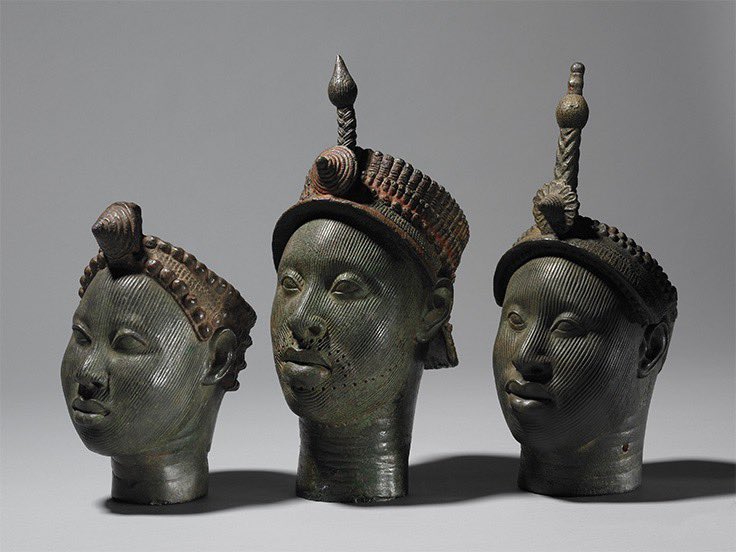
Ife’s artists left the most eloquent evidence of its stature. Between roughly the twelfth and fifteenth centuries, Ife workshops produced naturalistic heads in terracotta and copper alloy of extraordinary refinement. When the German ethnographer Leo Frobenius encountered them in 1910, he refused to believe Africans had made them and speculated about a lost Greek colony or Atlantis. That reaction tells us as much about colonial thought as about Ife. A society capable of such art had wealth, specialist guilds, royal patronage and a sacred court at its centre.
This is what an empire of the spirit looks like. It does not need garrisons. It needs other rulers to believe that their crowns are incomplete without its blessing.
Credit: Aare Kurunmi Kakanfo (Geopolitics with Oladimeji Bolarinwa)