1/11
Excited to share my postdoc work from @schierlab and @RainerFriedri12! 🐟👃
How does the brain decide whether an odor is good or bad? In larval zebrafish, we find that odor preference is reflected in spatially cohesive neuronal domains of the olfactory bulb. 🧵
Calling all computational neuroscientists! Our department is recruiting two new lecturers/associate profs. Application deadline 10th July. https://t.co/we2WiPCxvy #sciencejobs@uclnpp
1/11
Excited to share my postdoc work from @schierlab and @RainerFriedri12! 🐟👃
How does the brain decide whether an odor is good or bad? In larval zebrafish, we find that odor preference is reflected in spatially cohesive neuronal domains of the olfactory bulb. 🧵
Special thanks to @FrankFishLab Bethan Jenkins, Johannes Kappel, @LukasAnneser, Ruth Montano, and the Biozentrum core facilities; Research IT, IMCF, FACS, Genomics, and Workshop teams.
1/12
Excited to share our new Nature paper:
“A thalamus–brainstem attractor network drives history-biased decisions”
How does the brain use recent experience to guide the next decision?
#Neuroscience#Zebrafish#DecisionMaking
https://t.co/ykrhfFUGH4
Two brain circuits.
Same learning problem.
Shared learning outcomes.
Different dynamical implementations.
Learning is not a single canonical solution but can emerge through distinct population dynamics shaped by circuit architecture.
Excited to share our latest preprint! 🧵1/12
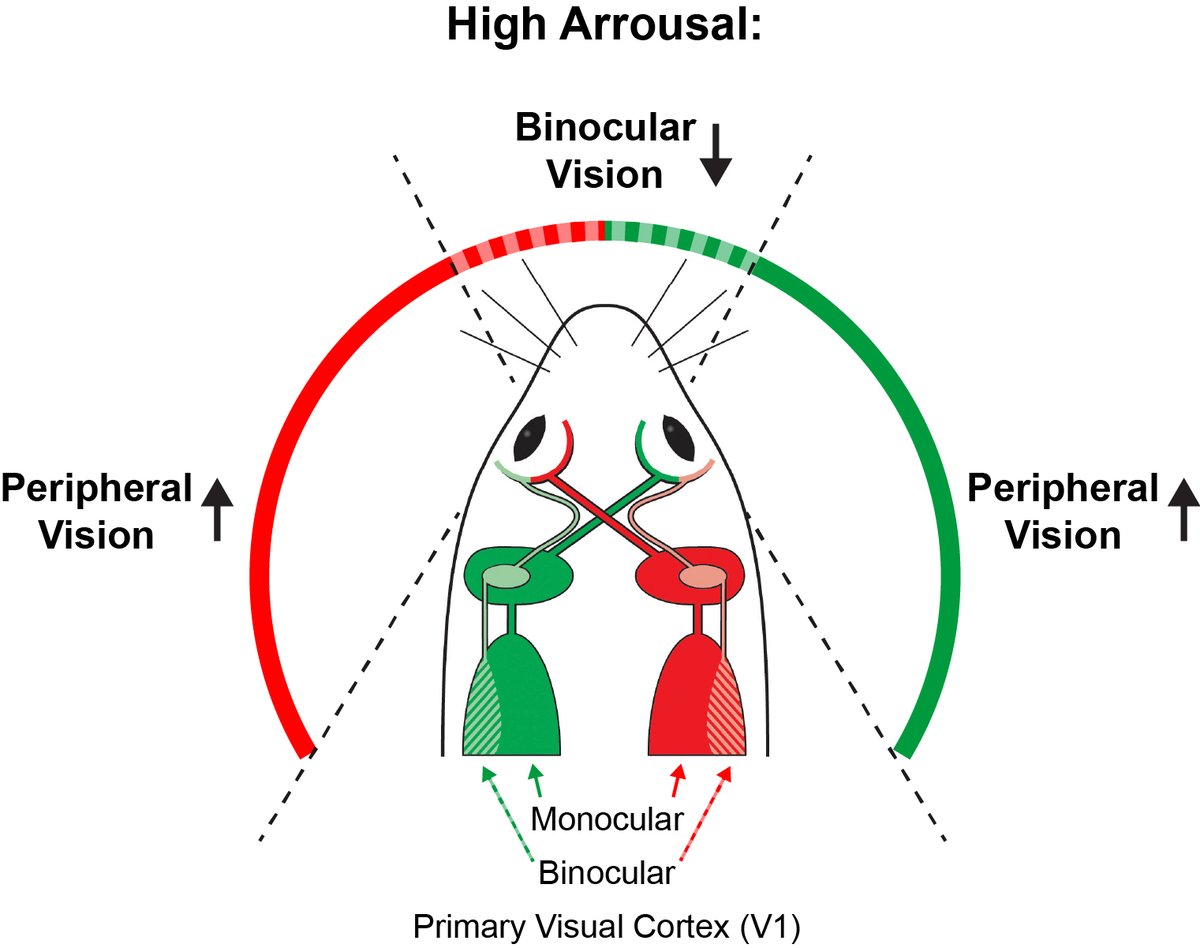
🚨Paper Alert🚨 After 4(!!!) years of revisions, the amazing @KetiCohen & team pushed out this beauty💪 Unlike what the textbooks say, V1 binocularity is not fixed: at high arousal, binocularity decreases while the strength of peripheral vision increases. https://t.co/mK3KEw7jbs
How natural stimuli lead to highly correlated ganglion cell activity in primate (marmoset) and mouse retina. Now out in @nature.
https://t.co/PIYdb7Xi1Q
Individuality is fascinating. Check how to quantify variability among individuals by identifying long motor strategies during navigation on small 🐟! Check the latest @wyartlab work from Dr. Gautam Sridhar & @antoniocbscosta@InstitutCerveau@PNASNews: https://t.co/unp0QhU4QC