🔴#LIVE | Former Bangladesh Prime Minister Sheikh Hasina speaks to NDTV's Aditya Raj Kaul (@adityarajkaul) in her first big interview after ouster
#NDTVWorldExclusive
https://t.co/roFkYL4le4
Sheikh Hasina pledges Bangladesh return by December, saying prison will not deter her
In a supplied NDTV interview transcript reported by AFV News, Hasina reaffirms a December 2026 return, rejects the tribunal verdict and outlines plans to rebuild the Awami League.
Read ➡️ https://t.co/hdZDZJpJuF
#Bangladesh #SheikhHasina #DecemberCalling
During the period of the interim government from August 2024 to February 2026, however, the mass measles vaccination campaign which normally happens every four years was missed. The last one was in 2020.
Stockpiles of vaccines became depleted as the procurement process slowed down and tens of thousands of health worker roles were left vacant.
https://t.co/WnV7lalkez
#Bangladesh
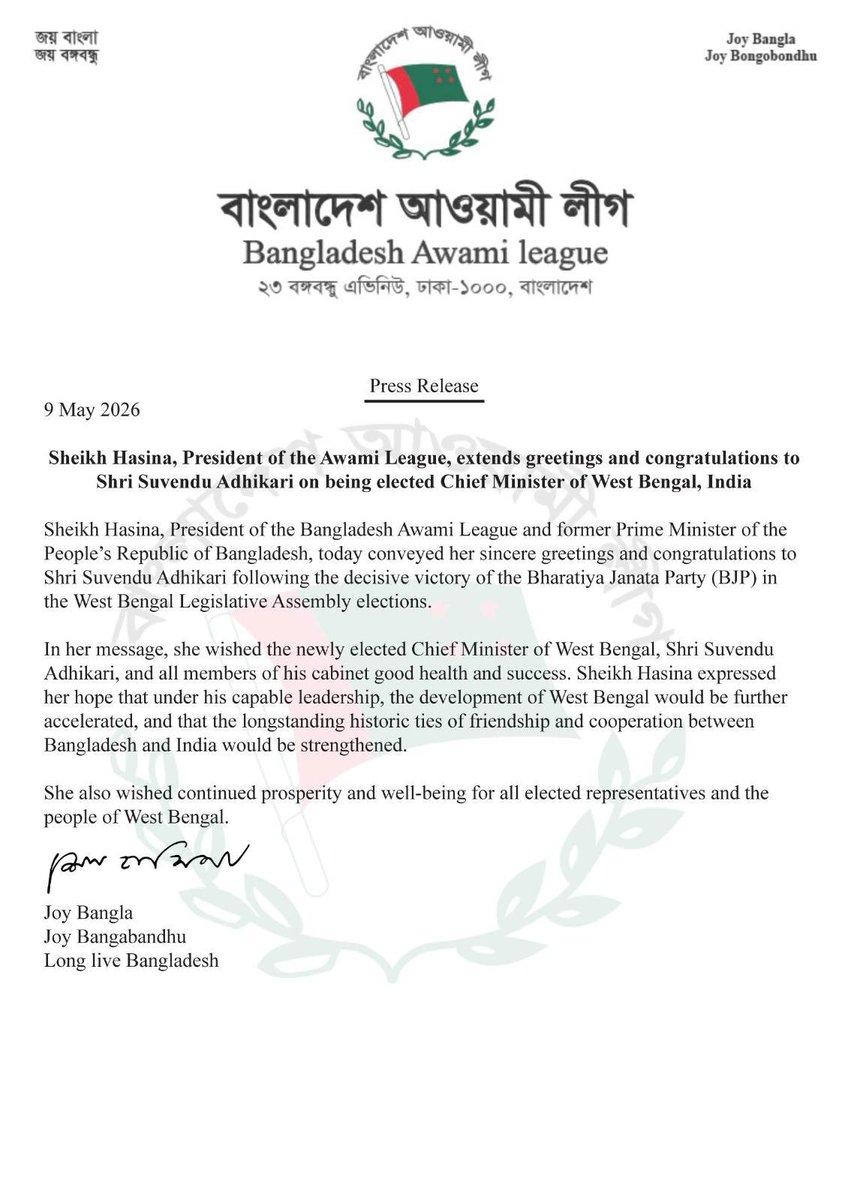
Sheikh Hasina, President of Bangladesh Awami League and former Prime Minister of the People’s Republic of Bangladesh, today conveyed her sincere greetings and congratulations to Shri Suvendu Adhikari following the decisive victory in the West Bengal Legislative Assembly elections
On the birth anniversary of BongoBondhu Sheikh Mujibur Rahman, I remember a voice that awakened a nation and a courage that shaped our destiny. His vision was not just for freedom, but for dignity, justice, and hope. His legacy continues to guide us!
Joy bangla
A heartbreaking reflection of the collapsing law & order situation.
15-year-old Shanto Kumar Saha was killed by a truck while chasing robbers who stole his father’s auto-rickshaw.
At an age when he should be in school, he was trying to support his family.
Who will take responsibility for this tragedy?
#Bangladesh #BangladeshCrisis
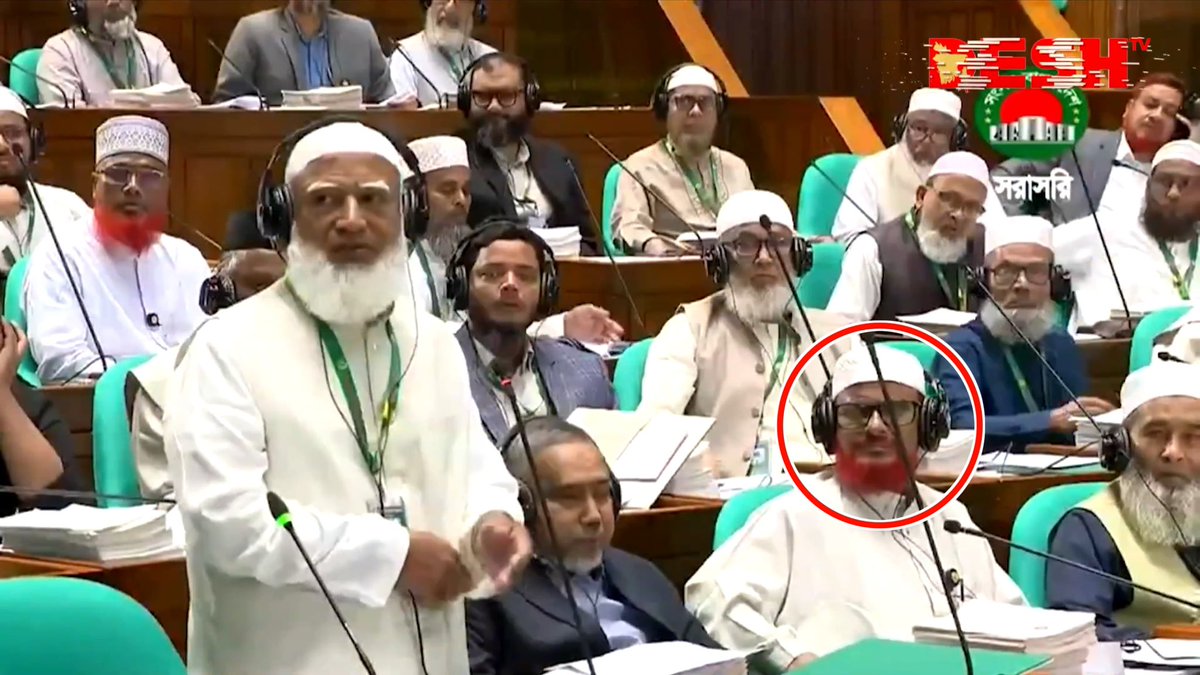
“If July 24 had not happened, someone like me could not have come from a death-row cell to Parliament.”
— This statement was made by ATM Azharul Islam, a man who opposed Bangladesh’s independence in 1971 and was sentenced to death for war crimes. His words reveal a deeper truth: who stood behind the July conspiracy and what July has ultimately brought to the country.
The person marked in the red circle in the image is war criminal A. T. M. Azharul Islam. Today, he has participated in a parliamentary session—despite being convicted for his role in the killing of 1,400 unarmed Bengalis during the 1971 Liberation War.
On April 17, 1971, Jamaat leader Azharul Islam collaborated with the Pakistani army in carrying out mass killings in several villages in Rangpur, where around 1,400 unarmed Bengalis were murdered. He also assisted the Pakistani military in other locations and took part in numerous acts of violence and killing.
Key incidents include:
• April 16, 1971 – Azharul Islam, along with Pakistani soldiers and Jamaat members, attacked Mokshedpur village. Homes were looted and burned, and many unarmed civilians were brutally killed.
• April 17, 1971 – He took part in a coordinated attack on several Hindu-majority villages near Jharuar Bil in Rangpur. Approximately 1,200 people were killed, and more than 200 others were abducted and later murdered. Azharul Islam was convicted under the doctrine of Joint Criminal Enterprise (JCE) for these crimes.
• April 30, 1971 – Azharul Islam abducted four Hindu professors and the wife of one professor from Carmichael College in Rangpur. They were later killed. Evidence presented in court established beyond doubt that he directly participated in these abductions and murders.
Today stands as a dark and shameful chapter in history. A convicted war criminal, an opponent of Bangladesh’s independence, and a death-row prisoner has taken part in Parliament.
It signals the beginning of a path that undermines democracy, the rule of law, human rights, and the values of a civilized society.
This is what is being called the “New Bangladesh.”
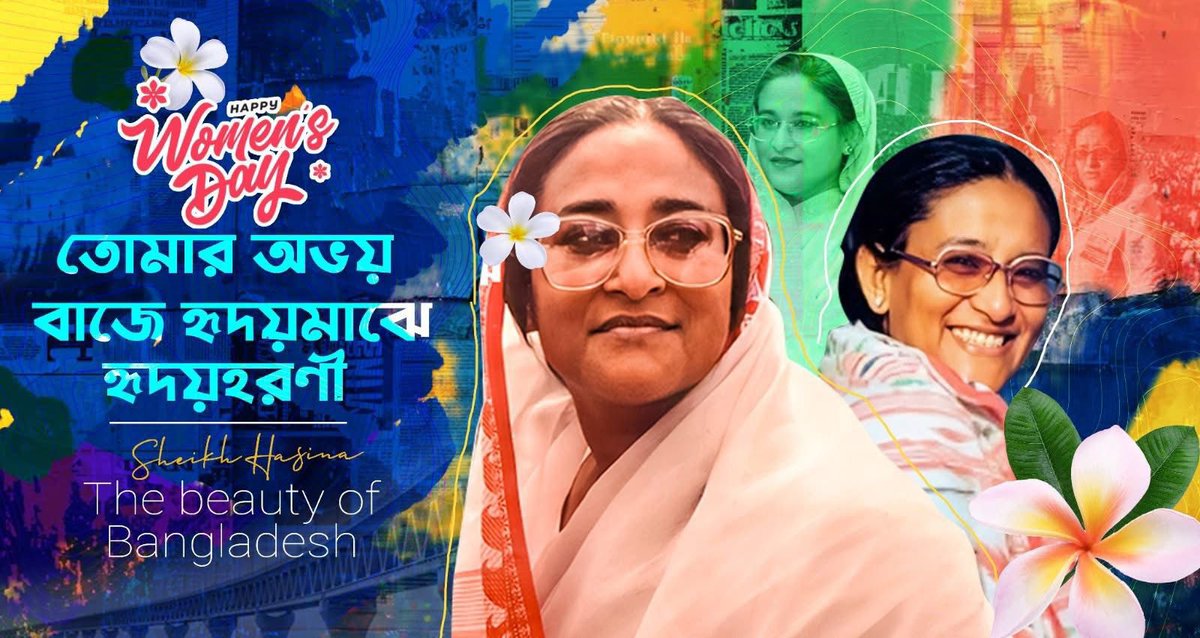
Women- the pillars of compassion, the architect of progress and the true champions of courage, strength and leadership.
Happy Women’s Day! Today and everyday. 🌸
The Speech That Awakened a Nation
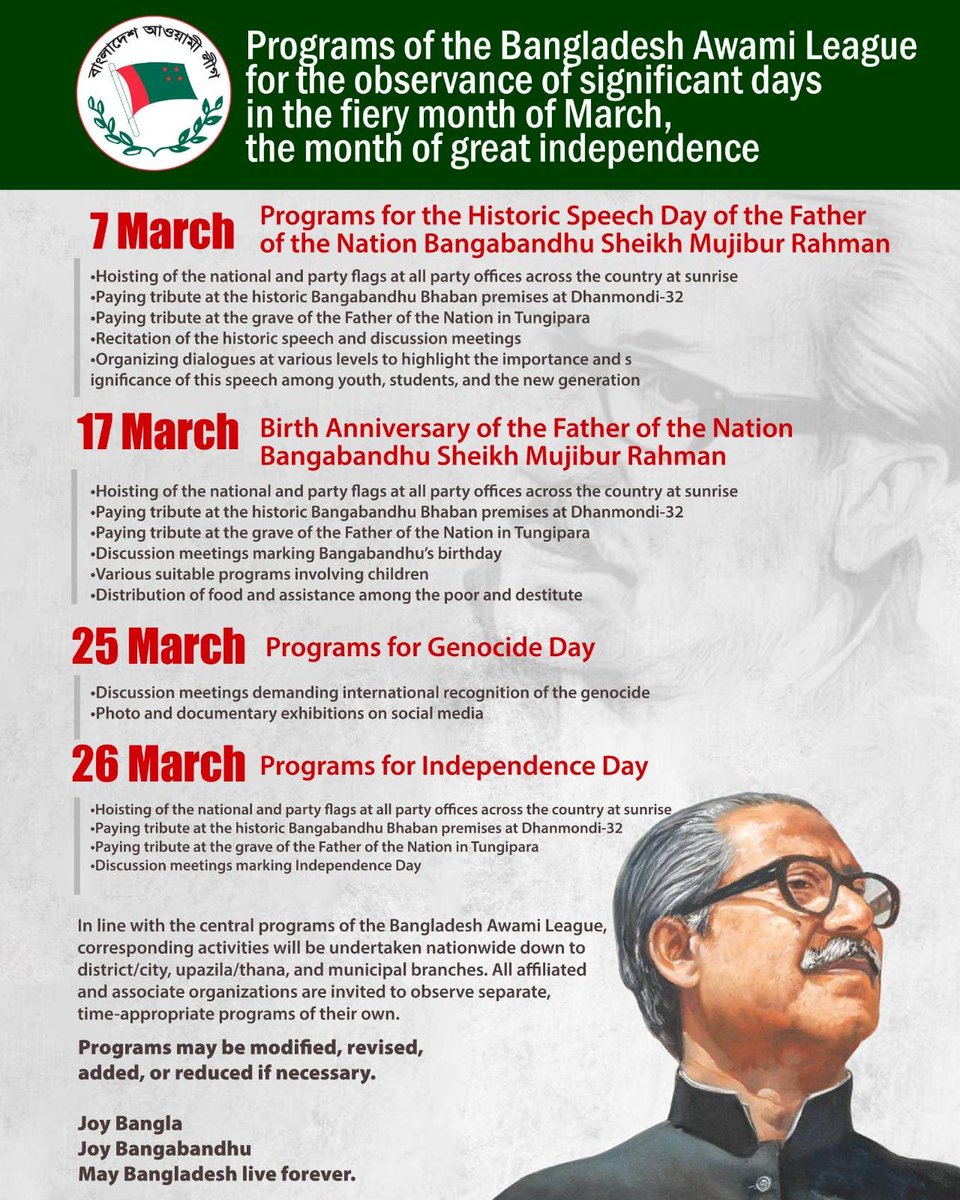
March 7 is more than a date in history. It is the moment a nation found its voice.
On this day in 1971, Bangabandhu Sheikh Mujibur Rahman stood before millions at the Racecourse Ground in Dhaka and delivered a speech that changed the course of history. In just 18 minutes, he united a people who had endured decades of political exclusion, economic exploitation, and cultural repression.
With remarkable courage and strategic wisdom, Bangabandhu inspired a nation to prepare for its struggle for freedom while avoiding immediate repression from the regime. His words mobilized millions and laid the foundation for Bangladesh’s Liberation War.
In 2017, the historic speech was recognized by UNESCO and added to the Memory of the World Register.
March 7 was not just a speech. It was the awakening of a nation.
Joy Bangla. 🇧🇩
#Bangladesh #7March #March1971 #Bangabandhu
The struggle of the Bengali nation - and of the people of all of Bangladesh that began in 1971 has not yet truly ended.
We achieved our map, our sovereign territory, but we have yet to secure full economic freedom. The journey toward that freedom was begun by Bangabandhu Sheikh Mujibur Rahman - who started building the nation after independence. Following his path, his daughter Sheikh Hasina led the country toward becoming a middle-income developing state.
But today Bangladesh faces a crisis marked by hunger and poverty. Freedom of expression is under strain, and political rights remain deeply contested.
On this historic and fiery day of 7 March Speech of Sheikh Mujibur Rahman, let us renew our pledge: to build Bangladesh, to free its people from hunger and poverty, and to restore the democratic rights of its citizens.
Joy Bangla.
Joy Bangabandhu.
১৯৭১ সালে বাঙালি জাতির তথা সমগ্র বাংলাদেশের মানুষের যে সংগ্রাম শুরু হয়েছিল তা এখনও শেষ হয়নি।
আমরা আমাদের মানচিত্র পেয়েছি, এখনও পায়নি অর্থনৈতিক মুক্তি। সেই মুক্তির পথে দেশ গঠন শুরু করেছিলেন বঙ্গবন্ধু, তার পথ অনুসরণ করেই দেশকে মধ্যম আয়ের উন্নয়নশীল রাষ্ট্রে পরিণত করেছিলেন তারই কন্যা।
কিন্তু আজ বাংলাদেশে ক্ষুধা আর দারিদ্র্যের মহামারি, নেই কোন বাকস্বাধীনতা, নেই রাজনৈতিক অধিকার।
আসুন ৭ই মার্চের ��েই অগ্নিঝরা দিনের শপথ নেই, বাংলাদেশ গড়ার। বাংলাদেশের মানুষকে ক্ষুধা, দারিদ্র্য থেকে মুক্ত করার, বাংলাদেশের মানুষের গণতান্ত্রিক অধিকার ফিরিয়ে আনার।
জয় বাংলা,
জয় বঙ্গবন্ধু।
#Banabandhu #7March #March1971 #Bangladesh #JoyBangla
Bangladesh’s International Crimes Tribunal is once again under scrutiny.
Chief Prosecutor Tajul Islam has been removed following months of political tension and corruption allegations. Appointed after the tribunal’s restructuring under interim leader Muhammad Yunus, he oversaw high-profile cases linked to the July 2024 unrest.
Supporters called the trials essential for accountability. Critics labelled them politically driven.
Recent allegations claim financial misconduct tied to tribunal cases — though no court has confirmed the accusations, and allies deny wrongdoing.
His removal raises fresh questions about the tribunal’s credibility — and in a deeply polarised Bangladesh, the battle over justice is far from over.
#Bangladesh #BangladeshCrisis #ICTBD
In post-riot Bangladesh, a new and alarming chapter of “prison killings” targeting leaders and activists of the Awami League has begun to unfold. Since the July riot, arrests of Awami League figures on what are described as false cases, followed by a series of deaths in custody, have raised growing concern. The latest deaths of two leaders in Patuakhali and Narayanganj have intensified allegations that the Bangladesh Nationalist Party may now be joining what critics call the “elimination path” shown by the interim government led by Muhammad Yunus.
On Friday afternoon, former president of Dumki Upazila Chhatra League, Shafiqul Islam Khan, died while undergoing treatment in Patuakhali District Jail. He had been sent to prison on August 11 in connection with a political case filed in 2015. Although prison authorities and doctors claim the death was due to heart disease, political circles are asking why a long-ill activist with heart blockages was kept in custody without ensuring advanced medical care.
Earlier, Monir Hossain Sikdar (60), vice-president of Narayanganj District Awami League, died at Dhaka Medical College Hospital. He had been arrested on November 12 merely on suspicion of “possible sabotage.” His family alleges that three months of detention without trial and physical abuse pushed him toward death. Party leaders and activists are calling it a “planned killing.”
According to human rights groups, in each case authorities have labelled the deaths as “heart attack” or “natural,” yet allegations persist of torture marks on bodies and severe medical negligence. Critics compare this pattern to the “Jakarta Method,” referencing the model of eliminating political opponents in custody while staging their deaths as natural — an allusion to the book The Jakarta Method.
Since the July events, roughly 137,000 cases have reportedly been filed against Awami League leaders and activists. The party claims that despite the rise of mob politics and extremism after August 5, it did not pursue sabotage. Yet questions are being raised as to whether the BNP — which presents itself as a proponent of multiparty democracy — is now silently endorsing this politics of prison deaths.
Observers believe that detaining elderly and ill leaders such as Ahmad Mostafa Khan Bacchu (80) in Sirajganj or Tariq Rifat in Gaibandha, pushing them toward death in custody, echoes the dark chapter of the 1975 jail killings. The silence of international human rights organizations, they argue, is deepening the crisis.
Carrying out such custodial deaths in the name of protecting democracy and blocking the Awami League is seen as a severe blow to Bangladesh’s human rights situation. There are fears that if this brutality is not stopped, the country could move toward even greater bloodshed.
#BangladeshCrisis #KilledInCustody #AwamiLeague