Why Glo is Failing
Glo once forced MTN to rethink pricing, handed Nigerians free SIMs, signed the biggest celebrities, and landed a 9,800 km submarine cable. It was not just a telecom company. It was a statement.
That statement has been rotting for a decade.
In March 2024, Glo reported 62 million active subscribers. By September, 19 million. The NCC’s audit did not shrink Glo’s base. It revealed that Glo had been counting ghosts for years, inflating figures while the real business collapsed underneath.
The infrastructure tells the same story. MTN runs over 28,000 km of fibre across Nigeria but Glo runs 13,800. Less than half. With that deficit, 102 major outages in early 2025 should surprise no one. One lasted eight hours across five states. Another sat unresolved for four days in Adamawa and Taraba which was unresolved.
Then there is the breach. Hackers attacked Glo in August 2023 and walked away with customer data. Glo said nothing for a full year. The NCC had to force a board overhaul in October 2024 just to get governance back on the table.
Market share is now 11.9% with No 5G. 3.2 million internet subscribers lost in five months. A daily bleed of 21,000 users. Its internet base is back to 2013 levels.
Airtel has 34% of the market. MTN has 52%. Glo has memories.
The company that once made the big players nervous is now in danger of being overtaken by 9mobile. 9mobile oooo. The same operator most Nigerians forgot existed.
Glo did lost to itself.
There are three ministries in Nigeria that, if they truly worked together, could make life easier for Nigerians while generating billions of dollars in revenue every year.
But for that to happen, we need leaders who are willing to put Nigeria first.
The three ministries are:
1. Federal Ministry of Transportation
2. Federal Ministry of Marine and Blue Economy
3. Federal Ministry of Art, Culture, Tourism, and Creative Economy
These ministries control sectors that could make Nigeria feel like heaven on earth.
Take tourism for example.
Nigeria’s tourism industry contributes roughly $4–5 billion annually.
Now compare that with the Philippines, where tourism generates close to $100 billion every year.
Yet Nigeria has more cultural diversity, more festivals, a globally influential music industry, and one of the largest film industries in the world.
Now look at the maritime sector.
The Philippines earns roughly $16–25 billion annually from maritime and ocean industries.
Nigeria earns about $6–8 billion.
Yet Nigeria has the largest port economy in West Africa, massive oil shipping activity, a long Atlantic coastline, and one of the biggest consumer markets in Africa
The opportunity is there… but corruption and poor coordination continue to slow progress.
The last time I visited the Philippines, I traveled from Manila to Cebu, then to Bohol, and back to Manila on a Ro-Pax vessel.
That journey made me imagine how transformative such a system could be in Nigeria.
Nigeria has eight coastal states that touch the Atlantic Ocean:
• Lagos State
• Ogun State
• Ondo State
• Delta State
• Bayelsa State
• Rivers State
• Akwa Ibom State
• Cross River State
In addition, several inland states are connected to the ocean through river systems flowing into the Niger Delta, including:
• Anambra State
• Edo State
• Benue State
• Niger State
• Kogi State
If Nigeria fully developed inland water transport, cargo and passengers could move by boat from inland states like Kogi, Anambra, and Benue to coastal cities.
A Ro-Pax vessel earns from two main streams:
• passenger tickets
• vehicle and cargo transport (cars, buses, trucks)
A typical medium Ro-Pax ferry carries:
• 800–1000 passengers
• 150–200 vehicles per trip
Now imagine Nigeria building 10 major Ro-Pax routes across its rivers and coastline, operating about 20 vessels.
Routes could include:
• Onitsha to Port Harcourt
• Warri to Lagos
• Lokoja to Delta State
Each vessel could generate tens of millions of dollars annually.
Across the network, that is over $600 million in direct revenue every year.
Once tourism, logistics, port activity, hotels, restaurants, and trade are factored in, the total economic value could exceed $2.4 billion annually.
And guess what? With this, we have reduced pressure on highways, lower logistics costs, reduced congestion at airports, and created thousands of jobs.
Countries like the Philippines and Norway use Ro-Pax ferry networks as national transport infrastructure.
Now imagine Nigeria expanding that vision further.
Imagine tourism and waterway agreements with other West African countries.
• Lagos to Tema in Ghana
• Benin Republic to Bonny Island
• Coastal ferry routes across the Gulf of Guinea
The opportunities are PLENTY.
We have the resources.
We have the geography.
What we need is leadership that puts the country first.
Because with the right vision and the right people in government, Nigeria can truly become heaven on earth.
The funds we spend on presidential yachts, unnecessary renovations, or buying cars for judges, etc could build infrastructure that benefits millions of Nigerians. But we have leaders who are blind to this. Selfish leaders.
Nigeria is supposed to be a 1st world country.
The attached picture is what a ro-pax vessel looks like.
It accommodates both passengers and cars/trucks, etc.
A friend of mine has been running a company for 30 years, The moment he gives control to his son, everything collapses. In 3 years, the company shut down and lost everything. When I ask my friend if he regrets anything, He smiled and said this:
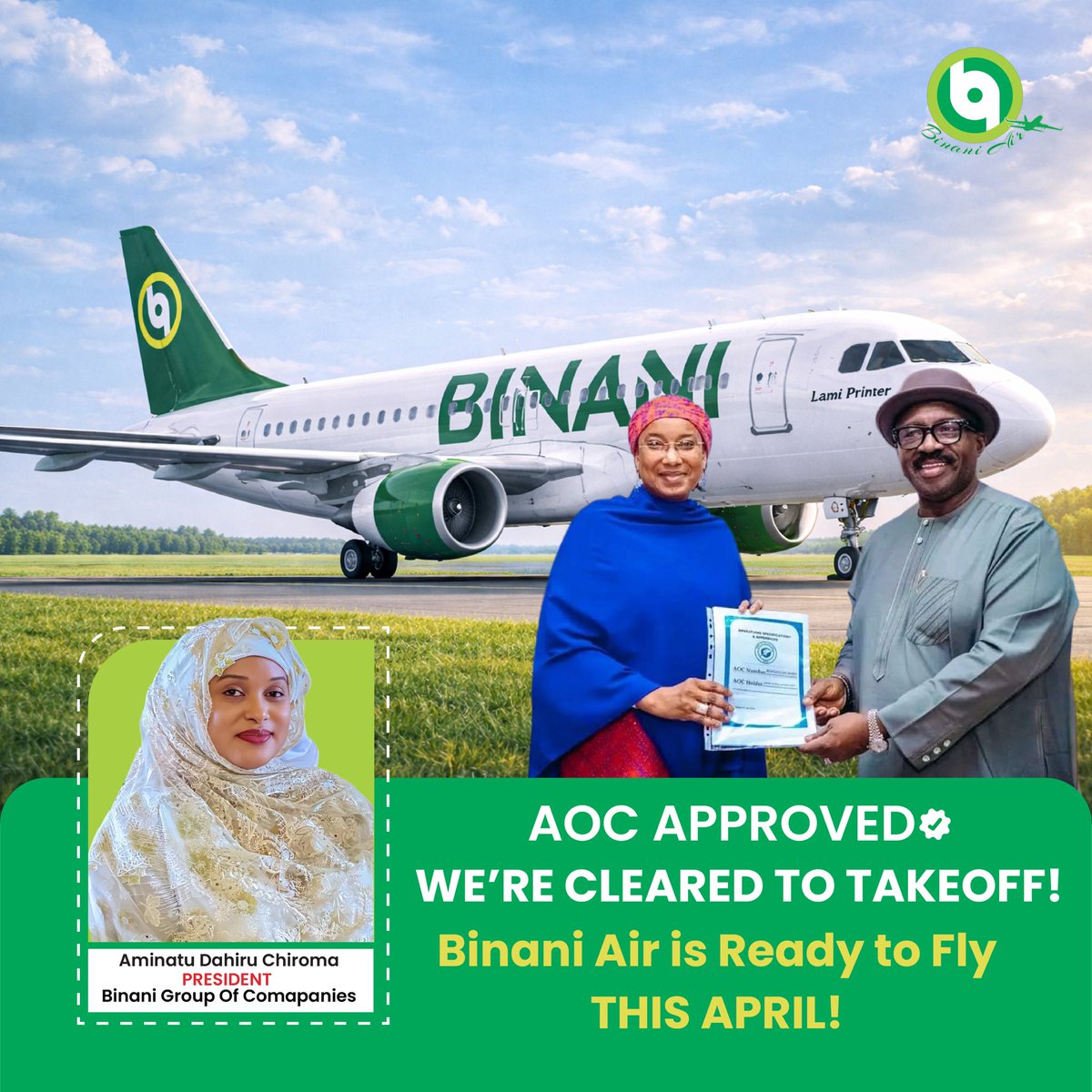
Alhamdulillah 🤲✨ Binani Air has officially received its AOC from the Nigerian Civil Aviation Authority 🇳🇬
Grateful to my father, my husband, my family, our visionary Chairperson Sen. Aishatu Binani, and our incredible team—this milestone is the start of a new era. ✈️
The Ultimate Dua' list for LAYLATUL QADR!
1. Allahumma innaka 'afuwwun, tuhibbul-'afwa, fa'fu 'anni
اَللَّهُمَّ اِنَّكَ عَفُوٌّ ، تُحِبُّ الْعَفْوَ فَاعْفُ عَنِّي
(O Allah, You are Most Forgiving, and You love forgiveness; so forgive me).
2. "LAA ILAAHA ILLAA ANTA SUBHAANAKA INNY KUNTU MINATHAULIMEEN"
لا إله إلا أنت سبحانك إني كنت من الظالمين
“There is none worthy of worship except You. You are pure. Verily I am amongst the oppressors.” [Al-'Anbya' : 87]
3. Rabbi Inneee A-o’od’u Bika An As-alaka Maa Laysa Lee Bihee I’lm Wa Illaa Taghfirlee Wa Tarh’amneee Akum Minal Khaasireen
"My Lord, I seek refuge in You from asking that of which I have no knowledge. And unless You forgive me and have mercy upon me, I will be among the losers." (Surat Hūd, 11: 47)
4. Astaghfirullah al-ladhi la ilaha illa huwal hayyul qayyum wa atubu ilayhi
*أسْتَغْفِرُ اللهَ الَّذِي لا إلَهَ إلا هُوَ الحَيُّ القَيُومُ وَأتُوبُ إلَيهِ*
It says in hadith, whoever says it three times his sins will be forgiven even if he should have run away from the battlefield.
5. Subhan Allah wa bhihamdihi
Whoever says it hundred times, his sins will be forgiven though they may be as much as the foam of the sea.
6. La ilaha illallahu wahdahu la shareeka lah lahul mulku wa lahaul hamdu wa huwa ala kuli shay’in qadeer
7. "Allahumma inni zalamtu nafsi zulman kathiran wa la ya'ghfirudh dhunuuba illa anta fa'ghfir li ma'ghfiratan min ‘indika warhamni innaka antal ‘ghafurur rahim."
"O Allah, I have greatly wronged myself and You alone can forgive sins, so grant me forgiveness from you and have mercy on me. You are the forgiving and Merciful One.
8. Allahumm-aghfir li, warhamni, wa-hdini, wa 'afini, warzuqni"
O Allah! Forgive me, have mercy on me, guide me, guard me against harm and provide me with sustenance and salvation." [Muslim]
9. Rabbana thalamna anfusana wa in lam taghfirlana watar hamna lana koonanna minal khasireen [7:23]
''Our Lord ! we have sinned against ourselves and unless You grant us forgiveness and bestow Your mercy upon us, we shall most certainly be lost''
10. Astaghfirullaaha wa 'atoobu 'ilayhi.
I seek the forgiveness of Allah and repent to Him. (Recite one hundred times in Arabic during the day)
It is reported in Saheeh Muslim that Prophet Muhammad SAWS said: “I seek forgiveness one hundred times in a day.” [Muslim]
11. Rabbi, inni lima anzalta ilaya min khairin faqeer
ربِّ إني لمآ أنزلت إلي من خير فقير
"O My Lord! Truly am I in (desperate) need of any good that You bestow on me!" (Qur’an: 28:24)
12. Allahuma inni as-aluka‘ilman nafi’an wa rizqan tayyiban wa ‘amalan matqaballa.
اللّهُـمَّ إِنِّـي أَسْأَلُـكَ عِلْمـاً نافِعـاً وَرِزْقـاً طَيِّـباً ،وَعَمَـلاً
مُتَقَـبَّلاً
(O Allah, I ask You for knowledge which is beneficial and sustenance which is good, and deeds which are acceptable.)
13. Allahuma a’inni ‘aladhikrika washukrika wahusni‘ibadatika.
اللّهُـمَّ أَعِـنِّي عَلـى ذِكْـرِكَ وَشُكْـرِك ، وَحُسْـنِ عِبـادَتِـك
(O Allah, help me to remember You, to thank You, and to worship You in the best of manners.)
14. Allahumma inni ‘audhubika min al-hammi wal huzani,wal ‘ajzi wal kasali, wal bukhli wal jubni, wa dala’ad-dayni wa ghalabatir-rijâl.
اللَّهُمَّ إِنِّي أَعُوذُ بِكَ مِنْ الْهَمِّ وَالْحُزْنِ وَالْعَجْزِ وَالْكَسَلِ وَالْبُخْلِ وَالْجُبْنِ وَضَلَعِ الدَّيْنِ وَغَلَبَةِ الرِّجَالِ
“O Allah, I take refuge in You from anxiety and sorrow, weakness and laziness, miserliness and cowardice, the burden of debts and from being overpowered by men.” [Bukhari]
15. Allaahumma laa sahla illaa maa ja‛altahu sahlan, wa anta taj‛al-ul-ḥazna idhaa shi’ta sahlan.
اللَّهُمَّ لَا سَهْلَ إِلَّا مَا جَعَلْتَهُ سَهْلًا ، وَأَنْتَ تَجْعَلُ الْحَزْنَ إِذَا شِئْتَ سَهْلًا
O Allah, there is no ease except in that which You have made easy, and You make the difficulty, if You wish, easy.
ALLAH HAS FULL ABILITY TO GIVE YOU ANYTHING YOU WANT! AND ONLY HE (SWT) HAS THAT ABILITY.
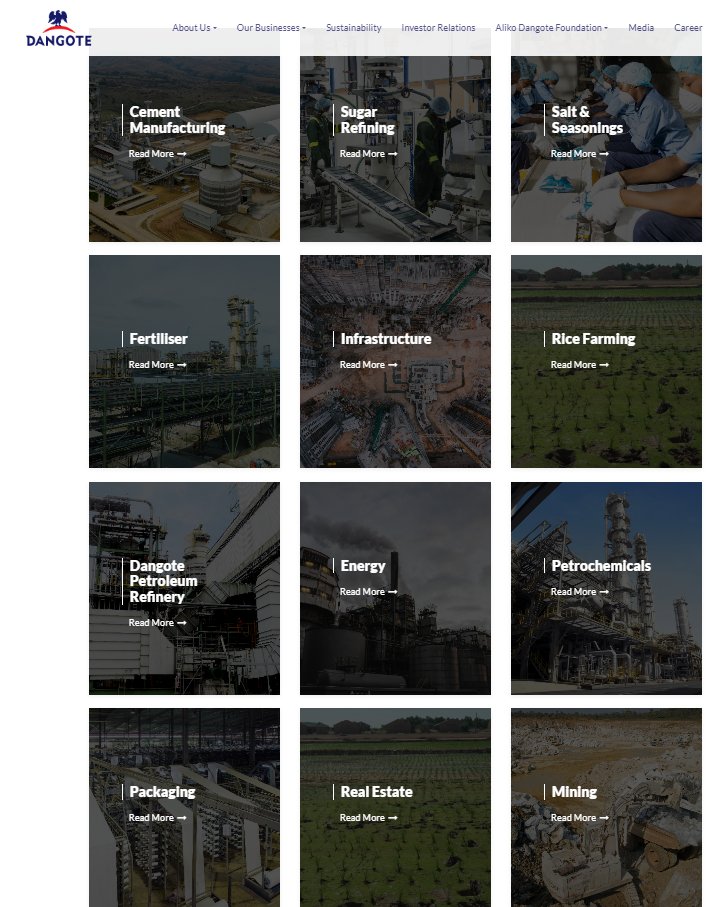
Aliko Dangote was not the richest Nigerian in 1999. Dangote was not the most connected Nigerian in 1999. I knew him as an importer of rice, sugar, and salt.
Dangote simply took the biggest risk: he borrowed, invested in manufacturing, and scaled. Scale is what sets Dangote apart. He doesn’t do small.
Dangote went from zero cement plants to become the largest cement operator in Nigeria while WAPCO, CCNN, BCC, and Eagle Cement were all watching.
The same with his refinery: he started about a decade ago when NNPC had four refineries and he had zero. Today he has the largest refinery in Africa. Now he has signaled he is going into power, steel, and logistics while the rich and liquid Nigerians are watching him.
There is no developed nation without steel, petroleum, logistics, and cement. Dangote is going to own them all. Everyone is watching him. Kudos to Dangote.
Give it 10 years, Dangote will break into the top ten globally wealthy persons. I see his strategy as replicating what he has done in Nigeria across Africa. He is building cement, fertilizer, steel, and power plants across the continent. Banks like JP Morgan and Gulf banks are coming to Nigeria to service Dangote.
Did you not see the Emir of Qatar introducing Dangote to Trump? Think about it: a foreign president using Dangote as a flex to Trump.
If I were a state governor, I would call Dangote, offer zero state and local taxes for 25 years plus free land if he locates heavy industries in my state. (I would even rename a Local Government after Dangote LGA.)
I can’t even imagine Nigeria with $80 crude oil without a functional refinery or fertilizer plant. Nigeria needs just two more Dangote's and we are good.
If you think I am praising Dangote, you are wrong. You should not think.
February 12, 2026 — MEMAN Competency Centre Energy Bulletin: Import parity & gantry PMS, AGO and ATK prices, international crude indicators, and critical market headlines.
#CompetencyCentreBulletin#MEMAN
BREAKING NEWS 🗞️ 🚨 🚨 🚨
STRATEGIC COMMUNICATION IN 2026
KNOW YOUR STATE MONTHLY/ YEARLY ALLOCATION FROM TINUBU LED FEDERAL GOVERNMENT.
PRESIDENT TINUBU @officialABAT@Tinubunewmedia HAS PAID BOTH STATE AND LGA ALLOCATIONS
Websites below 👇 are to check and verify your Govs and LGA Chairmen monthly allocation
1. https://t.co/V9N5GR6QB9
2. https://t.co/wKhgzb6Kuf
3. https://t.co/9xgbAGteVZ
FULL LIST: Top 10 states with highest FAAC allocation in 2025
1. Delta led the 2025 FAAC table with ₦649.67 billion in net allocation. Its dominance was driven largely by oil receipts, particularly the 13 per cent derivation fund. Combined with statutory allocation and VAT inflows, the oil advantage cemented Delta’s position at the top.
2. Rivers ranked second with ₦526.30 billion, reflecting a similar structural edge. As a major oil-producing state with a vibrant commercial base, Rivers benefited from derivation revenue alongside strong VAT performance generated by high transaction volumes.
3. Lagos emerged as the highest-ranking non-oil state, posting ₦514.56 billion. Nigeria’s commercial nerve centre leveraged its vast consumption market and electronic payment ecosystem to record robust VAT and Electronic Money Transfer Levy (EMTL) inflows.
4. Akwa Ibom secured ₦494.23 billion, reinforcing its status among the top tier. Oil production and derivation earnings, backed by statutory and VAT components, sustained the state’s strong FAAC standing.
5. Bayelsa received ₦488.08 billion, underscoring the weight of derivation revenue in the FAAC formula. Despite a relatively smaller population and market size, oil-linked inflows lifted the state above several larger counterparts.
6. Kano led the northern non-oil states with ₦270.86 billion. Its large population and commercial scale supported solid VAT receipts, strengthening its position among the top allocations.
7. Oyo recorded ₦213.75 billion, reflecting the impact of population size, trade and consumer activity. Though without derivation benefits, the state’s economic base bolstered its share of statutory and VAT distributions.
8. Anambra posted ₦199.88 billion, driven by sustained private-sector activity and transaction flows. While lacking oil derivation revenue, its commercial strength kept it competitive in the FAAC rankings.
9. Borno received ₦198.75 billion, highlighting the broader factors embedded in the allocation formula. Beyond oil output and commerce, fiscal considerations and statutory criteria shaped its final share.
10. Ondo closed the top 10 with ₦198.42 billion. As an oil-producing state, derivation revenue enhanced its allocation, enabling it to compete favourably despite having a smaller consumer market than some peers.
If your state is not developed after collecting 100s of billions in yearly federal allocation, leave Tinubu and go hold your governor accountable.
Moving forward, every month ℹ shall be posting 774 LGA Monthly Allocations.
HMINISTER OF INFORMATION @HMMohammedIdris
Good Morning ☀️
@NGRPresident@PremiumTimesng@NigeriaGov@SundayDareSD@woye1@DrCOmole@segalink Takenote @LanreIssaOnilu@NOA_Nigeria@STinubu@CityBoyMedia@AdaAnambra2023
🚨 Pep Guardiola hits back at Jim Ratcliffe: "We treat immigrants or people that come from other countries like they are the ones causing problems for our country. It's a big problem because the fact I am Catalan and you are British? What influence did we have on where we were born?
"Everyone wants to have a better life, everyone wants to have a better future for themselves and their families. Sometimes the opportunities are where you are born and sometimes it is in the place where you go.
"The colour of your skin or the place where you were born don't make a difference.
"Most people run away from their countries for the problems that are in their country, not because they want to leave.
"The more we embrace other cultures, truly embrace it, then we will have a better society - I do not have any doubts about that."
In 2021, 39-year-old Babatunde Afolabi launched what is known as Green Africa, a low-cost airline operating in our skies.
Babatunde is now 43.
The airline did not have its own aircraft assets but relied on a wet lease arrangement.
A wet lease arrangement is where an airline in Nigeria leases an aircraft from abroad for an agreed monthly fee.
The airline abroad leasing the aircraft sends their aircraft with their crew, including pilot and air hostess.
Wet lease arrangements are very common in the Nigerian aviation ecosystem.
This is why it is common to see an oyibo pilot and oyibo air hostess in a local flight.
What it means is that the particular aircraft, even though passengers think it belongs to a local airline, was wet leased from a foreign airline.
The lessor retains operational control of the aircraft, meaning they are responsible for the flight, safety, and compliance with aviation regulations.
This is different from dry lease arrangements where the lessors send only their aircraft without the crew.
So, Babatunde Afolabi started his airline business with three aircraft leased from a lessor.
Life was good, and business was moving for the low-budget airline until last year when the owner of the three airlines came for their properties.
On March 31, 2025, lessor ACIA Aero Leasing repossessed three ATR 72-600 aircraft operated by Green Africa for their commercial operations.
Consequently, the airline announced a temporary suspension of flights, extending beyond the Eid-al-Fitr holidays.
The repossession was fast and furious, which caught Green Africa napping.
This development forced the airline to acquire its first owned airline asset, ATR 72-500, serial number 852, registered as 5N-GAB, so as to continue their business with partial support from Access Bank that extended a loan to the airline to acquire their first owned aircraft assets.
I just read online that the budget-friendly airline has acquired its second aircraft( picture attached below), doubling its fleet with an ATR72-600 that arrived today, again with support from Access Bank.
Managing Director and Chief Executive Officer of Access Bank, Roosevelt Ogbonna, said the partnership reflects confidence in enterprises transforming critical sectors.
He noted that following the strong performance of Green Africa’s first owned aircraft, Access Bank was proud to extend support for the second acquisition. According to him, the transaction would enhance capacity and accelerate sustainable growth.
As I was reading the story, something struck me:
Babatunde was not fully ready in 2021; he did not have the money nor the social capital to raise a loan to buy a new aircraft.
What did he do?
He found a way around it by starting Green Africa operation with a wet lease arrangement, which made Access Bank take notice.
I can bet that if he had waited to be ready before starting Green Africa last year, Access Bank would not have taken the risk to finance not one but two aircraft for the young airline.
People underestimate the power of just starting.
People plan too much.
If you keep planning, you’ll plan forever.
Just start.
Just like Green Africa. You don’t have to have it all planned; you don’t have to have it all figured out.
Just start.
You can figure things out along the way, and this for me is the biggest lesson from this story.
By Chukwudi Iwuchukwu
Another day to remind everyone:
Be kind. But do not be nice.
Pls don’t let anyone gaslight you.
And don’t give in to people who will not give you the same grace they want now.
Be kind. But do NOT be nice.
Happy Sunday to everyone.