Chris Hohn is buying rocks and everyone is too busy chasing AI to notice.
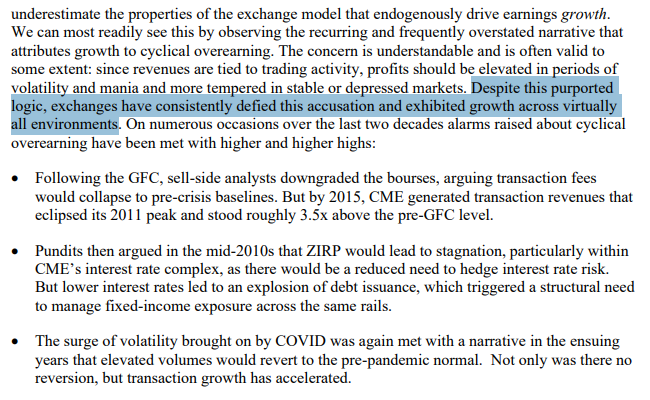
TCI's latest 13F, filed in August: a brand new $758M position in $MLM and $722M in $VMC. Fresh money, not adds.
The pricing power is structural. Local monopolies on permitted reserves, freight economics that wall off imports, and a product every road, data center, LNG terminal and power project needs. Vulcan printed mix adjusted pricing up 5% last quarter with aggregates cash gross profit per ton over $12. Martin Marietta is running plus 4% with midyear increases still flowing.
The margin story is a catch up on delay. Two years of diesel and energy inflation masked the compounding underneath. VMC posted $654M of EBITDA while eating a $40M fuel headwind. Price locks in every January and again at midyear while costs reset daily. When the fuel drag fades, the margin expansion shows up late. That lag is the setup.
$MLM's Lhoist deal is the sleeper. $13.5B for the national lime leader: 2 billion tons of reserves, over 200 years of reserve life, and industrial demand from steel, environmental and chemical markets that doesn't cycle with housing. Accretive to earnings and margins in year one. Lime prices like aggregates, but almost nobody models it yet.
The residential bear case is the gift. The affordability trough has private volumes dead, which keeps these cheap, while both footprints sit squarely on data center, power and LNG corridors. A housing reset is upside, not risk.
Hohn doesn't trade stories. He owns franchises for a decade at a time. And right now he's buying rocks.
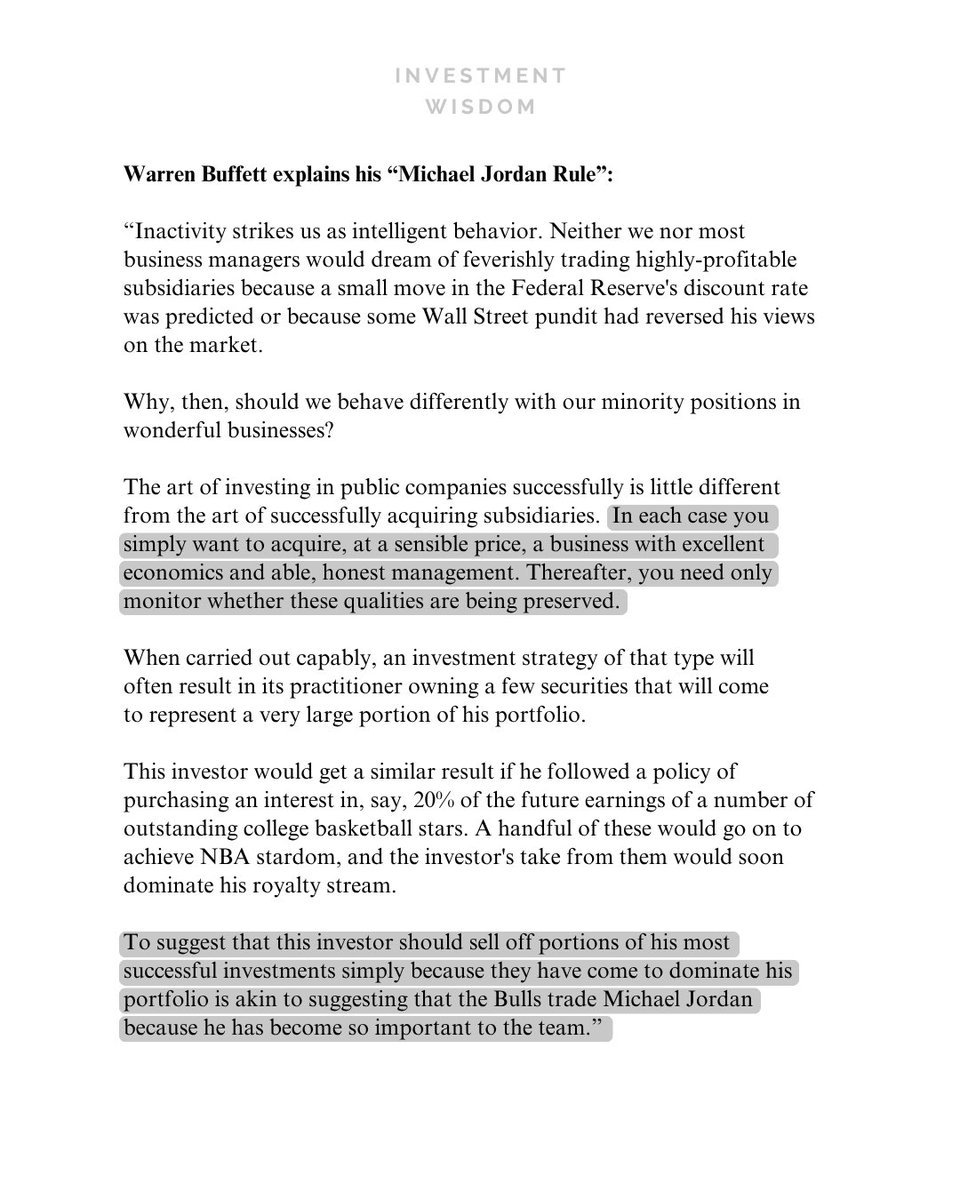
Warren Buffett earns 39% IRR in merger arb:
1981 - Arcata Corp.
It's Buffett playing the oddsmaker, psychologist and businessman all at once.
You can read it here:
This was an interesting read, the Zhipu (Zai/GLM) earnings call.
Same as with the letter they posted after the July fundraise, I enjoy the read, but understand half of it
---That's ok, I don't care about the details, these will change in 3 months
---I'm just trying to get a sense of acceleration/change in compute, monetization, etc as it has implications for Chinese hardware and hyperscalers, where I have money
Three interesting things to me:
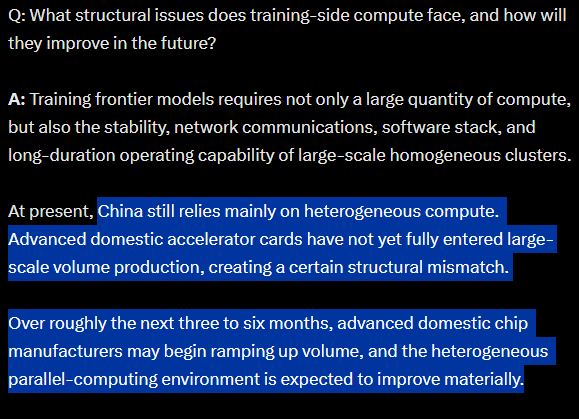
1-they are still waiting for high end Chinese chips for training, coming 2H26
---This commentary ties with what Alibaba and Tencent say
---And to me it is bullish SMIC, which has been trading sideways, but saw an uptick in revenue this quarter. No one else makes this stuff
---Now, will SMIC make money is a different question. But since when is profitability important for investors. The book says just buy accelerating top lines.
2-the business model has moved from services (for on prem deployment), to then api/tokens (for coding and subscription plans), to now Tasks (get this done for me)
---Interesting because this is similar to what Eddie Wu said in the Alibaba call
---Both say money in AI will not be made selling compute/tokens but selling the product/solution/task
---Not good for hyperscalers without models as they become the infra where the cool stuff runs on top? (like chips vs msft in the 90s, or telecoms vs apple in 2010s)
---Or maybe the China business model ends up different than in the US, same as China jumped straight to mobile (since China doesn't have SaaS today)
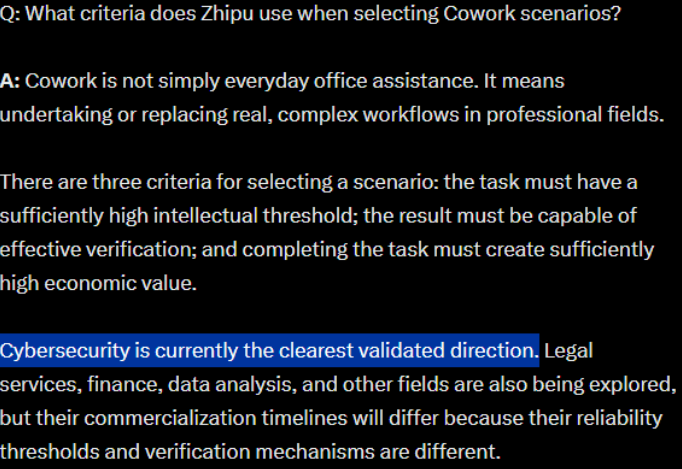
3-Funny one: for this "task" thing, their biggest use case at the moment is cybersecurity, help companies fix vulnerabilities
---This is funny because the Palo Altos and all cyber names are shinning today, spared from Saaspocalypse victims, as every investor thinks they are the most important software at the moment to save companies from rogue agent civilizations
---But it turns out actually Cyber could be the first software category fully disrupted by model companies😂
---short PANW? Dunno, check with a bank CTO
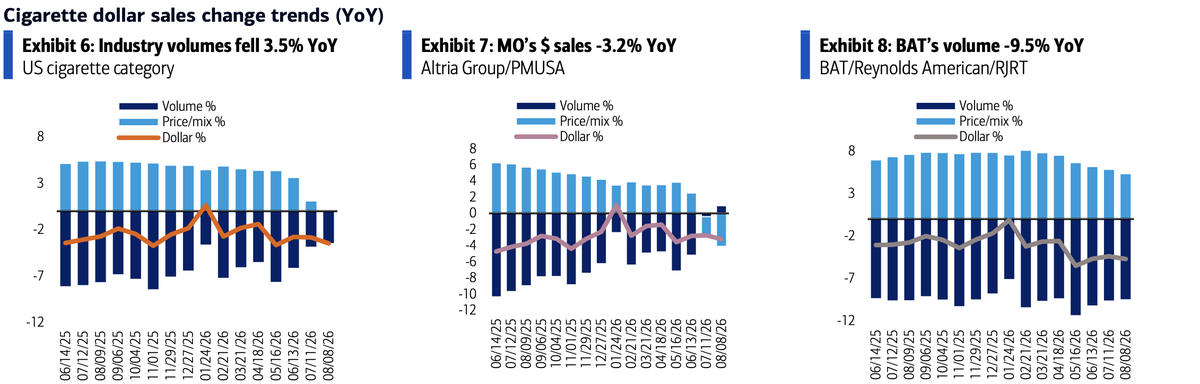
R.J. Reynolds Vapor, part of British American Tobacco $BTI , has won a key ruling in its Vuse Alto patent dispute with Altria $MO after a JUUL sublicense was found sufficient to end Reynolds’ future 5.25% royalty obligation. A 2022 jury had previously awarded Altria about $95.2 million for past infringement involving three patents.
The ruling does not overturn the earlier infringement verdict, but it could eliminate what Altria described as hundreds of millions of dollars in future royalties, showing how licensing and sublicense arrangements can materially reshape commercial liabilities long after ownership ties have changed.
#BTI #BAT #Vuse #VuseAlto #MO #Altria #JUUL #PatentLitigation #IntellectualProperty #Vape #2Firsts
https://t.co/xgj1gA87iS
@momentumasia Alibaba is not giving up. It just changed the way it is playing and moved from subsidies to building infrastructure.
https://t.co/aG4PW7YVzv
I agree with MW: Alibaba can't allow Meituan to be dominant in instant retail because instant retail cannibalises on traditional retail.
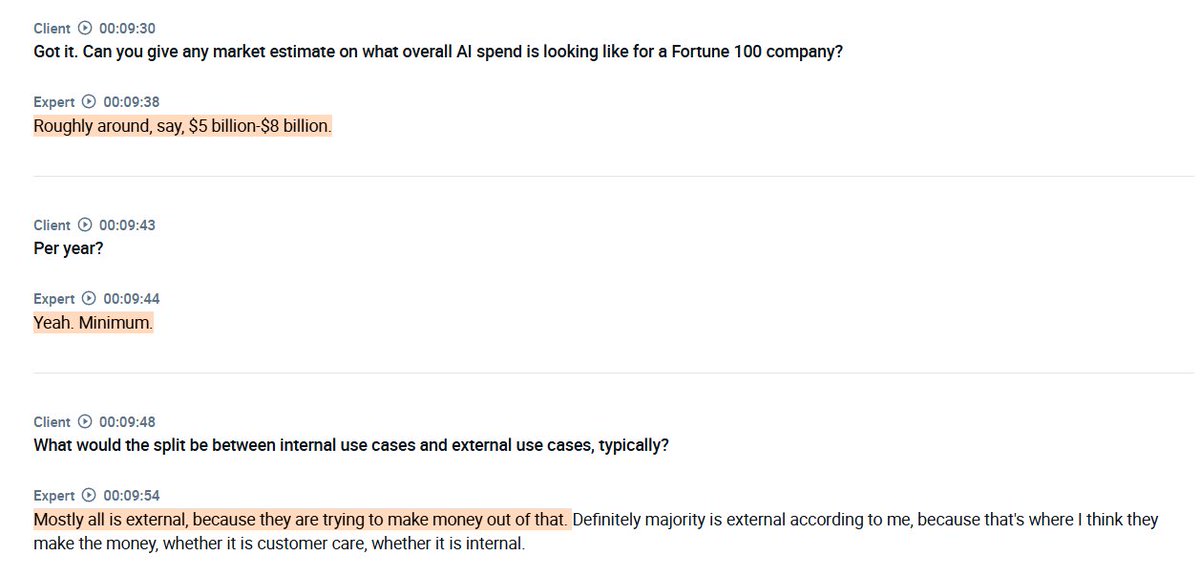
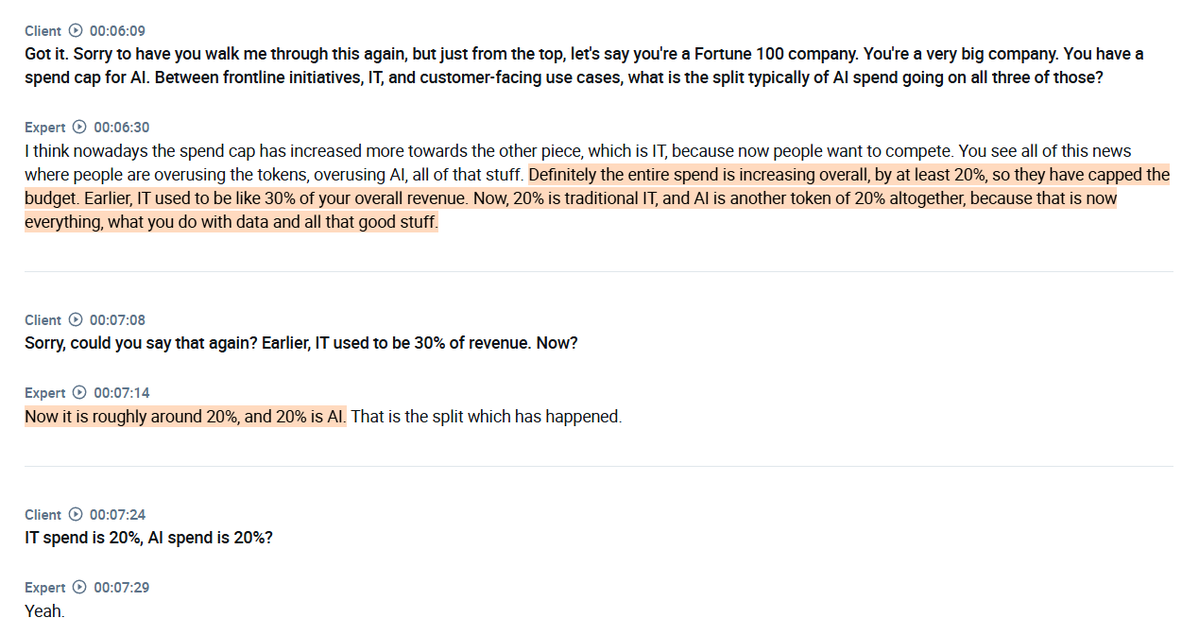
Interview with a $GOOGL employee on why enterprise AI spending is nowhere near its peak despite already growing rapidly ($MSFT):
- The expert describes a shift in how enterprise companies allocate their technology budgets, with traditional IT spend down from around 30% of overall revenue to roughly 20%, while AI now represents another 20% on top of that. Within AI spend, the expert confirms that around 60% goes to frontline and customer-facing initiatives, with the remainder split between IT and other internal uses.
- According to the expert, AI CapEx is growing at around 10-12% and now represents closer to 50% of overall technology revenue allocation, up from around 40%. The workforce side is also getting more expensive, with AI-first talent costing enterprises at least 5-7% more in salary as demand continues to outpace supply.
- The expert sees enterprise willingness to spend on AI as high across the board right now, with nobody questioning whether AI investment makes sense. Spend caps are increasing as a natural consequence of rising consumption, with the expert estimating an 8-10% increase in overall spend caps annually. For a large enterprise running around $100-150 billion in revenue, that translates to an IT budget in the range of $4-5 billion.
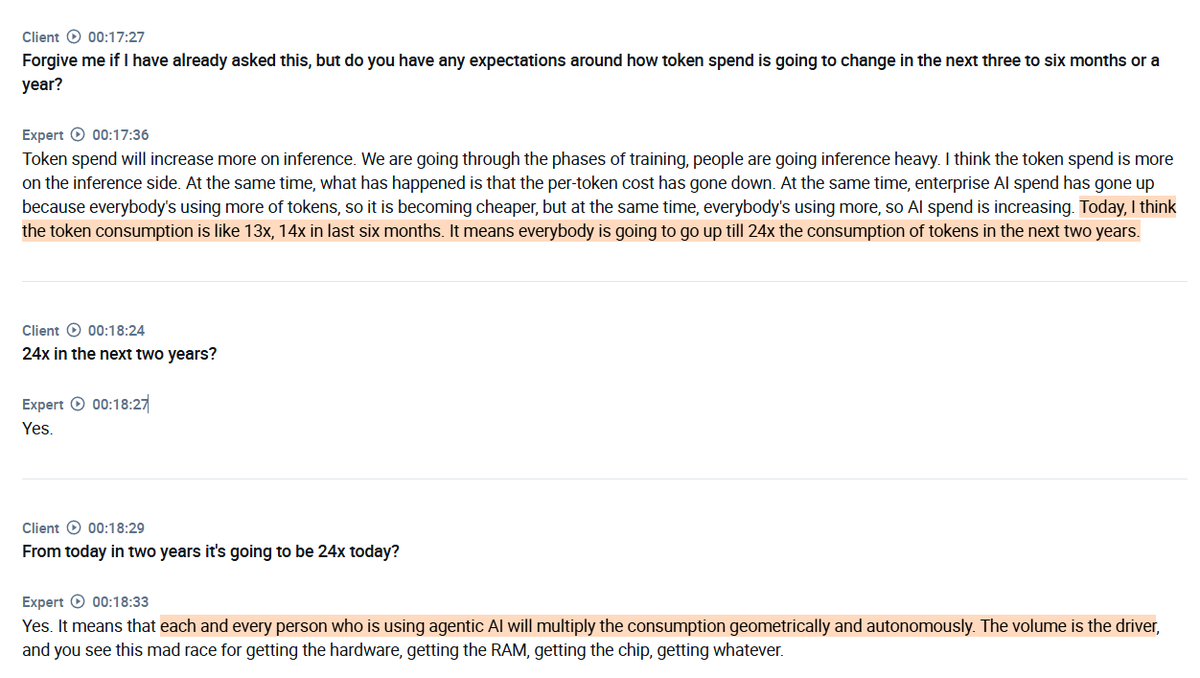
- The expert expects token spend to keep rising, driven by the shift toward inference-heavy workloads as more enterprises move past the training phase. While the per-token cost has come down, overall AI spend is going up because consumption is growing much faster than prices are falling. The expert estimates token consumption has already grown around 13-14x in the last six months and sees that reaching 24x over the next two years.
Anthropic is paying $45B over six years for 460MW of Vera Rubin compute at Nscale’s West Virginia campus.
Contract economics:
>$45B ÷ 6 years = $7.5B/year
>$7.5B ÷ 0.46GW = $16.3B/GW-year
>Nscale maps the initial 1.35GW to ~430,000 GPUs (PR):
430,000 ÷ 1,350MW = ~319 GPUs/MW
460MW × 319 = ~146,500 Anthropic GPUs
$45B ÷ (146,500 GPUs × 8,760 hours × 6 years) = $5.84 per available GPU-hour, or $6.87 at 85% utilization.
The initial phase is three buildings totaling 1.35GW of IT capacity. The first comes online in late 2027, with the others following in 2028.
Estimated capex:
>$47B GPUs (66%)
>$17.7B data centers
>$6.5B onsite power
= ~$71B total
That equals $52.6B/GW including GPUs, or $17.9B/GW for the physical infrastructure alone. Still hovering around that ~$50B capex per GW figure.
The campus is being energized by 2GW of onsite natural-gas generation plus batteries, designed to operate independently of the public grid.
this just in: Barret Zoph, who dramatically left Thinking Machines Lab to go to OpenAI, is now going to Google as a VP of research on RL/posttraining
completing the boomerang of Google --> OpenAI --> TML --> OpenAI --> Google
scoop with @MeghanBobrowsky https://t.co/1tASQhViGj
New: Google is moving its AI responsibility team out of GDM and into the global affairs org, sparking employee fears of being sidelined. The team includes researchers testing for CBRN risks and studying the impacts of chatbots
first scoop for @WSJ: https://t.co/H4cDPcnapx
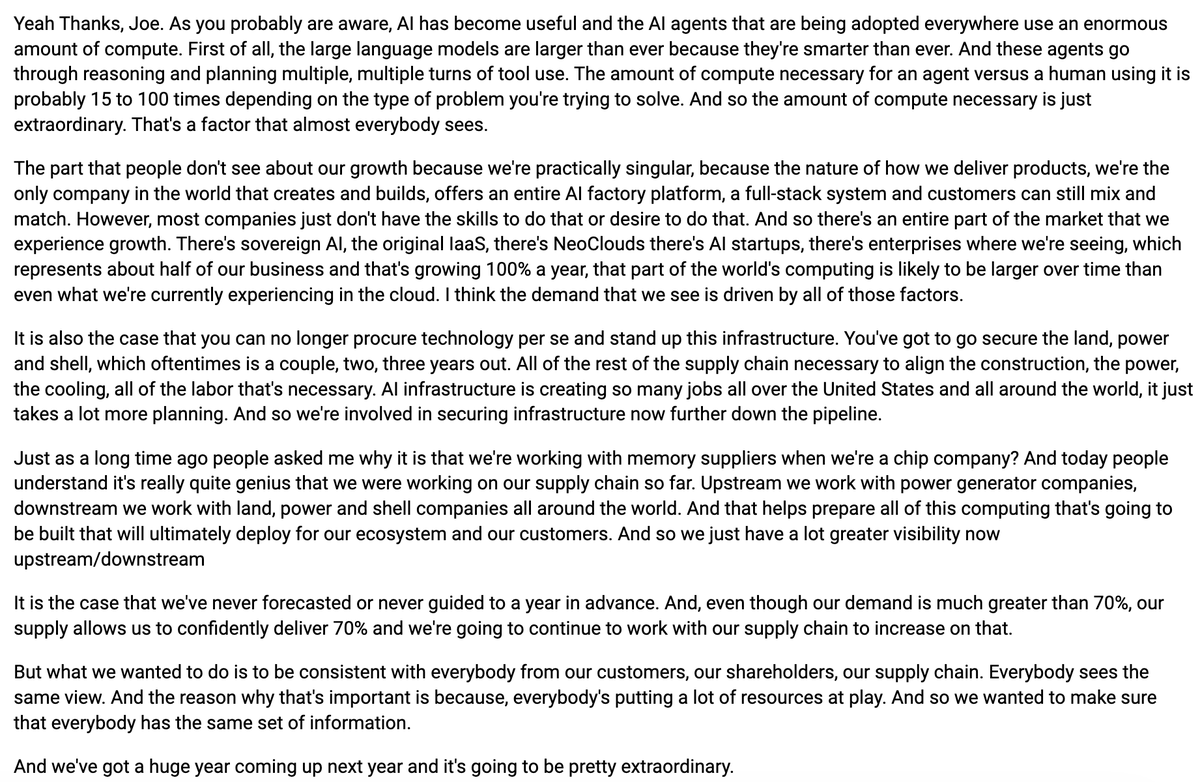
$NVDA CEO: Agentic AI requires ~15x–100x more compute than human-directed usage
“The amount of compute necessary for an agent versus a human using it is probably 15 to 100 times more, depending on the type of problem you're trying to solve. And so the amount of compute necessary is just extraordinary.”
Big Tobacco is pushing higher-potency nicotine pouches in the U.S, reports @FT
https://t.co/BekCmDGz5P
While standard offerings were 3mg–6mg, sales of stronger variants (8mg–12mg+) are surging - now making up 17% of total category volume
$NVDA CEO Jensen Huang says AI agents use roughly 15 to 100 times more compute than a human using the same tools, depending on the problem. Their broader business beyond hyperscale cloud, including sovereign AI, NeoClouds, AI startups, and enterprises, represents about half of their business and is growing 100% a year, which he expects to eventually be larger than what they currently see in cloud. Despite demand being much greater than 70%, supply allows them to confidently deliver 70% growth, which they are guiding to for the first time in order to give customers, shareholders, and the supply chain a consistent view.
"As you probably are aware, AI has become useful and the AI agents that are being adopted everywhere use an enormous amount of compute. First of all, the large language models are larger than ever because they're smarter than ever. And these agents go through reasoning and planning multiple, multiple turns of tool use. The amount of compute necessary for an agent versus a human using it is probably 15 to 100 times depending on the type of problem you're trying to solve. And so the amount of compute necessary is just extraordinary. That's a factor that almost everybody sees.
The part that people don't see about our growth because we're practically singular, because the nature of how we deliver products, we're the only company in the world that creates and builds, offers an entire AI factory platform, a full-stack system and customers can still mix and match. However, most companies just don't have the skills to do that or desire to do that. And so there's an entire part of the market that we experience growth. There's sovereign AI, the original IaaS, there's NeoClouds there's AI startups, there's enterprises where we're seeing, which represents about half of our business and that's growing 100% a year, that part of the world's computing is likely to be larger over time than even what we're currently experiencing in the cloud. I think the demand that we see is driven by all of those factors.
It is also the case that you can no longer procure technology per se and stand up this infrastructure. You've got to go secure the land, power and shell, which oftentimes is a couple, two, three years out. All of the rest of the supply chain necessary to align the construction, the power, the cooling, all of the labor that's necessary. AI infrastructure is creating so many jobs all over the United States and all around the world, it just takes a lot more planning. And so we're involved in securing infrastructure now further down the pipeline.
Just as a long time ago people asked me why it is that we're working with memory suppliers when we're a chip company? And today people understand it's really quite genius that we were working on our supply chain so far. Upstream we work with power generator companies, downstream we work with land, power and shell companies all around the world. And that helps prepare all of this computing that's going to be built that will ultimately deploy for our ecosystem and our customers. And so we just have a lot greater visibility now upstream/downstream
It is the case that we've never forecasted or never guided to a year in advance. And, even though our demand is much greater than 70%, our supply allows us to confidently deliver 70% and we're going to continue to work with our supply chain to increase on that.
But what we wanted to do is to be consistent with everybody from our customers, our shareholders, our supply chain. Everybody sees the same view. And the reason why that's important is because, everybody's putting a lot of resources at play. And so we wanted to make sure that everybody has the same set of information.
And we've got a huge year coming up next year and it's going to be pretty extraordinary."
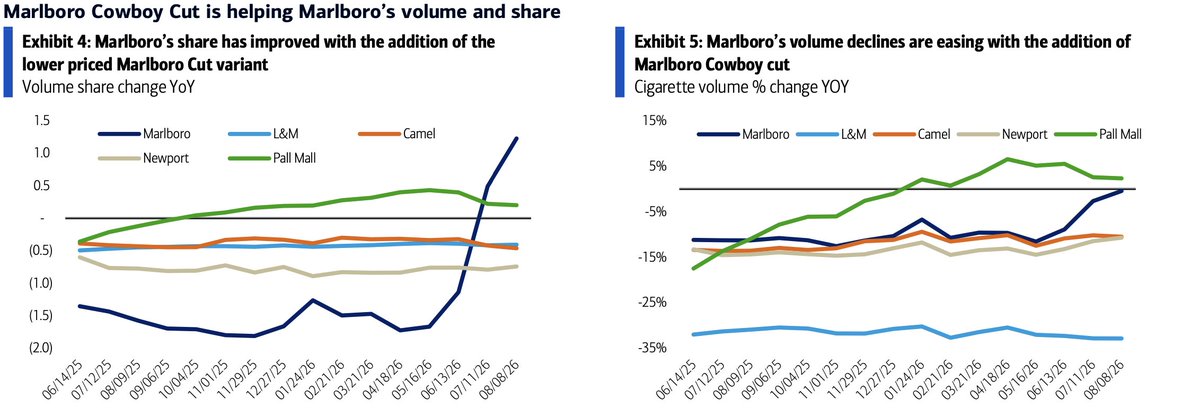
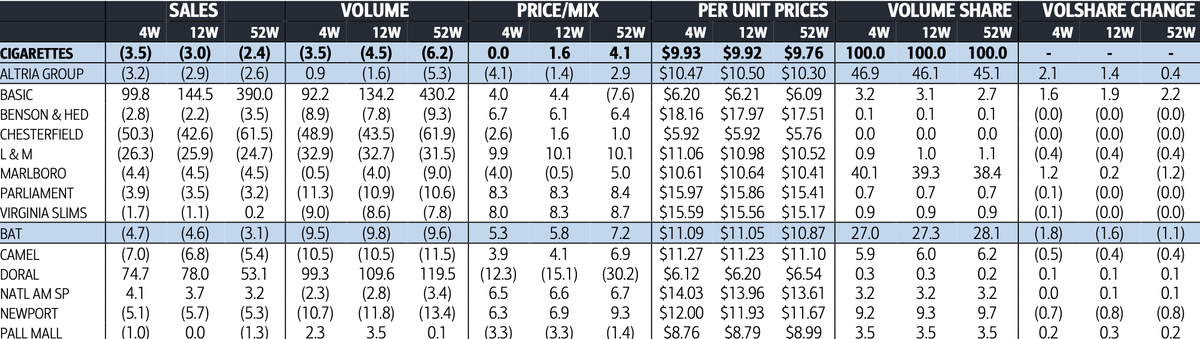
While I'm always rough on the $MO management, I gotta say the cowboy cut move was excellent.
$BTI $BATS has to improve their Newport strategy, perhaps some of you guys know how loyal Newport customers are, but I feel like they fast price increase is a double edged sword.
*graphic is missing Lucky Strike