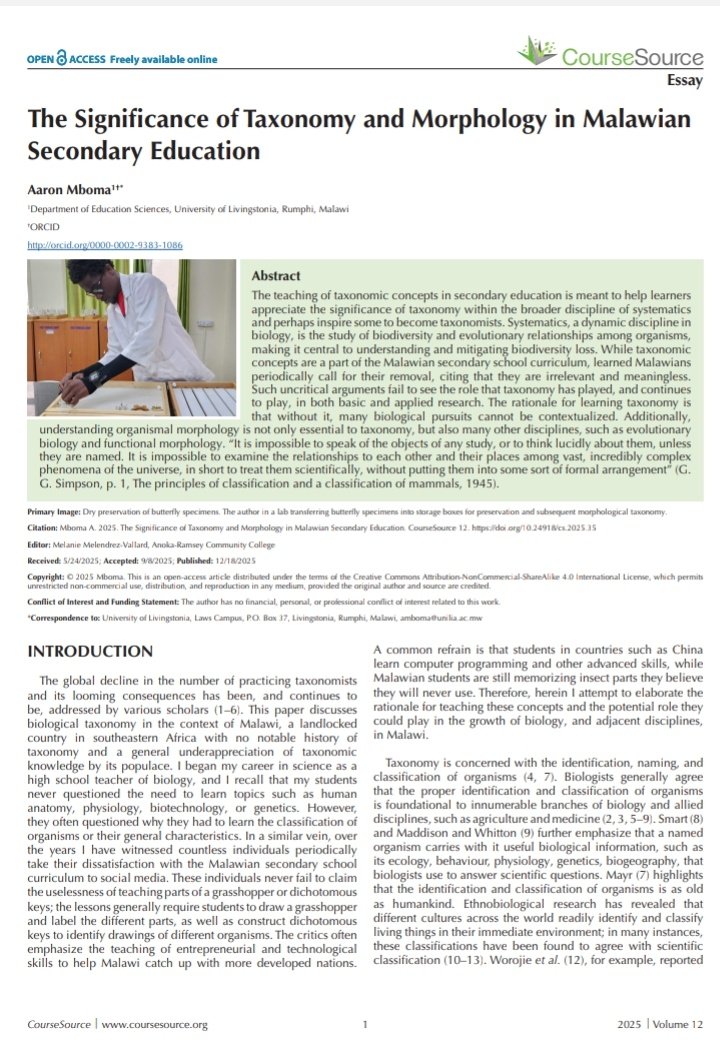
For years, I’ve watched Malawian critics dismiss the study of dichotomous keys and insect morphology as 'useless.' My formal rebuttal, making a case for the enduring utility of taxonomy in biological research, has officially been published (open access).
https://t.co/5FJq4gQaAL
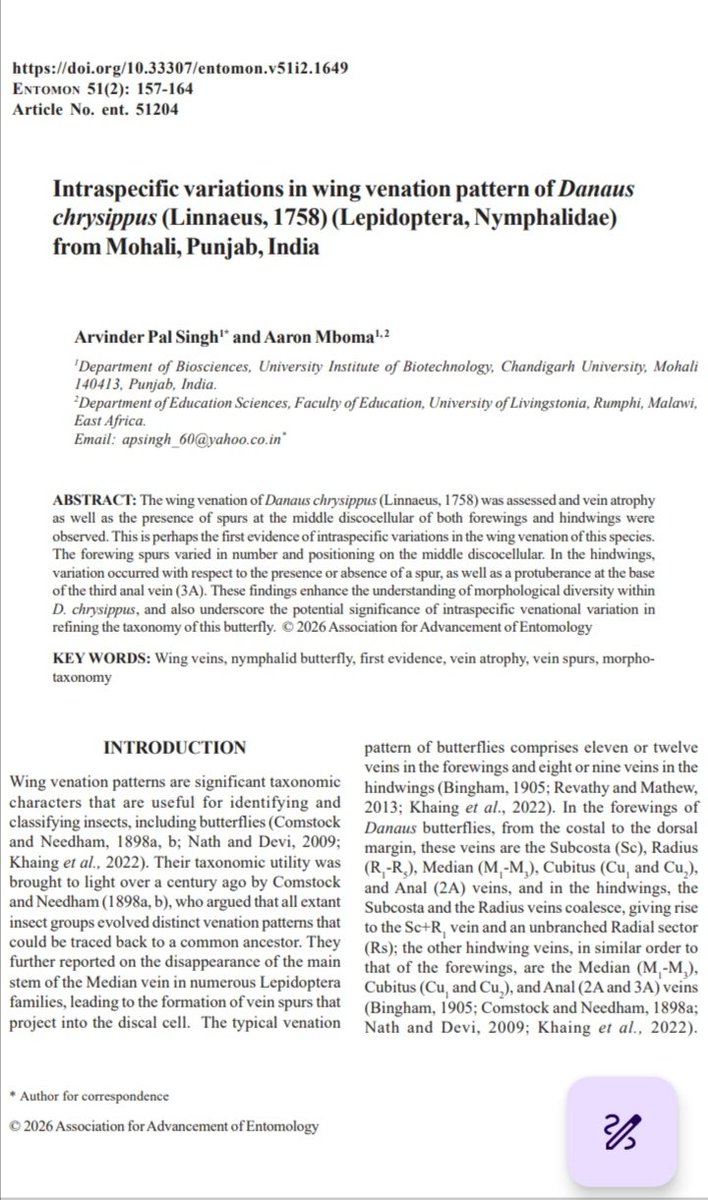
I'm happy to share our latest publication which records the first evidence of intraspecific variations in the venation of D. chrysippus. These variations are of taxonomic importance vis-a-vis the genus.
https://t.co/UlXhU1E9Rt
@stanislavfort@writerofscratch Yes, but would you cite on the origin without so much as having a cursory look at a paragraph or two? Maybe it's my mild OCD, but I just can't cite Darwin on account that he talks about natural selection without me actually verifying.
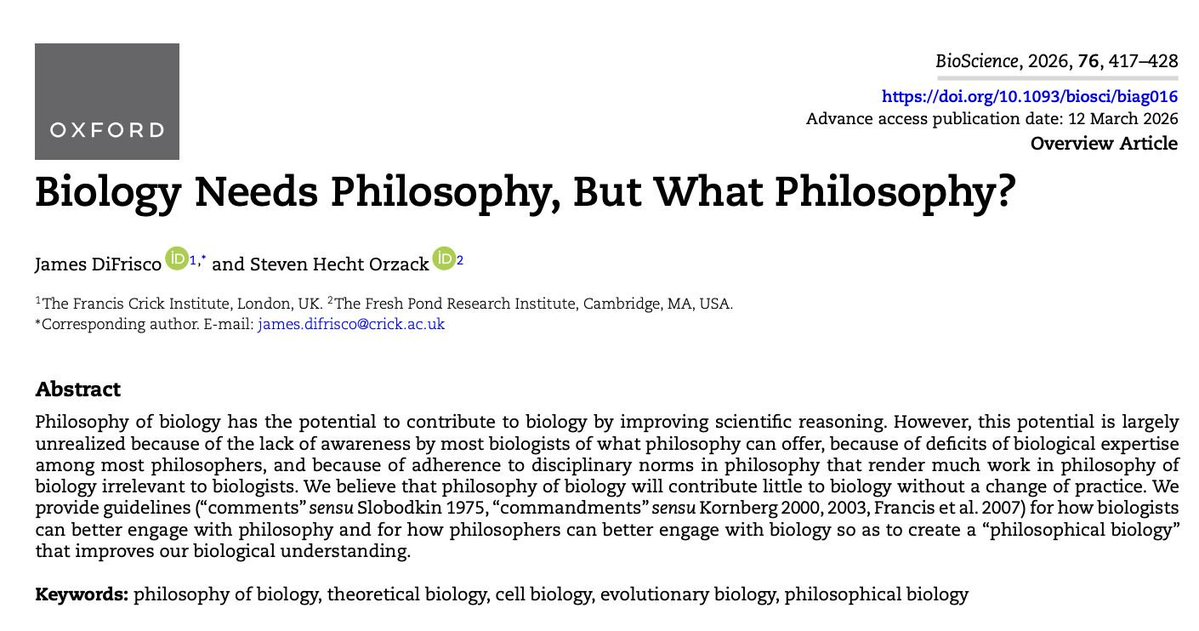
This was a long but valuable read. While some are familiar points, it offers many interesting insights. Take some time and read.
"Philosophy of biology has the potential to contribute to biology by improving scientific reasoning. However, this potential is largely unrealized because of most biologists' lack of awareness of what philosophy can offer, because of deficits in biological expertise among most philosophers, and because of adherence to disciplinary norms in philosophy that render much work in philosophy of biology irrelevant to biologists. We believe that the philosophy of biology will contribute little to biology without a change of practice. We provide guidelines on how biologists can better engage with philosophy and how philosophers can better engage with biology to create a “philosophical biology” that improves our biological understanding."
https://t.co/h5Nu2SNFlz
I read everything I cite. I do not cite something without reading enough to know that, gun to my head, I could point to where I'm getting the claim I'm citing that paper for. "Lots of people commit academic misconduct" is not the great argument you think it is.
@zdeborova@jimduey@eiszett You're obviously more experienced than I am in every regard, but Gould had it right when he argued against mindless copying without verifying the actual info. See his take on how such practice perpetuated the wrong narrative about horse evolution, among others.
Things that are not academic misconduct:
- Typos
- Editing markup
- Broken links
Things that are academic misconduct:
- Fabricated data
- Fabricated references
- Plagiarism
Thank you for your attention to this matter.
Guys, there is a very big difference between citing a real paper unnecessarily or for the wrong reason, and completely making up a detailed, convincing-looking reference to a paper that does not exist. Two completely separate things. One of them is clear academic misconduct.
It’s strange to live in a world where people think every scientist, researcher, or doctor is a shill - but an anonymous X account is telling the truth.
Water is a chemical. Salt is a chemical. Vitamin C is a chemical.
The question is not:
“Is it a chemical?”
The question is:
“At what dose is it harmful?”
That’s toxicology. First-year science.