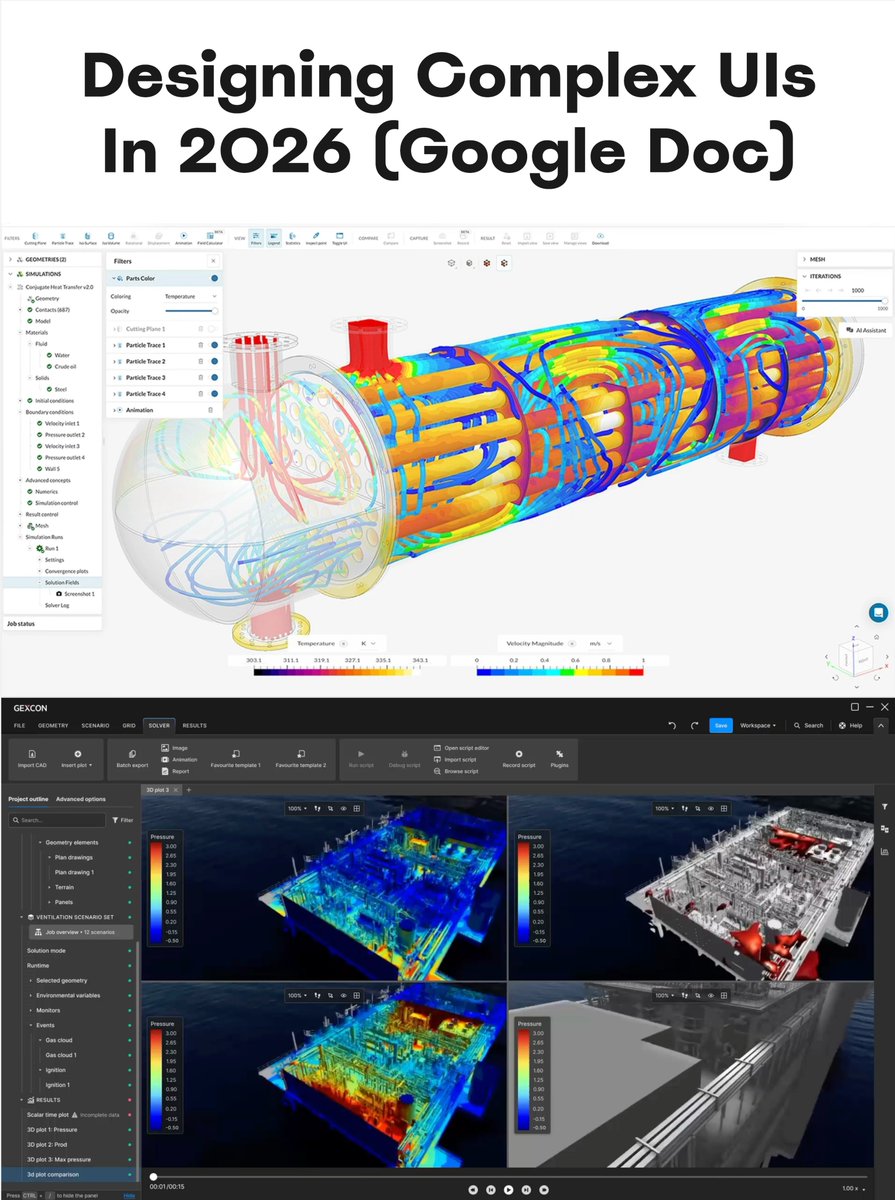
🌻 Designing For Complex UIs In 2026, a free 1.5h-deep dive into enterprise design patterns and data-heavy applications — with all video recordings, slides and examples in one single place. No strings attached!
Google Doc: https://t.co/VbhTCv4GEL
I hope you find it useful.
The biggest opportunities for AI startups today
We surveyed my readers about how they're using AI today, and more importantly, how they want to be using AI.
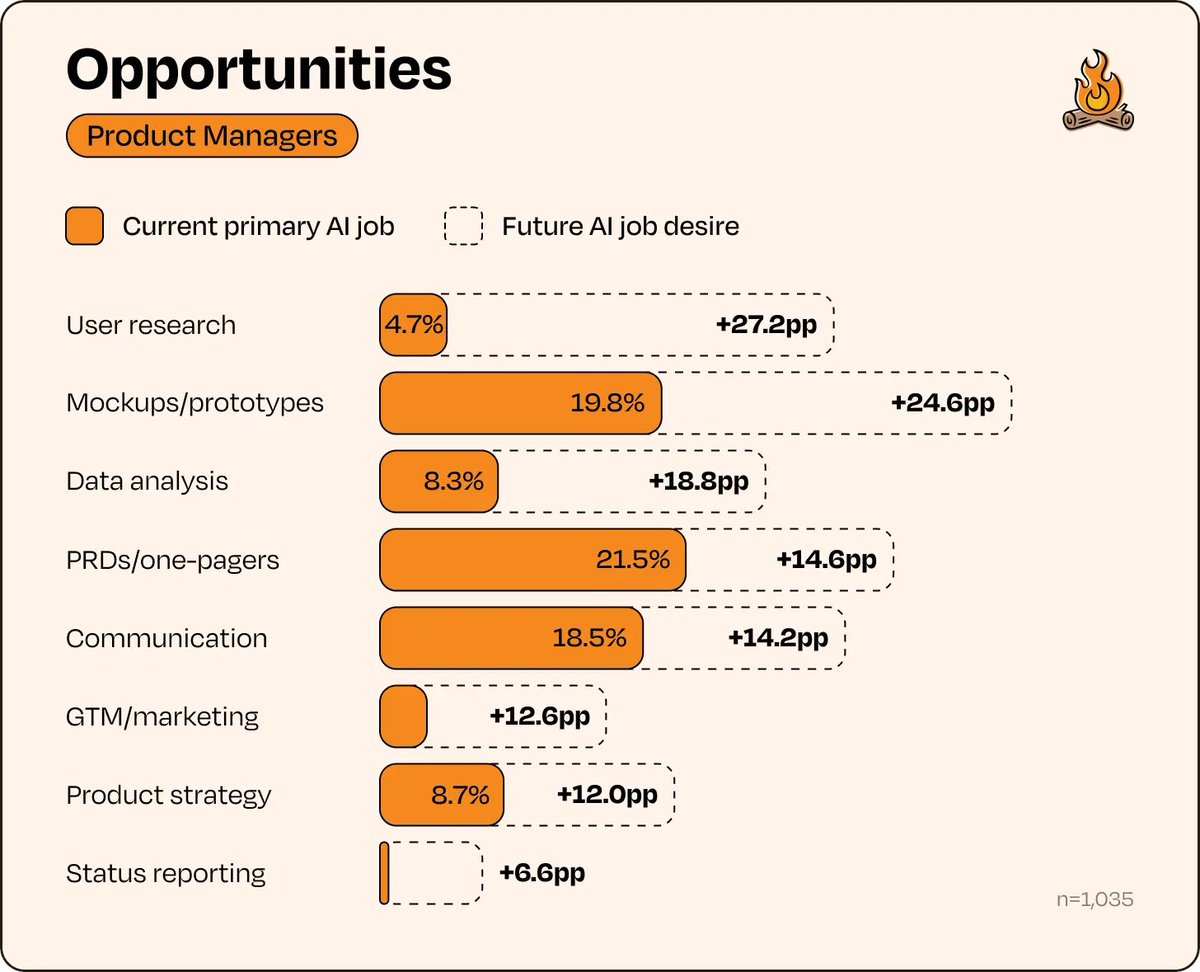
For PMs, the biggest opportunity is research. User research shows the largest demand gap of any task. Only 4.7% say it’s their primary AI use case today, but nearly a third want it to be. PMs have figured out how to use AI for output tasks like writing PRDs and drafting communications, but they’re hungry to apply it upstream, to the messy work of understanding what to build.
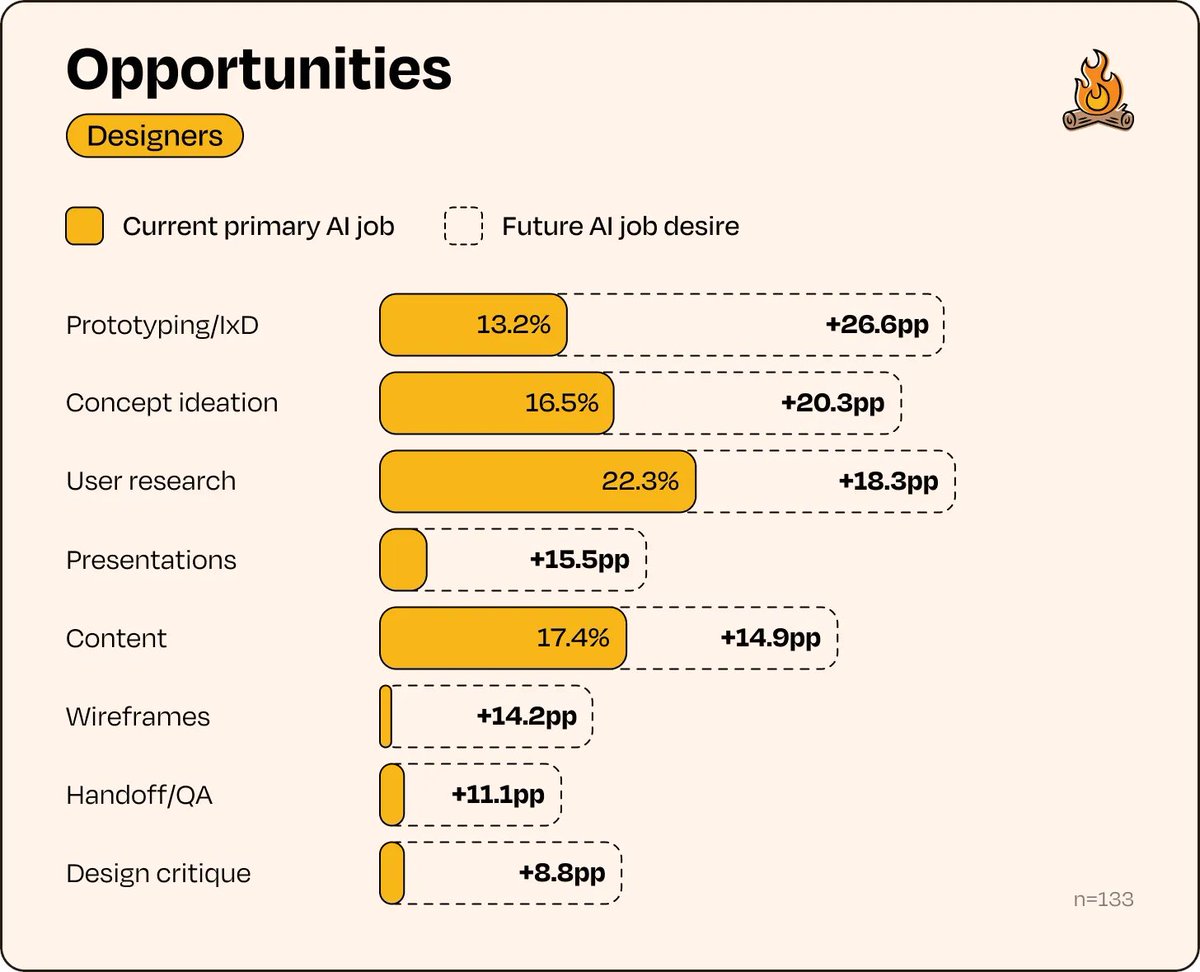
Prototyping is a breakout category across functions, both today and in the future. For PMs, “creating mockups/prototypes” jumps from 19.8% (currently using) to 44.4% (want to use next), a +24.6pp swing that makes it the single most-wanted future use case.
For designers, prototyping and interaction design show similar momentum (+27.8pp). This tracks with the rise of tools like Lovable, v0, Replit, and Figma Make.
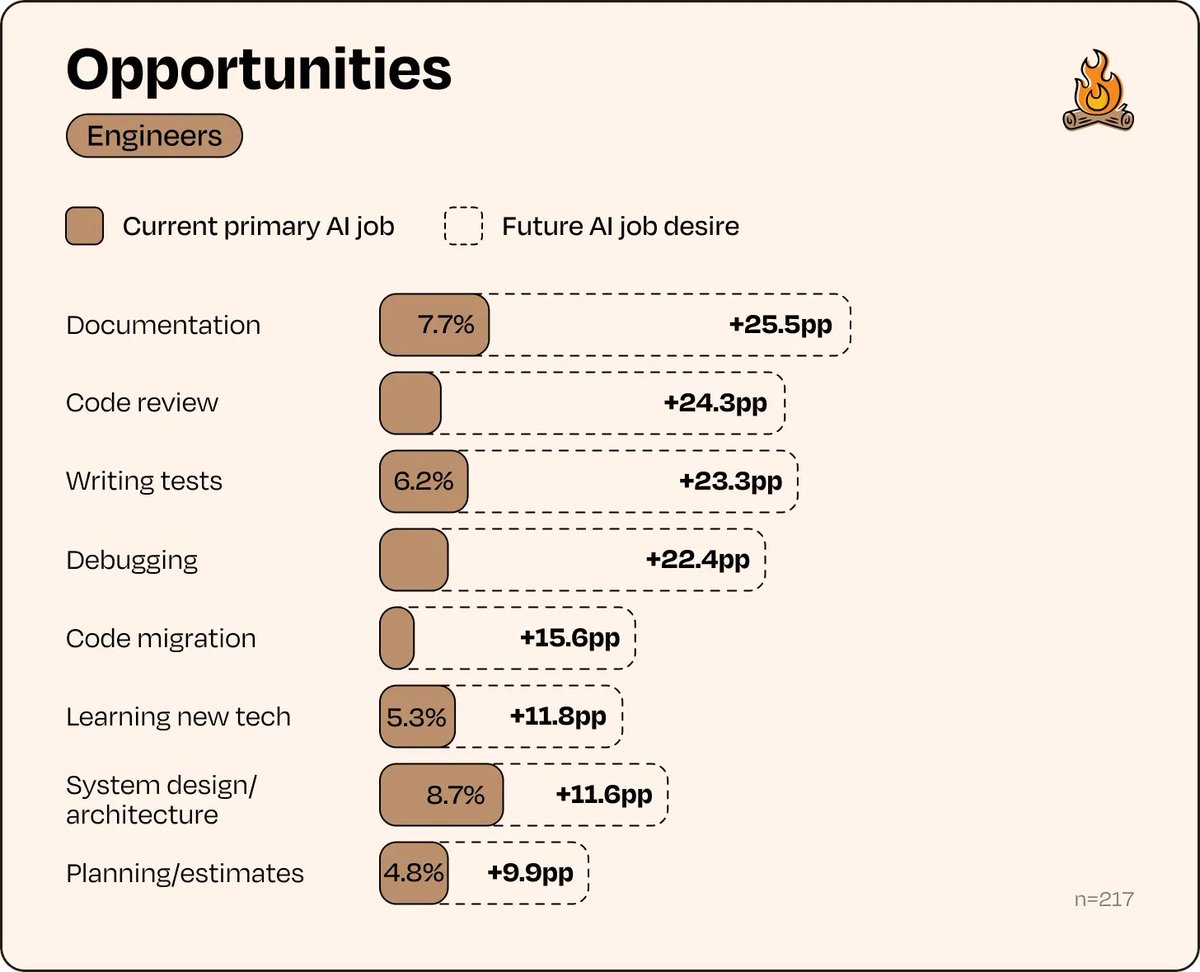
Engineers are shifting their use of AI to handle work after writing the code. Writing code is by far their most popular use case (51% current), but it has a demand gap of only +5.6pp. However, documentation (+25.8pp), code review (+24.5pp), and writing tests (+23.5pp) all show massive opportunities for growth in engineering AI tooling.
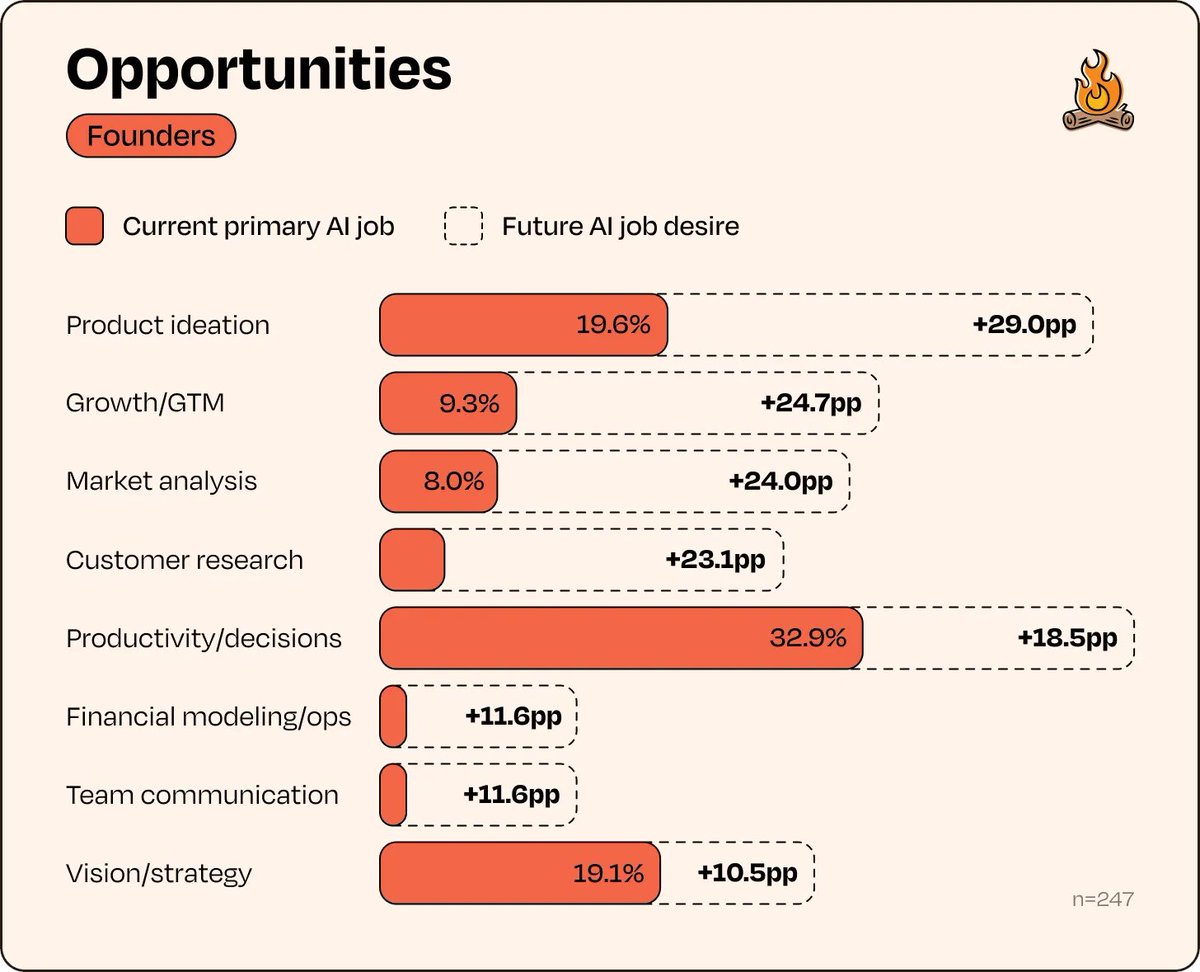
Founders are doubling down on AI as a thinking partner. Product ideation shows massive demand, jumping from 19.6% (currently using) to 48.6% (want to use next), a +29.0pp gap. Growth strategy and GTM planning (+24.7pp) and market analysis (+24.0pp) follow close behind.
Founders already use AI heavily for personal productivity (32.9% currently), but they want to move upstream. They’re looking for pressure-test ideas, explore markets, and think through go-to-market. AI as a co-founder, not just an assistant.
Full report by @noamseg: https://t.co/2ra234FE8e
Managers need help
According to an in-depth survey of my 1M+ newsletter subscribers (possibly the largest-ever sentiment survey of tech workers, led by the great @noamseg), fewer than 1 in 3 tech workers (26.6%) rate their managers as highly effective, while more than 4 in 10 (42.3%) rate their managers as ineffective.
Manager quality virtually all worker sentiment dimensions:
- People with great managers are 48% more engaged than those with poor managers.
- People with great managers also feel 63% (!) more belonging, 31% less burnout, and 62% (!!!) more job enjoyment compared to those with ineffective managers.
- Workers with ineffective leadership are 4.3 times as likely to be at risk of leaving (72.6% vs. 16.9%).
- Workers with extremely effective leadership are 8.2 times as likely to be committed to their role (61.6% vs. 7.5%).
- The most dramatic difference is in workers “actively looking” for new opportunities, who are 5 times as likely to rate their manager poorly.
Leadership quality may be the single most important lever for retention. It’s tied to substantial increases in engagement, belonging, and enjoyment, and notable decreases in burnout.
Interestingly, remote leadership was rated slightly more effective than in-office leadership, challenging assumptions about remote management challenges.
Leadership effectiveness ratings gradually decline as company size increases, with small companies showing modestly better leadership perception than large enterprises.
People in product and design roles have the most negative leadership perceptions.
The leadership effectiveness gap represents a major opportunity. With only 26.6% of workers rating their manager as highly effective, improving leadership quality represents one of the highest-leverage investments organizations can make.
Much more data here: https://t.co/wemnW7Gbnw
What to do?
1. Invest in leadership development
2. Check out these suggested Lennybot prompts to help you become a better manager: https://t.co/wNVcGN98Ig
3. Check out this recent post on helping your managers of managers thrive: https://t.co/U1lBytpbnG
on not changing for the sake of change:
the best design doesn't announce itself. it just works, quietly doing what it needs to do without asking for applause.
when we redesign something, the question isn't "how can we make this look different?" it's "how can we make this genuinely better?" better means the person using it gets to their goal faster, with less friction, with more delight in the small moments.
UI should disappear. when someone is writing, they shouldn't think about the text editor. when someone is paying for coffee, they shouldn't think about the payment flow. the interface becomes invisible when it's doing its job right.
constraints are not limitations—they're the foundation of good design. the 140 character limit made twitter what it was. the grid made swiss design timeless. the rectangle made the iphone possible.
subtlety is harder than flash. it takes restraint to not add that extra animation, that additional color, that one more feature. but restraint is what separates craft from decoration.
too many designers optimize for screenshots instead of experiences. they chase the latest trend instead of understanding the core problem. they simplify for the sake of simplifying instead of clarifying what matters.
good design has soul because it serves people, not egos. it emerges from deep understanding of the problem, not surface-level aesthetics. it gets better with use, not worse.
the best compliment you can get is when someone says "i didn't even notice the design—it just worked perfectly."
that's when you know you've made something good.
Handy collection of UX patterns for chat-based interfaces. Real examples, tips, and best practices to help you design smoother convos between humans and LLMs https://t.co/Q5oKA8JHLv