Until now, blockchain scaling had 2 paradigms: Monolithic & Modular
Introducing the next one: Aggregation
A novel solution combining the benefits of monolithic & modular designs by unifying liquidity via safe, near-instant atomic cross-chain txs using ZK proofs.
Feb Mainnet 👇
First things first: why do we need a fresh approach to blockchain design?
Right now, blockchains don’t look or feel like the Internet. Instead of a unified environment, chains face a poor UX due to scaling limits and fragmented liquidity. This is a consequence of the monolithic and modular scaling models.
Monolithic scaling increases node size to achieve scale, but at the cost of security, decentralization and sovereignty. Modular scaling preserves sovereignty at the cost of fractured liquidity and poor UX.
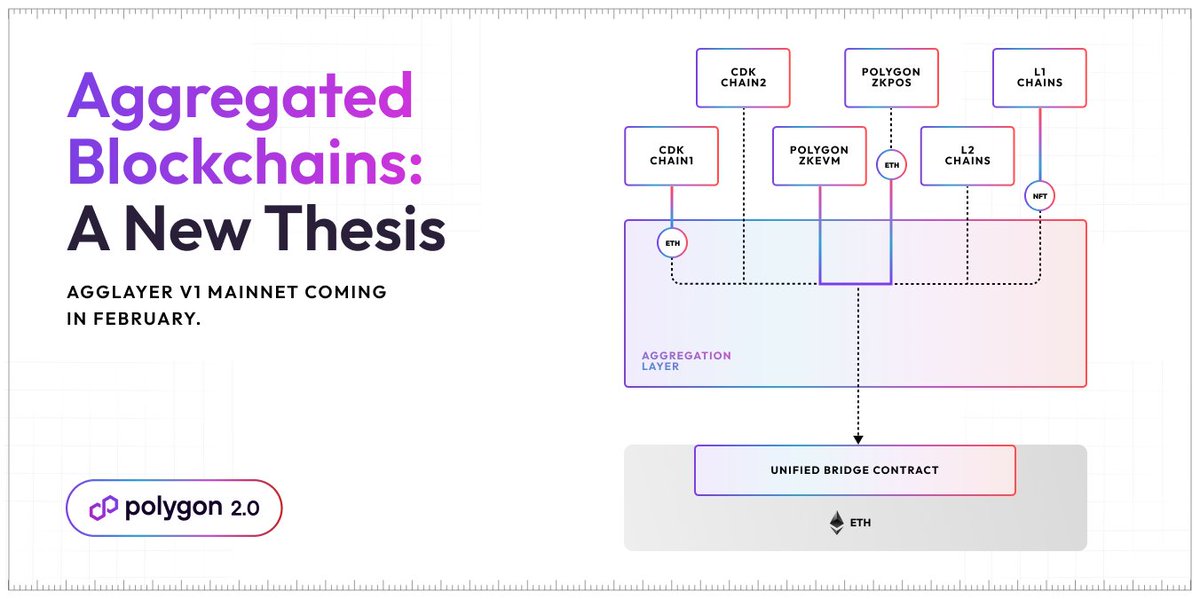
The aggregated blockchain synthesizes the benefits of both architectures with ZK proofs, effectively unifying liquidity across the entire Polygon ecosystem. With unified liquidity, users on every chain have access to the highest level of capital efficiency and cross-chain assets and projects, building a web3 network that feels like a single chain.
The AggLayer is not an L2 and not a shared sequencer. It’s a decentralized protocol that enables atomic, synchronous composability across aggregated chains, without sacrificing sovereignty. Non-ZK scaling solutions cannot achieve this.
*ducks*
Like the invention of TCP/IP, which created a seamlessly unified Internet, the AggLayer unites a divided landscape of the current web3 ecosystem into a web of ZK-proven L1 and L2 chains that feels like a single chain.
AggLayer v1 will go live on Mainnet in February during our “Aggregation Day” event, an in-depth discussion with developers at Polygon Labs and the broader Ethereum ecosystem about aggregation as the future of blockchains.
For more on the AggLayer, see here: https://t.co/X69bamJFHT
Break down of how Polygon 2.0 architecture works:
How does Polygon 2.0 makes blockchains like the internet - Unlimited scalability and Unified liquidity.
The @0xPolygonLabs governance team has done an amazing job of proposing a complete vision for Polygon 2.0 governance.
As with the existing PIP framework, it is up to the Polygon community to voice opinions, suggest changes, and ultimately implement governance.
Few chains are taking as serious of a community-first approach to governance so this is an opportunity to really be heard and make an impact.
Minting my @0xPolygon Open Edition NFT with @sukuthis!Polygon 2.0: Unlimited Scalability, Unified LiquidityCopy this tweet to magically 📷 mint your NFT.Manage the NFT with the Suku Wallet: https://t.co/pNsBP6IUHt
🚨 Today @0xPolygonLabs submitted a response to the @SECGov's proposed rulemaking redefining the term "exchange". The new proposed rule isn't only harmful for DeFi -- it threatens the very existence of permissionless blockchain networks in the U.S.
https://t.co/Yh6xp2e6fG
Roses are red 🌹
Violets are blue
Poems are hard 😩
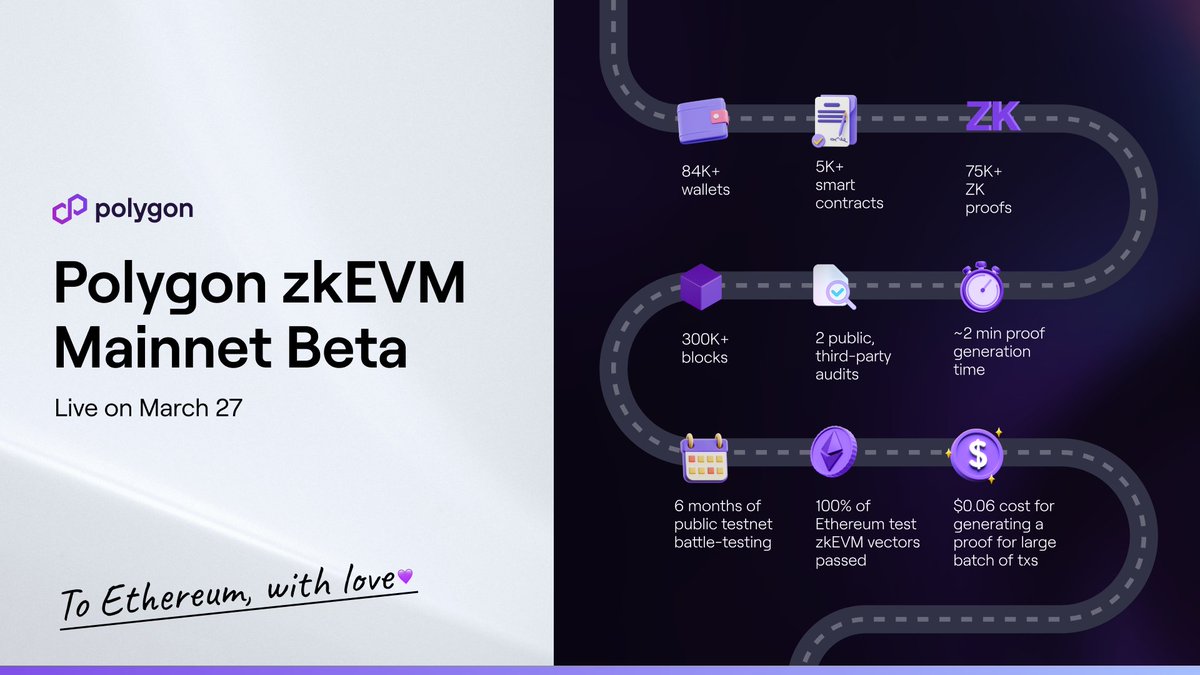
Mainnet Beta is here
ON MARCH 27, Polygon #zkEVM launches the future of Ethereum scaling
🚢💜🚢💜
https://t.co/OqSOYTn8Uv