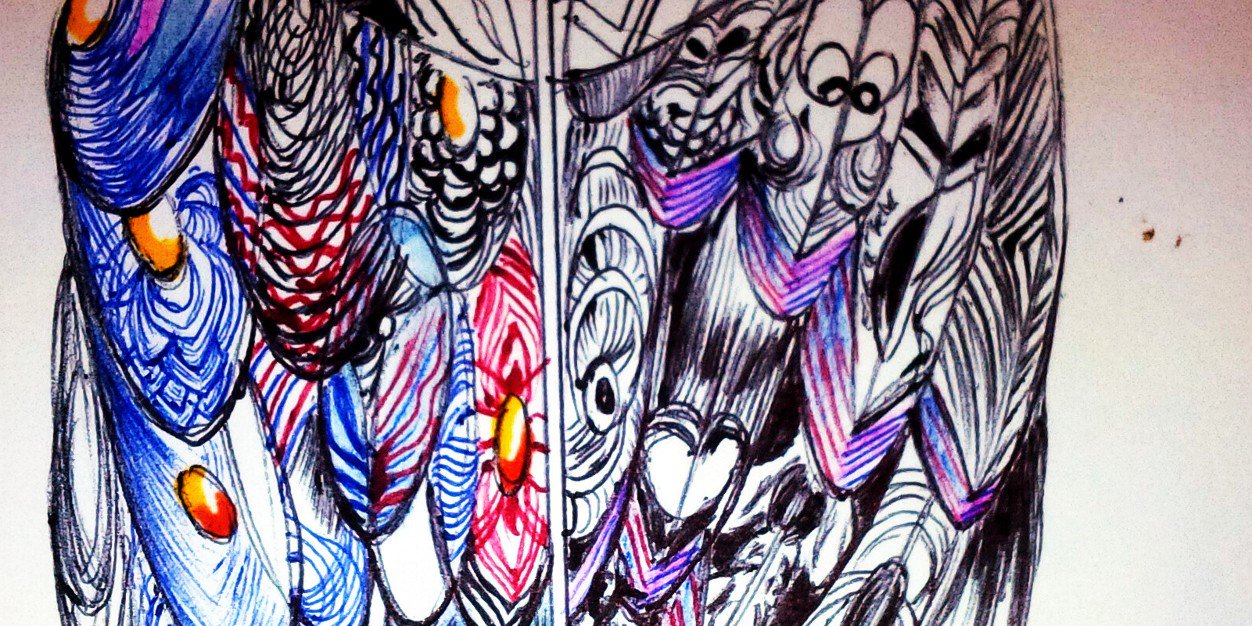
"When The World Was At Your Feet..."
A mixed media artwork about the brevity of events in our lives, that as beautiful or dreary as they seem they're always just components of...time
Listed on Rarible (0.35 Eth)
https://t.co/2Is8sl6FO8
Shared via https://t.co/NmjrS1Gy2u
Derinkuyu, in Turkey, is an ancient underground city dating back 2500 years and extending to a depth of about 60 metres and able to support 20,000 people, and their cattle. Subterranean cities were though to protect inhabitants from invasion, allowing thousands to live in secrecy
4,500 year old Egyptian dress that was painstakingly reassembled from approximately 7,000 beads which were found in an undisturbed tomb in Giza, Egypt.
One of the most famous women in all of history, and to this day nobody on Earth can tell you where her body is.
Start with a fact that breaks people's brains. Cleopatra lived closer in time to us than she did to the building of the Great Pyramid. By the time she was queen, those pyramids were already ancient, already thousands of years old, already tourist attractions. She is practically modern by Egyptian standards. And yet we have lost her completely.
Here's what we actually know.
When she died in 30 BC, Rome had won. Her lover Mark Antony was already dead by his own hand, and Octavian, the man who would become Augustus, had taken Egypt. The stories say Cleopatra refused to be dragged through the streets of Rome as a trophy, so she took her own life. The famous version is the bite of a snake, an Egyptian cobra smuggled to her in a basket. Some historians think it was poison instead. Either way, she died on her own terms, which was the one thing Rome could not take from her.
And then something surprising happened. Octavian let her be buried with Antony.
She had already built herself a great tomb, a mausoleum near a temple of the goddess Isis, in the royal quarter of Alexandria. Cleopatra had spent her life presenting herself as Isis on Earth, so it fit. The last pharaoh was laid to rest in her own city, in her own monument, beside the man she died for. For once in ancient history, we even have a location.
The problem is that the location no longer exists.
Ancient Alexandria's royal district, the palaces, the temples, the marble waterfront where her tomb almost certainly stood, did not survive the centuries. Earthquakes hammered the coast. A catastrophic quake and tsunami in 365 AD was especially violent. The ground itself sank. Slowly, piece by piece, the grandest part of the city slid beneath the Mediterranean. Today divers glide over sphinxes, fallen columns, and the foundations of royal palaces on the seafloor of Alexandria's harbor. Underwater archaeologists have literally mapped the sunken royal quarter. The neighborhood that held Cleopatra's grave is most likely down there in the silt and the dark, or crushed under the living, breathing modern city that was built right on top of the old one.
So the leading answer is almost cinematic. Her tomb is probably lost beneath the sea and the streets, sealed away by nature and time, which is why in two thousand years no one has ever opened it.
But there is a second theory, and this is the part that keeps the story alive, because it is not finished.
About 30 miles west of Alexandria stand the ruins of a temple called Taposiris Magna. For close to twenty years, an archaeologist named Kathleen Martinez has been convinced that Cleopatra and Antony were not buried in the exposed royal quarter at all, but hidden here on purpose, far from Roman eyes. Her critics doubted her for years. Then the ground started giving things up. Coins stamped with Cleopatra's own face and name. A carved head that may be the queen herself. Foundation deposits tying the temple to Ptolemaic royalty. Deep burial shafts holding mummies, some gilded, some with gold placed on their tongues so they could speak to the gods. And in recent years, a long tunnel carved through the rock, running for hundreds of meters, part of it reaching toward the sea.
Every season brings another clue. And every season ends the same way. No tomb. No queen. No proof.
So the honest answer to where Cleopatra was buried is the most haunting one possible.
We lost her. The woman who outmaneuvered Julius Caesar, seduced an empire, and stared down Rome itself for years pulled off one final disappearing act. She may be under the ocean. She may be under a city of five million people. She may be lying in a sealed chamber under a desert temple that someone is digging into at this very moment.
The most famous queen who ever lived does not have a grave you can visit.
She has a mystery that refuses to die, and somewhere out there, still waiting, she has the last laugh.
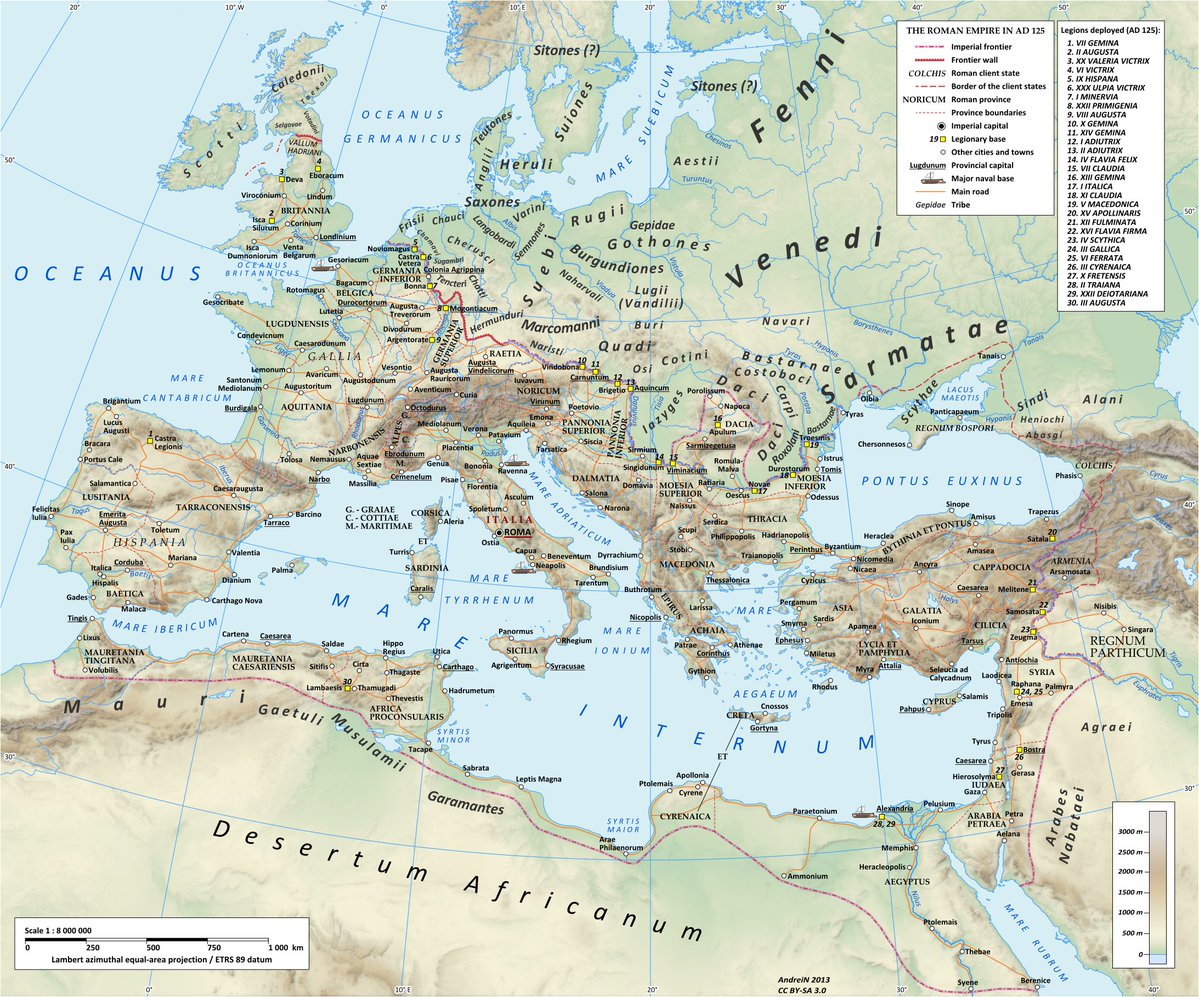
The Roman empire under Hadrian (ruled 117–138) showing the location of roads, cities, provincial boundaries, naval bases, the Roman legions deployed in AD 125 and Germanic tribes from the time of Augustus
Most vocational centers train people. Le Ndomo in Ségou, Mali trains people while keeping a whole textile tradition alive.
Founded by artist Boubacar Doumbia, the center takes its name from the first stage of Bambara initiation, transmission of knowledge. It teaches unschooled youth three ancestral textile techniques: Bogolan, dyed with fermented mud, Basilan, using ochre plant pigments, and Gala, built on natural indigo dyeing. The building itself is raw earth (banco), built in Sudano-Sahelian style, hand-shaped walls, arched windows, and sculptural relief patterns that double as ventilation and shade.
Most cultural preservation happens in museums. This one happens on a construction site, with mud walls and dye vats teaching the next generation directly.
Le Ndomo | Founder: Boubacar Doumbia
Ségou, Mali
Tutankhamun, the boy king of Egypt’s 18th Dynasty (c. 1332–1323 BCE), ascended the throne at about age 9 and died at just 19.
Despite his short life, he restored traditional Egyptian religion, reopened temples, reversed his father’s radical reforms, and helped stabilize the kingdom — leaving a legacy far greater than his years.
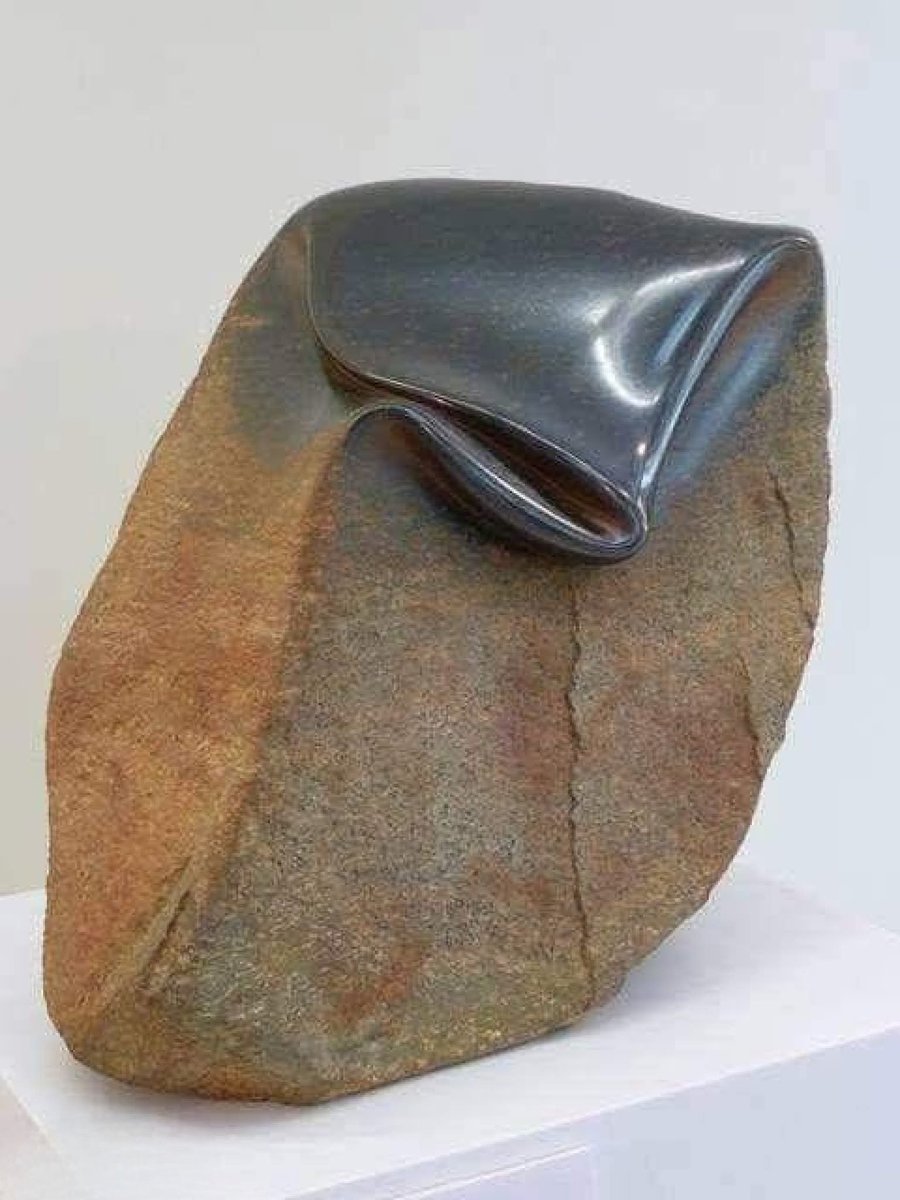
🛑 This Stone Breaks Everything We Think We Know
At first, it looks like an ordinary rock. Then you see the surface—smooth, flowing, polished like a mirror. This object may come from the prehistoric world, possibly the Neolithic or even earlier, yet it feels shockingly modern. Someone thousands of years ago deliberately shaped and polished it using advanced techniques, leaving part of the stone raw and untouched.
No one knows why it was made. Ritual? Symbol? Pure skill? Whatever its purpose, it proves one thing: early humans understood beauty, precision, and experimentation far better than we assume. This isn’t just a stone—it’s a reminder that human creativity didn’t begin with history books. It began long before.
She was 23 years old. The man convicted of assaulting her was a Stanford University swimmer with a promising future, a scholarship, and a courtroom filled with people speaking on his behalf.
Under California law, he faced a possible prison sentence of up to 14 years.
Instead, the judge sentenced him to just six months in county jail.
She responded by writing more than 7,000 words and reading every one of them in court.
In the end, the sentence did not become the lasting legacy of the case. Her words did.
In January 2015, after a fraternity party near Stanford University, two graduate students spotted a man assaulting an unconscious woman behind a dumpster. They confronted him, chased him when he tried to flee, and held him until police arrived.
The woman remembered nothing. She woke up in a hospital with pine needles tangled in her hair and no idea what had happened.
During the legal proceedings, she was identified only as Emily Doe.
In March 2016, Brock Turner was convicted on three felony counts related to sexual assault. California law allowed for a sentence of up to 14 years in state prison.
On June 2, 2016, Judge Aaron Persky sentenced Turner to six months in county jail, saying that a longer sentence could have a severe impact on his future.
Turner ultimately served three months before being released.
Before sentencing, Emily Doe stood in court and read a victim impact statement that stretched beyond 7,000 words. It began with a line that would become widely known:
"You don't know me, but you've been inside me, and that's why we're here today."
She described sitting in a hospital examination room pulling pine needles from her body. She described the shock of learning details of her assault through news reports before anyone had explained them to her.
On June 3, 2016, BuzzFeed published the statement in full.
Within just a few days, it had been read by more than 11 million people.
It was translated into multiple languages, shared around the world, and even read aloud on the floor of the United States Congress.
Thousands of survivors reached out to say her words had expressed emotions they had never been able to put into language themselves.
Stanford law professor Michele Dauber later led a campaign to remove Judge Persky from office.
In June 2018, California voters recalled him, making him the first judge removed by voters in the state in more than 80 years.
That same year, California had already enacted new laws requiring prison time for sexually assaulting an unconscious or intoxicated person and expanding the legal definition of rape to include digital penetration.
For more than three years, the public knew her only as Emily Doe.
Then, in September 2019, she revealed her identity.
Her name was Chanel Miller.
Her memoir, Know My Name, became a New York Times bestseller and received the National Book Critics Circle Award, the Dayton Literary Peace Prize, and the California Book Award.
The first layer of this story is simple. Chanel Miller wrote a courtroom statement that endured far longer than the sentence handed down in her case and became part of the public record that followed.
The second layer is how quickly those words echoed beyond the courtroom, contributing to legal reforms in California, the recall of the judge who sentenced Turner, and a national conversation about how sexual assault cases are handled.
The third layer is the one that still matters today. For many survivors who wonder whether speaking out can make a difference, Chanel Miller's testimony remains one of the strongest examples of how a single voice can reach far beyond the walls of a courtroom.
Chanel Miller was once known only as "Emily Doe."
Today, she is remembered by her own name—and for the words that changed far more than one case.
If her story has stayed with you, feel free to share your thoughts respectfully in the comments
He died with 200 children in a gas chamber, holding their hands until the end.
Janusz Korczak was a famous doctor and a brave Polish military officer who spent his entire life proving that children are the most important people on Earth.
This wasn’t just a job for him—it was his life’s mission.
In 1912, he founded a very special place called the Orphans’ Home in Warsaw, designed specifically for children who had lost their parents and had nobody else to protect them. He didn’t just look after their health; he respected them as complete human beings with deep feelings and big dreams.
He even created a “Children’s Republic” inside the home, where the orphans had their own small government and even their own court to settle arguments fairly. To him, every child was a “precious gift” and a “creative flame” that adults were lucky enough to protect.
He lived by one simple, powerful rule: you haven’t done enough for a child until you have done everything you possibly can.
Because he lived by that rule, his responsibility grew even heavier when World War II began, Korczak moved all 200 of his children there to keep them together. In a place filled with hunger and disease, he became their father figure, their doctor, and their only shield.
He spent every day begging for food and medicine just to keep them alive. Because Korczak was so famous and respected, he was offered several chances to escape to the “safe” side of the city and hide. He refused every single time.
He knew that if he abandoned those 200 children to save his own life, everything he had ever taught about loyalty and love would be a lie. He stayed because a father does not leave his children when the storm arrives.
The day they were taken away to the death camps, the streets witnessed something that looked more like a happy school parade than a march to a tragedy. Korczak wanted to protect the children’s hearts from the terrifying truth, so he told them they were finally going on a trip to the countryside.
He had them wash their faces and dress in their very best clothes. They marched through the ghetto singing songs and carrying a bright green flag. Korczak walked at the very front of the line, standing tall in his military doctor’s uniform, carrying the two smallest children in his arms while the others clung to his pockets to stay close.
Even the enemy soldiers watching them at the train station were moved to silence by the sight of such incredible dignity. When a soldier recognized him and offered him one last chance to walk away, Korczak didn’t even hesitate—he chose to stay with his “family.”
In the end, he followed his children all the way into the dark gas chambers of Treblinka. He stayed true to his word until his very last breath, holding their hands so they wouldn’t be afraid of the dark.
When the chambers were opened later, they found him still leaning forward, surrounded by the sea of children who had huddled close to him for safety in their final moments.
Janusz Korczak was a man who had every excuse to run, every reason to save himself, and every opportunity to look away, yet he chose to stand in the fire so his children wouldn't have to stand there alone.
His life proves that while evil can take a life, it can never take away the dignity of a person who refuses to stop loving.
Deep in the heart of ancient Bactria, where the rugged mountains of modern-day Afghanistan meet the legacy of Alexander the Great, an artisan poured their soul into a masterpiece. This is the Cybele Disk of Ai-Khanoum, a breathtaking 2nd-century BC relic forged from bronze and gilded with whispers of gold leaf.
More than just metal, it is a living bridge between worlds. Look closely, and you can almost feel the desert wind as the great Anatolian mother goddess, Cybele, rides a chariot pulled by powerful, majestic lions. Beside her stands Nike, the winged goddess of victory, while overhead, the sun god Helios shines his radiant light upon a crescent moon and a star.
This disk is the emotional heartbeat of a forgotten multicultural empire—a place where Greek settlers and Near Eastern cultures didn't just coexist, but beautifully fused their faiths, dreams, and art into one timeless story.
It began with a single buffalo. Patrick Kilonzo Mwalua found the animal slumped beside a bone-dry waterhole in Kenya's Tsavo West National Park, its ribs rising and falling in the dust. No rain had come for months. No relief was in sight. And no one, it seemed, was coming to help.
Patrick was no scientist, just a humble pea farmer. But he couldn't unsee that buffalo. So in 2016, as a brutal drought scorched the land, he rented a battered water truck, filled it with around 3,000 gallons, and drove for hours over rough roads to pour life back into the parched watering holes. He did it again the next day, and the next, often every single day, paying out of his own pocket until the world caught wind of what he was doing.
The animals learned the sound of his engine. Elephants, zebras, buffalo, and antelope would gather and wait, then come running the moment his truck appeared on the horizon. "I choose to stand for animals," he said simply.
Even as his own health failed and dialysis wore him down, Patrick refused to stop. He kept driving that water out to the wild until his passing in 2024. The Water Man of Tsavo is gone now, but the trust he built carries his mission on, and somewhere out in that dust, the animals still drink because one ordinary man decided they were worth saving.
Sources: Mongabay, The Dodo
Jo Nagai was raising swallowtail butterflies at his home in Kobe, Japan, when he noticed something odd. The ones he had looked after as caterpillars seemed to recognize him. Wild butterflies fled. His didn't.
He was in second grade. He wrote a four-page letter to Dr. Martha Weiss, an entomologist at Georgetown University who had studied whether moths could retain memories through metamorphosis. He asked if she could help him design a version of her experiment for butterflies.
She said yes.
Using a muscle therapy device, Jo trained caterpillars to associate the scent of lavender with a mild vibration. When the caterpillars became butterflies, 70 per cent of them still avoided the lavender. Their brains had been completely rebuilt during metamorphosis. The memory survived anyway.
Then he bred them.
The offspring, which had never been trained, also avoided lavender. So did their grandchildren. Without ever experiencing the vibration, two generations of butterflies inherited an aversion to a scent their grandmother had been taught to fear.
Jo documented it all in a 33-page research paper and presented his findings at the International Congress of Entomology in Kobe in 2024. He was 10.
A second grader wrote a letter to a Georgetown professor, and together they found evidence that butterflies can pass memories down through generations.
-Wilderness Whisper
Ephesus Odeon
The Ephesus Odeon (also known as the Bouleuterion) was one of the most important structures in the ancient city of Ephesus.
It was built in the mid-2nd century AD, around 150 AD. It was financed by Publius Vedius Antonius, a wealthy Ephesian, and his wife Flavia Paiana (or Flavia Papiana in some sources).
It served a dual function: both as a meeting hall for the city council (senate/boule) and as an indoor hall (odeon) for small concerts, music, and theatrical performances.
Capacity: Approximately 1,400–1,500 people.
It remains well-preserved today and can be visited at the Ephesus archaeological site.
July 1799. A French officer named Pierre Bouchard is supervising repairs on a crumbling fort near the town of Rashid, in the Nile Delta. Napoleon had invaded Egypt the year before and dragged along 150 scholars, because of course he did.
The soldiers are tearing into an old wall. Someone pulls out a slab of dark granite, broken at the top, chipped down the side. It had been sitting in that wall as construction filler for centuries. Recycled rock. Nobody's treasure.
Bouchard looks at it and notices something. There is writing on it. Three different kinds of writing.
Here is why that mattered.
Egyptian hieroglyphs had gone completely dark. The last person who could read them died sometime around the 5th century. Fourteen hundred years of silence. Europe had spent centuries staring at temple walls covered in birds and eyes and squiggles, inventing nonsense about mystical symbols, because the actual sound values were gone. An entire civilization left thousands of pages of writing and nobody on earth could read a word of it.
Now look at the slab. Hieroglyphs on top. Demotic in the middle. And at the bottom, Greek.
Greek. A language scholars read perfectly well.
Same text. Three scripts. A key.
The British beat the French in Egypt two years later and took the stone as a spoil of war. The French general tried to claim it was his personal property. It did not work. To this day you can read the words painted on its side in the British Museum: captured in Egypt by the British Army, 1801.
But the text had already escaped. Ink impressions had been pressed and mailed to scholars all over Europe, including the French ones. The British got the object. Everyone got the puzzle.
It still took twenty years.
Thomas Young cracked part of it. Jean-Francois Champollion finished it in 1822, realizing hieroglyphs were not pure symbols and not pure alphabet but both at once, sound and meaning braided together. When it clicked, he ran to his brother's office, said "I've got it," and passed out cold on the floor.
And the message that reopened three thousand years of human history?
A tax deal.
It is a decree from 196 BC, signed off by a council of priests for a 13 year old king named Ptolemy V. Temple funding. Debt forgiveness. Amnesty for prisoners. Grain allowances. Politics.
The best part is the ending. The decree instructs that it be carved in all three scripts and placed in every major temple in the land.
The stone contains the order to create the stone.
A bureaucratic memo about priestly tax breaks, written in triplicate so everyone could read it, then thrown in a wall and forgotten. And that is the thing that gave us back Tutankhamun, the pyramids, the Book of the Dead, and every name in every tomb.
Civilizations do not die when the last person dies. They die when the last person who can read them dies.
Ancient Egyptian priests could predict a coming famine years before modern meteorology existed, using nothing but a well and a staircase.
The Kom Ombo nilometer let priests measure the Nile's flood level with enough precision to calculate the next year's harvest, and even set tax rates accordingly. High water meant abundance. Low water meant hardship, and the state adjusted immediately.
A temple well, functioning as an early warning system for an entire nation's food supply.
This face was placed on a temple roof for one specific job: to scare evil away before it ever got inside.
The Temple of Zeus at Aizanoi, built under Emperor Hadrian in the 2nd century AD, is considered the best-preserved Zeus temple in all of Anatolia. Displayed at the site is a massive carved bust, originally an akroterion, a roof ornament, from the temple's northwest gable.
In Greco-Roman belief, a face like this was apotropaic, meaning its purpose was to ward off evil simply by being seen. Not decoration. A warning, carved in stone, mounted where everyone would notice it.
Nearly 2,000 years later, she's still up there watching.
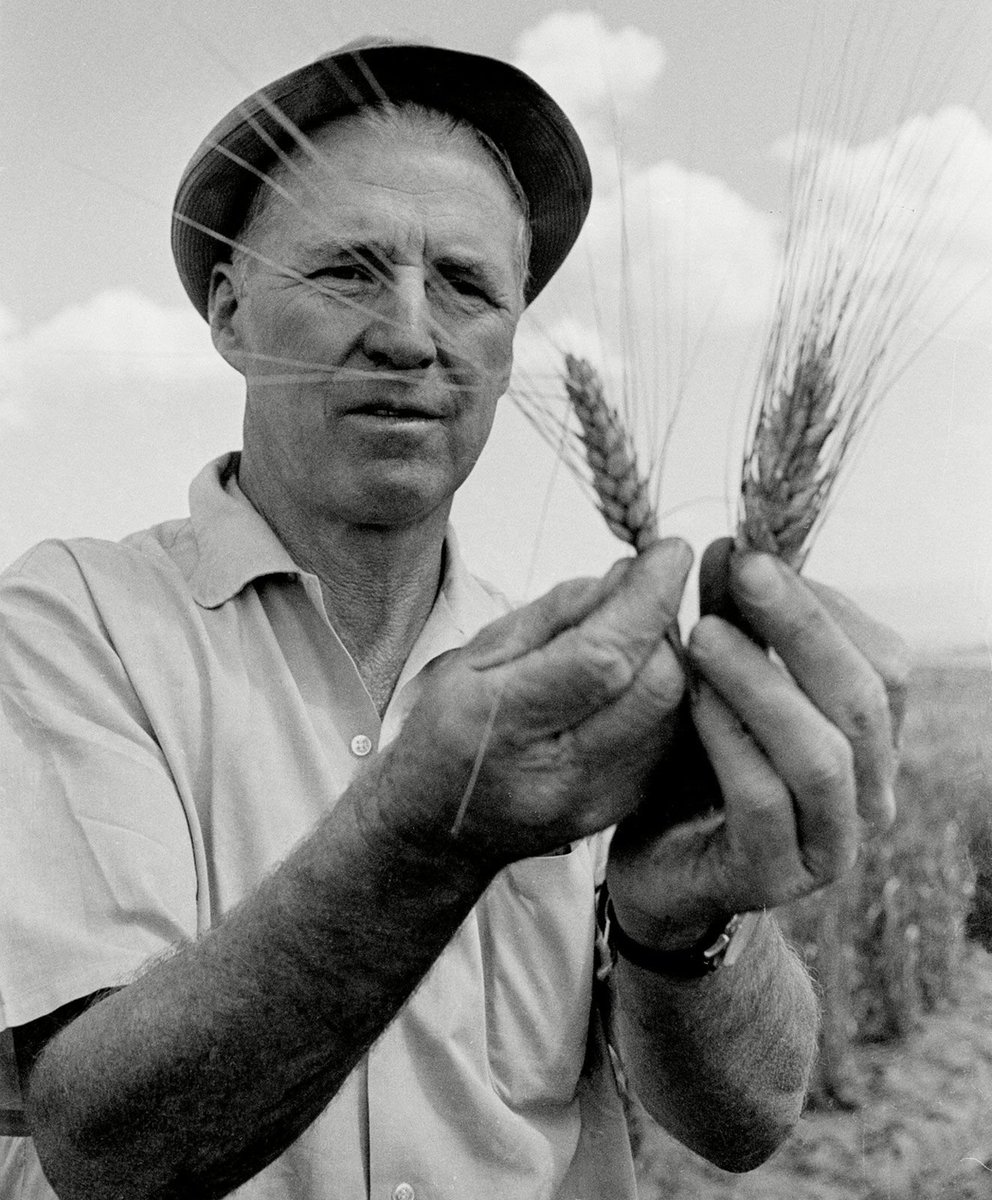
Norman Borlaug never commanded an army.
He never led a country.
He never became one of the world's biggest celebrities.
Yet many historians consider him one of the most important people who ever lived.
Born on a small farm in Iowa, Borlaug understood from an early age that food meant survival. That understanding shaped his life's work.
As a plant scientist, he spent years developing high yielding, disease resistant wheat varieties. He worked relentlessly in Mexico, and later helped bring those breakthroughs to countries such as India and Pakistan, where millions of people were facing the threat of devastating famine.
The results were extraordinary.
Harvests multiplied.
Fields that once struggled to feed families began producing enough grain to feed entire nations.
His work became the foundation of what the world now calls the Green Revolution.
In 1970, Norman Borlaug was awarded the Nobel Peace Prize. The Nobel Committee said he had given the world "a well founded hope" that the food problem could be solved.
Today, he is widely credited with helping save more than a billion lives by preventing mass starvation. Some sources estimate the number could be as high as two billion, although no one can calculate an exact figure.
He never became a household name.
There are no crowds chanting his name in stadiums.
Most people have never heard of him.
But somewhere in the world, every meal made possible by stronger harvests carries a small part of his legacy.
Sometimes the greatest heroes don't change history by taking lives.
They change it by making sure billions have the chance to live
In 711 AD a Berber general crossed from Africa into Spain with maybe 7,000 men and toppled a kingdom that had ruled the peninsula for 300 years.
His name was Tariq ibn Ziyad. You already say it all the time without knowing.
He landed by a huge rock on Spain's southern tip. The Arabic name for it became Jabal Tariq, the mountain of Tariq.
Say that out loud a few times and listen. Gibraltar.
Here is the part people forget. Tariq was not an Arab nobleman. He was a North African Berber, likely a freedman or client who rose on skill alone in an army where that was not supposed to happen.
He was sent by Musa ibn Nusayr, the Umayyad governor of North Africa. And there is a strange twist in that relationship we will get back to.
The Visigothic kingdom he invaded was already rotting from the inside. Its king, Roderic, had seized the throne, and the family of the previous king wanted him gone.
Legend even says a local ruler named Julian, furious at Roderic over his daughter, helped ferry Tariq's men across the strait. Treat that one as a story, but the civil war behind it was real.
Tariq met Roderic at the Guadalete river in the summer of 711. Roderic had the bigger army and the home ground.
He lost everything. Some of his own commanders reportedly abandoned him mid battle. His body was never clearly found, and the kingdom never recovered.
From there Tariq did not stop. He drove north and took Toledo, the Visigothic capital, moving faster than any occupying army had a right to.
Legend says that early on he burned his own ships after landing and told his men the sea was behind them and the enemy in front, so the only way out was through. That speech comes from much later sources, so treat it as legend, not fact.
Now the twist. Tariq did so well that Musa, his own commander, grew jealous and crossed into Spain himself to share the glory.
Both men were eventually summoned back to Damascus by the Caliph. Instead of rewards, they fell from favor and faded from power. The man who gave his name to a continent's edge died in obscurity.
But what they started did not fade. Within a few years Muslim rule covered almost the whole peninsula, and it was only halted deep in France near Tours in 732.
That world they opened, Al-Andalus, lasted nearly 800 years, until Granada fell in 1492.
So next time you see Gibraltar on a map, remember it is not just a rock or a naval base.
It is a fossil in the language. The name of a Berber outsider who crossed a narrow strait, broke a kingdom, was betrayed by his own side, and still left his name carved on the edge of a continent forever.