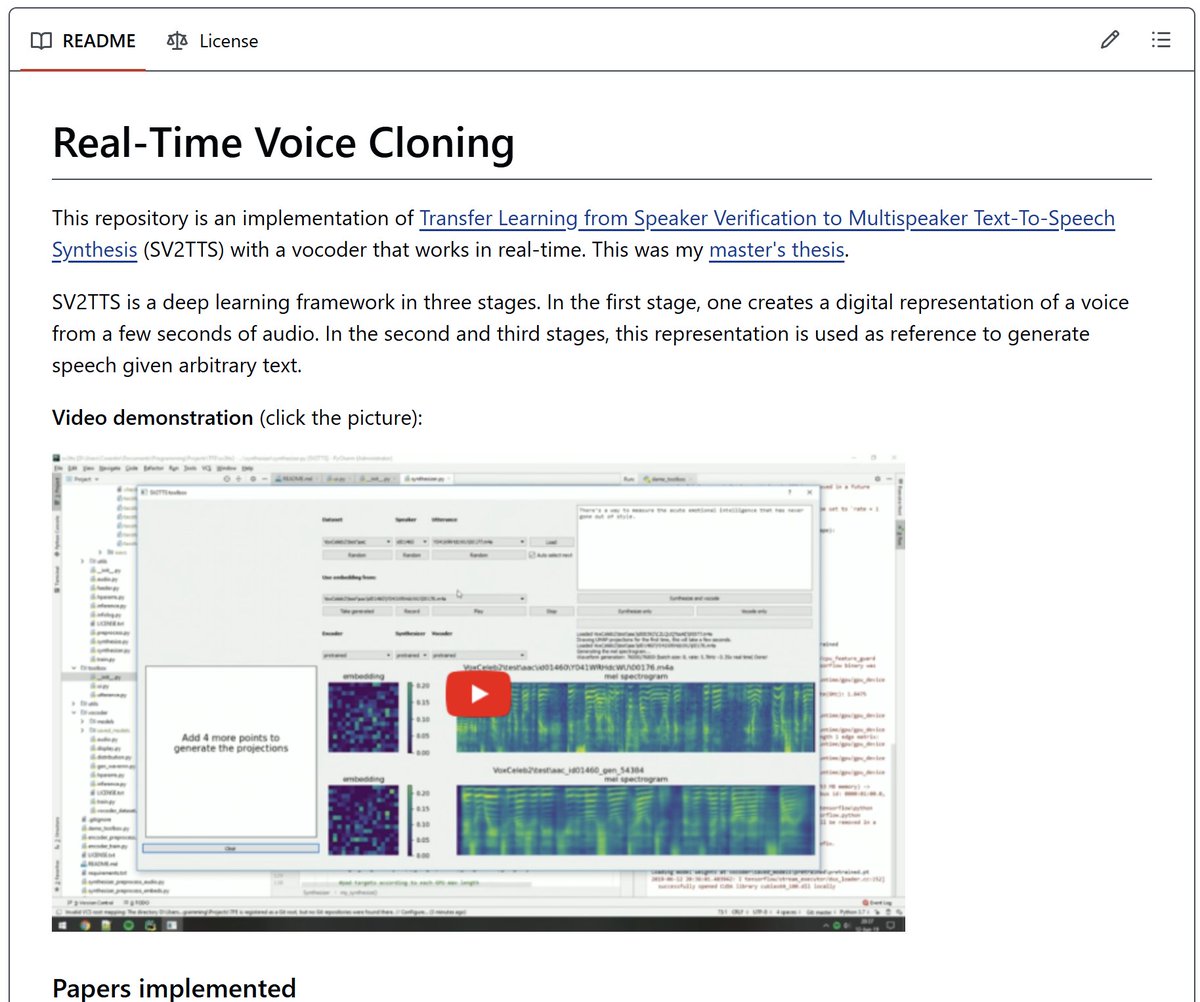
10 repositorios de GitHub para clonar cualquier voz con IA
Guárdalos. Cada uno copia una voz a partir de unos segundos de audio y la hace decir lo que tú escribas. Lo que ElevenLabs te cobra cada mes, aquí lo tienes gratis y abierto.
We’re releasing ZERO this week.
A new coding harness built from scratch in Go.
No fork.
No bloat.
Just speed.
Looking for beta testers who want to push it hard.
Selected builders get free OpenGateway access.
email [email protected]
Jonathan Josué Burgos Sánchez dejó de pertenecer al Cuerpo de Investigaciones Científicas, Penales y Criminalísticas (Cicpc), luego de ser detenido tras ser señalado de retirar dólares en efectivo de inmuebles afectados durante las labores de atención desplegadas por los terremotos.
El Cicpc señaló que no tolerará, bajo ninguna circunstancia, desviaciones policiales, actos de corrupción o conductas que vulneren el honor institucional o el dolor de las víctimas de la emergencia.
En estos momentos es cuando más hay que ayudar. Si tenés familia o amigos allá, podés enviarles dinero ahora mismo, sin comisión. Desde la app, al instante. 🇻🇪
En momentos así, cada envío importa. 🧵👇
97 bin yıldız almış ama Claude Code çevreleri dışında neredeyse hiç konuşulmuyor.
ui-ux-pro-max-skill, ajanlarınıza gerçek tasarım zevki ve profesyonellik kazandıran güçlü bir AI becerisi.
161 mantık kuralı + 67 farklı UI stili ile donatılmış.
Bu yüzden yapay zeka tarafından oluşturulan panolarınız 2014 Bootstrap klonuna benzemiyor.
Her kodlama ajanına entegre edilmesi gereken bir yetenek.
⭐ 97.4K Stars
#AI #UIDesign #AIAgents #UIUX
Repo 👇
Learning Go?
Pick your path:
Go + Gin → Backend APIs
Go + gRPC → Distributed Systems
Go + Kafka → Event-Driven Systems
Go + Kubernetes → Cloud Native
Go + Docker → Containers
Go + Terraform → Infrastructure
Go + Prometheus → Observability
Go + Redis → High-Performance Caching
Go + WebSockets → Real-Time Apps
One language. Countless engineering careers. 🫡
¿Cómo evitar que tu IA suba basura a GitHub?
El repo "git push no-mistakes" tiene una solución.
Valida tu rama con IA y ejecuta tests, lint, docs y CI. Sin bloquear nada, usando un worktree en local.
Si todo pasa, abre una PR limpia:
https://t.co/5b6lLv8LJv
API Security Best Practices
Most API breaches happen because of broken authorization, leaked secrets, or missing rate limits. Let's look at some of the basics.
- Use Modern OAuth/OIDC + MFA: PKCE for public clients, short-lived tokens, and step-up MFA for anything sensitive. Implicit and password grants should be dead by now.
- Enforce Fine-Grained Authorization: Check object, function, and field-level permissions on every request. BOLA is still the top API vulnerability.
- Minimize Scopes and Data: Give each client the smallest token scope and the least data it needs. Only return the fields the caller actually needs.
- Encrypt Every Hop: TLS for external traffic and mTLS between services. If it crosses a network boundary, encrypt it.
- Protect Secrets and Keys: Store signing keys in HSM-backed vaults. Rotate them.
- Validate Requests with Schemas: Reject unknown fields, oversized payloads, and suspicious URLs at the gateway. Don't let bad input reach your business logic.
- Rate Limit and Cap Resources: Quotas per user, payload size caps, and execution timeouts. Without these, one misbehaving client takes down your entire system.
- Defend Sensitive Business Flows: Protect login, checkout, and OTP with anti-bot, idempotency keys, and step-up auth.
- Control Outbound and Third-Party Calls: Allowlist where your API can call out to and block internal metadata endpoints. Your security is only as strong as your weakest integration.
- Harden Config and Error Handling: Deny by default on CORS, methods, and debug endpoints. Return generic errors, never stack traces.
- Inventory APIs and Versions: Track every endpoint, version, and shadow API. You can't secure what you don't know exists.
- Log, Detect, and Respond: Push auth decisions and anomalies to a SIEM. Alert on 401 spikes before they become incidents.
Over to you: Which of these best practices is the hardest to enforce across your services?
¡Herramienta gratuita para mejorar tu CV!
Mejora tus posibilidades de encontrar empleo.
✓ Analiza si pasa filtros ATS
✓ Da consejos para optimizarlo
✓ Lo compara con ofertas
De la gente de Manfred → https://t.co/SGgnSVqdgz
¡Vaya tesoro! Colección de APIs gratuitas de modelos de Inteligencia Artificial. Sin pagos y con límites claros.
✓ +20 modelos disponibles
✓ DeepSeek, Gemini, GPT OSS, Qwen...
✓ Con peticiones/minuto y tokens por día
→ https://t.co/6j9yC6kwab
DBeaver lleva 15 años siendo el cliente de base de datos por defecto.
Es potente. Y también es un dinosaurio de Java que tarda 20 segundos en arrancar.
Alguien lo construyó desde cero en Rust y añadió lo que DBeaver nunca tuvo.
Se llama Tabularis. 2.5k estrellas. Apache-2.0. Activo hace 17 horas.
El detalle que más me ha flipado:
Lo construyó una sola persona (@debba_92 ) como experimento de desarrollo asistido por IA.
Quería ver hasta dónde podían llegar los agentes construyendo una herramienta real.
El resultado: 55 releases, 1.192 commits y un cliente de base de datos que compite con herramientas de empresas con decenas de ingenieros.
Lo que tiene que DBeaver no tiene:
✅ Servidor MCP integrado - Claude, Cursor y Windsurf pueden leer tu esquema y ejecutar queries directamente desde el chat
✅ SQL Notebooks con gráficos inline y variables entre celdas
✅ Visual EXPLAIN con análisis de IA del plan de ejecución
✅ Constructor de queries visual con JOINs drag-and-drop
✅ Diagramas ER generados automáticamente
✅ Compatible con PostgreSQL, MySQL/MariaDB, SQLite y ClickHouse via plugin
✅ Editor Monaco con autocompletado inteligente
✅ Sin telemetría, sin cuentas, sin suscripción
Lo que DBeaver sí tiene y Tabularis todavía no:
SQL Server y Oracle. Si los necesitas, DBeaver sigue siendo la opción.
Para todo lo demás: esto arranca en 2 segundos, pesa menos y tu agente de IA puede consultarlo directamente.
el enlace 👇