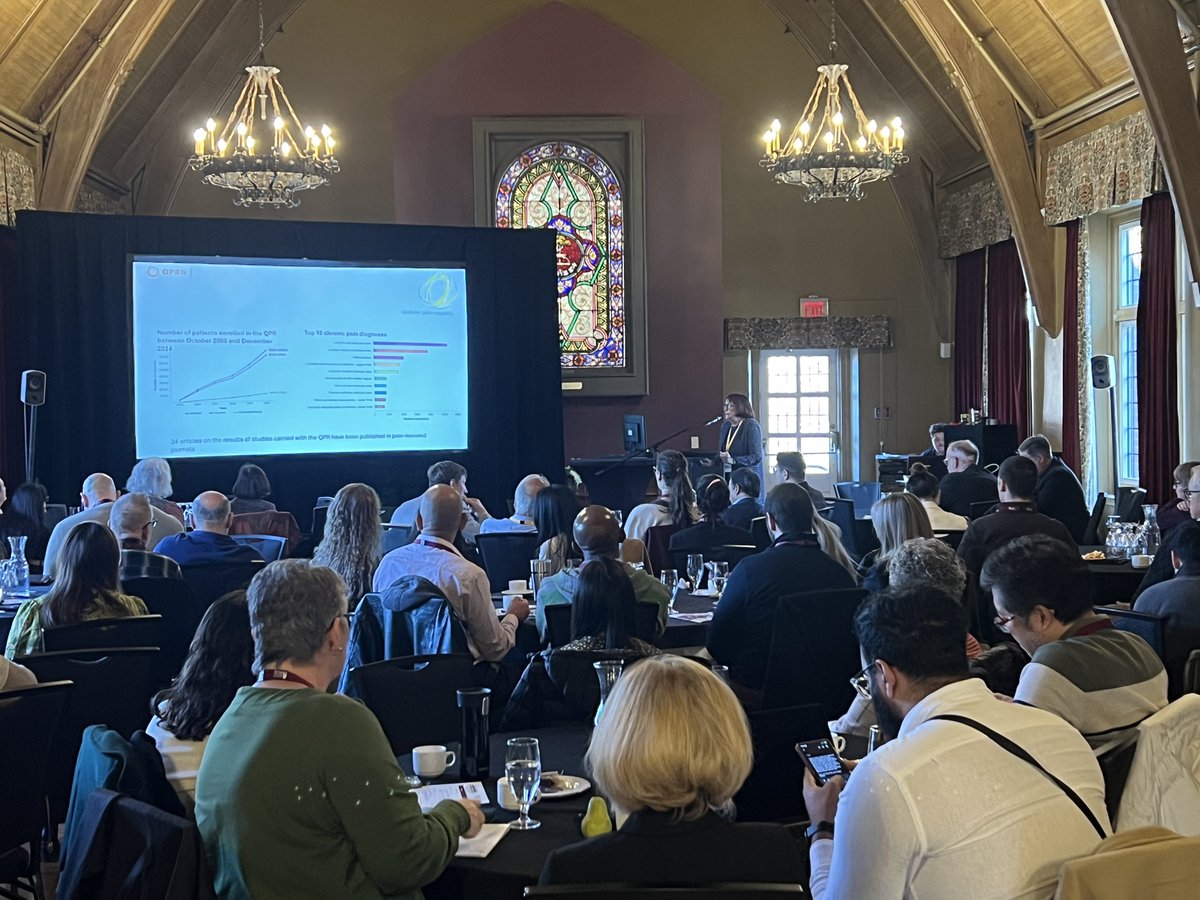
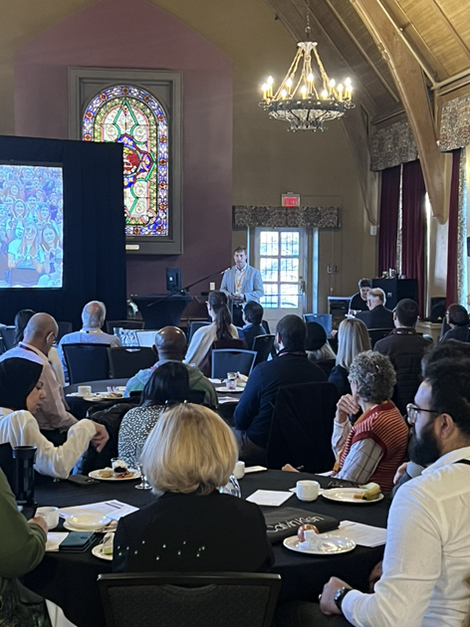
Wrapping up the day is Dr. Andrea Darzi, presenting on the Digital Chronic Pain Recommendations Map: a consolidation and systematic appraisal of guideline recommendations for managing chronic pain (o-ChronicPain RecMap).
1 in 8 Canadian women will face breast cancer in their lifetime. Today at the 10th Annual Michael G DeGroote Pain Symposium, Dr Li Wang shares new insights from a systematic review on predicting chronic pain after breast-cancer surgery.
Proud of MIRA/IPRC fellow Veronica Souza Santos, who is presenting her work on improving how pain information reaches older adults at the 10th Annual Michael G. DeGroote Pain Symposium.
Starting off our post-lunch presentations, Dr. Irena Rebalka discusses Implicating Skeletal Muscle Amino Acid Flux in the Development of Statin-induced.
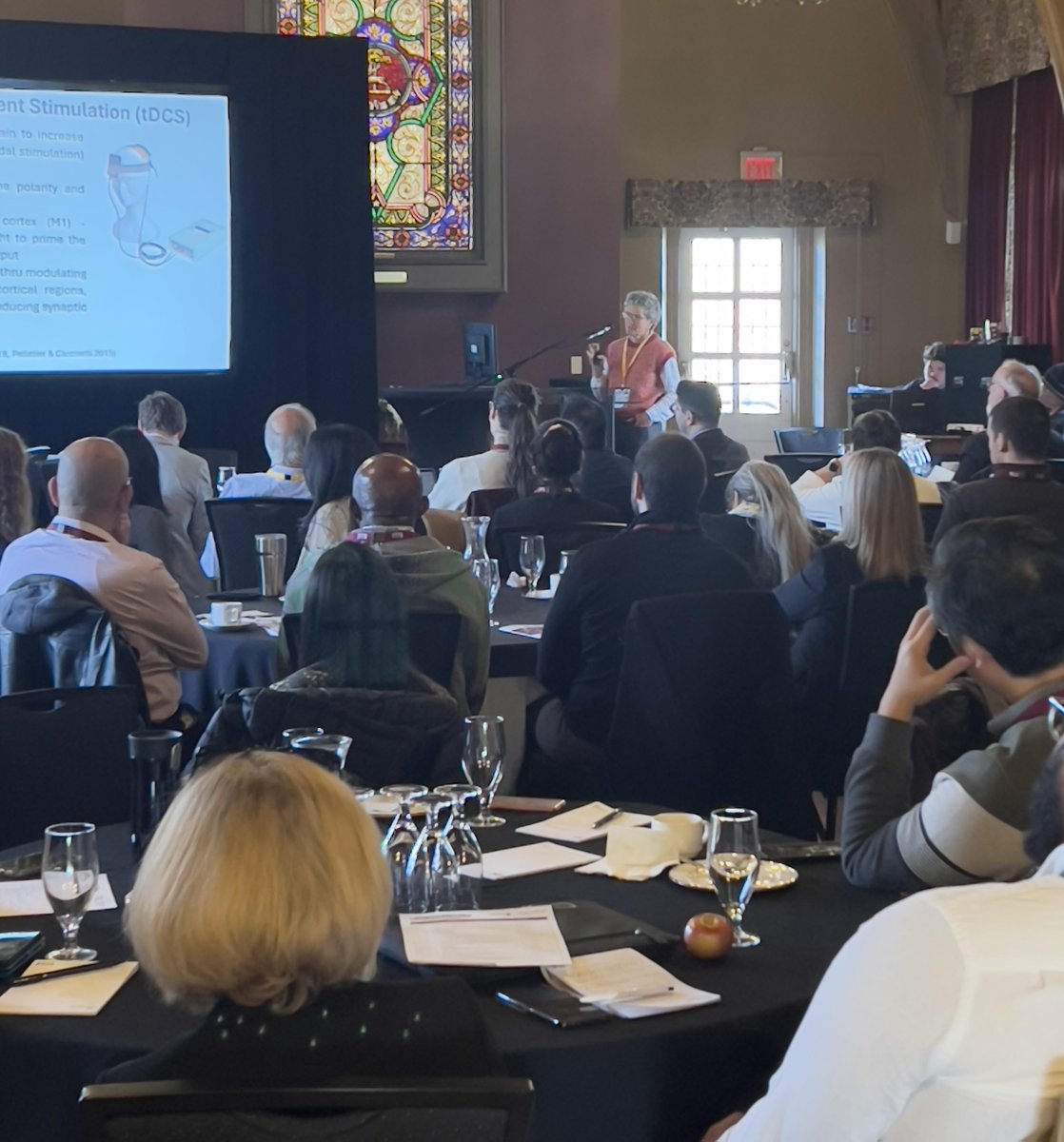
Dr. Lisa Carlesso discuses A Randomized Sham-Controlled Trial of Transcranial Direct Current Stimulation and Yoga for People with Knee Osteoarthritis: A Pilot and Feasibility Study.
“We weren’t looking to find fibromyalgia; fibromyalgia found us,” said Dr. Aimee Nelson when discussing what led to her research on Controllable Pulse-Parameter Transcranial Magnetic Stimulation to Afleviato Pain In Fibromyalgia.
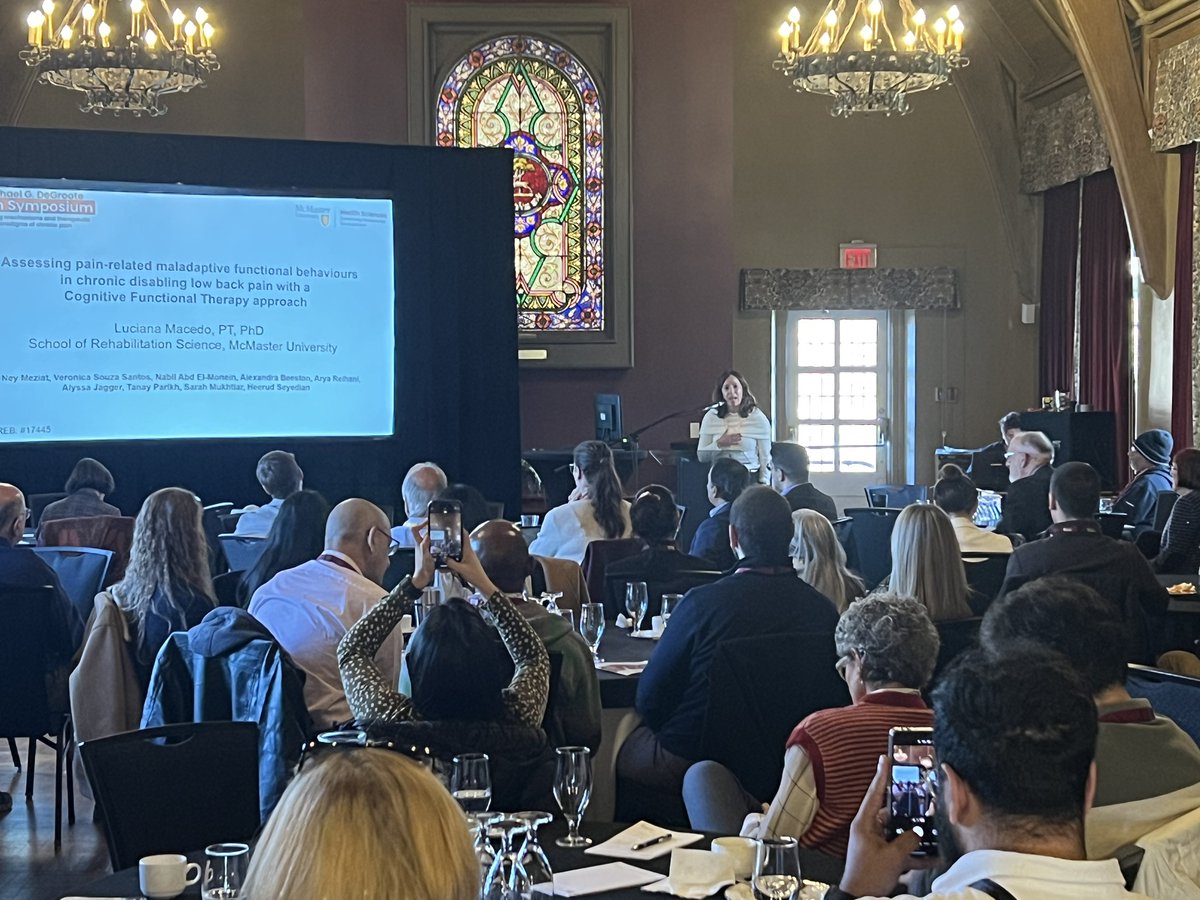
Dr. Luciana Macedo discusses
Assessing Pain-Related Maladaptive Functional Behaviors in Chronic Disabing
Low Back Pain with a Cognitive Functional Therapy Approach at the 10th Annual MGD Pain Symposium.
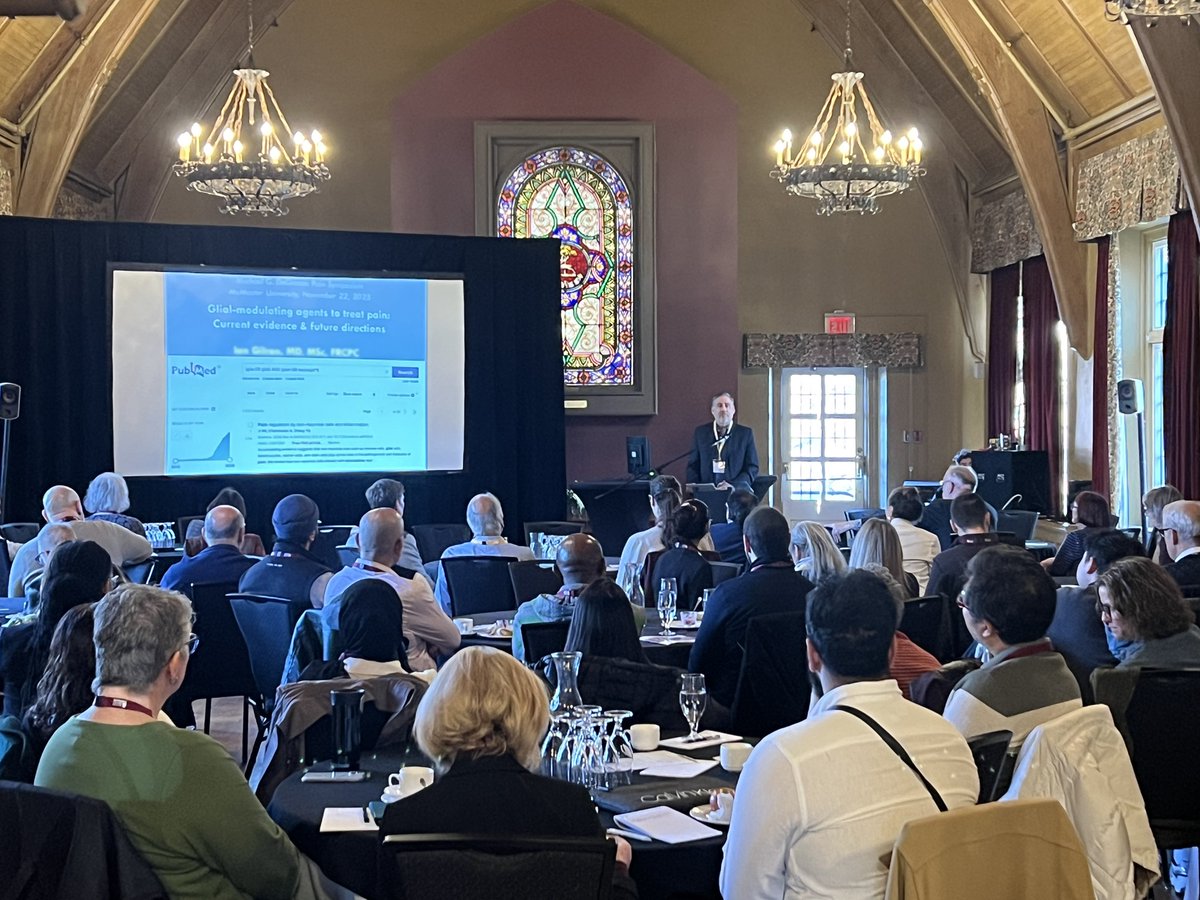
Dr. Ian Gilron, our second presenter of the day, discusses Glial-Modulating Agents to Treat Pain: Current Evidence and Future Directions at the 10th Annual Michael G. DeGroote Pain Symposium.
Can you believe it is our 10th Annual Michael G. DeGroote Pain Symposium? Starting the day is Dr. David Seminowicz, our keynote speaker, discussing Cortical Blomarkers of Pain Sensitivity: Toward Validation and Clinical Application.
Pain doesn’t exist in isolation.
Parents feel helpless when a child hurts.
People with chronic pain carry the weight of anxiety and depression too.
It’s time to change how we understand pain — and how we respond to it.
#NPAW2025#PrioritizePain#PainAwareness
That sting of a paper cut or throb from a stubbed toe? That’s nociceptive pain — your nerves reacting to injury.
Usually it fades, but sometimes it doesn’t. Research helps us learn why some pain lingers — and how to prevent it by reducing risk factors.
#NPAW2025#PrioritizePain
Neuropathic pain is one of three major pain types, along with nociceptive and nociplastic.
It often appears with diabetes, shingles, spinal cord injury, MS, nerve trauma or even chemotherapy.
To #PrioritizePain, we must understand every form.
#NPAW2025#PainAwareness#ChronicPain
Chronic pain affects millions — from arthritis and cancer to invisible or undiagnosed illnesses. It’s time to make pain a priority. We need to improve care and eliminate barriers for those living with #ChronicPain.
#NPAW2025#PrioritizePain
In 2020, @IASP_Pain expanded its definition of pain — adding 6 key notes & new context:
🧠 Personal experience
⚡ Not just nociception
💬 Reports should be respected
💔 Impacts function & well-being
🐾 Felt by humans & animals
#NPAW2025#PrioritizePain#PainAwareness
It's National Pain Awareness Week.
Nearly 8 million Canadians live with chronic pain.
This week, we’re sharing how pain impacts Canadians, types of pain and how NPC & IPRC-funded research is improving lives across the country.
#NPAW2025#PainResearch#ChronicPain#PrioritizePain