I have been VERY vocal about how low volume rallies are not bearish at all, and have been bullish since this rally began (see my posts from March 25 onward for a real-time read of the narrative shift).
After today, however, I'm actually a little cautious for the first time. Let's talk volume nuance.
Volume = participation. Nothing else. On the way down at the end of March, we did not have capitulatory volume. The volume was not special. $SPY volume after March OPEX just kind of sat there around 90-100M shares. It was indicative of the narrative getting tired.
We had an outlier high volume day on March 31 when we gapped up (on de-escalation headlines) and ramped on "2 to 3 weeks" comments.
*This* type of heavy volume is welcome. It was the true turnaround point. Buyers were signaling that they were ready. We then had a Good Friday holiday and some low volume days, and I explained *why* volume was low, in this post: https://t.co/KxsHzzXgVa . Stick with me here.
The market was balancing, so we expect low volume, and on April 7 after cash close the official 2-week ceasefire announcement came. This gave us the monster gap up on the 8th which held, on an elevated volume day.
So after April 8, what do you want to see? I absolutely do NOT want to see heavy volume. Why? We are just above the midpoint of the ATH and the March lows. Elevated volume right here says that sellers are re-engaging. They've been absent for 7 days. The last thing I want to see is *more* participation.
We continued our climb to new ATHs, and in this entire context, low volume means sellers are absent. Great for longs.
However, as we get above new ATHs, rotate, and begin a next leg up, if I'm long, at this point every new poke above highs we make with lackluster volume begins to concern me. Sellers have been absent for weeks. But now we need some signs of initiative from buyers.
For example, this morning buyers showed that they're definitely still willing to bid, as they held a retest of the 4/17 & 4/23 double top breakout, beautifully done.
But this is textbook responsive buying. On the dips they're bidding. On the pushes higher they're taking naps. This is complacency. All it takes is for enough people fail to show up on one of these shallow dips for us to have a meaningful unwind.
With $QQQ up 19% in less than a month, given the reasoning above, I feel it's only a matter of time before we have some profits taken and when bidders don't show up as planned, we can get a big, or multi-day slide.
When "BTD" feels as expected and normal as it does right now, that's the time to be more vigilant. Don't be looking to actively short. Just be extra open to the possibility of a liquidation that is deeper or faster than you may have been expecting.
Hopefully the above is fairly clear. This is only my read on it. Right or wrong, I have contextualized the volume, not just lumped it all together as if every scenario is the same. This is where nuance comes into play, and for me it's nuance based on being around markets for a long time. Understand the volume, and it becomes more meaningful. Cheers!
#ES_F #NQ_F
Enjoyed explaining this scalp long in #ES_F @ 67s along with trades in #WTI and #NQ_F in today's Trader Talk with @FuturesTrader71 and the gang. Trade plans/ideas and observations are called out ahead of time in the maven's channel JOIN https://t.co/0CtXwGJu6a
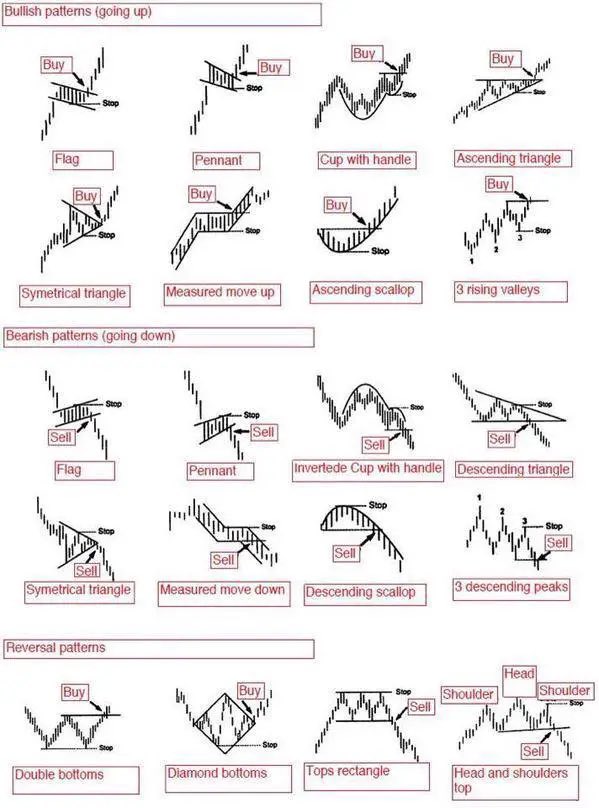
Is Technical Analysis BS?
Many people will dismiss technical analysis as useless before doing the homework to even fully understand what it is or how it should be used. Dismissing technical analysis as bullshit after hearing that academics dismissed it in a paper is like saying no one can make any money in the stock market because some academics did a study and didn’t make any money.
There are as many ways to use technical analysis as there are ways to make money in the stock market. Stock market participants range from day traders to value investors from option traders to futures traders and technical analysis is just as diverse. It is the peak of arrogance for someone to think they can dismiss the entire art and science of technical analysis because they can’t figure out how it works or how to make it work. Many traders spend thousands of hours to construct profitable trading strategies using some form of technical analysis.
There is predictive technical analysis that tries to tell what the future will be from the present chart pattern and then there is reactive technical analysis that tries to go with the flow of current price action in the path of least resistance and stay with the trend.
One looks at chart patterns as crystal balls and the other looks at a chart like a traffic light.
The right question is not “Does technical analysis work?” or “Is technical analysis BS?” but to first quantify and specify what exactly do you think technical analysis is? What patterns are you testing? What time frame? How are you managing the entries and exits? What is your position sizing? How diversified is your watchlist going to be and how many positions will you take? How will you account for volatility?
The real search for profitable trading is creating a positive expectancy model and technical analysis is just a tool for finding it in repeating patterns. Technical analysis is the tree and the trading system is the forest. Many miss the forest for the trees.
Most of the people that dismiss technical analysis have no idea how to even create a technical trading system to backtest or forward test much less have enough information to dismiss it as not working at all.
Also they never seem to research the millionaire traders that have proven that it gives them a profitable edge in the markets. It is as if they said you can’t make any money playing football because they tried and it didn’t work for them.
Technical analysis is the art and science of using the behaviors seen on a price chart of traders and investors as they interact buying and selling a stock to create good risk/reward ratios for entry signals. Profitable trading using technical analysis is based on quantifying trade entries and exits with a good probability that losses will be small and wins would be big. By placing stop losses at price levels that will prove you wrong and letting winners run until price reverses and tells you the move could be ending. That is the proper use of technical analysis everything else is just commentary.
Just like there are millionaire football players there are millionaires that used technical analysis to make a lot of money. In Jack Schwager’s books he interviewed several of these traders with long track records. Even billionaire Paul Tudor Jones was seen using Elliott Wave technical analysis in the ‘The Trader’ documentary on PBS before doubling his money under management in the October 1987 Black Monday plunge.
Here is a famous quote from a billionaire investor. “I haven’t met a rich technician” – Jim Rogers
Well Mr. Rogers, let me introduce you to billionaire Paul Tudor Jones and multi-millionaire Marty Schwartz just a few of many rich technicians over the last 100 years including Nicolas Darvas, William J. O’Neill, Jesse Stine, Dan Zanger, and many others.
Continued👇
Stop being a herb and marrying your bad trades.
Check out today's Misfit Happy Hour with @Chris_C_Cady to hear how tape transferred from the pit to the charts on your screen.
https://t.co/FLdSN00pc0
A trader mentoring session rarely goes by where I don’t reference the best question I received last year.
Brand new trader unassumingly asked: “If you’re always telling traders to go back to basics, why do they ever stray from them to begin with?”
Such a powerful and profound question so innocently asked!
The answer?
During periods of success traders often become complacent and overlook or neglect the practices that specifically led to that success.
When times are good traders think they don’t need to write a daily DRC, they can get away with poor sleep, they don’t need to collaborate as much.
But as @JamesClear reminds us, our PNL is a lagging indicator of our habits!
It is complacency and straying from the basics during these good times that often creates a boom-bust cycle in the performance of many traders, co-mingled on top of the cycle of varying opportunity in markets.
Consistency in habits and finding a routine you enjoy is what dampens this boom-bust cycle that most traders face.
Today we're excited to announce Counter-Strike 2. Counter-Strike 2 is an overhaul to every system, every piece of content, and every part of the C-S experience. First, let's talk about smoke grenades:
Instagram is dead.
In the next 3 - 5 years, every single image in social media will be generated by AI.
And here is the kicker: It will be impossible to tell fake from reality.
I wrote a few lines of Python code to show you how screwed we are:
I finally created a Level 2 + Tape reading course and im giving it away for free!
It’s 1 video that’ll teach you how to:
> Basics of Level 2 and Tape
>How to read Lvl 2+ Tape
> How to execute on it
RT & comment “YES” and I'll DM it.
MYTH: you need to be a programming genius to land a high-paying job.
REALITY: you need a strong portfolio of projects.
Here are awesome projects you should add to your resume.