Thirteen hundred of you took the time to complain to the NACC about their appalling mismanagement of the Robodebt referral.
This is how the Commissioner talks about those complaints. How utterly shameful.
Some of Australia's largest mining companies receive hundreds of millions in diesel fuel tax credits - BHP alone received $622 million last financial year.
At a time when the budget is under pressure and Australians are feeling huge cost of living pressures, these subsidies need to end.
We should be capping fuel tax credits to look after farmers and small miners but make the biggest miners pay the full price for diesel like everyone else.
https://t.co/yYDk1tPxXF
Asking the Royal Commission into Social Cohesion and Antisemitism if Muslim communities can't give evidence and false claims of antisemitism which conflate a bake sale or wearing a keffiyeh with antisemitism go unchallenged, what exactly is this royal commission for?
Australia now has the world’s strongest economy and some of its weakest economic reporting.
Coverage of the latest Federal Budget exposed just how far standards in Australia’s media have declined.
The Budget data showed Australia remains one of the strongest-performing advanced economies on Earth. It is currently the only country with unemployment and inflation both below 4.7%, median adult wealth above US$250,000, triple-A credit ratings from all major agencies, moderate interest rates, and government debt below 25% of GDP.
On top of that, the Budget introduced reforms aimed at tackling long-standing structural inequities changes that many economists argue were overdue.
In most countries, results like these would dominate headlines and strengthen public confidence. Instead, much of Australia’s media responded with outrage, fear campaigns and ideological attacks.
Headlines warned of “budget debacles”, “dire consequences”, “war on wealth”, and “further pain”, while largely ignoring Australia’s globally leading economic performance.
Much of the commentary relied on the same recycled narratives that have dominated economic reporting for years narratives that often collapse under scrutiny.
Claim: Living standards are falling.
Reality: Living standards dipped globally after COVID, including in Australia, but key indicators have rebounded strongly since 2023. Australians are travelling overseas in record numbers, spending more on dining, retail and discretionary goods, and consumer activity has surged.
Claim: Wages are going backwards.
Reality: Real wages were hit during the inflation spike that followed the pandemic, but wage growth has now outpaced inflation. Since late 2023, wages, pensions and welfare payments have all risen faster than consumer prices.
Claim: Australia is a high-tax country.
Reality: Australia remains one of the lower-taxed advanced economies. The GST is just 10%, far below consumption taxes across much of Europe, while Australia’s total tax-to-GDP ratio sits near the bottom of the OECD.
Claim: Labor keeps increasing taxes.
Reality: IMF data places Australia among the lowest-taxing developed economies in both 2025 and 2026.
Claim: Labor is anti-business.
Reality: Business profits outside mining have reached record highs, while employment and expansion across many sectors continue to grow.
Claim: Labor spends recklessly.
Reality: Spending as a share of GDP under Anthony Albanese remains below levels seen under several previous governments, including the Morrison Government.
Claim: Business investment is collapsing.
Reality: Investment stagnated during the Coalition years but has resumed growth under the current government.
The bigger issue is what this says about Australia’s media culture.
Economic reporting increasingly resembles political campaigning rather than factual analysis. Too often, selective statistics, misleading framing and emotionally loaded commentary replace balanced reporting.
When positive economic outcomes are ignored while fear and outrage dominate coverage, it damages public trust, distorts national debate and weakens social cohesion.
Australia’s economy is not perfect. Productivity, housing affordability and inequality remain serious challenges. But pretending the country is in economic collapse despite internationally strong results does not inform the public. It misleads them.
Everyone COPY this video, share it far and wide. Paramount Skydance billionaire baby David Ellison can’t handle that Stephen Colbert is getting millions of views . @Youtube we will cancel our subscription as we did when we dumped @paramountplus.
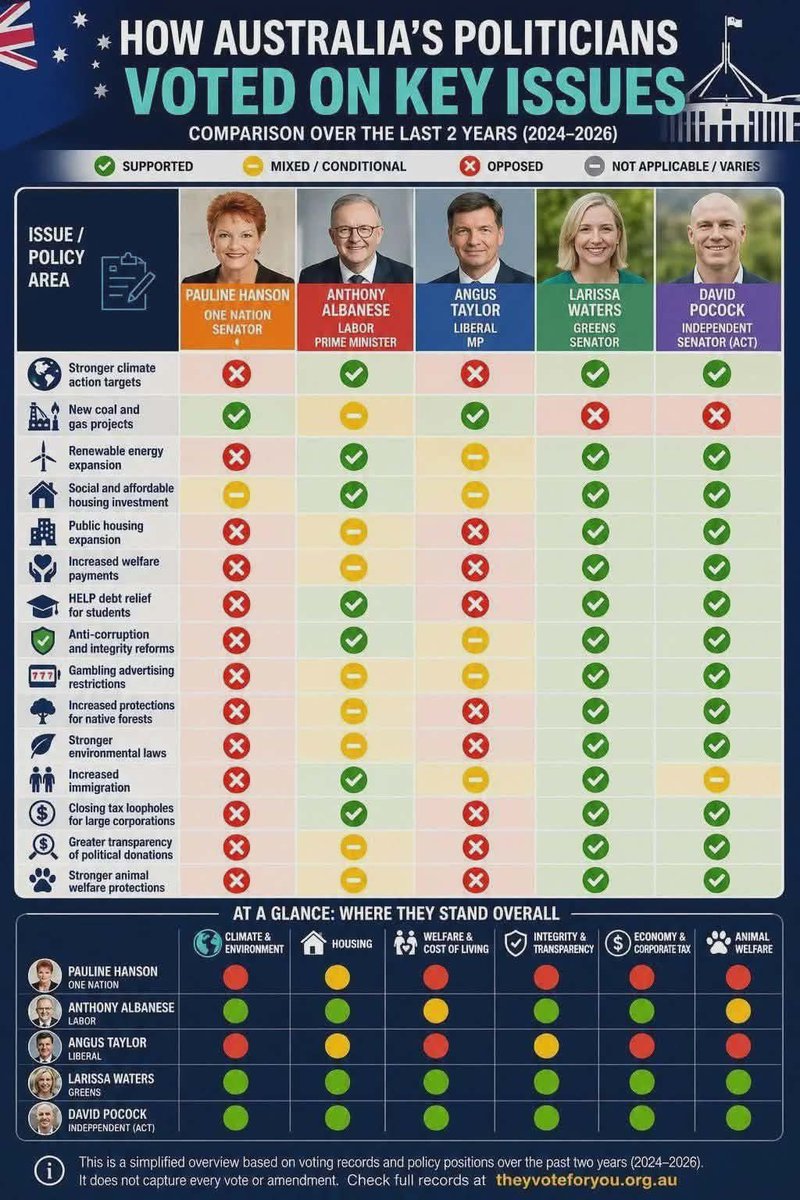
David Pocock tears into Pauline Hanson’s gas plan, says it’s a “red flag" it being announced “at the gas industry conf” while “getting the red carpet” from gas giants who spent millions lobbying against an export tax
“I just want a fair return on the export of our gas”💥 #auspol
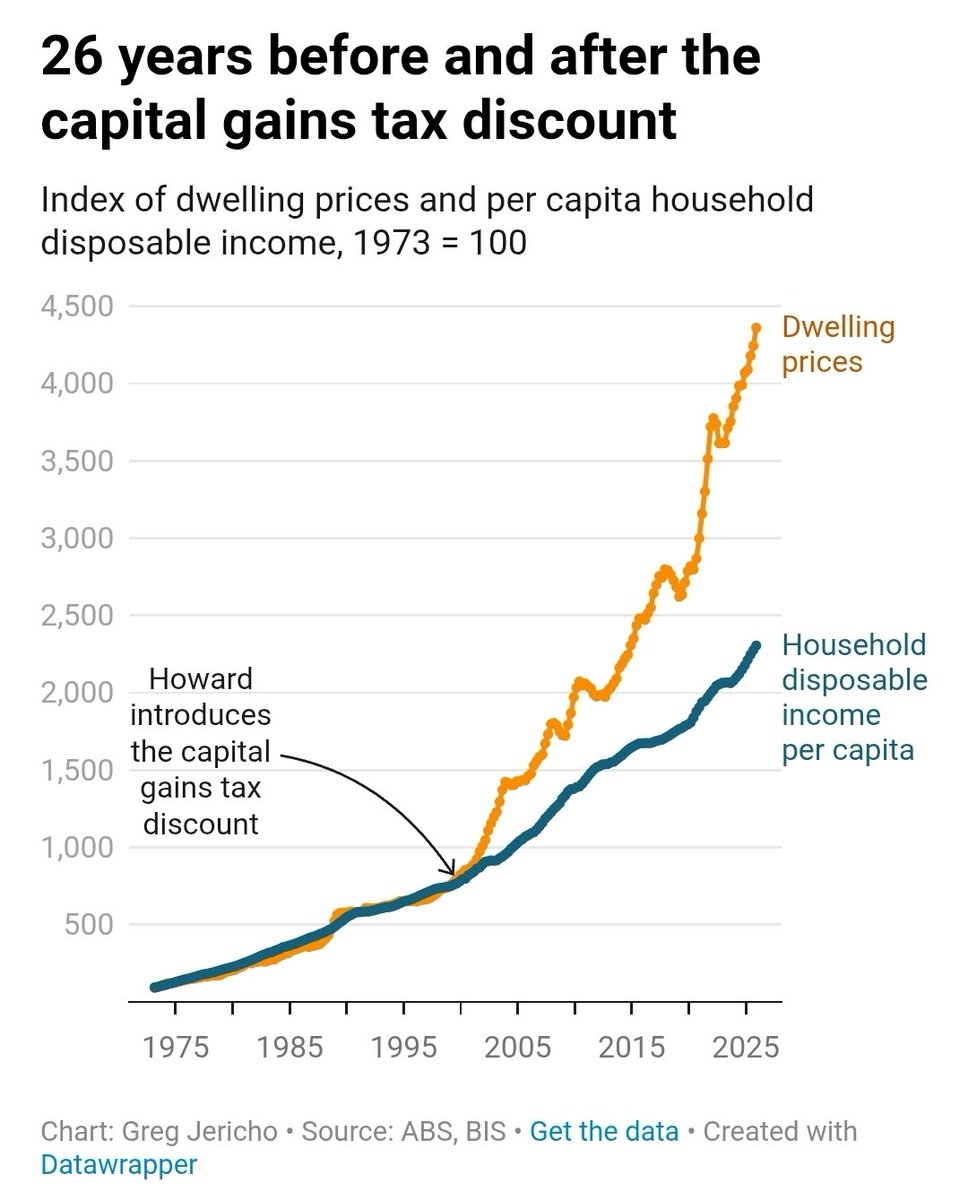
"Over the last ten years, the population has increased by 16%, and the number of homes has increased by 19%."
"The housing crisis wasn't caused by a drop in supply."
@MattGrudnoff@auspol
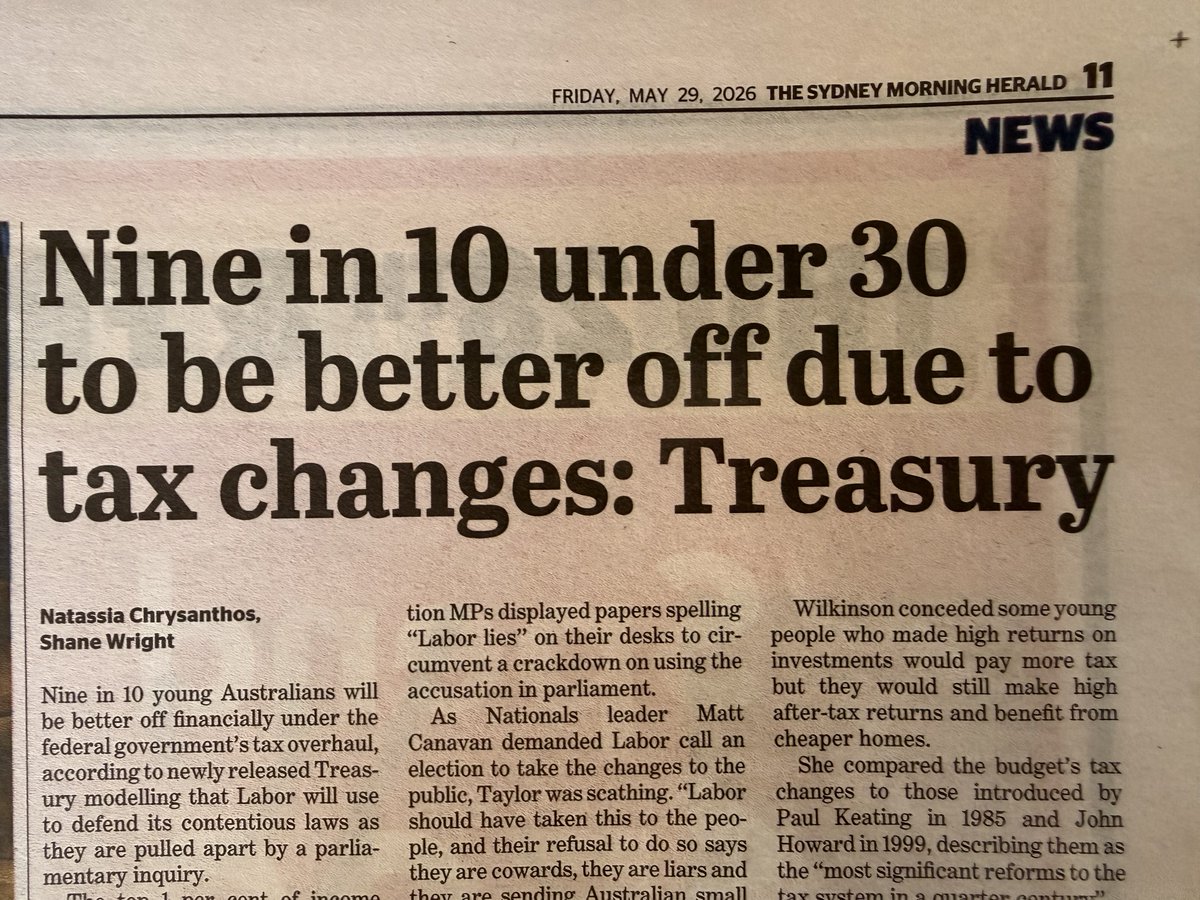
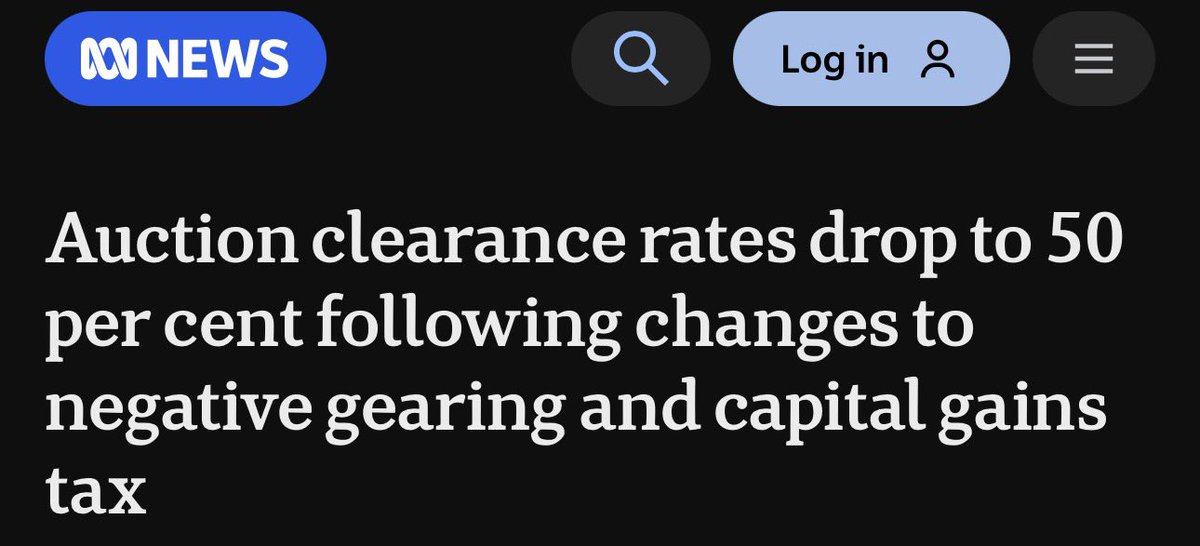
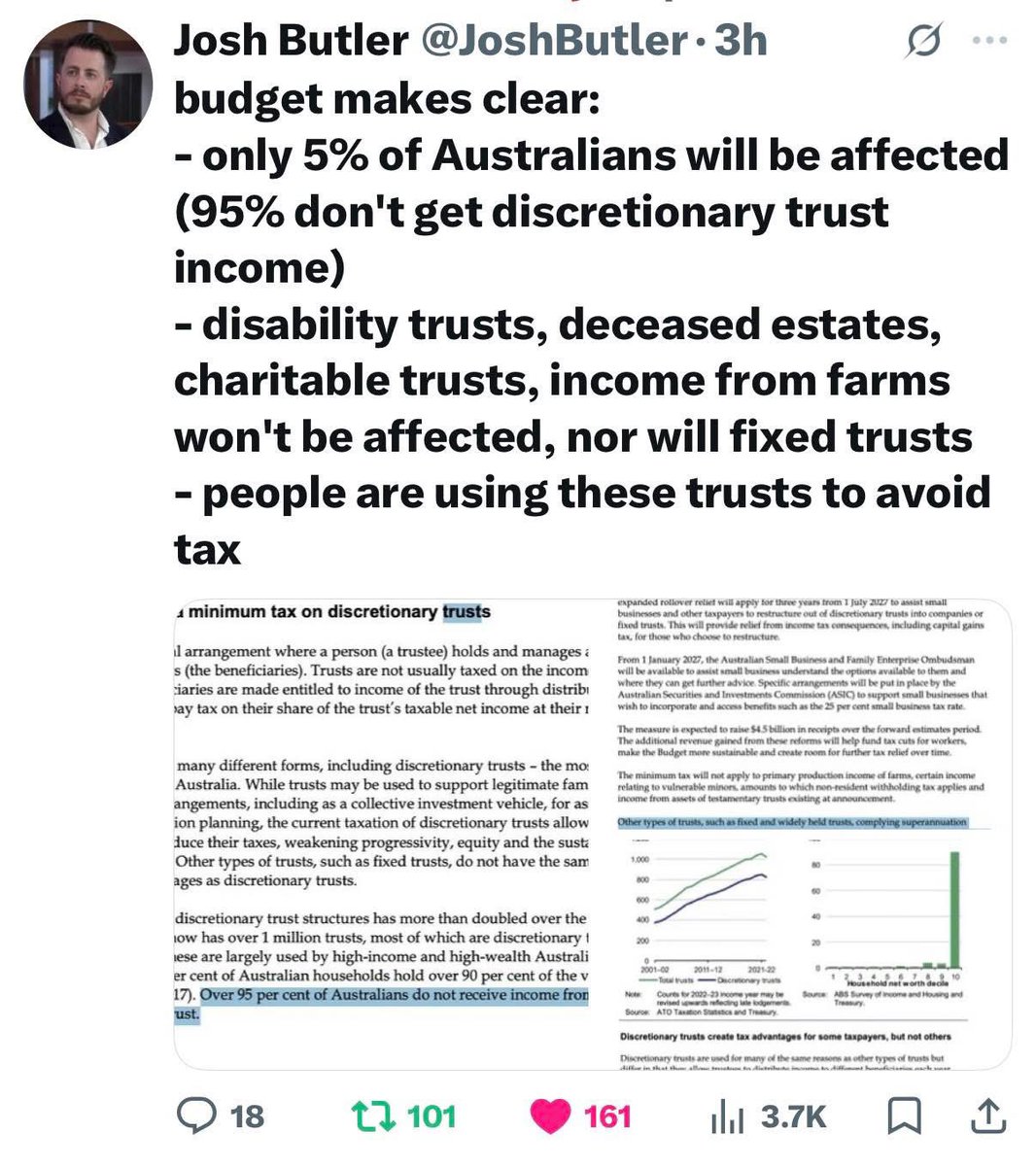
I'm not going to allow BS to go through to the keeper regarding the extremely sensible CGT changes proposed by @JEChalmers. Tonight, I listened to an accountant tell a group of people that someone on a $40k income pays $3,200 in tax on a capital gain of about $40k. I called BS, asking what % of people on $40k have the cash to invest to make such a significant capital gain. He had to concede that his example was an exaggeration of proposals that were not even legislated. This example is the same BS the LNP/ ONP/ Rinehart/ Murdochracy coalition is trying to spin to the 95% of the population who carry the tax burden. It’s Time the 5% pay proper tax.