The Guardian's @seaningle first broke this story, and we decided it was worth unpacking from a 🇨🇦perspective, as this could deeply impact Andre De Grasse's career.
BC is sending 11 endurance (800m-marathon) athletes to the Olympics! Only 1 of those athletes is a member of the BCEP (BC Endurance Project). @BC_Athletics I think it's time to start giving that $60,000+ a year you give to BCEP to some of BC's other athletes and coaches.
Very end of the hearing: "Oh BTW, what about privacy, and what about smart contracts?"
This should have been the focus of this entire hearing. Meanwhile, China has launched #DCEP to the public.
#smartcontracts#DeFi#Crypto#fintech#CBDCs#stablecoins
If you're interested in where the US is at with a digital currency, there is is a live stream senate hearing going on right now, including Stanford economist @DuffieDarrell https://t.co/QdRfP2HfH0
A central bank digital currency would not be open and decentralized, and would not then require mining; so it wouldn't have a big environmental footprint. Not bigger than the current payments system.
@jthorpe11 The yap stone analogy came out of procrastinating from actually writing my first draft. I read far too much about the history of money in order to avoid having to write about it myself.
@schmarkty@globeandmail@globebusiness I was not expecting twitter to make my day today! I appreciate your kind words. I've got a few followup stories in the works. Fascinating and important subject that I look forward to exploring further.
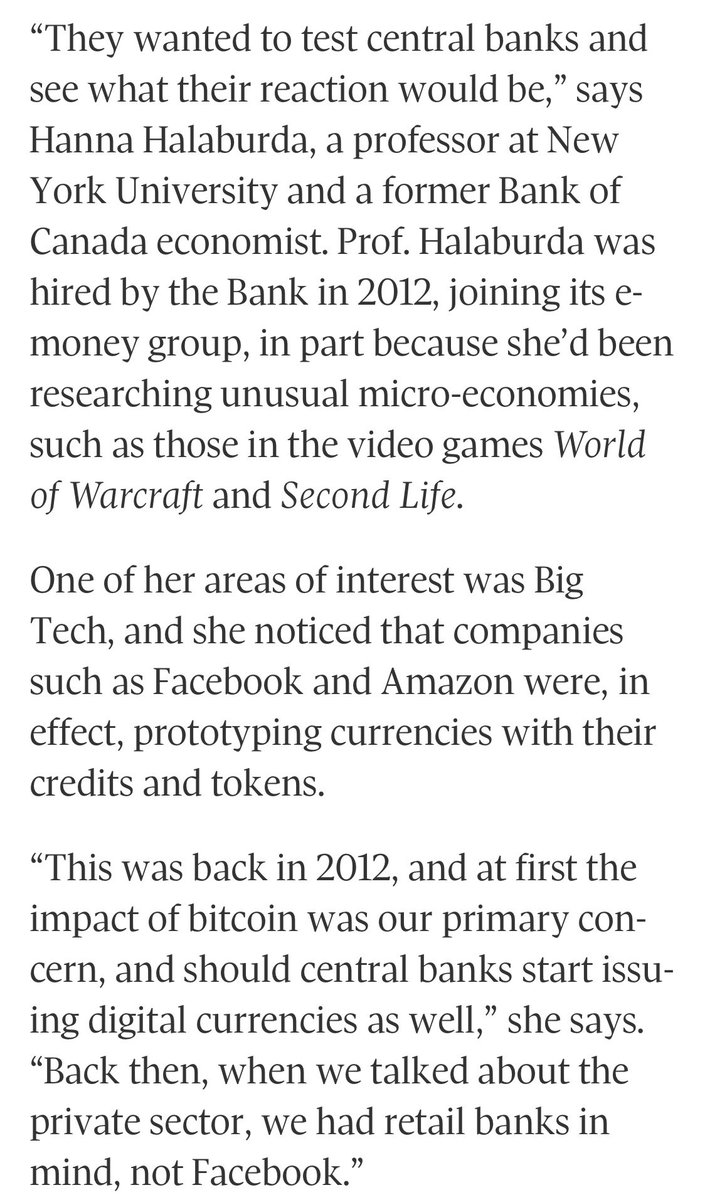
A thread on a story I wrote for @globeandmail@globebusiness about the future of money--an excuse to talk to some of the smartest people in the world about the the end of privacy, Facebook's near takeover of the global economy, and World of Warcraft gold. https://t.co/sAp0I33vK2
The most exciting aspect of a central bank digital currency: government could program in policy decisions... And that's also potentially the scariest thing.