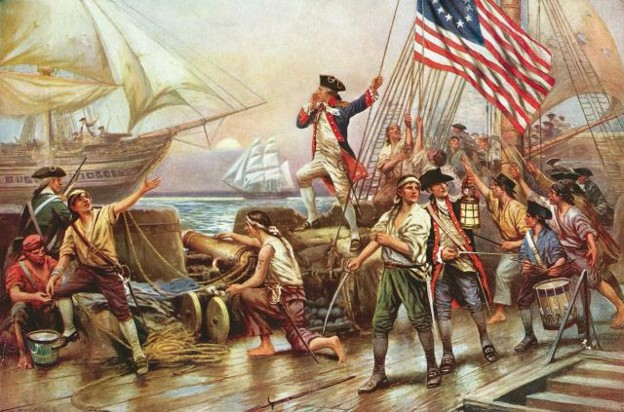
On this day in 1779, an American captain stood on the deck of a ship that was literally sinking under his feet, on fire, riddled with holes, half his crew dead or wounded, and when the enemy shouted across the water asking if he surrendered, he roared back a line that the United States Navy has never forgotten: "I have not yet begun to fight!" His name was John Paul Jones, and what he did that night made him the founding legend of the American navy.
Understand how insane the setting was. Jones was not defending American waters. He had taken the fight to the enemy's home, cruising in a small squadron right off the coast of England itself, terrorizing British shipping in their own front yard. His flagship was an old, worn-out French merchant vessel he had converted into a warship and renamed the Bonhomme Richard, in honor of Benjamin Franklin's "Poor Richard." It was slow, tired, and outgunned.
Off Flamborough Head, Jones ran into a British convoy escorted by a brand-new, faster, more powerful Royal Navy frigate called the Serapis. By every rational measure, Jones should have run. The Serapis was a better ship with heavier guns. Instead, Jones attacked.
The battle that followed, fought into the night under a rising moon, was one of the most savage ship-to-ship duels of the entire age of sail. Early on, disaster struck the Americans: two of the Bonhomme Richard's big old cannon burst when fired, blowing apart their own gun crews and leaving Jones dangerously short of firepower. The Serapis hammered the Richard mercilessly, its heavier guns tearing the American ship to splinters, opening holes below the waterline, setting fires. The Richard was being destroyed.
So Jones did the only thing that could save him. If he could not win a gunnery duel, he would not fight one. He drove his ship straight into the Serapis and lashed the two vessels together, hull against hull, muzzle to muzzle, so close the gun crews were practically fighting through each other's ports. Now it was not a naval battle so much as a brawl, and Jones's American and French sailors and marines could rake the enemy's decks with musket fire and grenades from the rigging.
It was in the middle of this hell, with his ship clearly sinking and afire, that the British captain called over, reasonably, to ask if the Americans had had enough and wished to strike their colors. And Jones, standing on a doomed deck, gave the answer that became immortal: he had not yet begun to fight. And he meant it.
The turning point came from above. One of Jones's men climbed out on a yardarm over the enemy ship and dropped a grenade down through an open hatch into the Serapis, where it touched off a chain of gunpowder charges. The explosion ripped through the British gun deck, killing and maiming dozens of men in an instant. The fight went out of the Serapis. Its captain, his own ship now wrecked and burning, finally surrendered.
And here is the almost unbelievable ending. John Paul Jones had won, but his own ship was beyond saving. The Bonhomme Richard was so shattered that it slowly sank over the next day, and Jones had to move his victorious crew onto the captured Serapis and sail away in the enemy's ship, because his own had gone to the bottom. He won the battle and lost his vessel, all at once.
The victory made him a hero on both sides of the Atlantic, a symbol that the infant United States could carry the war to the mightiest navy on earth and win. To this day, the Navy calls John Paul Jones its father, and it teaches new sailors his answer from that burning deck. Remember September 23, 1779, and the man who was sinking, and on fire, and outgunned, and answered a demand for his surrender by saying he had not yet begun to fight, and then proved it.
Wounded three times, his legs shot out from under him so he could not walk, Ray Duke told the two men carrying him to put him down and run. He knew he was slowing them, and slowing them meant they would all die. So he stayed, propped up, pouring fire into the charging enemy, and that was the last anyone saw of him alive.
Duke was an Army sergeant first class from Tennessee, leading a platoon near Mugok on April 26, 1951, during the Chinese offensive. When his platoon was ordered to pull back, he learned that several of his men had been left isolated and cut off in the ground they had just given up, surrounded and fighting for their lives. He would not leave them there. He gathered a small force and led a daring assault back into the enemy to reach the trapped men and pull them out.
Having rescued them, he stayed in the fight. Though he had been wounded by mortar fragments, he moved calmly along his platoon's line, coordinating their fire and urging his men to hold firm against the mounting enemy assault. He was steadying the whole defense by walking the line under fire.
Then he was wounded again, a third time, this time hit in both legs. He could no longer walk. Two of his men picked him up and started carrying him off the hill to safety, but Duke quickly understood the arithmetic. Two men hauling a third could not move fast enough, and the enemy was closing in. Carrying him was going to get all three of them killed.
So he ordered them to leave him. He told the two men to put him down and save themselves, to get to safety while they still could. And then Ray Duke, unable to stand, propped himself up and kept fighting. The last time his men saw him, he was pouring devastating fire into the ranks of the onrushing enemy, buying them their escape.
They got away. Duke did not. He was captured, and he did not survive captivity. He died as a prisoner of war a few months later, in November 1951.
Ray Duke was posthumously awarded the Medal of Honor. The sergeant who charged back to rescue his cut off men, and then, when his own legs were gone, refused to let them die dragging him along, and stayed behind firing so they could live.
I need every single Conservative in the United States to watch this video.
This is the most important video that I will put out for midterm elections in November.
@denstarr4 I'm in SoCal (Orange County). Our Edison bill was $511 last month with the thermostat set at 77. And we don't deal with anything close to the heat you get there.
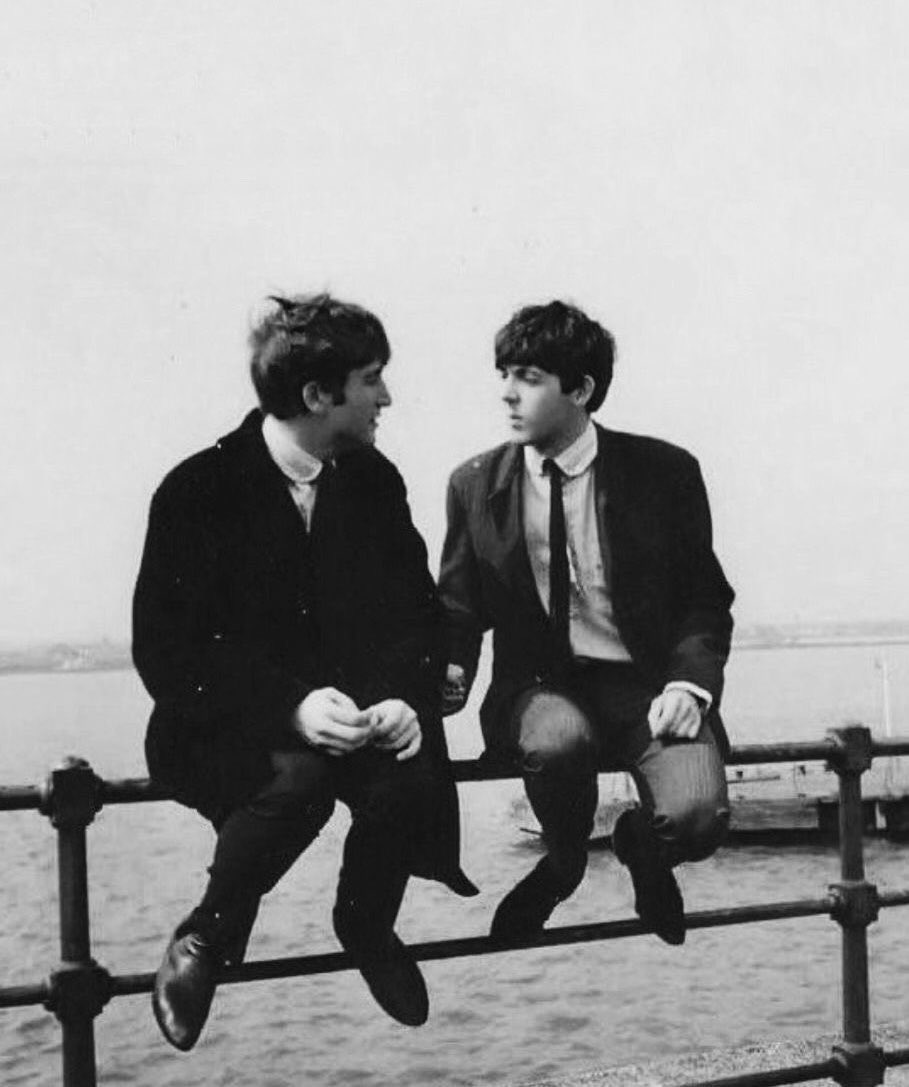
제 인장에도 박혀있는 Think about me every now and then, my old friend 와 관련된 마법같고 거짓말같은 일화
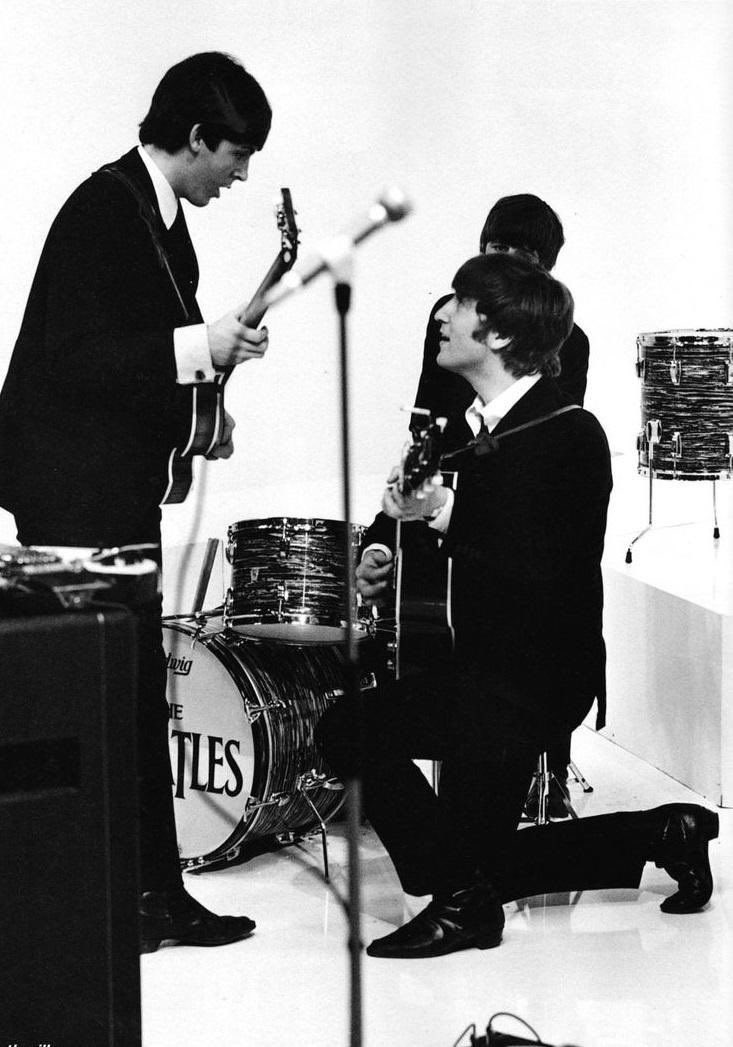
1981년, 존 레논의 사망 직후 폴과 린다는 칼 퍼킨스를 집으로 초대함. 폴의 새 앨범 노래인 "Get it" 녹음을 도와달라고 칼을 부른 것. 칼은 그들과 8일을 같이 머물렀고 조지와 링고도 녹음을 도와주러 왔다.
전설과도 같은 시간을 함께 했던 친구들은 아주 좋은 시간을 보냈다-고 칼은 말함.
"제가 떠나기 전날 밤, 친구를 만나러 여기까지 온 게 너무 행복해서 이 느낌에 대한 노래가 하나 떠올랐어요. 그런데 제 맘속에서 노래를 꺼낼 수가 없었어요. 너무너무 강한 느낌이라서 글이나 음표조차 쓸 수가 없었어요. 참 이상한 일이었어요. 왜냐하면 저는 항상 노래가 생각나면 바로 써 내려가거든요.
다음날 아침, 저는 "My Old Friend" 라고 이름 붙인 노래를 린다와 폴에게 들려줬어요. 초대해줘서 고맙다고, 선물이라고 하면서 말이지요.
노래를 절반쯤 불렀을때, 그러니까
If we never meet again this side of life, in a little while over yonder, where there's peace ans quiet, my old friend, won't you think about me now and then?
( 만약 우리가 살아있는 지금 이 세상에서 다시 만나지 못한다면, 평화가 있고 조용한 저쪽에서, 내 오랜 친구여,때때로 나를 생각해주지 않겠어?)
이 가사를 부르는데 갑자기 폴이 눈물을 흘리기 시작했어요. 그 눈물은 그치지 않았고 그는 밖으로 나가서 한참을 서 있었어요. 눈물이 폴의 예쁜 볼을 따라 끊임없이 흘러내렸어요.
그때 린다가 말하더군요.
"칼,정말 고마워요."
"린다, 미안해요 울게 하려던 건 아니었어요"
"하지만 폴이 울잖아요 폴은 그래야 해요. 존에게 그 일이 있은 후 제대로 쉬지도 못 했거든요."
그러면서 린다가 제게 손을 얹고 말했어요.
"하지만 어떻게 아셨죠?"
"뭘 알아요?"
제가 묻자 그녀가 이야기 했어요.
"다코다 빌딩에서 존이 마지막으로 폴에게 한 말을 아는 사람은 세상에 단 두 사람뿐이에요 그렇지만 이제는 세 명이네요. 그 세 명 중 한 사람은 당신이고요. 당신도 알고 있네요."
"세상에 나 지금 겁먹었어요! 무슨 소리를 하는건지 모르겠어요!"
겁먹은 내게 린다는 다코다 빌딩에서 존 레논이 폴에게 마지막으로 한 말이 무엇인지 알려주었어요.
존은 폴의 어깨를 가볍게 두드리며
"때때로 나를 생각해줘, 내 오랜 친구야(Think about me every now and then, my old friend)"
라고 말했다더군요.
@FrankBr05713205 As a whole I agree. The problem in that industry is a matter of trust - or lack of trust. Sadly. A few rotten apples spoil the whole bunch. I've stuck with one guy since he opened his shop in the late '80's because I trust him.
@67gta390 Thanks a lot Greg. We had a ball as usual acting like we're both 14 again. My brother is three years younger than me, but we're very close after sharing a room and bed all during our childhood.