@alvinsswai@kalegamyeh Hii Hata Uclaim Sidhani Kama Inafanya Kazi, Mi Niliclaim Before Hawajabadili Mfumo Hawakuapporove, Baada ya Mfumo wao Kuleata Magumashi Siku walinipigia Simu Wakarekebisha, Wakaniambia Niclaim Tena Hii ni wiki inaenda ya Nne Hakuna walichofanya
Registration for the 5th ISCoS International African Symposium in Ghana, South Africa & Tanzania is now open!
Learn from SCI experts, network globally, and advance spinal cord injury care.
Register now - https://t.co/GqDQ8WeArW
#ISCoS #SpinalCordInjury #AfricanRoadshow #SCI #MedicalEducation
Why submit an abstract to #ISCoS2026?
Hear directly from poster and oral presentation award winners from ISCoS 2025 on why presenting their work mattered — from feedback and discussion to visibility across the global SCI community.
▶️ Watch the video:
https://t.co/kQRNpCMgm1
📄 Learn more & submit your abstract:
https://t.co/XgoWy13oIx
#SpinalCordInjury #SCIResearch #ClinicalResearch #AlliedHealth #ECR #Rehabilitation
This is why foraminal disc herniations are so painful ⚡
Note the position of the dorsal root ganglion (DRG) which lies in the intervertebral foramen (IF).
The presence of a disc protrusion in this region may lead to irritation or even direct compression on the DRG - which is extremely sensitive to mechanical and chemical stimuli.
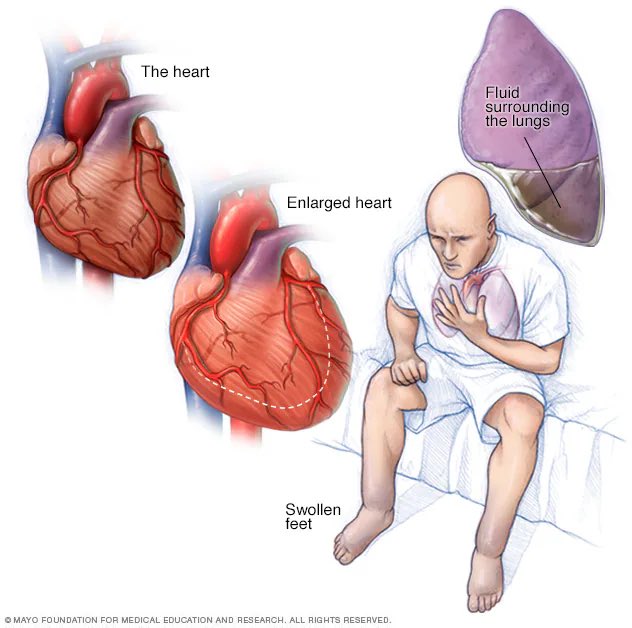
🚫 Medicines to Avoid in Heart Failure (HF)🫀
🔺 NSAIDs – may cause fluid and salt retention, worsening HF.
🔺Corticosteroids – promote sodium and fluid retention; if needed, use the lowest dose for the shortest possible duration.
🔺 Beta-blockers – avoid starting in acute or uncontrolled HF; start only when stable.
🔺 Pioglitazone – causes fluid retention and can trigger HF exacerbation.
🔺 Alogliptin – linked to worsening HF in moderate to severe cases.
🔺 Vildagliptin – avoid in severe HF due to possible fluid retention.
🔺 Non-DHP CCBs (Diltiazem, Verapamil) – negative inotropic effect; avoid in HFrEF.
🔺 Flecainide & Dronedarone – can worsen arrhythmias and heart failure.
You’re seeing a young lupus nephritis patient in remission.
She complains of dyspnea on exertion.
🫁 Chest X-ray — normal
❤️ ECG — RV strain & RV
🩸 D-dimer — 700
🩻 CTPA — no Pulmonary embolism
��� You suspect Pulmonary Hypertension (PH) — but she can’t afford a right-heart cath.
All you have is an Echocardiogram.
👉 Here’s the simplest, step-by-step way to detect PH from echo — even if you’re not an echo geek.
🎯 Before going deeper, I hope you are aware of change in definition of pulmonary hypertension
📜 Old:
•Mean PAP ≥ 25 mmHg
. (PVR) > 3 Wood Units
📘 New (6th World Symposium, 2018):
•Mean PAP > 20 mmHg
•Pulmonary Vascular Resistance (PVR) > 2 Wood Units
•Pulmonary Capillary Wedge Pressure ≤ 15 mmHg
👉 So even “mild” elevations now count.
#RheumTwitter #CardioTwitter #Rheumatology #Immunology
#Sullysrounds #MedX #Medtwitter #Mnemonics #Medicine #History
@DrAkhilX @IhabFathiSulima @Janetbirdope #MedTwitter #RheumTwitter @CelestinoGutirr