You applied for a #PhD / postdoc position, but the professor does not reply to you. Why?
As many students are concerned about the lack of response, let me try to explain this phenomenon point by point:
▫️
1. In industry, recruiters and HR take care of the selection process. They are hired specifically for this.
BUT in academia, it is the professor’s job to find and hire the right person (and find time for that).
▫️
2. A typical faculty is HEAVILY overloaded by duties. It’s like being a CEO of a small company + HR + recruiting + R&D lead at the same time.
As a result, faculties are often struggling with finding time to reply to each candidate.
▫️
3. Many candidates ask for a response (and feedback) and expect engagement from the faculty.
Now, imagine you are a professor. You’re getting 5-15 emails per HOUR from colleagues, collaborators, funding agency, admins, students, etc.
But you can dedicate only 1-2 hours per day for ALL your emails. You will barely have time to scroll through your mailbox!
▫️
4. The number of candidates can exceed 300-400 per position, with many emails from candidates who expect replies.
So, as a result, professors often reply IF the candidate is of interest to them. Of course there are those who find time to send a short message to everyone, but such people are statistically rare.
▫️
So, my advice:
1️⃣ Apply and don’t wait for a reply. Submit your application to the groups that you would like to join. If you don’t get a reply, you can send a follow-up email but don’t do it many times.
2️⃣ Tailor your cover letter to the position, make it stand out. When competition is so high, you want your application to be memorable.
3️⃣ See the absence of reply as “no position”. And don’t stress over it. Finding the right fit takes time for all of us.
4️⃣ IF you are ready to invest into traveling:
- You can say that you will in their city/town, and if they are interested, you can visit their group and give a research talk (without any obligations from their side). If they agree, it may be your chance to present yourself in person.
▫️
Unfortunately, the academic system is constantly overloading faculties. This causes a lot of misunderstanding.
Many faculties wish they had that time to respond to everyone. I do my best to find this time. But it doesn’t always work out smoothly.
#AcademicTwitter #AcademicChatter
Short paper submissions for the joint AAAS & AAAP Conference in Melbourne 2024 are now open!
Details via the link below (and why not sign on for conference updates while you're there?)
https://t.co/CrWqZivRlx
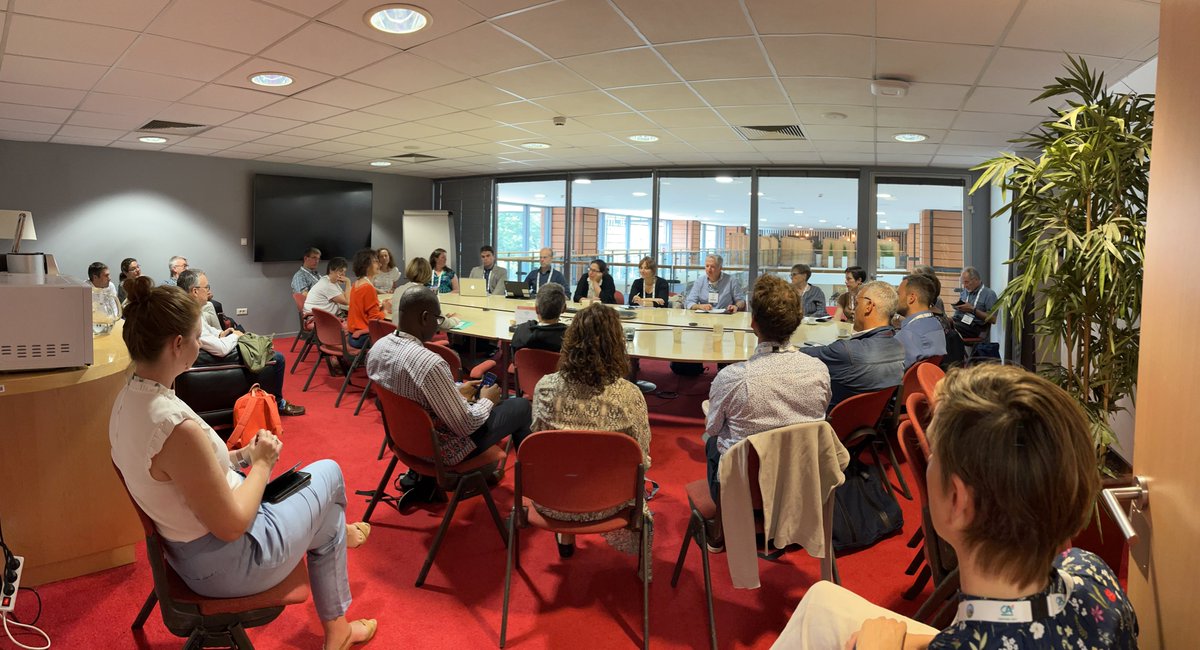
Animal editorial team met @eaap2023Lyon. I. Ortigues, editor-in-chief, shared that, contrary to other journals, when you publish in Animal, part of APC returns to Consortium (@EAAPofficial@INRAE_Intl@BSAS_org) and is used to support activities & members https://t.co/g9q7Ezb6tR
Thanks @abclandline for showcasing our grazing trial, along with @meatlivestock 's Margaret Jewell, skip forward to 20mins to see our snippet... spoiler alert our trial did NOT use asparagopsis https://t.co/Z5BhLXxw01 @Mariano9001
If you are interested in working to reduce methane emissions from grazing cattle in Australia, then get in touch with me, we have a fully-funded PhD position available at UQ. #phd#methanereduction#uq
https://t.co/biNaSD3uSs
Happy to observe that our trial is getting attention by the media. @meale_lab explaining our project in Landline. First research project around the world evaluating 3-NOP on grazing conditions.
Dr. Gabriel Ribeiro's research focuses on finding nutritional strategies to improve health, performance and profitability while reducing the environmental impact of beef cattle production.
Watch Dr. Ribeiro's Advancements in Agricultural Research seminar: https://t.co/yN1X9jxhNt
Great work @DanielForwood publishing your final thesis chapter investigating the effects of feeding carrots on the metabolome in lambs.
https://t.co/f8LrTpsG2U
Check out our paper looking at screening emerging feed additives for use in the Australian grazing context https://t.co/39vwvLp5p4
@Mariano9001 @UQscience
The potential of seaweed to reduce methane from livestock is real, newly published research says; but a balance must be struck with maintaining animal health, food quality and sustainable production. Read the research at: https://t.co/h5DDexKCNL #seaweed#methane
🟢 NEW report on the state of grassland #soils
A baseline for future work to explore the impacts of #livestock management on soil carbon at country and farm levels.
Free download👉https://t.co/Mv7c8I0l09
#ClimateAction
𝐂𝐚𝐧 𝐰𝐞 𝐢𝐦𝐚𝐠𝐢𝐧𝐞 𝐚 𝐰𝐨𝐫𝐥𝐝 𝐰𝐢𝐭𝐡𝐨𝐮𝐭 𝐥𝐢𝐯𝐞𝐬𝐭𝐨𝐜𝐤? 🤔
@LivestockVoice has published an article analysing environmental, economic aspects related to abandoning the European livestock model. 5 consequences are considered inevitable👇
https://t.co/jXN3AEiD8j