A 27-year-old pointed Claude Code at 4,000 Obsidian notes and woke up to an employee he never hired.
6 years of notes. Ideas, half-finished essays, 212 book summaries all rotting in a folder he stopped opening in 2024.
Then he noticed something obvious that almost nobody uses.
Obsidian is just markdown files, and Claude Code lives in the terminal which means his entire second brain is one cd command away from an AI that can read all of it.
So he ran it once, overnight.
By 7 AM the agent had crawled every note, linked 340 orphan ideas back into the graph, flagged 18 contradictions between things he believed in 2021 and things he wrote in 2025, and drafted 6 essays from threads he forgot existed.
Now the loop runs every night while he sleeps.
New note goes in messy wakes up tagged, linked, connected to 3 older notes he'd never have found himself. His daily note greets him with what he was thinking exactly 1 year ago and why he was wrong.
Cost of the setup: 1 folder path and a 400-word CLAUDE.md file.
No plugins, no Notion AI subscription, no $30/month "second brain" course.
People spent a decade building vaults that just sit there.
He built one that thinks back.
Visualizing complex inventions and machines with GPT Image 2 is so much fun.
2x2 grid, do this for 4 famous complex engines: > SUBJECT: $ complex_invention // e.g., " ## THE CANVAS The background is a modern, apple quality patent paper. AI infers the colors, seals, diagrams, details. ## THE ANOMALY (3D POP-OUT EFFECT) - The 2D drawings on the paper are magically assembling themselves into a Photorealistic 3D Object right off the page. - Base of object: Still looks like flat lines drawn on paper. - Top of object: Fully materialized into real, tactile materials (AI infers -> e.g. polished brass, oiled mahogany, glowing glass). ## LIGHTING AI-inferred lighting casting realistic shadows of the 3D machine onto the flat paper.
EYE FLOATERS - a sign your body is quietly suffering.
This is how they form, what that tells you about your underlying health, and how to prevent/eliminate them.
The vitreous fluid in the eyes is what makes up most of your eyeballs.
That fluid isn't just water, it's full of collagenous protein, hyaluronic acid and other structural components that give it its characteristic jelly-like features.
It also contains tons of antioxidants, in order to prevent these structures from breaking down from oxidative stress.
Without enough of these antioxidants, these structures break down and clump up in the vitreous.
The back of the eyes is what facilitates vision (the retina).
If there's anything in the vitreous obstructing the retina from your visual field, it will impair your sight.
If that's these clumped up structures, then you get floaters.
Eye floaters are thus a sign that your antioxidant system is impaired.
This is not just a cosmetic issue: your antioxidant system is ground zero for ensuring every single system in your body runs smoothly and isn't damaged.
Literally EVERYTHING, from gut issues, to cognitive decline, to cancer and diabetes, is at least in part driven by oxidative stress.
Oxidative stress, yes it will destroy your vitreous fluid and give you eye floaters.
It will also destroy every other part of your cells and tissues.
It:
◇ Disrupts mitochondrial function
◇ Impairs gene expression
◇ Triggers inflammatory response
& so much more.
This system is dependent on tons of nutrients and other factors, which I've covered in detail previously (will link below).
There's also some evidence that excessive blue light exposure from electronic devices can contribute to floaters.
This type of light is much higher in energy than other colors / forms so it is more liable to increase free radical production in the eyes.
This type has been linked to numerous other visual conditions.
Because of this - antioxidants can be highly protective.
One study (PMID: 34647961) for instance, people took:
⬩125 mg l-lysine
⬩40 mg vit C
⬩26.3 mg grape vine extract
⬩5 mg zinc
⬩100 mg sour orange extract
and showed substantial reductions in eye floaters.
Ultimately this is a sign of systemic underlying poor antioxidant status, which can be driven by a number of other factors like impaired mitochondrial function, systemic inflammation, toxins and more.
🚨do you understand what just happened to mathematics..
A 23 year old with ZERO math degree opened ChatGPT on a Monday afternoon out of boredom.
80 minutes later - a 60-year-old unsolved problem was dead.
The problem? World's top mathematicians had tried for decades. Failed..
The tool? A $20/month subscription..
The effort? One single prompt..
And here's the wild part - the AI used a method everyone already knew existed. Nobody just thought to apply it HERE.
Terence Tao (literally the greatest living mathematician) called it "a meaningful contribution that goes well beyond solving this one problem"
We are not ready for what's coming next..
The same hands that built our timeless walls also made healthy and beautiful kitchen utensils from clay, the same material they built with.
Clay keeps water cool without a refrigerator. Clay keeps food warm without a stove. Clay pots absorb and release moisture, regulating temperature the same way a well-built clay wall regulates heat inside a room.
This is not coincidence. It is the same material intelligence applied at two different scales.
Africa, Asia, and Latin America all figured this out independently. The earth gave them the same answer because the problem was the same, how do you live well with what is available.
Then plastic came. Then concrete came. Then electricity bills came.
The material never failed us. We abandoned it.
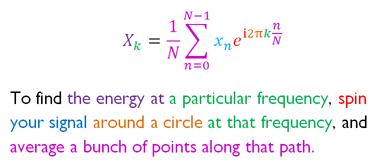
Calculus decoded. 🔍
Ever looked at a textbook definition for a derivative and felt like it was just alphabet soup?
Let’s translate it into plain English.
At its core, this concept is just a story about motion and change. Whether you are calculating the velocity of air flowing over an airfoil, the damping of a mechanical spring system, or simply how fast a car accelerates, the derivative is the engine behind understanding it all.
Here is the cheat code based on the breakdown:
• The Change in Quantity: You start by taking the "new value" of something and subtracting the "old value." This tells you exactly how much your quantity changed.
• Divided By: You then divide that change by the "time interval" which is simply how long it took for that change to happen.
• The Magic Step: Here is the real trick. You imagine shrinking that time interval down until it becomes very, very small so small it tends to zero.
When you divide the change in your quantity by that microscopic, almost-zero sliver of time, you get your "rate of change with respect to time." It isn't a mystery; it is just capturing a single, perfect freeze-frame of the universe in motion.
Bookmark this translation for the next time calculus tries to intimidate you!
Indeed, it was *because* I was not from the aerospace industry that SpaceX made such radical breakthroughs. Same for Tesla.
Those in the industry would have if they could have.
If you look at this profile, this is the archetype of the individual who can leverage coding agents the most: technical expertise mixed with extreme taste and the eye of an artist can create beautiful software.
"I calculated that civilization needs just 50 machines to build everything from scratch.
And what people can't believe, is that I posted the full plans, designs, instructions and how anyone can build these machines for themselves."
found a website where you can create, program and test electronic hardware. it already has some featured projects
really great if you want to test before building your own hardware








![craftian_keskin's tweet photo. Nano Banana 2 vs Nano Banana Pro
Interestingly, NB2 is better.
Prompt;
{
"Objective": "Create a modern architectural comparison poster showing a photorealistic metallic-toned house interior on the top and its architectural blueprint on the bottom.",
"Composition": {
"layout": "vertical split",
"aspect_ratio": "3:4",
"top_section": {
"type": "photorealistic interior render",
"scene": "modern living space with metallic color tones",
"elements": [
"brushed steel accents",
"gunmetal furniture details",
"polished chrome lighting fixtures",
"large modern sofa with cool gray metallic fabric",
"minimalist metal coffee table",
"wide floor-to-ceiling windows",
"soft natural daylight entering the room"
],
"style": "extremely realistic architectural photography",
"lighting": "soft natural daylight mixed with subtle reflections on metallic surfaces",
"materials": [
"brushed aluminum",
"steel finishes",
"cool gray stone flooring",
"matte metallic wall panels"
]
},
"bottom_section": {
"type": "architectural blueprint",
"style": "clean technical floor plan drawing",
"background": "dark blueprint blue",
"lines": "thin white architectural drafting lines",
"elements": [
"labeled rooms",
"walls and door swings",
"furniture layout",
"circulation paths",
"architectural measurements"
],
"visual_style": "professional architectural blueprint schematic"
}
},
"Environment": {
"aesthetic": "modern luxury architecture",
"design_theme": "minimalist metallic interior design",
"color_palette": [
"steel gray",
"silver",
"charcoal",
"cool metallic tones",
"deep blueprint blue"
]
},
"Rendering": {
"style_keywords": [
"architectural visualization",
"photorealistic interior render",
"metallic modern interior",
"architectural blueprint diagram",
"design presentation board"
],
"realism": "ultra photorealistic top render",
"detail_level": "extremely high detail",
"aspect_ratio": "--ar 3:4"
},
"Response_Format": {
"type": "image_generation_prompt_json",
"editable_fields": [
"top_section.elements",
"bottom_section.elements",
"materials",
"color_palette"
]
}
}](https://pbs.twimg.com/media/HDZMp9IXAAADfJJ.jpg)








![craftian_keskin's tweet photo. Nano Banana 2 vs Nano Banana Pro
Interestingly, NB2 is better.
Prompt;
{
"Objective": "Create a modern architectural comparison poster showing a photorealistic metallic-toned house interior on the top and its architectural blueprint on the bottom.",
"Composition": {
"layout": "vertical split",
"aspect_ratio": "3:4",
"top_section": {
"type": "photorealistic interior render",
"scene": "modern living space with metallic color tones",
"elements": [
"brushed steel accents",
"gunmetal furniture details",
"polished chrome lighting fixtures",
"large modern sofa with cool gray metallic fabric",
"minimalist metal coffee table",
"wide floor-to-ceiling windows",
"soft natural daylight entering the room"
],
"style": "extremely realistic architectural photography",
"lighting": "soft natural daylight mixed with subtle reflections on metallic surfaces",
"materials": [
"brushed aluminum",
"steel finishes",
"cool gray stone flooring",
"matte metallic wall panels"
]
},
"bottom_section": {
"type": "architectural blueprint",
"style": "clean technical floor plan drawing",
"background": "dark blueprint blue",
"lines": "thin white architectural drafting lines",
"elements": [
"labeled rooms",
"walls and door swings",
"furniture layout",
"circulation paths",
"architectural measurements"
],
"visual_style": "professional architectural blueprint schematic"
}
},
"Environment": {
"aesthetic": "modern luxury architecture",
"design_theme": "minimalist metallic interior design",
"color_palette": [
"steel gray",
"silver",
"charcoal",
"cool metallic tones",
"deep blueprint blue"
]
},
"Rendering": {
"style_keywords": [
"architectural visualization",
"photorealistic interior render",
"metallic modern interior",
"architectural blueprint diagram",
"design presentation board"
],
"realism": "ultra photorealistic top render",
"detail_level": "extremely high detail",
"aspect_ratio": "--ar 3:4"
},
"Response_Format": {
"type": "image_generation_prompt_json",
"editable_fields": [
"top_section.elements",
"bottom_section.elements",
"materials",
"color_palette"
]
}
}](https://pbs.twimg.com/media/HDZMp9pawAAKe8T.jpg)


