🩺 Med student using AI tools to make med school easier | 📚 High-yield mnemonics—a virtual notebook | 📩 Join newsletter for exclusive study notes & AI tools👇
Med school can feel like chaos—I know because I’m living it too. That’s why I started a website and a newsletter to share the AI-made notes, guides, and tips I use.
It’s not perfect, but it’s helpful. Maybe it can help you too.
You can subscribe here: https://t.co/1d4tL8MOtq
MI Localization by ECG 📍
🚑 Anterior MI = ST ⬆️ in V1-V4 (LAD occlusion)
🚑 Inferior MI = ST ⬆️ in II, III, aVF (RCA occlusion)
🚑 Lateral MI = ST ⬆️ in I, aVL, V5-V6 (LCX occlusion)
🚑 Posterior MI = ST ⬇️ in V1-V2 (PDA occlusion)
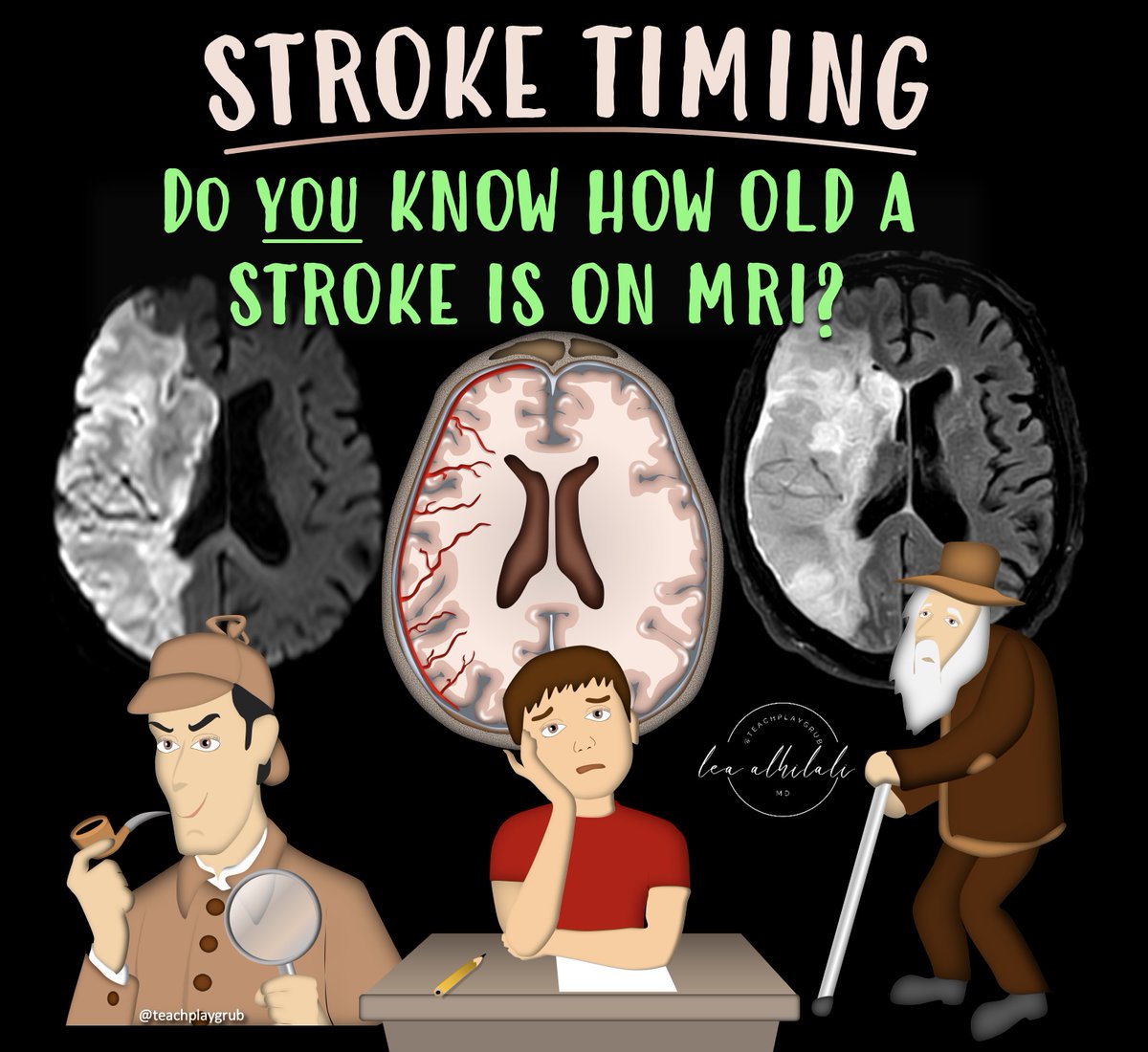
1/Time is brain! But what time is it?
If you don’t know the time of stroke onset, are you able to deduce it from imaging?
Here’s a thread to help you date a stroke on MRI!
5️⃣ Use This Framework to Make AI Your Personal Tutor
Works for:
✅ Study notes
✅ USMLE prep
✅ Patient cases
✅ Differential Dx
✅ Mnemonics
Stop using AI like Google. Start using it like a clinical tutor. Want a full cheat sheet with 10+ optimized AI prompts for med students?
OpenAI’s Expert Revealed the Best ChatGPT Prompt Formula (Med School Edition)
Most people use AI wrong—vague prompts = weak answers.
If you’re in med school, you’re missing out on game-changing AI power.
Here’s how to get perfect AI responses every time. (A Thread)👇
4️⃣ Give Context for Precision
Tell AI who you are & why you need it.
❌ “Explain atrial fibrillation.”
✅ “I’m a 4th-year med student prepping for OSCEs.
•Explain AF diagnosis & treatment
•Use a problem-based approach
•Skip textbook definitions”
More context = better