Scalpels out - Month 2 of #MedHistory begins tomorrow! 🔪🩺
Theme: The History of Surgery.
From ancient trepanation to modern transplants, we’ll explore how humans learned to heal with hands, steel, and science.
30 daily posts coming up, brace yourself for an exciting month! ✨
Larrey’s ambulances and triage system became the blueprint for modern military medicine,
inspiring Red Cross relief, paramedics, and battlefield evacuation systems still used today.
The first modern military surgeon. 🩺
#MedHistory#Napoleon
In the Napoleonic Wars, Larrey saw soldiers die waiting for care.
So he built horse-drawn ambulance wagons—light, fast, and staffed by medics.
They could reach the injured within minutes, saving lives before infection or blood loss set in.
He was legendary for speed—at Borodino (1812), Larrey reportedly performed 200 amputations in one day.
His motto: “The most humane thing in war is a prompt amputation.”
Quick surgery saved countless lives in an age before anesthesia.
Day 7: Dominique-Jean Larrey — The Surgeon Who Brought Speed to the Battlefield (1800s)
War was chaos. Surgery was slow.
Then came Dominique-Jean, Napoleon’s surgeon who invented the "flying ambulance" to rush wounded from the front lines.
The birth of battlefield medicine 👇
Though their dissections later became taboo, their notes survived.
Every scalpel stroke by surgeons for 2,000 years traced back to Alexandria, where Herophilus & Erasistratus first mapped the human body.
#MedTwitter#MedicalHistory
Day 6: The First Anatomists – Herophilus & Erasistratus of Alexandria (3rd Century B.C.)
Before modern anatomy, there was Alexandria.
In 3rd century B.C., Herophilus & Erasistratus did what no one dared: dissecting the human body to unlock its secrets.
The birth of anatomy 👇
Herophilus identified parts of the brain like the ventricles and even the optic nerve.
He measured pulse rates and linked them to heart rhythm, earning him the title “Father of Anatomy.”
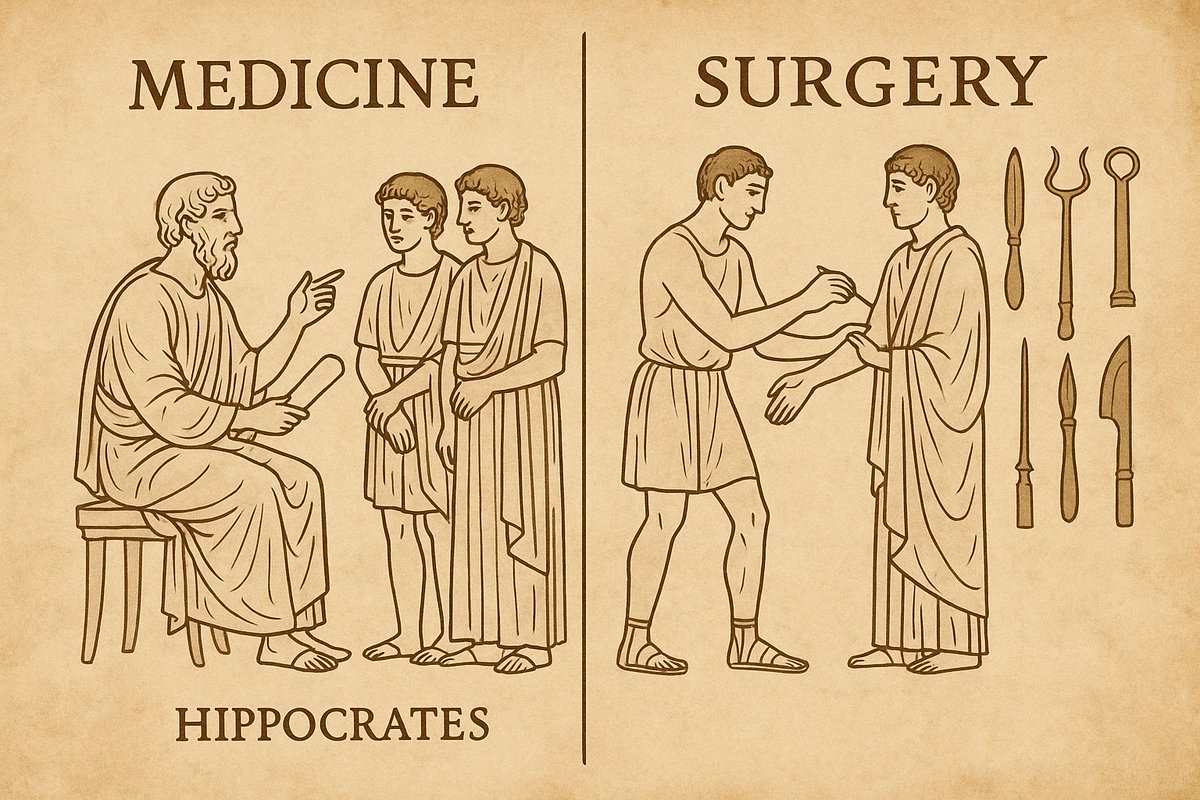
In Hippocrates’ Greece, surgery and medicine parted ways — the thinkers observed, the craftsmen cut.
But together, they formed the two hands of healing.
And from that division came the world’s first ethical code for doctors. 🏛️
#MedHistory#Hippocrates
Day 6: Hippocratic Greece — When Docs Refused to Operate
In Classical Greece (5th–4th B.C.), med took a major leap forward under Hippocrates, but here’s the twist:
Docs were forbidden to perform surgery.
Let’s look at why the father of med said, “I will not cut for the stone.” 👇
Yet Greek doctors weren’t entirely hands-off.
Texts of Hippocratic Corpus describe setting fractures, draining abscesses, bandaging wounds, and even trepanning skulls for head injuries.
They laid down methods that military and battlefield surgeons still drew upon centuries later
Hua Tuo’s innovations vanished after his death (legend says his notes were destroyed).
But his legacy lives on as China’s first surgeon and anesthetist, a reminder that science and compassion transcend time and culture.
#MedicalHistory#China
Hua Tuo – The First to Master Anesthesia (2nd Century A.D.)
Day 5 : Before modern anesthesia, a Chinese Dr, Hua Tuo did painless surgery using a herbal brew called mafeisan.
Almost 1800 yrs ago, he put patients into deep sleep, then operated.
Meet the world’s first anesthetist 👇
He also championed post-operative exercise for recovery—his “Five Animal Frolics” (mimicking tiger, deer, bear, monkey, crane) promoted blood flow and strength after illness.
Hua Tuo believed healing was both surgical and holistic.