🧘♀️ Every Sunday: Your Weekly Dose of Meditation Wisdom
Missed this week's insights? Here's what we explored:
✨ Perspective Shifts – How meditation literally changes what comes into view in your life (not just how you think about things)
🎯 Focus Training – Why every meditation is a focus exercise that builds real-world concentration
🌊 Wu Wei & The Frictionless Way – Ancient Daoist wisdom for integrating meditation into modern life
🧠 Negativity Bias Solution – A two-step practice to rewire your brain's threat-detection autopilot
These aren't your typical "wellness tips." Each insight is a collection of well-thought-out Microlearning posts that teach practical concepts in mindfulness, meditation, and resilience.
It's not too late! Subscribe for FREE at https://t.co/cWPWUAtfTj and read our archive of weekly insight articles and also get:
- Weekly Insight articles delivered to your inbox each Sunday morning
- 12+ years of teaching wisdom learned from teaching thousands of students in 5,000+ classes over 12 years
- Bite-sized learning you can actually apply in real life
No fluff. No spiritual jargon. Just clear, accessible guidance for training your mind.
👉 Link in bio | https://t.co/N6h4Kxs00G
#Mindfulness #Meditation #MentalTraining #Focus #Resilience #WeeklyInsights #MindfulLiving #InnerWork
Today's meditation class topic is on Witness Consciousness - a state of exceptional clarity and calmness.
🌐 Online on Zoom at 10 am
✨ Subscribe to join us
🎁 First month free
🙌 Zero commitment
🚪 Cancel anytime
🔗 Link in bio @themeditationcourse
#Mindfulness#Meditation #Bromley #Compassion #Connection#Community#GuidedMeditation
❄️ January In-Person Mindfulness & Meditation ❄️
Day Retreat – Meditation, Mindfulness & Connection
📅 Sunday 18 January 2026
🕙 10:15 am – 4:00 pm
📍 West Malling, Kent
A full day of calm, focus and relaxation in the heart of Kent.
⸻
5-Week Mindfulness Course
📅 Starts Tuesday 20 January 2026
🕙 7:00 – 9:00 pm
📍 In-Person: Bromley South, Kent
🌐 Online: Zoom
Learn practical ways to replace worry, anxiety and stress with focus, calmness and relaxation.
Visit the Bromley Mindfulness website to learn more:
👉 https://t.co/eoqnEPnSml
#JanuaryWellbeing #NewYearCalm #FreshStart #Focus2026 #WinterWellness
The Micro-Learning Post for Today is: The Science of the Breath
🌬️ In-breath → Activates the sympathetic nervous system (stress response).
😌 Out-breath → Activates the parasympathetic nervous system (relaxation response).
👉 By lengthening the out-breath, we:
1.Spend more time in relaxation → calming signals are sent to the brain.
2.Breathe more efficiently → fully emptying the lungs, refreshing the air, and restoring the O₂/CO₂ balance that keeps the body stable.
✨ A simple change in the way you breathe can shift your physiology and mind to a more focused, calm and relaxed state.
The key meditation practice to use to harness this natural phenomenon is called Pranayama. It's the foundation of many breathing practices that have become so popular. And it's a central part of what I teach at Bromley Mindfulness and on The Meditation Course.
This post is part of my What Changes with Meditation bite-sized microlearning series.
Follow me on this channel to read more microlearning posts on this subject and other topics related to mindfulness, meditation and resilience.
#Meditation #Mindfulness #Microlearning #PersonalDevelopment
🌙 Ever felt caught between waking and sleeping?
That dreamy, relaxed state is called hypnagogia.
🧘 Many meditators drift into it. Some even fall asleep. But with practice, you can harness hypnagogia as a powerful way to rest and restore your energy—anytime during the day.
💡 Imagine taking just 5–25 minutes to recharge and overcome all the sleep deprivation of modern life.
🎧 I shared how to use hypnagogic meditation for deep daytime rest in my podcast:
👉 “Hypnagogic Meditation – Tuesday, 9 July” on
"The Meditation Course Podcast."|
✨ If you’re curious about a simple practice to rebuild your energy and recover your focus, have a listen.
Each week, I post a Weekly Insights article on my online meditation course website.
Each article is a roundup of the insights that I've posted the previous week across all my social media platforms. Each insight is a micro-learning post that teaches something useful in the domain of mindfulness, meditation, and resilience.
The Weekly Insights For This Week Are:
- How to gain focus in an overwhelming world
- How to overcome negative self-talk
- How to build resilience
- Why do the benefits of meditation take so long to show
- The first in my What Changes With Meditation series is: Stress
You can subscribe for free to get the Weekly Insights article sent directly to your inbox.
https://t.co/4ZHvy6VRhq
#Mindfulness #Meditation #Resilience #Microlearning
Stress often shows up as muscle tension, and the quickest way to release it and prevent overwhelm is with your breath.
Stress is your body’s response to a challenge.
For a variety of reasons, meditation is seen by many people as a stress-management tool. This is largely because it is quick, easy, and relatively inexpensive to measure in studies. There is no doubt that meditation has many tools that will enable you to intervene in your stress.
Stress shows up in the body as musculoskeletal tension—tight muscles, clenched jaw, stiff shoulders, changes in posture.
Other signals can include:
* Raised heart rate
* Higher blood pressure
* Faster or shallower breathing
* Sweaty palms
* Butterflies in the tummy
* Clamping your jaw
Why It Matters
While you can’t turn stress off instantly, you can manage and neutralise its effects. This helps you avoid emotional overwhelm.
There is a selection of breathing and relaxation techniques that can help. Many of my students have found these life-changing. It is the most commonly quoted practice from those who have completed my training.
This post is part of my What Changes with Meditation bite-sized microlearning series.
Follow me on this channel to read more microlearning posts on this subject and other topics related to mindfulness, meditation and resilience.
#Meditation #Mindfulness #Microlearning #PersonalDevelopment
It's very simple, really. The purpose of meditation is to become familiar and comfortable with the mind. The ultimate benefit of meditation is that you become so familiar and comfortable with your mind.
That you find that your mind is always on your side. You notice if the inner critic's at work. You notice if your mind gets caught in a rut, and you're able to refocus either on something constructive or on the experience of the present moment.
The reason this takes so long is because you're retraining your mind. Whatever habits your mind has got into may have taken you decades to learn, so you not only have to learn new habits, but you also have to unlearn the old ones.
Resilience is the capacity to cope with adversity in a way that helps us cope with future adversity.
Resilience isn't a state; it's a process, and our resilience is either growing or it's shrinking at any given point in time.
Essentially, personal resilience is emotional resilience.
To build resilience, we must learn from the adversities we've encountered and actively cultivate the skills, techniques, and practices that have helped us most. Resilience is built in the period between adversities.
There are no silver bullets. And we can't think our way to resilience. Work needs to be done because we need to train our minds and our bodies to react more helpfully. We need to process uncomfortable experiences. We need to process our emotions through our body and become familiar and comfortable with the states of mind that arise in the aftermath of difficulties.
Unless we release our accumulated discomfort and work on our unruly minds, we will be no better off the next time around. There is a mountain of evidence, both scientific and anecdotal, that these practices enhance our ability to cope. That's not in dispute.
The problem is that the modern mind believes that it is pure thought and that that thought is somehow under our control. And rather than focus on building and growing the skills we need to help us cope, the tendency to seek an easy, quick win leads most new meditators straight back to where they were in the first place with just a memory of some practices they could have learned on the way.
Short-term pleasure seeking to feel better wastes the time we need to invest in building the skills that become part of us so that we can cope better.
One of the most essential areas of focus is to learn the patience we need to allow ourselves the time to build a solid, reliable practice that can transform our lives. The alternative is to just go back into the mental vortex and the mountain of stress that brought us to mindfulness or meditation in the first place.
Robert Mitchell of Bromley Mindfulness has taught mindfulness-based resilience to thousands of students. from all walks of life over the last 10 years, with only five-star reviews in all that time.
The solution to negative self-talk is very simply...
Positive self-talk...
Positive self-talk is a narrative that we can control, which neutralises the negative self-talk and calms the mind.
The self-compassion practice is just such a narrative. It is applicable to any life situation, and we can change or extend it to include any other beings.
When things become difficult and the inner critic kicks in, we can really help ourselves by repeating:
“May I be well, may I be happy, may I find peace of mind.”
🙏
In meditation, intention is not goals, choice or planning.
One doesn't decide on an intention; intentions form.
Intentions are part of the intuition and insight cycle.
Join our meditation class or tune in on Zoom to learn how it works.
📅 Date: Saturday, Saturday, 4 October 2025
🕙 Time: 10:00 - 11:00 am
🌐 Online on Zoom
💰 Cost: First month free. Successive months are £14 per month (Same cost as a weekly Starbucks latte)
🔗 Link in bio for Instagram users at @themeditationcourse
https://t.co/6X1srJ31dr
#Mindfulness #Wellbeing #Meditation #GuidedMeditation #LiveMeditationClasses
Take a glass of water, pour fine sand into it, stir it up with a spoon, then hold it up and look into it. You will find that the water has become murky and is no longer transparent.
Put the glass down. Don't move or agitate it. With time and patience, perfect clarity emerges from the fog. You can then see clearly through the glass.
When your mind is overwhelmed by the confusion of the modern world, sit quietly and move your one attention repeatedly away from the agitation of the mind to the breath whenever you notice that your attention has been captured by your mind.
This is meditation. It is mental training. You are training your subconscious mind, through gentle repetition, to notice you are on autopilot and return your attention to the ultimate reality of the present moment.
#Focus #Clarity #Awareness #Meditation #Mindfulness #GuidedMeditation
Insight during meditation is your subconscious mind giving you the answers you need to hear.
Think of your brain as a big organisation with many messages constantly generated by different departments. Your prefrontal cortex, located right behind your forehead, acts like a communications team that decides which messages get through to the leadership team (your conscious awareness). This filtering system, called inhibition, blocks out most information to prevent overwhelm, limiting messages to only the most important priorities.
Meditation calms this busy inner chatter, allowing messages you are not normally aware of to bypass these filters and open a portal to our intuition. This can lead to amazing creativity.
Once we open this communication channel, we can receive intuitive realisations and recognitions.
This is known in meditation as 'Insight'.
Insight is the "aha" moments that arise when something you've been processing unconsciously suddenly becomes clear, and a piece of the jigsaw puzzle of life clicks into place.
We may believe we know or understand something, but we may not benefit from that knowledge until we have integrated it intuitively. While knowledge is inert facts, we are less likely to act on it. But when it becomes part of us, our behaviour can change.
Opening the Channel to Insight
Once your meditation practice has moved to calming your mind, you can keep a meditation journal beside you when you practice. Then, when these insights arise, you can capture them immediately by writing them down, and then return to meditating, as often an insight can open the door to other insights.
This is part of my meditation microlearning training, which is bite-sized chunks of learning you can digest in your social media feeds. You can pick it up on Facebook, Instagram and X as well as in a weekly roundup on The Meditation Course website.
#MicroLearning #MeditationJournal #SelfAwareness #PersonalGrowth
The catch-22 of meditation is that those who can benefit from meditating the most often have the busiest minds, and it's their busy minds that create a barrier to meditating.
One way to short-circuit this barrier is through nature meditation.
Because we've evolved to live in nature, when we are in a natural environment, our brain automatically shifts its focus to that environment. It does this to keep us safe, but for us, it feels like an open connection with the natural environment.
For example, when we're in the forest, it's almost as if we can feel the forest.
I first tried out meditation in 1988 but it was only in 1bout 2010 that I learned I could meditate when I was alone in nature.
***The Nature Solution
Nature offers a unique pathway through this barrier. When life becomes overwhelming, artificial environments can feel suffocating. But many of us already realise that stepping outside changes everything. The simple act of being in nature can shift our mental state before we even begin meditating.
Your stressed mind isn't broken—it just needs the right environment to heal.
More on nature meditation in this series.
#naturemeditation #meditation #focus #connection
The catch-22 of meditation is that those who can benefit from meditating the most often have the busiest minds, and it's their busy minds that create a barrier to meditating.
One way to short-circuit this barrier is through nature meditation.
Because we've evolved to live in nature, when we are in a natural environment, our brain automatically shifts its focus to that environment. It does this to keep us safe, but for us, it feels like an open connection with the natural environment.
For example, when we're in the forest, it's almost as if we can feel the forest.
I first tried out meditation in 1988 but it was only in 1bout 2010 that I learned I could meditate when I was alone in nature.
***The Nature Solution
Nature offers a unique pathway through this barrier. When life becomes overwhelming, artificial environments can feel suffocating. But many of us already realise that stepping outside changes everything. The simple act of being in nature can shift our mental state before we even begin meditating.
Your stressed mind isn't broken—it just needs the right environment to heal.
More on nature meditation in this series.
#naturemeditation #meditation #focus #connection
Yoga is not what you think it is!
From the original text of Yoga, we read that: "Yogaś citta vṛtti nirodha (योग चित् वृत्ति निरोध)"
Yogas (Yogaś) = Yoga (is);
citta = of the mind-stuff;
vṛtti = modifications;
nirodha = restraint.
In a nutshell, Yoga is the practice of calming the mind.
The original text of Yoga is the Yoga Sūtras of Patañjali.
Patañjali was a sage who lived, it is believed, 500 years before the time of Christ in India.
In his famous (and accessible) translation of the Yoga Sutras of Patanjali, Swami Satchitananda writes:
"The restraint of the modifications of the mind-stuff is Yoga. In this sūtra, [sūtra 1.2] Patañjali gives the goal of Yoga. For a keen student, this one sūtra would be enough because the rest of them only explain this one. If the restraint of the mental modifications is achieved, one has reached the goal of Yoga. The entire science of Yoga is based on this."
In the Yoga Sūtras, Patañjali teaches a framework for Yoga - the eight limbs of Yoga:
1. Yama: Ethical Behaviour
2. Niyama: The practice of self-discipline
3. Āsana: Posture
4. Prāṇāyāma: Regulating the breath
5. Pratyahara: inward focus
6. Dhāraṇā: Concentration
7. Dhyāna: Meditation
8. Samādhi: Connection
One of those eight limbs is Asana, which is where modern Yoga focuses, whereas originally, Yoga was mainly meditation with the intention of calming the mind.
So if you meditate in a way to learn how to calm the mind, that is the heart of Yoga.
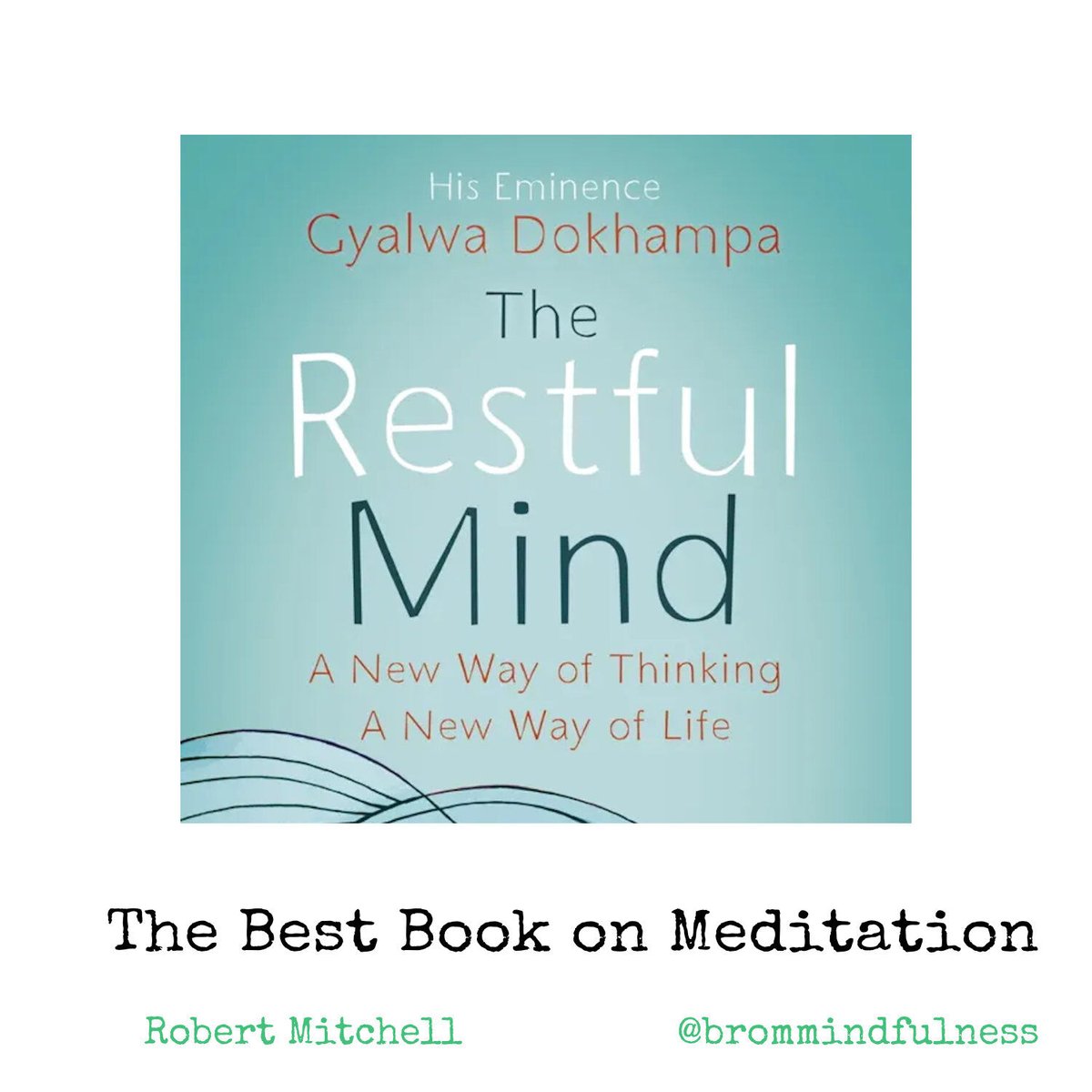
We all learn in different ways. For some of us, reading a book is especially useful for learning about a subject. Right now, the best book on meditation is The Restful Mind by Gyalwa Dokhampa.
If you're a book reader and you're interested in meditation, I highly recommend this. I have had great responses from my students. It's available from all the usual places.
This is absolutely the best book on meditation. It is simple, clear, and explanatory. The author is a Buddhist Meditation Master and monk, but he writes from the perspective of the modern mind and modern life.
Last week I posted a personal insight that has proven to be quite popular.
"What you think, you become.
What you feel, you attract.
What you imagine, you create.
Focus is Everything."
When I posted this, I explained that one of the things I had personally learned is that I can now meditate "with intention, direction, focus, and total clarity on the goals of my practice."
The key to this is intention.
Intention is the 'Why?' Why are you meditating? What do you want to gain from meditation?
This isn't something I can answer for you but it is something I suggest you work to understand.
Now if you have a meditation practice, and you are struggling to decide on an intention, then I suggest that you meditate on it.
To gain insights in meditation, we only need to leave ourselves open to insights. There isn't a special meditation, it is just part of our practice. I learn things about myself and about others all the time when I meditate.
All you need is a notebook by your side and the at some point, the answer will come.
Insight brings intention so the next time you meditate, meditate with the intention of gaining insight into intentions for your meditations. 🙂
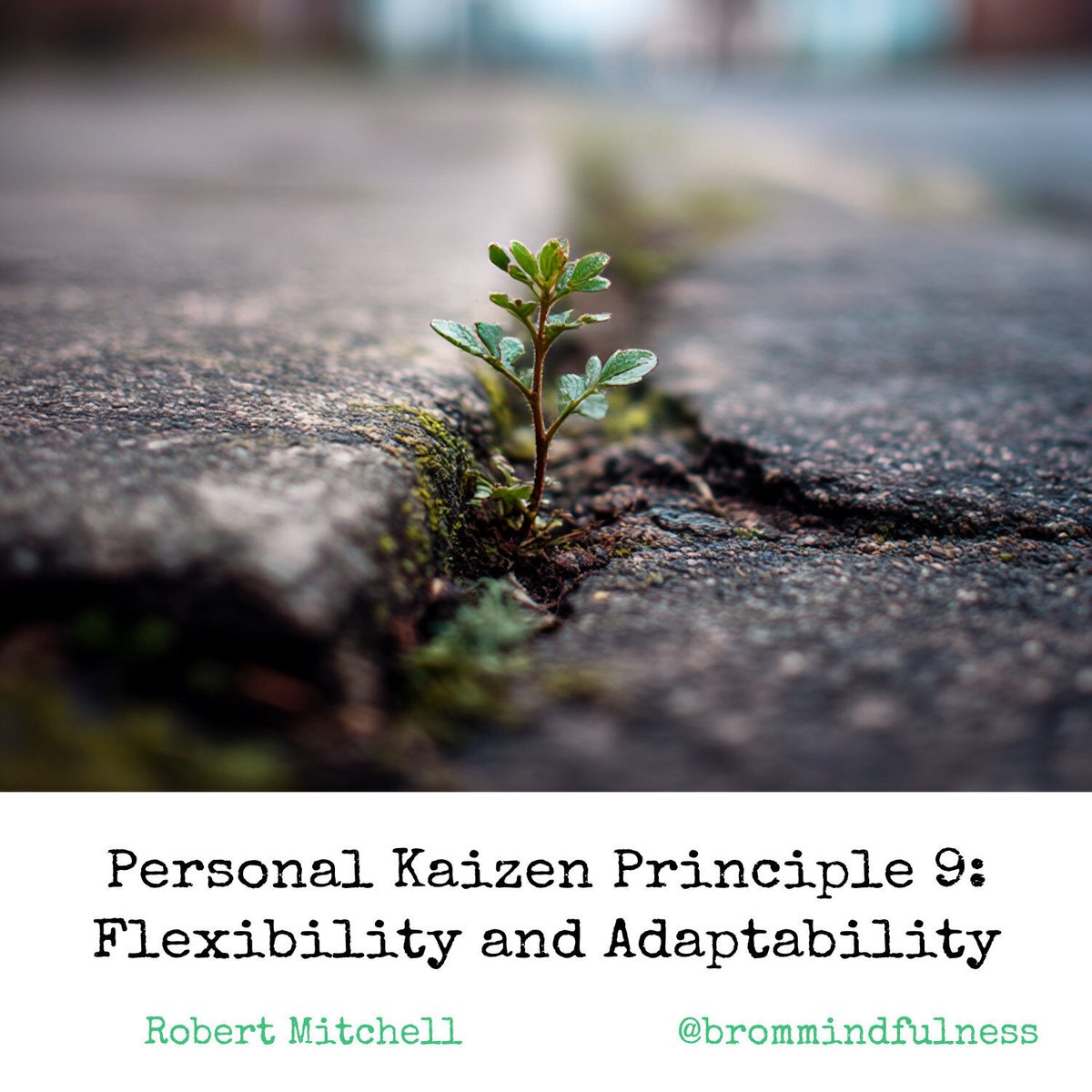
🌟 Microlearning Moment: Build Resilience with Personal Kaizen & Meditation 🌟
Struggling with change? Combine Personal Kaizen (small, regular improvements) with meditation to reduce resistance and boost your resilience.
1. Observe and become familiar with your Inner Resistance. In meditation, observe the feelings that arise—uncomfortable feelings are signals for different meditation practices. Uncomfortable feelings are not roadblocks because, by using the skills we can, over time, neutralise them.
2. Adapt Incrementally: Monitor your mind and your feelings with different meditations at different times in different places. "What worked? What changed?" Turn setbacks into steps forward.
3. Build Mental Toughness: Over time, this strategy will help you to become familiar and comfortable with your mind.
The next time you meditate, try making one change or adjusting one habit.
💪 💚 #PersonalKaizen #MeditationMagic #ResilienceHacks
Come along this Saturday to learn why 'Focus is Everything' and what you can do about it.
Our culture lives in our minds. We are social animals and have no choice but to share everything. Work, leisure, commodities, benefits, and costs. They are all shared somehow. It might not be equal, but it's shared. Our culture is shared, too. Again unequally.
We are taught our culture as children, and it is reinforced continuously through newspapers, the internet, books, television, radio, and from our peers. This creates a communal mind, but also a mind that reflects the conflicts within our culture.
We can become preoccupied with the complexities of the modern world, cultural, economic, technical, and social, that fill our lives. We're either engaging in an activity that is somehow culturally driven, or our inner narrative and mental movies are playing it out in our minds.
Only through mental training can we continuously return to awareness to escape this quagmire. There is no other way. Everything else is a distraction, which will only work for a time, then leave us with the accumulated mental baggage of a lifetime.
You've all seen the TV programs about hoarders. We hoard our mental baggage. It needs a clear-out, and only meditation can empty it, so we can then fill it with helpful items to replace the clutter.
First month free - zero commitment - cancel anytime.
https://t.co/J6rOUlNpp7
#Mindfulness #Meditation #Bromley #Compassion #Connection#Community#GuidedMeditation
🔗 Link in bio @themeditationcourse







![meditationclass's tweet photo. Yoga is not what you think it is!
From the original text of Yoga, we read that: "Yogaś citta vṛtti nirodha (योग चित् वृत्ति निरोध)"
Yogas (Yogaś) = Yoga (is);
citta = of the mind-stuff;
vṛtti = modifications;
nirodha = restraint.
In a nutshell, Yoga is the practice of calming the mind.
The original text of Yoga is the Yoga Sūtras of Patañjali.
Patañjali was a sage who lived, it is believed, 500 years before the time of Christ in India.
In his famous (and accessible) translation of the Yoga Sutras of Patanjali, Swami Satchitananda writes:
"The restraint of the modifications of the mind-stuff is Yoga. In this sūtra, [sūtra 1.2] Patañjali gives the goal of Yoga. For a keen student, this one sūtra would be enough because the rest of them only explain this one. If the restraint of the mental modifications is achieved, one has reached the goal of Yoga. The entire science of Yoga is based on this."
In the Yoga Sūtras, Patañjali teaches a framework for Yoga - the eight limbs of Yoga:
1. Yama: Ethical Behaviour
2. Niyama: The practice of self-discipline
3. Āsana: Posture
4. Prāṇāyāma: Regulating the breath
5. Pratyahara: inward focus
6. Dhāraṇā: Concentration
7. Dhyāna: Meditation
8. Samādhi: Connection
One of those eight limbs is Asana, which is where modern Yoga focuses, whereas originally, Yoga was mainly meditation with the intention of calming the mind.
So if you meditate in a way to learn how to calm the mind, that is the heart of Yoga.](https://pbs.twimg.com/media/G2Mdzw6WwAALPxI.jpg)