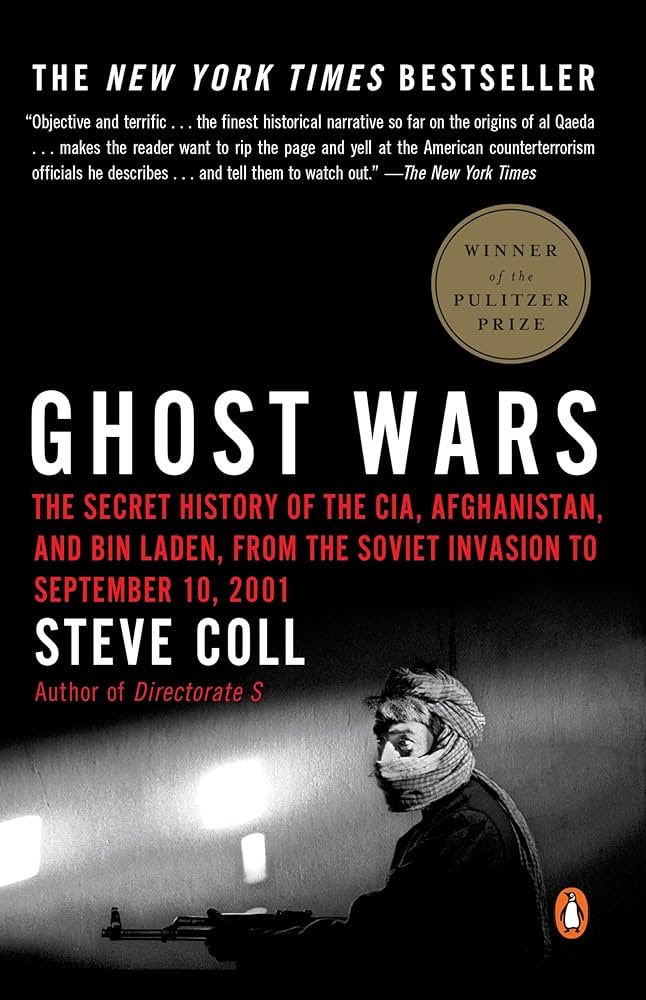
Read Steve Coll Pulitzer prize winning book, Ghost Wars: The Secret History of the CIA, Afghanistan, and Bin Laden.
Actually read this a while ago but it’s stuck with me. quick summary below
1980s (Soviet War): USSR invades. CIA + Saudis send billions to Afghan rebels via Pakistan's ISI. Pakistan funnels weapons to Islamists. Soviets lose and leave.
- Early 1990s: US loses interest and cuts funding. Afghanistan collapses into civil war.
- Mid 1990s (Taliban Rise): Chaos leads to the rise of the Taliban, backed by Pakistan, who take Kabul in 1996.
- 1996–1998: Bin Laden gets kicked out of Sudan, sets up shop in Afghanistan under Taliban protection, builds Al-Qaeda camps, and bombs two US embassies in 1998.
1998–2001: CIA knows Bin Laden is a massive threat. They try working with anti-Taliban fighter Ahmad Shah Massoud, but DC politicians and CIA brass hesitate on strikes due to bad intel, fear of civilian casualties, and red tape.
- the book’s climax is the hunt for Osama Bin Laden before 9/11 (unbeknownst to me since 1996) throughout Africa and Afghanistan, and the CIA and Pentagon’s efforts to capture him (during the Clinton admin) and the geopolitical challenges such as the tenuous relationship with Pakistan and Saudi, and later the indifference of the Bush admin to the threat of Islamic terrorism
- at a high level, what began as funding religious tribes (mujahedeen) for an anti-Soviet proxy war in Afghanistan in 1979, expanded to a global problem in the form of Taliban and Al Qaeda
- during the Afghan-Soviet war of 79 to 89, the CIA and the US congress funded the Afghan freedoms fighters (mujahedin) $6Bn
- for more on this google Senator Charlie Wilson
- Given the remoteness of the region, Pakistan and Saudi, and their respective intelligence agencies were liaised with as partners
- unsurprisingly, the interests of Pakistani and Saudi intelligence did not align completely with that of the CIA / US
- There is ample evidence that Pakistani intelligence (ISI) funded, trained and promoted factions that ultimately became the Taliban and Al Qaeda
- importantly, there is no clear evidence that there were direct funding links between the CIA and Al Qaeda
- after the Fatwa issued by Osama in 1996 against Americans and bombings of embassies in Africa, a bomb placed in the World Trade Center parking lot and a shooting at a CIA in Virginia, the CIA made a concerted effort to capture, extradite or kill Osama.
- Interestingly there were two opportunities to do so in Afghanistan, once while he was believed to be visiting one of his wife’s farm compounds and another while was on a hunting trip with potential gulf Arab sponsors, but legal issues and political considerations got in the way of action and Bin Laden got away.
- large training camps initially set up by the Pakistani intelligence to fight against the soviets became training grounds for Al Qaeda, with continued funding from Saudi charities, Pakistan and potentially the Saudi intelligence agency.
- Clinton, weakened by impeachment proceedings and boxed in by a hostile Republican majority in Congress, proved unable to force the astonishingly passive Pentagon to pursue military options. As an alternative he put the CIA’s covert action arm in the lead against al Qaeda
- other interesting observations: (1) post the defeat of the soviets in 89, the transition to an Afghan state was mishandled by the U.S. they left a huge vacuum for the Taliban to grow in (2) the transition between the Clinton administration to Bush’s in 2000, while done professionally, resulted in a huge interest gap at a critical point in time while 9/11 was being planned (3) the majority of 9/11 terrorists were arabs who were trained at Mujahideen camps in Afghanistan directly sponsors by Osama, and set up by Pakistan, (4) the animosity between India and Pakistan drove some of the deep interest of Pakistan’s military to support an Islamist ally forming in Afghanistan
Recently read “1873: the first Great Depression” by Liaquat Ahamed (pulitzer-prize winning author)
it’s the only book i’ve found that comprehensively describes the first global great depression of all time (which started in 1873)
*Core premise: 1850s–1860s infrastructure boom (railroads, telegraphs, Suez canal, transcontinental US railways) was financed by a newly created asset class. international bond market. Rothschilds played instrumental role.
*The bubble & crash: Overbuilding of rail lines, speculation, and state debt defaults (e.g., Ottoman Empire).
* Monetary policy error: Western nations (led by Germany, then the US) demonetized silver to adopt gold standard, contracting the money supply.
*The fallout: "Long Depression"two decades of deflation, the derailment of US Reconstruction, and rising populist backlash (e.g., jim crow laws in US, antisemitism in germany).
*The Rothschilds' role: While the family acted cautiously and avoided much of the reckless lending during the peak, the public still scapegoated them and international finance, accelerating modern antisemitic tropes
* a slate of bad / populist policies and misguided ideas became popular after, from antisemitism across germany and france to tariffs in the U.S./Canada/europe
-some good regulations came out of the crash (glass steagall act, and creation of federal insurance for bank accounts) but also a lot of bad policy came after 1929 (e.g. protectionism + allowing banks to fail + tax hikes to pay for all the mess) which made the depression worse
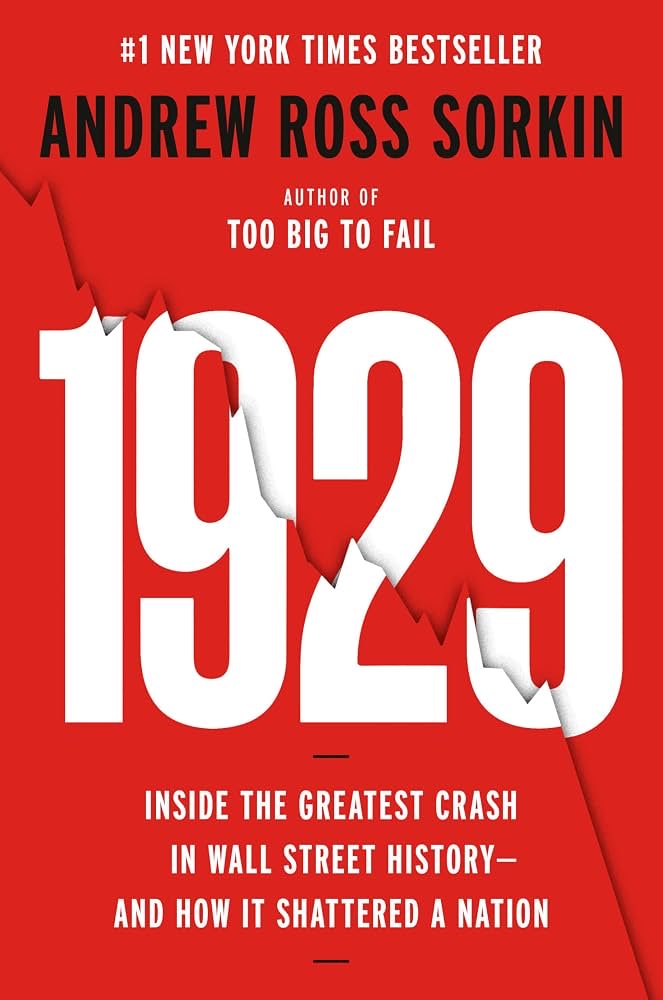
Finished 1929 by Andrew Ross Sorkin
great overview of the events that led up to the “great depression”
drivers were the same as today:
- leverage
- bad incentives
- populism driving policy vs economic logic
- fear / fomo / contagion when panic hit
- bad policies
1/x
- the concept of credit (borrowing on margin) in capital markets was seen as innovative so many new types of credit instruments were being used to invest
- ultimately the federal reserve acted too late and raised interest rates too suddenly. perpetuating the crash further
@doodlestein@sergeynazarovx you’re lying. assuming you brush your teeth (hopefully) and shower (also hopefully), that means you sleep less than 6 hours a day. post your apple watch / whoop / garmin average 1 year sleep hours. otherwise you’re a liar.
@AravSrinivas How is the launch of this not crashing Factset's market cap? Perplexity Finance is already more intuitive and better. Factset is a $16b market cap company...
@HiddenMonopoly@mjmauboussin I feel like Maboussin’s writing is like questioning the emperors new clothes. Ask anyone what the paper is saying and they’ll just say it’s intellectually stimulating without having an actual answer.
@JamesLi88246847 @darioperkins Many of the banks of lent money at rates in the 1-3% range (this is their interest income). To offer depositors high interest would result in negative Net Interest Margin.