Power, society, and (dis)connectivity in medieval Sardinia. A project led by @LancasterUni, @ahrcpress funded, set out to recover the ‘lost’ history of Sardinia
Exciting news!
The PI of our research team, Dr Alex Metcalfe, just became a top-selling author, #2 in the Italian Amazon best-seller rankings for books on Islam: https://t.co/G98XQbDrwi
So proud to be a part of this brilliant team!
#bestsellers#Italia#medievaltwitter
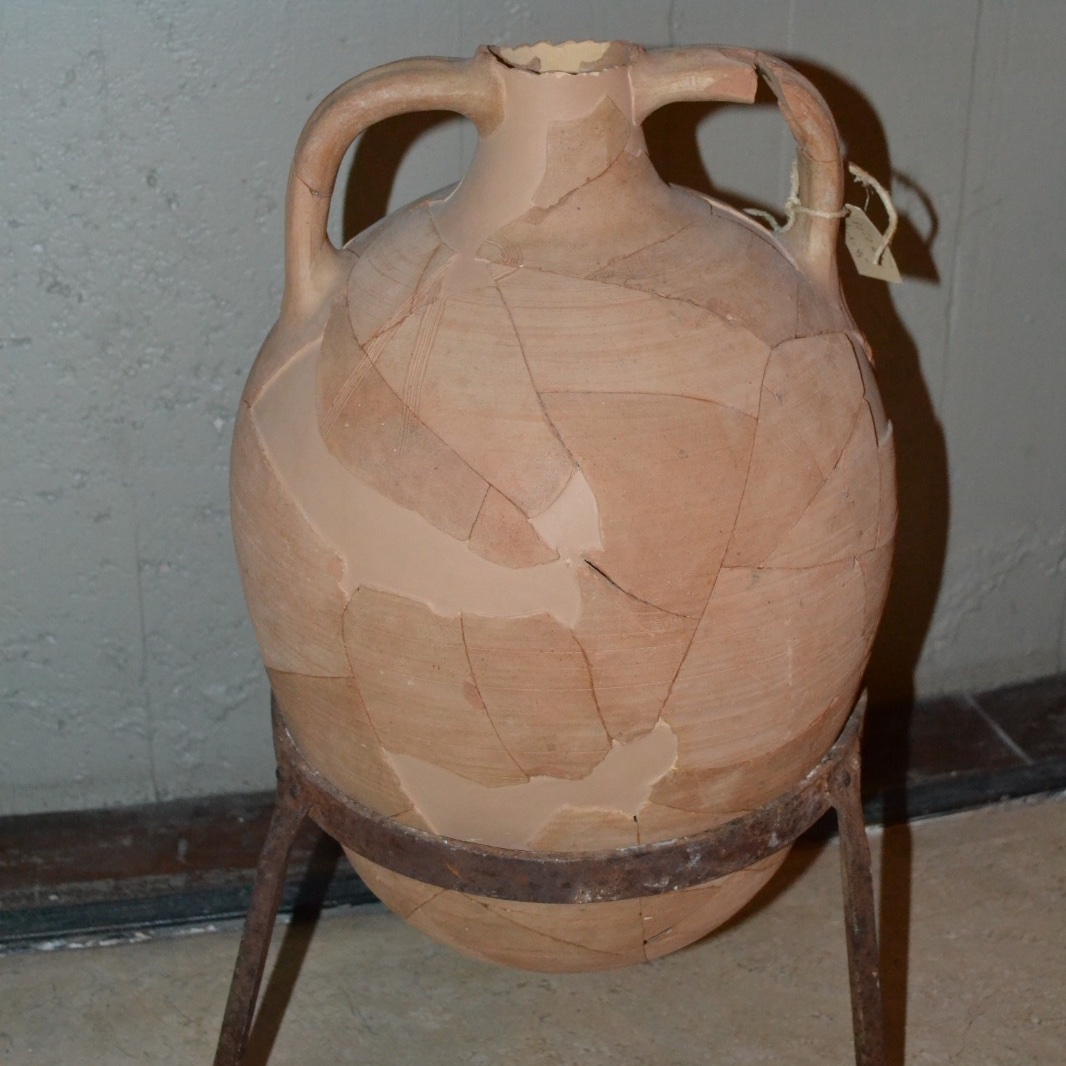
Would you like some wine🍷?
This is a 'globular amphora' because of its round shape, used for trading wine and oil in the Western Mediterranean during the Early Middle Ages. This was found in Bonaria, at the periphery of Karales – the ancient Cagliari!
#medievaltwitter#Sardegna
A small cup from Porto Torres, 8th-9th cc. It belongs to a typology named 'Forum Ware', which is one of the most important indicators of trade in the Western Mediterranean, due to their diffusion in Latium, Campania, Sicily, and Sardinia!
#Sardegna#medievaltwitter#Archaeology
Its decoration of a griffin & a pegasus is without precedents in the Byzantine Mediterranean! The object is kept @MuseoArcheoCa, but it is currently in Naples to take part as one of the most important elements of an exhibition for Byzantine Southern Italy.
One of our favourites! 😍
This Byzantine-style marble slab, c. 10th c., was found around Nora, near the small island of S. Makarios. It dates back to 10 c. and it was originally planned to decorate a church. Do you know this marble slab is an unicum?
#Sardegna#medievaltwitter
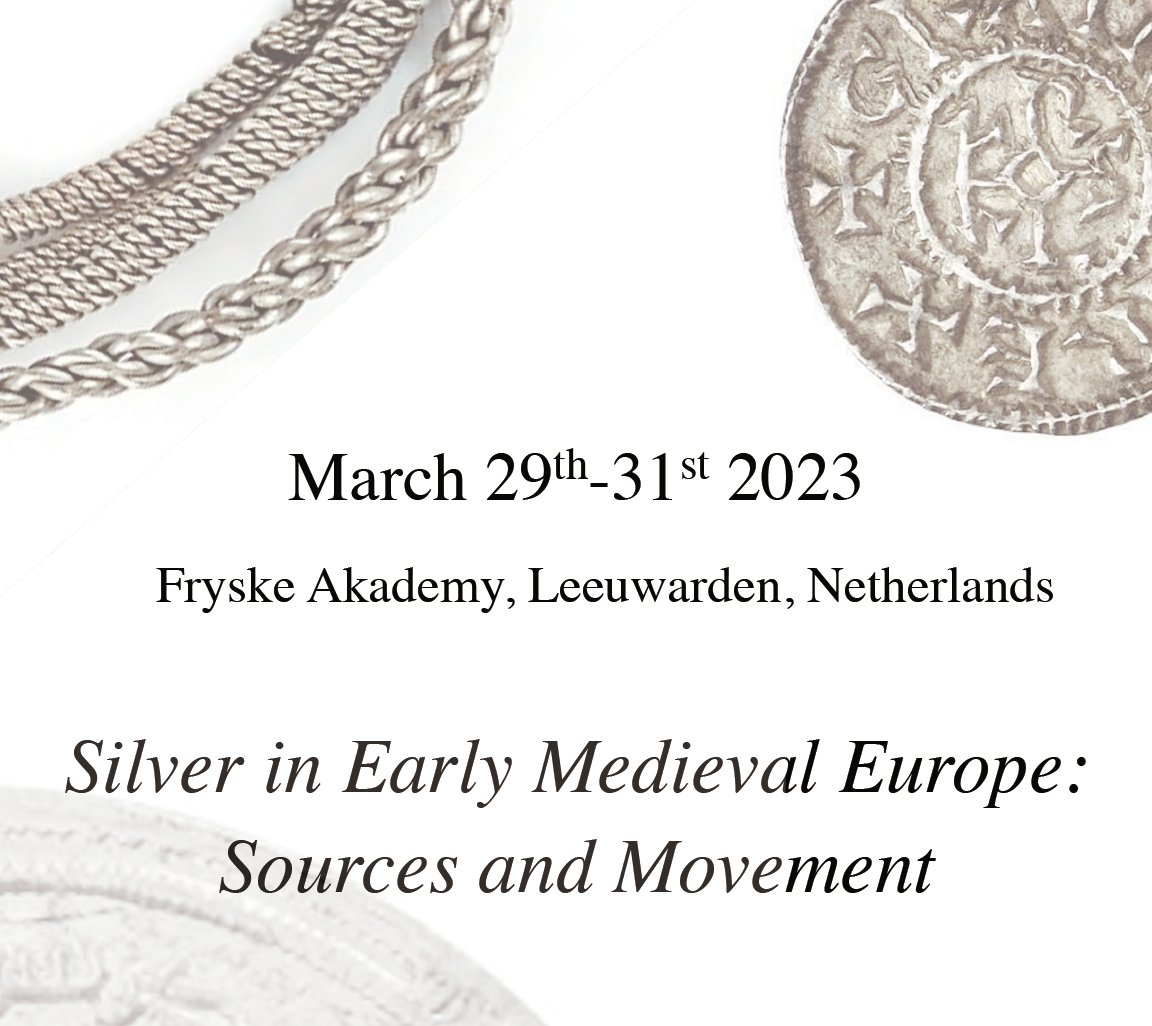
This week, Alex Metcalfe – our PI – and Tom Birch – our international Co-Investigator – will be attending the conference 'Silver in Early Medieval Europe', in the Netherlands, organised by
@FryskeAkademy
Looking forward to it!
#medievaltwitter#Archaeology
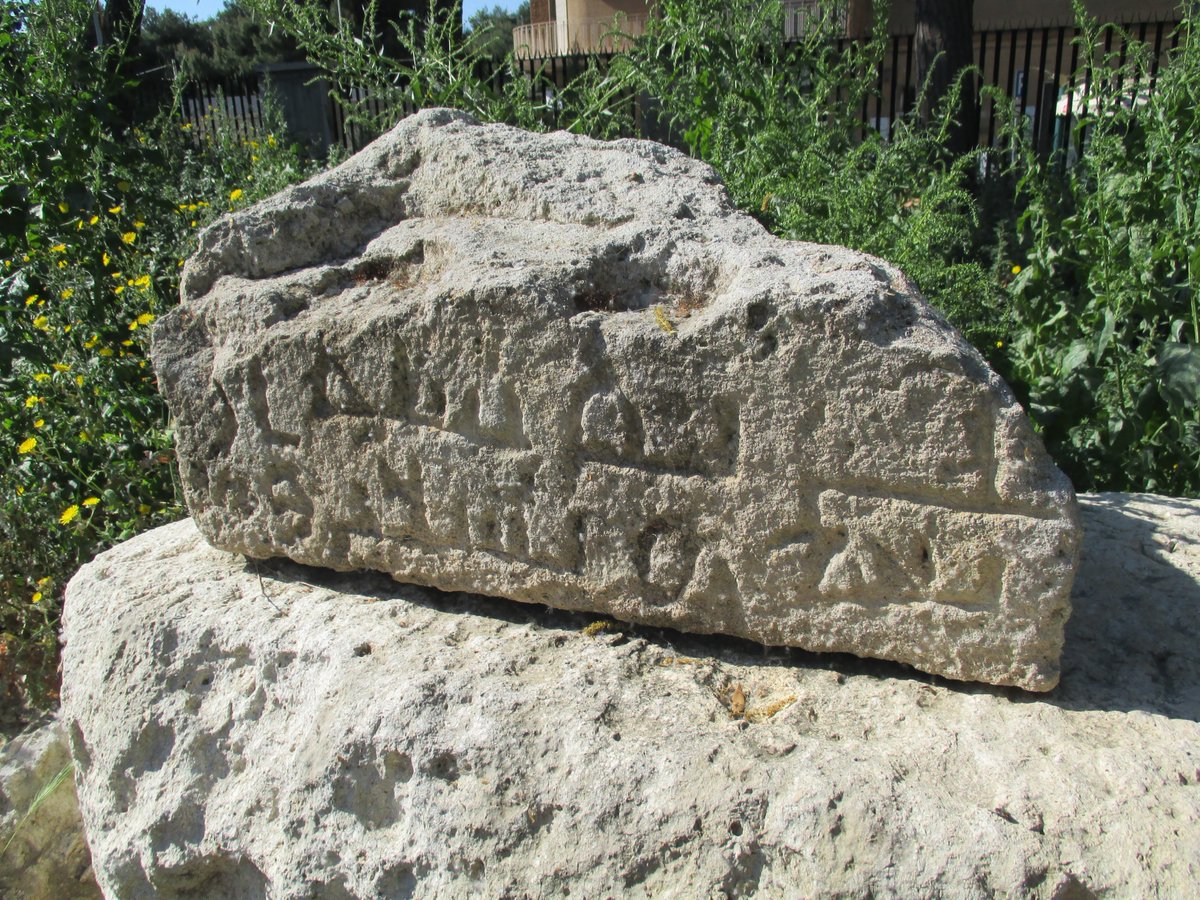
An Arabic inscription outside the Basilica of San Saturnino, in Cagliari. #Sardegna
"[Kál]arih in the year 194 h [= 810 ce]".
#medievaltwitter
For more about it and its context: "Early Muslim Raids on Byzantine Sardinia", by Alex Metcalfe https://t.co/ZiZz4NARH1
What a fascinating jewel! An Arabic inscription outside the Basilica of San Saturnino, in Cagliari.
Transcription: "[Kál]arih in the year 194 h [= 810 ce]".
For more about it and its context: "Early Muslim Raids on Byzantine Sardinia", by Alex Metcalfe https://t.co/5VbojOXg2B
De la servidumbre, el género y las relaciones 'afectivas' forzadas en la Edad Media:
Dividiéndose siervos (homines), Petru de Kerki se queda con una mujer, Margarita, porque declara la había tomado de amante.🫢 Pero se le muere, y se 'lleva' la otra, por lo que es demandado.
The central fragment bears the inscription 'NTINV MEGAL' in Latin letters, which has been intended as a dedication to Constantine the Great, which was worshipped as a saint in Sardinia – as in the Byzantine Empire.
These marvelous fragments (c. 10th c) were found near Nuraminis, originally part of a canopy: lily flowers, crosses in garlands, and birds and peacocks. But their exceptionality is in their Greek and Latin inscriptions!
#medievaltwitter#Archaeology
This jug is exhibited at the Archaeological Museum of Alghero. It was found during an underwater archaeological excavation near Capo Galera, on the North-Western coast of Sardinia. #Sardegna
Look at this jug’s surface: decorated with pitch-coated woven plant-like coverings.
Made by Muslim artisans c. 12th-13th cc, it was part of the cargo of a shipwreck: Evidence of multi-cultural trade between Medieval Sardinia and its surrounding worlds. #medievaltwitter#History
Cross-shaped church of Sant'Elia of Tattinu, near Nuxis (SW Sardinia)!
Typical Early Medieval, modeled after the larger churches of S. Saturnino (Cagliari), S. Giovanni di Sinis (Cabras) and Sant'Efisio (Nora).
Tattinu was its parish, a now lost town. #medievaltwitter#Sardegna
Cross-shaped church of Sant'Elia of Tattinu, near Nuxis (SW Sardinia)!
Typical Early Medieval, modeled after the larger churches of S. Saturnino (Cagliari), S. Giovanni di Sinis (Cabras) and Sant'Efisio (Nora).
Tattinu was its parish, a now lost town. #medievaltwitter#Sardegna
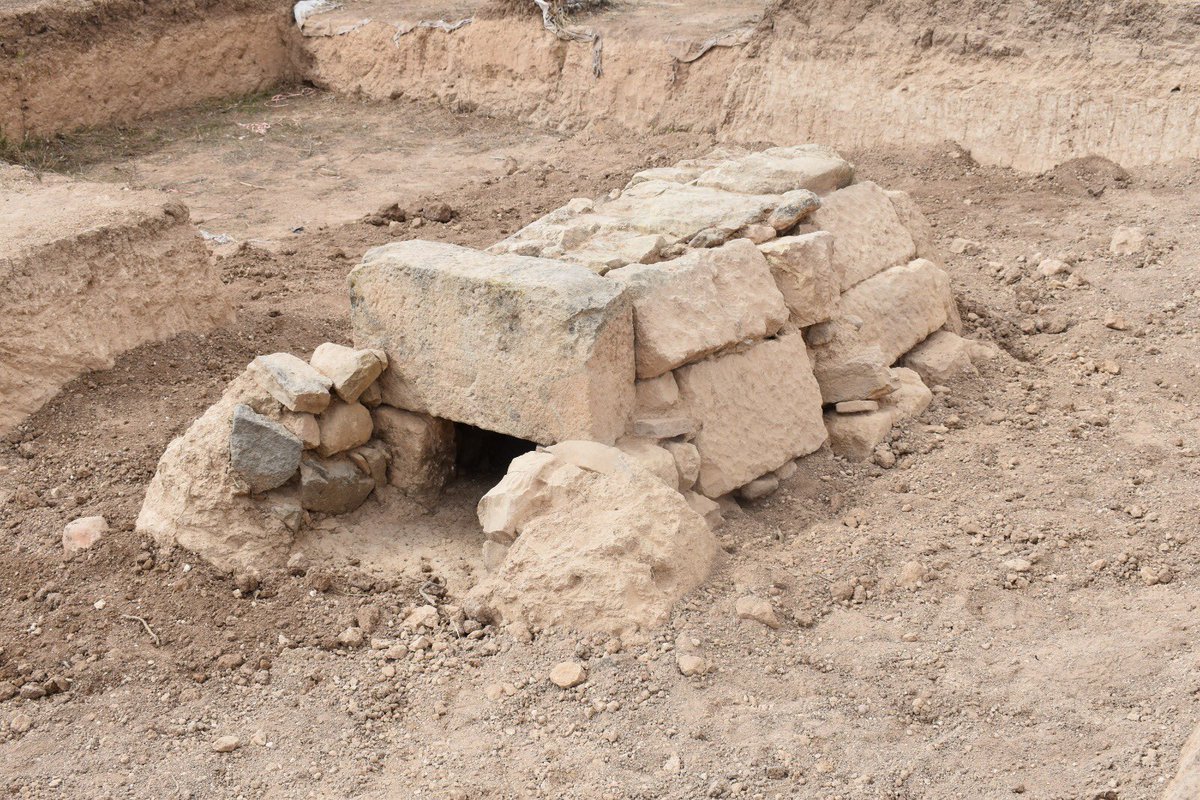
Near Nuraminis, near Cagliari, rests one of the most interesting funerary testimonies of Sardinia's Byzantine Archaeology: a tomb made of stone slabs, with an ogival vaulted roof. Who was the owner of this grave? Was it single or part of a wider necropolis? #medievaltwitter
This quaint romanesque church of St Peter is in the location of Santa Igia (Ilia, i.e. St Cecilia), the 'capital' of the iudikato of Calari – destroyed by the Pisans, 1258.
Its importance for Sardinian art history and medieval archaeology is priceless!
#medievaltwitter#Sardegna
Our very own PI, Alex Metcalfe, spoke about the use of Sardinia's medieval past in 19th-c. historiography at Université Paris 1 Panthéon-Sorbonne @SorbonneParis1.
Find out more about your engagement activities! https://t.co/mdzL1EuwUH
#medievaltwitter#twitterstorians#Sardegna