more TRAnsients & Pulsars group @OfficialUoM. Commensal MeerKAT observations - searching for fast radio transients in real time. Funded by @ERC_Research
Aw yesss! We have your Tuesday @arxiv reading list sorted!
We've got localised FRBs https://t.co/fE0rwHtrUh https://t.co/HXdeT26V4w, a sample of FRBs https://t.co/05opFsMaMu and localisation methods https://t.co/zfvFn4aP7j ! 🥳🌟
You can read about this cool result lead my @MeerTRAP's Mayuresh Surnis in MNRAS https://t.co/WaQVtBfnUH soon and available right nowon @arxiv https://t.co/tQzzigUKte 🥳😎
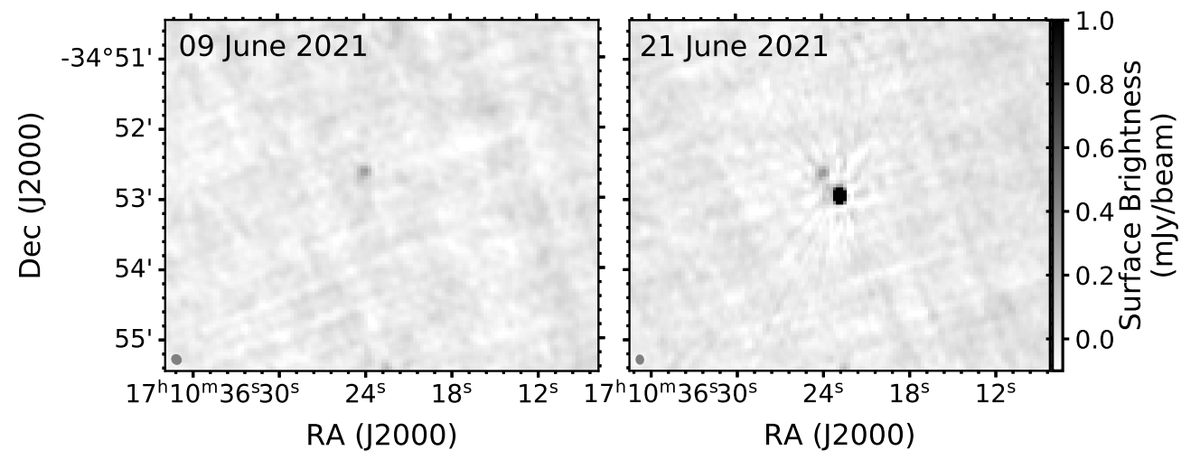
In this paper, teamwork made the dream work for sure! @MeerTRAP found the FRB while we were co-observing with @ThunderKAT_MLSP. So MeerTRAP detected it, then we used ThunderKAT imaging to find it's position! #teamwork
Last but certainly not least, we have FRB 20210405I, the first fast radio burst where we know the position to better than an arc-second! https://t.co/fE0rwHsU4J
@fabjankowski This paper explores how much of the sky @MeerTRAP has covered so far & how many FRB's we've found. This gives us an idea of the FRB rate, what the population we're finding looks like & how that all fits in with other teams and telescopes
And the papers keep coming! @fabjankowski led this one that shares *3* new MeerTRAP fast radio bursts (FRBs), investigates the FRB sample, and presents properties of the MeerTRAP survey so far!
https://t.co/05opFsMaMu
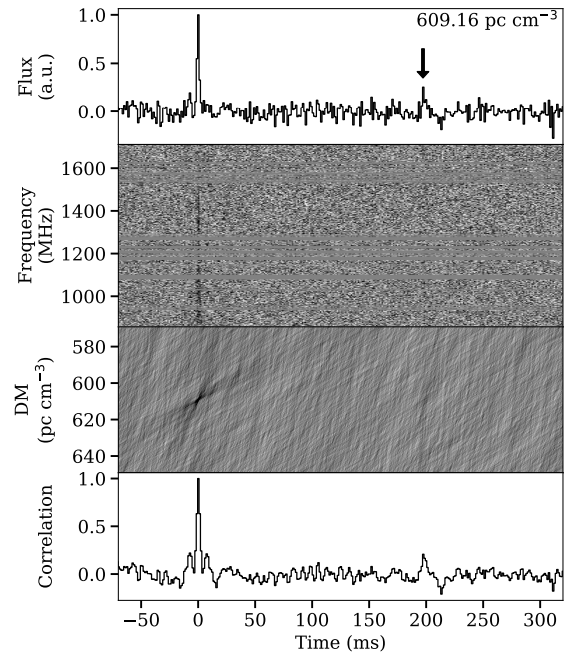
@fabjankowski One of the three new FRBs presented here looks like it has a faint post-cursor, or an extra little peak/burst that came after the original bright burst
@ManishaCaleb@arxiv@SKA_Africa Both of these things, large scattering and bifurcation, are hints that this FRB might be a repeater. We just haven't caught it repeating yet. Hopefully if we keep checking on it we'll catch it repeating!
@ManishaCaleb led one of our latest @arxiv papers on an FRB that looks like a repeater, but hasn't repeated yet 🤔 Like this gif; we can't tell right now if it'll turn out to be a one-off goat or a repeating unicorn
https://t.co/HXdeT26neY
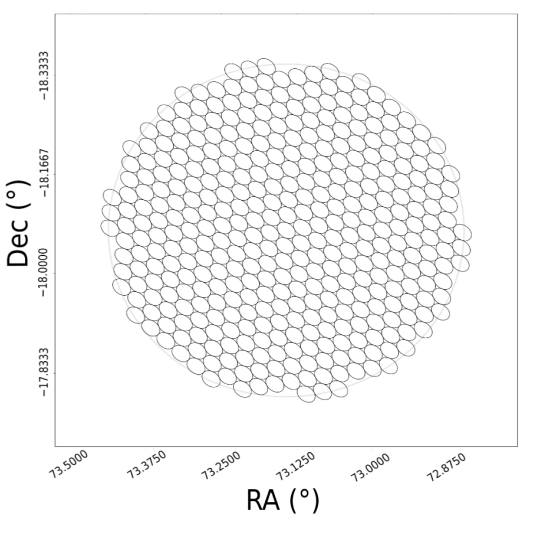
This method is called Tied-Array Beam Localisation or TABLo and is extra handy if you can��t save big chunks of data from your telescope by doing localisation via imaging. Want to use TABLo? Check out Tiaan’s @github repo: https://t.co/aWFADkPBiJ
With the @MeerTRAP pipeline we can (partially) fill our one big beam with more than 700 smaller beams, like adding pixels to your camera. @MC_Bezuidenhout developed a fancy way of using all those smaller beams to get a really good idea of where a flash of radio light comes from.