Sentiment is one thing, and market performance is yet another. I think if whatever has happened in small and midcap in Oct 2026 (the relative underperformance) continues for some more time, then sentiment for even domestic retail investors will start to worsen. The jury is still out on this.
As far as this being the worst sentiment ever for India, few occasions come to mind. First, in 2008, the mortgage crisis culminated in the global financial crisis emanating from the US. Their market declined 30%. Our market declined over 60%, A mini credit crisis of our own, especially in the real estate sector, followed by capital outflows and it was further followed by terror attacks in Mumbai and India's largest corporate scandal (i.e., Satyam). I heard some experts express utter dismay, "Why should FIIs ever return to India?" On a 1 trillion market cap, 16 billion of selling resulted in a complete meltdown. There is no domestic market, pathetic governance and there is no free float. It's a one-way street. FIIs have learned the hard lessons. They will never invest back into India.
Second, in 2013, India was already dealing with telecom spectrum allocation-related scams (2G), the coal scam, and what was called phone banking. That was followed by yet another corporate scandal, which is related to the National Spot Exchange, and ended with India being classified as part of the Fragile Five because of poor external macro and lack of competitiveness of the economy. In August 2013, Nifty was a full 1,500 points lower than the peak made in Jan 2008, and the rupee went all the way down to the 67-69 range from about 50 a couple years earlier.
Finally, in 2020, in March, when the markets declined with the onset of COVID-19, India was the worst-performing market in the initial decline, nearly 40%. What was the narrative?
- Extremely humid tropical climate
- High density of population
- Extremely poor medical infrastructure
- Poor hygiene and social protocols
India would be the worst-affected economy in the world.
We all know too well what happened after each of these occasions. I have seen India being called a basket case at least three to four times in my 27 years.
I am not too proud about it or sanguine about it, but it serves investors well not to get carried away by extreme narratives.
In the 2024 election campaign, the Prime Minister and his cabinet colleagues took huge credit for the bull market of the previous few years.
The Prime Minister even encouraged people to invest in PSU stocks.
I then pointed out that the government was doing an unwise thing. If they take credit for bull markets, they need to take the blame for bear markets in the future. You cannot have it only one way.
Also, what are the prices of PSU stocks from 2024 compared with now? What would have happened to those who bought PSU stocks based on the Prime Minister’s call?
However powerful a Prime Minister is, or for that matter the head of any country, no one controls asset cycles.
Trump learned it the hard way. Being the US President, arguably the most powerful position on earth, he thought he could control the bond markets. Instead, he is now acting according to the ebb and flow of the bond market.
Between 1964 and 1981, the US economy grew, yet the markets did little for these 17 years. That is because interest rates went up, compressing valuations.
There was a huge bull market in the US between 1981 and 1999. The US economy continued to do well. But as interest rates went down, markets started expanding valuations, leading to spectacular returns.
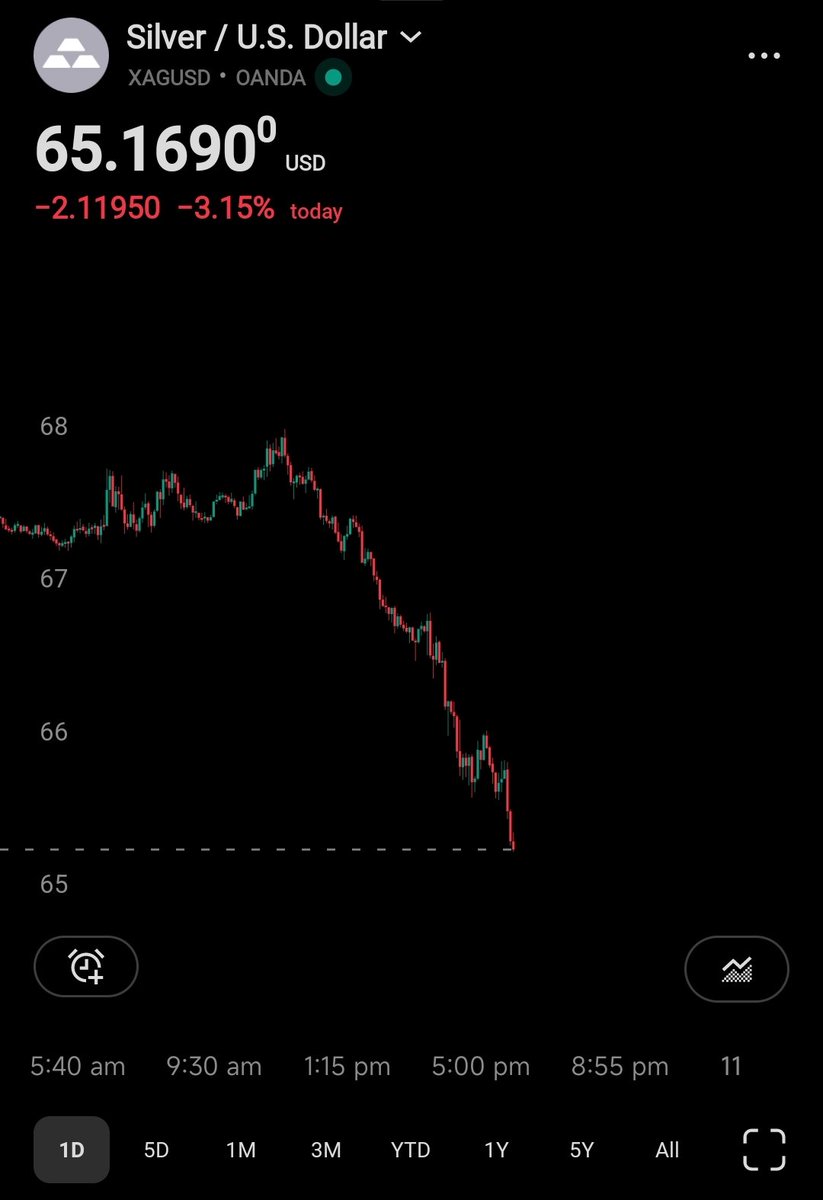
If governments could control asset prices, silver would not have fallen by more than 50% during the last 10 months.
Asset cycles are influenced by so many factors.
Government policies are one of the variables.
Government does not decide the fate of assets.
It is asset cycles that decide the fate of governments.
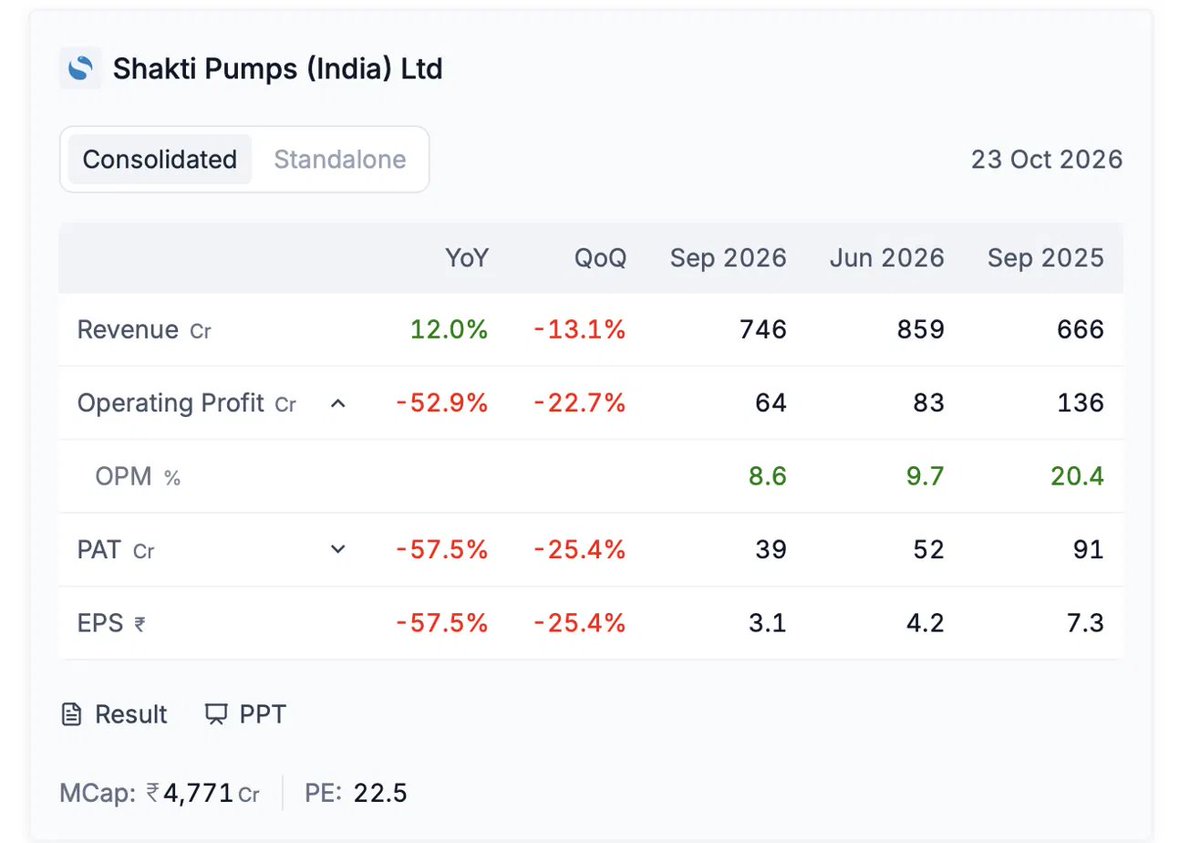
Shakti pumps after doing peak margins of 24% is now at margins of 8.6% and here's why?
In a B2G business the user and the payer are different people. When the farmer pays ~10% and the government pays the rest, demand is almost infinite, so TAM tells you nothing. Shakti’s deck shows a 5.5 lakh Cr TAM, while PM-KUSUM’s actual outlay was 34,422 Cr, about 6% of it. Even the rumoured ~50,000 Cr outlay for PM-KUSUM 2.0 takes you to about 9%.
So demand in such businesses is mostly not a problem as an investor one has to solve for rather the problem to solve for in most cases is the government.
The government holds three pens here. The Price pen set one rate contract (~2.36 lakh per pump in Maharashtra, the same for every vendor)
The Calendar pen let PM-KUSUM phase 1 sunset with 2.0 still not at Cabinet, and Shakti’s order book fell from ~₹2,100 Cr to ₹751 Cr in eight months
The Cheque pen routes money through Centre, state, nodal agency and a verification desk before it reaches you.
And players like Shakti hold only one pen i.e. execution.
The result is in the numbers. From FY24 to H1 FY27, Shakti reported ~898 Cr of PAT but negative 254 Cr of operating cash. FY25, its best year at 24% EBITDA margin, converted just 5% of profit into cash. QIPs and bank lines funded the gap
And this wasn’t Shakti-specific. Oswal’s receivable days went from 111 to 229, and asset-light GK Energy converted only ~26% of FY26 profit into cash.
On top of it they have been badly hurt by rising raw material inflation + higher logistics costs for export orders with lower realisations with revised prices. Also with this ALMM II compliant module prices are also up 15-20% which might also be hurting them
And their finance cost is rising with rising working capital financing.
Government money rarely defaults. The real risk is duration: how long you wait, and the interest, dilution and forgone growth you pay while waiting.
So when you look at any B2G business ask these questions to yourself -
1) Who pays?
2) Who sets the price?
3) Where is the scheme in its cycle? A scheme’s sunset is when the order book shrinks and receivables swell at the same time.
4) What is cumulative PAT vs cumulative CFO over three years?
5) Who is funding the gap?
Disclaimer - not a recommendation to buy/sell
US Proposes 12.5% Tariff On India, 59 Other Countries Over Forced-Labour Import Curbs
The U.S. Trade Representative (USTR) has proposed additional tariffs of up to 12.5% on imports from India and 59 other economies after concluding that these countries have not adequately prohibited or enforced bans on imports made using forced labour. The proposal stems from Section 301 investigations launched in March 2026
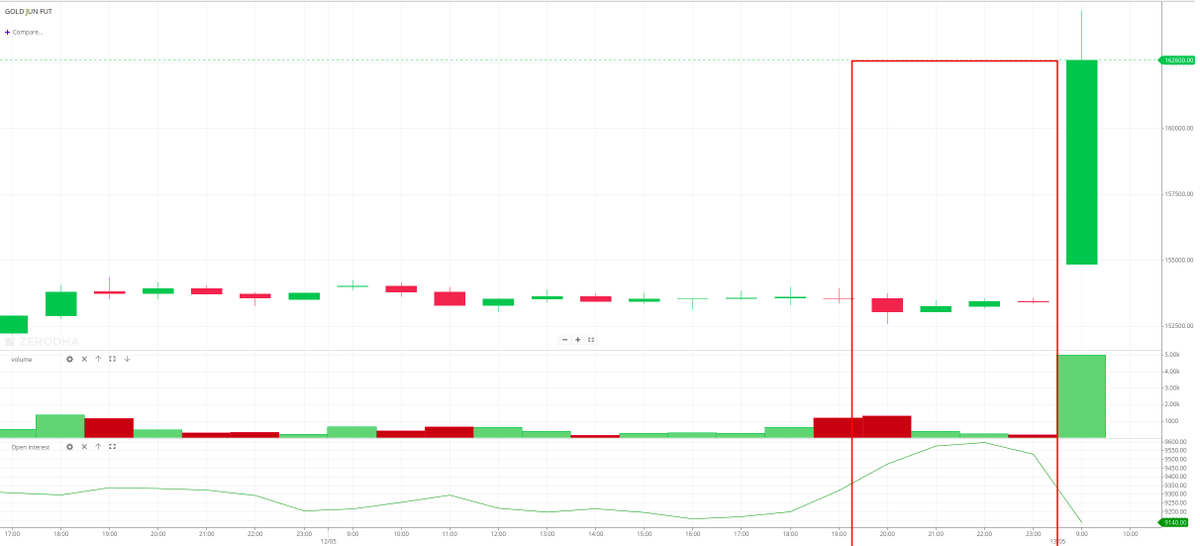
The news about import duties on gold and silver going up to 15% came late last night. The interesting thing: neither open interest, prices, nor volume in Gold and Silver showed any unusual moves in the hours leading up to the announcement.
If this had happened in the United States, I’m fairly sure some of the people close to the decision-making process would have found a way to trade it, either through regulated futures markets, other derivative contracts, or prediction markets like Polymarket and Kalshi.
We’ve seen versions of this with crude. And during the Iran conflict, too, there were all these reports and allegations about people around the government trading through futures, contracts, and prediction markets before or around important announcements.
It’s kind of insane how casually people in power seem to monetize privileged information. At some point, this stops looking like “market participation” and starts looking like blatant insider trading with better branding.
Just another reason why Indian markets, despite all their flaws, are far more tightly controlled in these grey zones than many Western markets.
SAIL looks attractive at 186
Multi-year channel breakout, steel sector is very hot🔥
explosive targets like 214, 229, 248 possible with SL of 155
#sail#steel#positional#breakout
Rajeev Thakkar of PPFAS on future of Indian IT services industry.
“People are saying AI will replace developers, but if 5 out of 10 developers go away, overall costs will reduce.”
“Decreased costs in IT will have same effect as Discount brokers and Internet had in India.”
Decadal Themes & Valuations - Grab a cup of Kauphy
Whenever the market starts believing a narrative like “this is a decadal theme,” “this sector has 5-year tailwinds,” or “this company can grow at 50% CAGR,” it usually starts pricing in the next 2–3 years of growth much earlier.
Look at chemical companies in 2022–23. The peak narrative back then was: “Chemicals are where IT was in the 2000s.”
Then came the renewables boom.
An EPC name like Waaree Renewable Technologies traded at ~250x TTM P/E in 2024. Around the same time, Oriana Power and Viviana Power Tech were trading well above 90x TTM P/E.
The same thing happened with transformer companies. Transformers and Rectifiers (India) traded at nearly 300x TTM P/E, while several transformer names were commanding 60–70x earnings multiples.
Again, the same phenomenon, markets started discounting the next 3 years of growth. That itself became the peak.
Ironically, just a few years earlier, these EPC and transformer businesses were viewed as commodity businesses.
Policy changes and industrial tailwinds changed everything. Traditional value investors disliked such valuations, and many never participated in these stories.
But markets don’t care who participates and who doesn’t. When liquidity is abundant, at least one sector attracts a disproportionate share of it, provided there is a compelling story to sell.
Then came the Data Center theme.
A company like Anant Raj, despite multiple perceived red flags, received an 80x P/E valuation. Beyond constructing buildings, it arguably had zero moat in the DC story.
Yet, investors who entered early still made serious money.
Now, one could counter saying:
“Sekhar, you can’t judge these companies using TTM P/E. You should look at forward valuations.”
Absolutely correct.
Investment decisions should always be based on forward earnings. I’m only highlighting how forward optimism eventually pushes TTM valuations into seemingly irrational territory.
Currently, we are witnessing the same phase in the AI Data Center theme.
MTAR Technologies, TD Power Systems, Aeroflex Industries, HFCL and Sterlite Technologies are all firing.
DEE Development Engineers may join the club too if management clarifies that its HRSG order book has meaningful AI Data Center linkage.
Each name now carries its own narrative:
• TD Power - One of the few suppliers to select gas turbine OEMs, with capacities reportedly booked out for 4–5 years.
• MTAR - AI Data Center players cannot wait endlessly for grid-scale infra or Gas based power, and Bloom Energy’s SOFC solutions offer a quicker alternative. MTAR’s “hot box” capability becomes the moat within that ecosystem.
• Sterlite - Not just an optical fiber story; the company is also backward integrated.
• HFCL - Optical fiber + defence + aerospace + preform backward integration over the next couple of years.
• Aeroflex - Beyond certain power densities (>50kW), conventional cooling becomes inefficient, making liquid cooling increasingly relevant. Aeroflex supplies into that ecosystem, while capacities are also scaling up.
If you’re wondering why I’m boring you with all this on a Saturday morning, it’s because investors need to view such themes through a different lens.
Back in late 2023, I held Waaree RTL shares. I did some rough math on FY24 and FY25 earnings and concluded that the upside looked limited. I switched into another opportunity (don’t even remember which one now) that appeared to offer better upside.
Waaree then went on to make a 7–8x move.
Because of that experience, I avoided making the same mistake with Oriana and Viviana. I held them until price action itself started weakening.
Similarly, I exited TD Power between ₹800–900 thinking most forward earnings were already captured.
That experience is also why I am trying not to repeat the same mistake with MTAR and Sterlite.
But at the same time, I didn’t jump into HFCL when some of my friends did, because my fundamental view on the company was still not fully aligned.
I eventually entered only after the results gave me more confidence in the story.
Sectoral tailwinds, especially global ones, can justify almost any valuation for a period of time.
Our thinking is usually too linear. Because of that, either:
We never participate in the story, or
We exit far too early.
Instead, ride the trend as long as possible. Track sector strength, monitor global developments, and use technicals for exits. Learn from your mistakes!
Don’t rely only on fundamentals for exits because fundamentals often fail to capture non-linear themes.
One big learning for me has been this:
Sometimes you need to temporarily shed traditional valuation frameworks and participate in momentum-driven themes.
That is where either you need technical analysis skills yourself, or at least a friend who understands them well.
And that’s the beauty of the market, such themes keep emerging every 2-3 years, and even if you identify them halfway through, riding them for long enough can still become your ticket to creating meaningful wealth.
Happy Saturday!