Hope to open eyes to need to rescue animals, adopt not shop, climate change, clean water & air, civility & respect for all. Squirrel Lover & proud of it!!
A report reveals that the FN303 has been disproportionately responsible for some of the most severe injuries in recent immigration-related protests across the US.
While the "less-lethal" weapon makes up only 12 of the 412 total cases of misuse, it was responsible for some of the grisliest and most debilitating documented injuries. https://t.co/Mpu3L7UqBb
After two years playing defense against the Trump administration, the National Council of Nonprofits is going on offense. Its Transformation 2035 campaign plans about 100 Action Summits in 47 states over the next year.
Read the full story: https://t.co/zIaoVBI5DF
Maggie Haberman Confirms Blockbuster Report That Trump Backed Off Firing Howard Lutnick After Commerce Sec's $25M Donation to Presidential Library https://t.co/0y3l1lUHqW
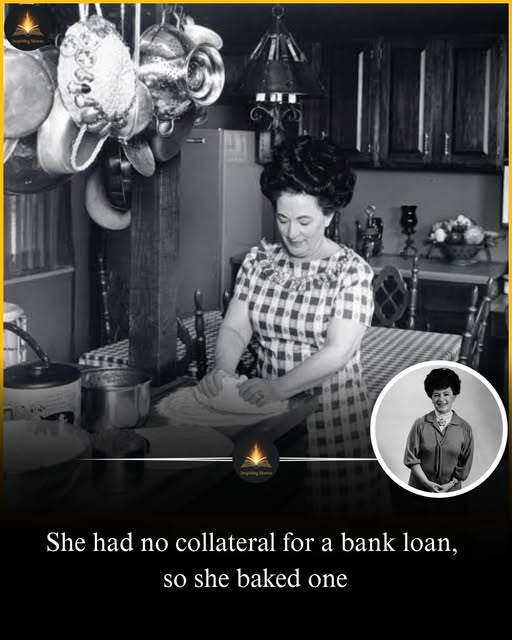
In the winter of 1951, a Minneapolis cleaning lady walked straight past a bank’s reception desk, set a hot, grease-stained cardboard box directly on top of a loan officer’s ledger, and opened the lid.
Earlier that same day, he had turned down her application for a $1,500 business loan.
Her name was Rose Totino. She scrubbed floors for a living while her husband worked as a baker, and the two of them lived on wages measured in coins. While the postwar economic boom lifted neighborhoods across the country, it had passed right by their kitchen table.
Rose and her husband wanted to open a small Italian takeout shop on Central Avenue. They needed $1,500 to sign a lease and buy ovens, an amount that, to a cleaning lady in the early 1950s, might as well have been a million dollars.
That morning, she had put on her best dress, paid the fifteen-cent streetcar fare, and ridden downtown to ask for the money.
The loan officer sat behind a wide mahogany desk and reviewed her forms. He didn't ask about her recipes, and he didn't ask about her work ethic. He looked at the blank lines where assets were supposed to be listed and asked for collateral.
Rose had none.
In 1951, women applying for commercial credit were practically invisible to the American banking system. According to a Federal Reserve survey of lending practices that year, less than two percent of unsecured small business loans went to female applicants. Without real estate, bonds, or a male guarantor holding matching equity, a loan application was dead on arrival.
The banker wasn't cruel; he was simply following the ledger. He slid the paperwork back across his desk and suggested she save her wages.
Rose didn't argue. She folded the application, walked out into the Minneapolis cold, and rode the streetcar home.
Back in her kitchen, she turned her home oven up to 500 degrees. She mixed dough, crushed tomatoes, and grated cheese. Because she didn't own proper restaurant containers, she walked out to the alley behind a grocery store and found a flat cardboard box, one corner slightly damp from the snow. She slid the hot pie inside.
Then she got back on the streetcar heading downtown. The smell of baked yeast and garlic filled the transit car, and white flour still clung to the hem of her coat.
When she walked back into the bank, she didn't stop at the teller window, and she didn't ask a secretary for an appointment. She walked straight into the loan officer's office, placed the leaking cardboard box on his desk, lifted the lid, and told him to eat a slice.
The banker hesitated as the smell of garlic and melted cheese filled his sterile office. Finally, he reached in and picked up a piece. The cheese stretched. He took a bite, then another, until he had finished the entire slice and wiped his hands.
He approved the $1,500 loan that afternoon.
The takeout shop opened on Central Avenue, and soon lines were wrapping around the block. By 1962, demand had grown so heavy that Rose began freezing her pies so local grocery stores could stock them.
In 1975, the Pillsbury Company bought her business for $22 million. Rose Totino became Pillsbury's first female corporate vice president and the first woman to sit on its executive board.
The original bank branch on Central Avenue is gone now, demolished decades ago to make room for a parking lot. Yet Rose’s name is still printed on millions of red boxes sitting in supermarket freezers across the country, picked up every day by shoppers who have no idea they are buying from a cleaning lady who had to bake her own collateral.
It makes you wonder how many brilliant ideas never get off the ground simply because their value can't be measured on a standard bank form.
BREAKINGNEWS; I just spoke with people in Burington, Iowa (Home Town) about the Army Ammunition Plant in Middle Town. Just 15 minutes west of the city and also a planned data center in that area being pushed.
There are serious concerns about farmland contamination, air pollution, and value of farmland decreasing.
Many believe the explosion will help potential data centers while harming local communities and farmers. The two counties feel hopeless as local officials aren't being transparent.
@RobSandIA someone needs to step in and stop this madness after a court order. 🚨