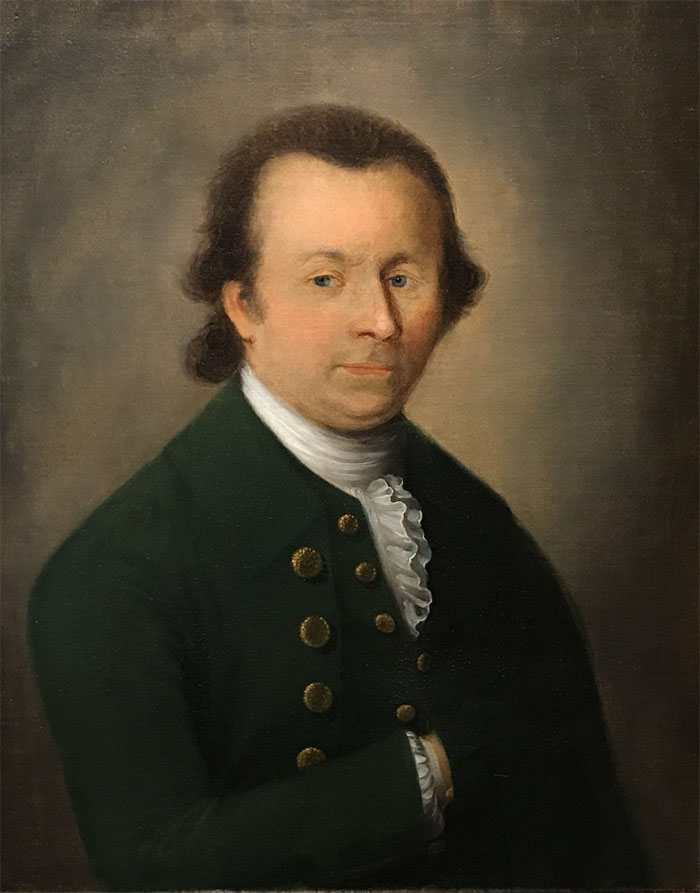
This man's life is so obscure that we are not even sure what he looked like, yet his signature is worth more than a Picasso sketch and historians have hunted it like buried treasure for two centuries. The strange afterlife of Button Gwinnett is one of the wildest stories of the Founding era.
Start with the name. Button Gwinnett. He was born in England, the son of a Welsh clergyman, and "Button" was his godmother's surname, not a nickname. One of only eight signers of the Declaration who were born across the ocean in the country they were about to rebel against.
His actual life was a string of failures. He sailed to America, tried being a merchant, and went broke. He bought a big plantation on St. Catherine's Island in Georgia on credit, tried planting, and sank into debt so deep he lost most of it. By his early 40s he was a struggling, ambitious nobody on the edge of the colonies.
Then the Revolution gave him a second act. Georgia sent him to the Continental Congress, and in 1776 he signed the Declaration of Independence. He rocketed upward fast, even serving briefly as the acting governor of Georgia in early 1777.
And that is where the ambition turned fatal. Gwinnett wanted to lead Georgia's troops, but the command went to a rival named Lachlan McIntosh. The two men blamed each other for a botched invasion of British Florida, and McIntosh publicly called Gwinnett "a scoundrel and lying rascal."
In that era, you could not let that stand. Gwinnett challenged him to a duel. On May 16, 1777, the two men stood twelve paces apart and fired. Both were hit. McIntosh recovered. Gwinnett's leg wound turned gangrenous, and three days later he was dead, becoming the very first signer of the Declaration of Independence to die, less than a year after signing it.
Here is where it gets strange. Because Gwinnett died so early and was so obscure before fame found him, almost nothing he ever wrote survived. Only about 51 documents bearing his signature are known to exist on the entire planet.
That scarcity created a frenzy. Wealthy collectors obsessed with owning a complete set of all 56 signers found that 55 were gettable and one was nearly impossible. Button became the missing piece, the white whale of American autographs.
The prices are staggering. A single Gwinnett signature has sold in the range of $700,000 or more, and a complete signers' collection anchored by his name closed at roughly $1.4 million. Drop for drop, his ink is one of the most valuable substances in the country. A failed merchant who died broke now signs the most expensive autograph in America.
And the final twist: today millions of people know his name and have no idea why. Gwinnett County, Georgia, a sprawling piece of metro Atlanta with nearly a million residents, is named after him. More people live in his namesake county than ever read a word he wrote.
He failed at almost everything he tried, died in a pistol fight over wounded pride within a year of his one great achievement, and somehow became immortal twice over, as a million-dollar signature and a county full of people who never knew the broke, hot-tempered Englishman they were named for.
On April 3rd, Milwaukee was 5-22 and one of the worst teams in the country.
Some of their losses:
Run-ruled 21-7 by LSU
Run-ruled 20-3 by Duke
Run-ruled 14-4 by Minnesota
Run-ruled 12-2 by SEMO
Run-ruled 17-1 by Purdue
Run-ruled 14-1 by NKU
Run-ruled 13-2 by Wright State
Run-ruled 16-2 by Notre Dame
Run-ruled 14-4 by UNLV
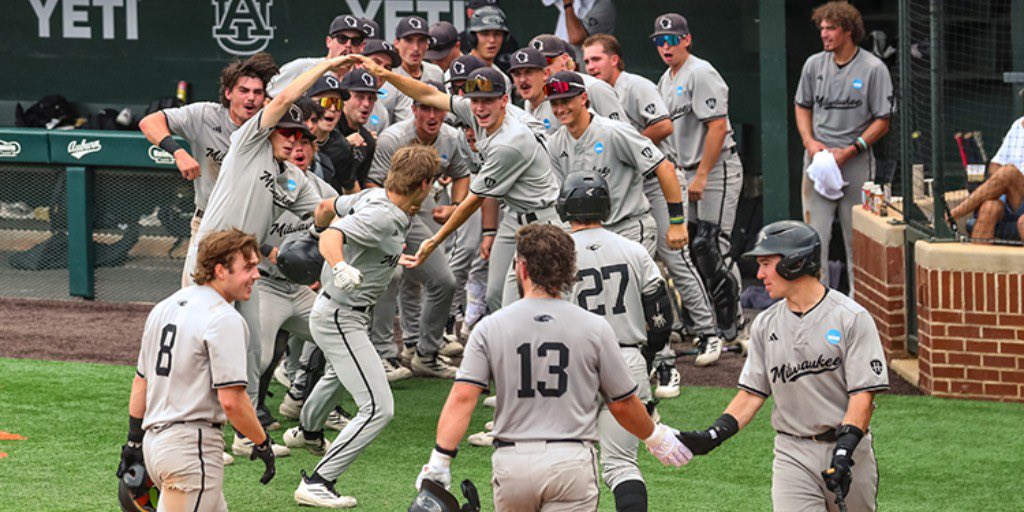
They finished the regular season 22-31, but won the Horizon League tournament and earned an autobid to the NCAA tournament.
Milwaukee beat #4 Auburn 13-8, beat UCF 13-6, and is now in a regional final, one win away from going to supers.
College Baseball.
One thing that’s been lost culturally is the satisfaction of hanging up on someone. You’d slam this fucker down and if you were mad enough you might even get a little “ding” from the ringer. Trust me when I say it felt fucking great.
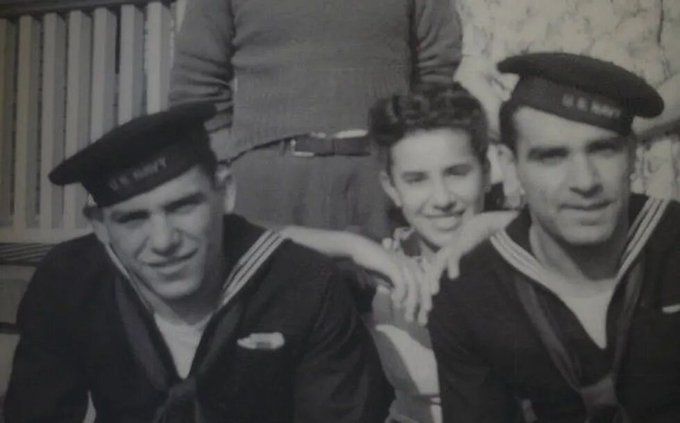
"After completing basic training, Yogi Berra volunteered for what he was told was a secret mission.
So secretive, in fact, that he was not permitted to disclose any details to his family.
This mission was to serve onboard a rocket boat in support of the first offensive waves of the Allied invasion of Normandy.
These 36-foot rocket boats, classified as Landing Craft Small Support (LCSS) boats, were armed with six crew, a dozen rockets, and several machine guns each.
Their job was to get within 300 yards of Normandy’s shore and pound the German machine gun nests with rockets so that the soldiers landing could have a better chance of survival.
For months before the invasion, Yogi’s LCSS trained with eleven others under the attack transport "USS Bayfield" to prepare for the invasion.
As gunner’s mate, Yogi was responsible for the operation and maintenance of all weapons and ordinance onboard while also manning one of the ship’s machine guns throughout the mission.
On D-Day at the mere age of 19, Yogi Berra was awestruck by the sheer magnitude of all the explosions and gunfire going on around him.
His officer actually had to yell at Yogi to keep his head down before he got hit.
As the invasion progressed, the LCSS crews also assisted in recovering bodies of those soldiers killed in action on their way to the shores of Utah Beach.
197 men were recovered onto the USS Bayfield alone.