Presenting the Newest Weapon in the #DeBox Ecosystem!
➡️https://t.co/WUlFsMeFgZ
🔥 Say hello to DeSwap, our revolutionary addition. This marks a crucial milestone on our journey toward the future of SocialFi.
Our resources are primed, and the DeBox community is ready for the adventure.
🫡With our products evolving swiftly, we are well-prepared to drive the growth of #SocialFi.
With Core Getting back up to 1.8$. We are pleased to announce that our Leverage Trading Option will be fully released on April 20, 2023.
We will also start looking into implementing Crust Swap ( With LP still remain on Ice Cream)
This week, I visited Valley Forge – sacred ground hallowed by the resolve of the troops who camped here during the Revolutionary War.
Here they found the steel in their souls to fight for freedom, for liberty, and for American Democracy.
This is who we were. And still are.
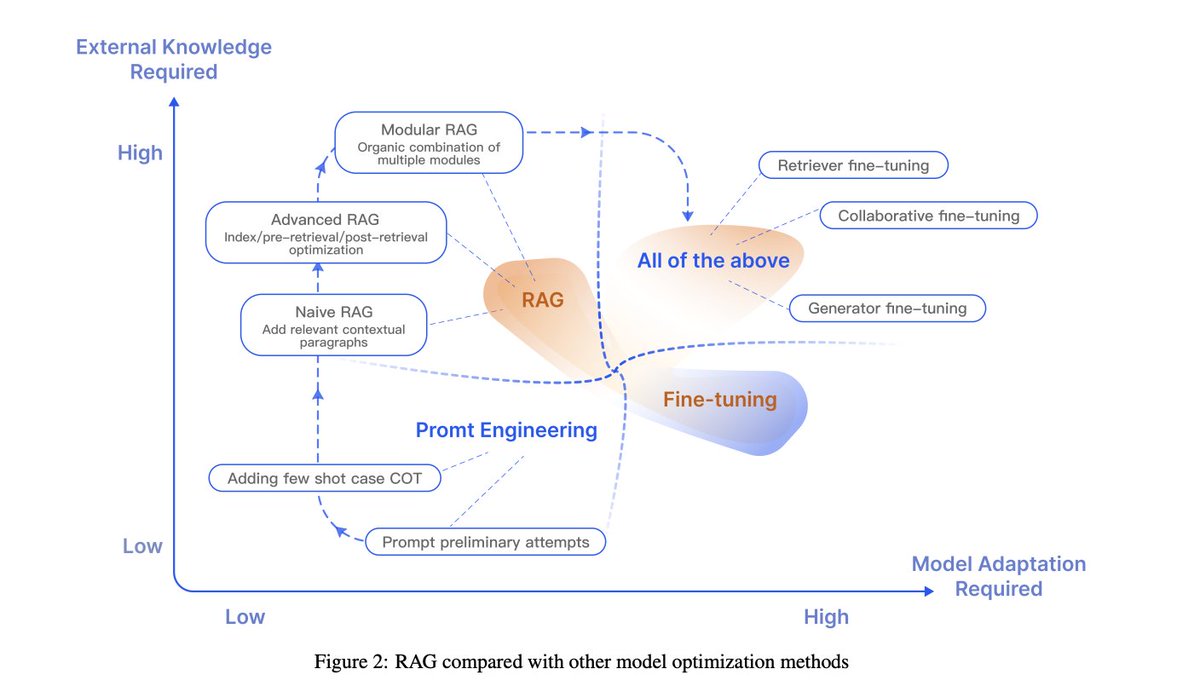
RAG Or Fine-Tuning?
There is a lot of confusion about when to apply which method.
RAG makes sense when you have a custom knowledge base and want a standard ChatGPT-like interface on top of it. RAG has multiple components to it and can be tricky to get right. However, it's definitely easier to implement than fine-tuning.
Fine-tuning makes sense when you have several supervised examples of request responses and are looking for a particular format for your responses. That is if you want the model to adapt to a particular type of response. For example, you can fine-tune a model to be good at a specific type of SQL code generation.
Sometimes, but not often, it makes sense to do both. Using something like Abacus AI makes applying either method on open-source and closed-source LLMs super simple.
Of course, we are particularly partial to open-source, especially if it can do the job!