One metric I rarely see discussed:
Maximum Drawdown.
Everyone loves posting profits.
Very few people talk about how much pain it took to achieve them.
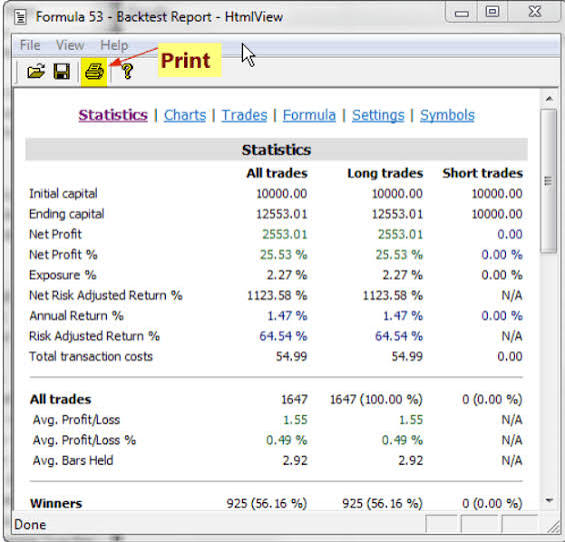
Understanding drawdown helps you determine whether a strategy is realistic to follow over the long run.
Returns matter.
Survivability matters more.
Follow for weekly trading backtests.
Before trusting any trading strategy, I always ask:
How many trades were tested?
Across how many years?
Bull market?
Bear market?
Sideways market?
A strategy isn't validated by one good month.
It's validated by consistency across different environments.
Follow for data-driven trading insights.
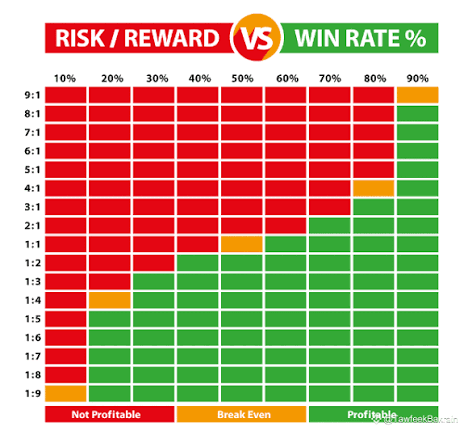
Win rate isn't everything.
A strategy with a 40% win rate can outperform one with 70% if the risk-to-reward ratio is better.
Focus on expectancy.
Not ego.
Professional traders think in probabilities—not individual trades.
Everyone loves finding the perfect indicator.
Almost nobody wants to review their losing trades.
Ironically, that's where the biggest improvements usually come from.
Every losing trade contains data.
Every winning trade contains confidence.
Only one of them teaches you something.
Review your mistakes as seriously as you celebrate your wins.
I ran the same strategy across three different market conditions:
• Bull Market
• Sideways Market
• Bear Market
Guess what?
The strategy that looked amazing during a bull run completely fell apart when volatility disappeared.
That's why I rarely trust screenshots showing one month of profit.
A strategy should survive multiple environments—not just one.
Robust systems always outperform optimized systems in the long run.
Follow for data-driven trading insights.
ETF inflows are one of the few metrics I trust more than market sentiment.
Price moves can be emotional.
Social media can be noisy.
But capital flows tell you what investors are actually doing—not what they're saying.
Whenever I backtest market cycles, sustained institutional inflows usually matter more than a single bullish headline.
Data doesn't predict the future.
It helps reduce uncertainty.
That's why I prefer statistics over speculation.
Follow for quantitative trading & backtesting insights.
One backtesting mistake I see all the time:
Testing only during bull markets.
A strategy should survive:
• Bull markets
• Bear markets
• Sideways markets
If it only performs well in one condition, it's probably curve-fitted.
Robust systems survive changing environments.
Follow for data-driven trading.
Most traders celebrate when price goes up. Quantitative traders celebrate when data confirms a thesis.
Over the past month, Bitcoin ETF inflows have remained one of the strongest indicators of institutional demand. Price can fluctuate wildly, but consistent capital entering spot ETFs often paints a clearer picture of long-term market sentiment.
One thing I always remind myself is that markets move on probability, not certainty. Instead of reacting to every green or red candle, I prefer tracking measurable signals like ETF flows, funding rates, and open interest.
The best traders don't predict—they collect evidence.
What's the first metric you check before entering a trade?
Communities have always been the strongest asset in both entertainment and crypto.
Projects with active, passionate communities often survive difficult markets much better than those built purely on speculation.
That's one reason BTS has remained successful for so many years.
Hollywood and crypto are getting closer than most people realize.
Blockchain isn't just about trading anymore.
Studios are exploring digital collectibles, blockchain-based ticketing, and new ways for fans to own exclusive experiences.
Most experiments are still early, but entertainment has always been one of the fastest industries to adopt new technology.
The real opportunity isn't selling expensive NFTs.
It's creating stronger relationships between creators and their audiences.
Technology works best when people barely notice it's there.
Would you pay for movie collectibles if they actually unlocked real-world benefits?
One trend I'm really enjoying lately:
Studios are finally taking science fiction seriously again.
Instead of relying only on explosions and visual effects, we're seeing more films explore AI, ethics, space exploration, and the future of humanity.
Good sci-fi doesn't just entertain.
It asks uncomfortable questions.
That's what makes the genre timeless.
What's your favorite sci-fi movie of all time?
Follow for daily movie news & reviews.