A new 'mental health' problem!
Being scared of summer
I suggest sufferers move to Scotland
They will never be afflicted if they live there
Fixed
https://t.co/K9Rb6kkA1l
Burnham’s No10 doubles down on his use of official jet to travel to No10 North in Manchester from Glasgow this morning
If he continues to fly weekly to No10 North on GBNI it will cost about £10 million / year, up to £30 million to taxpayers before the next election
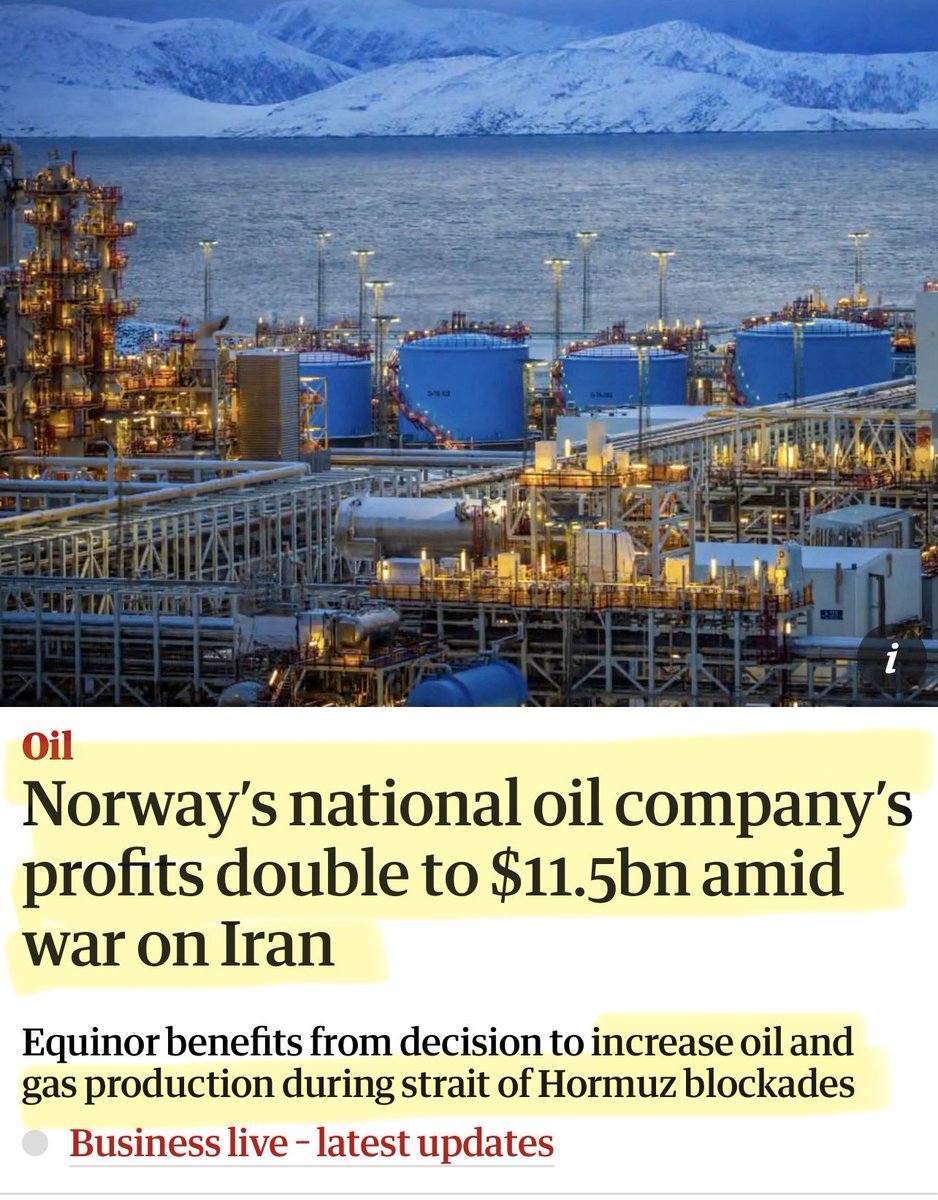
Brilliant! Norway’s state controlled energy company which has reported $11.5 BILLION in earnings in 3 months.
Thats the kind of wealth Mad Ed decided Britain shouldn’t bother with.
And £ Billions more in lost production, jobs, tax revenue and energy security.
That money could have helped fund defence instead of enriching another country. Shh …. We’re saving the planet though 🤡
Bloody hell … Mad Ed has not been replaced by a moderate but by a hard left climate globalist.
Meet Miatta Fahnbulleh - former head of the New Economics Foundation who wants the UK to have a Green New Deal including spending 2% of GDP on Net Zero climate policies.
She pushed for Companies to transfer ownership into worker controlled funds and for a larger, more interventionist state!
She is hard economic Left using Net Zero as the vehicle to transform ownership, welfare, housing, employment and the relationship between citizens and the state.
So … Net Zero on acid just replaced Mad Ed
Prime Minister Andy Burnham has moved Ed Miliband from Energy and Net Zero Secretary to Foreign Secretary. Hopefully signalling an end to the Labour government’s net zero lunacy.
My doctor told me to eat less red meat and more whole grains.
Beef liver has 27 essential nutrients per 100 calories. Eggs have 12. Beef has 10.
Whole wheat bread? 3.
Breakfast cereal? 2.
Vegetable oil? 0.5.
The most nutrient dense foods on earth are the ones they spent 50 years telling you to avoid. The least nutrient dense are the ones on the food pyramid they handed you in school.
Your ancestors ate the top of this chart for 3 million years. The bottom of this chart didn’t exist until the food industry invented it.
Fat and protein are essential. We need them or we die. There is no such thing as an essential carbohydrate. That’s not an opinion. That’s biochemistry.
Nobody gets sick from eating too much salmon. People get sick from replacing it with cereal.
You wouldn't know it by listening to the current news cycle, but global wildfire burn area is tracking to be the lowest on record this year. Although weekly data only goes back to 2012, the available data paint a different picture than the one legacy media has been.
FFS folic acid is in ready made pastry now too. Going to have to make that from scratch as well 🙄
Hey @AngelaRayner I hear you're going to be the next Health Secretary. Getting folic acid out of flour would be a great start to your new job. Show you care about the health of cancer patients, people with kidney and liver disease, people with undiagnosed B12 deficiency, people with stents, men, and everyone else who doesn't want medicines in everyday food. That's millions and millions of people!
Focus supplements on the people who actually need them. Show you're not just a puppet doing whatever Big Pharma and Big Food tells you.
There's a petition running, I'll post the link in the comments. Great to have your support!
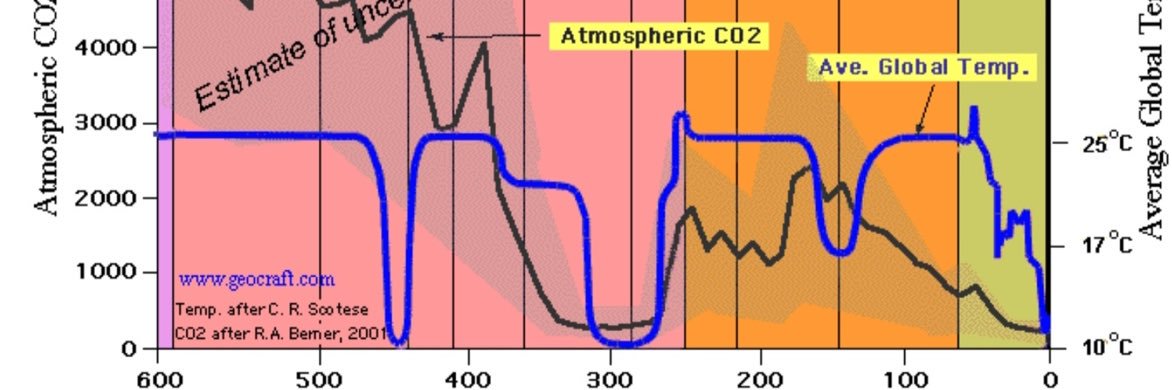
We live on a largely pleasant, yet historically cool world, where average temperatures hover around 15C.
This current baseline includes the 1.4C rise since the start of the Industrial Revolution 250 years ago. We are rarely reminded Earth's climate is roughly 10 degrees 'colder' than the long-term global average of 18C to 26C across hundreds of millions of years.
A warmer climate would not be a crisis, and never has across the history of biological life.
Humans and our unique, symbolism-based culture evolved against this cooling, drying backdrop of the Late Cenozoic Ice Age, which has lasted 34 million years since the glaciation of Antarctica. We are currently in its coldest phase — the Quaternary glaciation — which has endured for 2.58 million years.
Almost all human civilisation - and our acute sense of modernity - arrived during a brief, 11,700-year warm interglacial oasis known as the Holocene. This demonstrates that we are an 'ice age adapted' species, as are all modern mammals. Yet the current climate crisis is built around an institutional dogma, which ignores this vast geological history, operating as if the earth works just like a greenhouse, which it doesn't.
It's all complex. While orbital cycles dictate the 'macro' climate epochs of the Earth over millennia, the current debate focuses entirely on the 'micro' trend of the last 250 years. Our planet is constantly responding to the orbital aberrations identified by Milutin Milanković.
Over the short term, this changeability comes from natural variability in solar radiance, ocean currents, atmospheric water vapor and volcanic activity; over the deeper long term, it is guided by the ponderous tectonic creaking of continental plates.
The world's oceans, water vapor and clouds contribute 50% to 70% of atmospheric warming. The geological record reveals that only after the oceans — especially the Southern Ocean — have warmed for centuries does dissolved CO₂ outgas from the deep waters, a process unfolding over 5,000 to 10,000 years.
To focus exclusively on a trace gas like CO₂ is to ignore the true scale and power of these natural systems. Furthermore, the narrative completely missed the biological utility of this gas: NASA satellite data has shown a significant increase in global green foliage over recent decades, largely driven by elevated CO₂ levels acting as an airborne fertiliser. This green wave, alongside booming global agriculture, was entirely unanticipated by backers of the crisis agenda.
Today, this narrative runs directly counter to thermodynamic reality: we simply cannot run a modern economy without high-density fossil fuels, a baseline power that wind and solar cannot replicate.
To pretend otherwise is to forget our place in the natural world, where we live largely by chance, and only as invited guests — not as Overlords.
Less Global Fire
Halfway through 2026, the world has burned at record-low levels
Every continent is below average, and Africa, Americas, and Europe are at record lows
Media only shows when stuff is burning, leaving us badly informed on climate change
https://t.co/iDqlYckvRT
You can see all the references in my Twitter thread:
https://t.co/c1gWhtRaBe
Folic acid is not the same as the other things added to our bread.
1. Thiamin and niacin molecules are the same molecule as found in wholemeal and removed in milling. You can't overdose.
2. Iron and chalk are different salts to the ones found in food, you can overdose and people with haemochromatosis and kidney stones need to be careful about consumption.
3. Folic acid is a drug:
a) It is synthetic and is never found in nature
b) It needs to be converted by an inefficient enzyme before the body can use it (and has effects on the body in its unmetabolised state)
c) It is being added for a medicinal purpose.
d) People with certain medical conditions have to avoid it and the patient information leaflet that comes with the drug and the NHS both warn about these (including undiagnosed B12 deficency)
e) It interacts with other medications that people take.
Sign the petition: https://t.co/OgdjkgUBHW
New research claims human emissions are not driving atmospheric CO2.
A paper by Dai Ato ran multiple linear regressions for 1959 to 2022, testing two predictors of the annual CO2 increase: sea surface temperature and human emissions.
The result was clear: when the oceans warmed, CO2 levels rose almost exactly in step - about two to three parts per million for every one degree Celsius of warming.
Adding human emissions to the model didn't change the outcome.
Using only ocean temperature, the model reproduced global CO2 levels with near-perfect accuracy - a correlation of 0.995 and an error of just one to two ppm by 2022.
The main factor governing the annual increase in atmospheric CO2 concentration is sea surface temperature rather than human emissions.
Earlier studies have shown the same pattern. Temperature changes first, CO2 follows.
If Ato is correct, cutting human emissions won't lower atmospheric CO2 because it's the oceans that set the pace.
Right then … as Ross Clark points out, the claim that 2,700 people were killed by the heat is bollocks. (Technical term)
It was presented as an actual death toll. It wasn’t. It was a modelling exercise and er.… not actual mortality
UKHSA found NO excess mortality during the May heatwave.
And in the 2 published ONS weeks covering most of June’s heatwave, death registrations were actually 918 BELOW expected.
But the hysterical headlines pushed the narrative as if it was fact. As always, question everything.
The world is sleepwalking towards a multi-trillion dollar abyss — a nightmare already underway.
It promises to be the ultimate graveyard story — the sine qua non of the illusion of free air and sunlight. By 2030, fully 85–90% of the 1.3 million (equivalent) turbines operating today (GWEC 2025) will reach the end of useful operations.
To just maintain the status quo, they will all need to be replaced in a 15-20 year window that straddles the 2050 net zero deadline. That’s roughly 35,000–40,000 turbines per year to be decommissioned, recycled (or graveyarded) and replaced. This will then lead to a second, even more costly build-out - on top of the one we’re still paying for.
At the same time, 5–10 billion solar panels (2 TW installed today) will also be retired, triggering hundreds of billions in scrapping, replacing, recycling and burying.
Wind decommissioning alone will cost $90–150 billion globally ($150–250 k per turbine, offshore will be double). New turbine costs (for 2025–2050) could easily hit $3–4 trillion — on top of what we’re already spending.
As for the composite blades, 1.5–2 million units - mostly non-recyclable - will be heading to landfill graveyards or incineration. As for critical minerals, each 3–5 MW turbine needs 2 tonnes of rare-earth permanent magnets (NdPr, Dy). Demand could triple while China still refines 80% of global supply.
All of this must happen as public subsidies fade, fossil-fuel restrictions tighten (diesel still powers 86% of mining equipment) and private capital becomes pickier, after years of thin or negative returns in renewables.
The coming 'replace-everything-again' phase will demand a WWII-scale industrial mobilisation with far less political goodwill.
The restriction of VPNs, which are one of the ways you can access the world wide web even if your government tries to stop you, is the hallmark of authoritarian regimes like China, Russia and Iran. U.K. is now on course to join them.