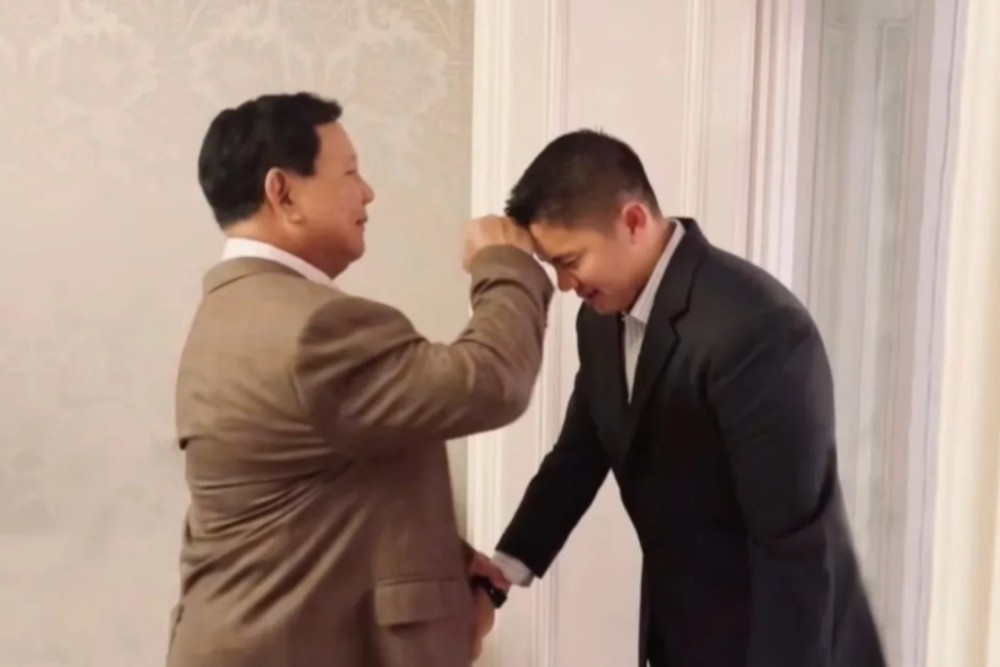
Guys, barusan gue tonton Bocor Alus soal Letkol Teddy.
Video ini menguatkan dugaan yang selama ini beredar bahwa Teddy disebut sebagai salah satu pintu utama menuju ke presiden.
Berikut poin-poin penting yang Tempo beberkan..
- Menteri disebutkan melapor ke Teddy, tidak hanya ke Presiden
- Menteri dan pejabat yang dekat dengan Teddy disebutkan memiliki akses lebih mudah ke Presiden
- Tempo menyebut Teddy berada dalam grup komunikasi menteri dan wakil menteri untuk memantau kinerja mereka.
- Teddy disebutkan ikut mengawal program prioritas presiden dengan detail...
- Misalnya, untuk program perumahan, Teddy dikabarkan sampai mengecek penerima subsidi, pembiayaannya, hingga detail lapangan acara peresmiannya.
- Media sosial Teddy tidak hanya dipakai untuk melaporkan program presiden, tetapi juga untuk membranding dirinya sebagai tokoh yang teliti dan pekerja keras.
INFO PALING SENSITIF: Tempo menyebutkan ada cerita dari internal militer dan istana yang menduga bahwa Teddy sedang disiapkan menuju jenderal bintang satu.
Dan seperti yang kita tahu, karier militer Teddy sebelumnya juga sempat dipersoalkan sejumlah pihak.
Source Info: Bocor Alus Tempo
Source Gambar: Harian Jogja.
“Gue nggak pernah nunggu mood untuk kerja..”
Itu kalimat pembuka Raditya Dika yang langsung bikin gua mendengarkan dengan serius podcast ini.
Di podcast ini, Radit sharing pengalaman real dia dari orang yang sudah puluhan tahun konsisten bikin karya.
Menurut Radit, mood adalah musuh terbesar kita.
Kita sering menunda kerja karena
“belum enak moodnya”
“belum semangat” atau
“nanti aja deh”
Padahal orang-orang yang sukses itu bukan kerja karena mood bagus, mereka kerja karena sudah berkomitmen.
Mood bisa aja datang terus pergi, tapi yg harus tetap ada itu DISIPLIN. make sense ya?
MSCI punya barang di DSSA 11 triliun
dan sekarang udah turun 86 % dari awal
mereka masuk
artinya sisa 1.65 triliun doang
minus 10.4 triluin lebihh
enak banget jadi konglo
udah masuk msci di pucuk
dan sekarang msci mau keluar
harga udh diskon parah
tinggal buyback di bawah
entar suatu saat mainkan lagi
masuk msci lagi
wkwkwk infinite money cok
ini baru msci doang
belum ftse dll
Bayangin u rekomen buat masukin $MANTA
Atau u secara publik mengakui ngorbanin follower u jadi exit liquidity biar bisa mengeruk duit dipucuk
Nah sekarang bayangin ada team yang proper, doing proper due diligence, terus bikin rekomendasi investasi
Sekarang tebak yang masuk penjara yang mana?
Bayangin dulu aja, kali2 ini semua cuma mimpi
Fyi... Super El Nino ini mengingatkan kita pada kejadian di zaman Nabi Yusuf as.
Di zaman beliau, tragedi panas dan paceklik yang sangat mengerikan itu berlangsung selama 8 tahun. Tentu susah banget itu ngadepinnya.
Tapi ternyata... beliau sudah memberikan trik bagaimana supaya selamat dalam menghadapi tragedi panas dan paceklik seperti ini. Intinya ada di dua hal:
1. Berhemat yang beliau gambarnya dengan menanam selama 7 tahun dan panenannya dibiarkan di tangkainya.
2. Memilih pejabat yang kompeten untuk menghadapi ini. Karena di saat genting gini, peran pemerintah itu vital. Dalam kejadian Nabi Yusuf, akhirnya beliau sendiri yang ditunjuk jadi menteri dan beliau berhasil.
Guys coba baca.
Itu Opung Luhut sampai minta maaf kepada investor global di Singapura.
Opung minta maaf karena kondisi pasar keuangan Indo yang volatil atau tidak pasti.
Yang ditampilkan publik alasan geopolitik dan tingginya suku bunga.
Tapi yang ga diketahui publik? Wallahu Alam.
Apapun itu. Ini tanda bahwa ekonomi Indo sedang tidak biasa-biasa saja. To the point, investor mesti ditenangkan.
Kalau investor panik, ya amblas IHSG dan Rupiah kita.
Rugi besar lah ujung2nya dan kena ke seluruh rakyat.
kemarin malam pas gue lagi sama nyokap,
tiba2 ia ngomong "kok WA papah gak bisa di chat yah?". terus gue bingung, "hah?
maksudnya? aku gak tau sih mah,
soalnya aku terakhir ngechat papa 2 tahun lalu".
karena gue penasaran, gue pinjemlah HP nyokap buat ngecek WA nya bokap yang katanya gak bisa di chat. dan bener, WA bokap udah gak bisa di chat..
Tapi bukan itu yang bikin sedih,
yang bikin sedih adalah ternyata nyokap gue masih rutin WA bokap, setelah 2 tahun berlalu sejak bokap meninggal
cc:threadsatriandhika14
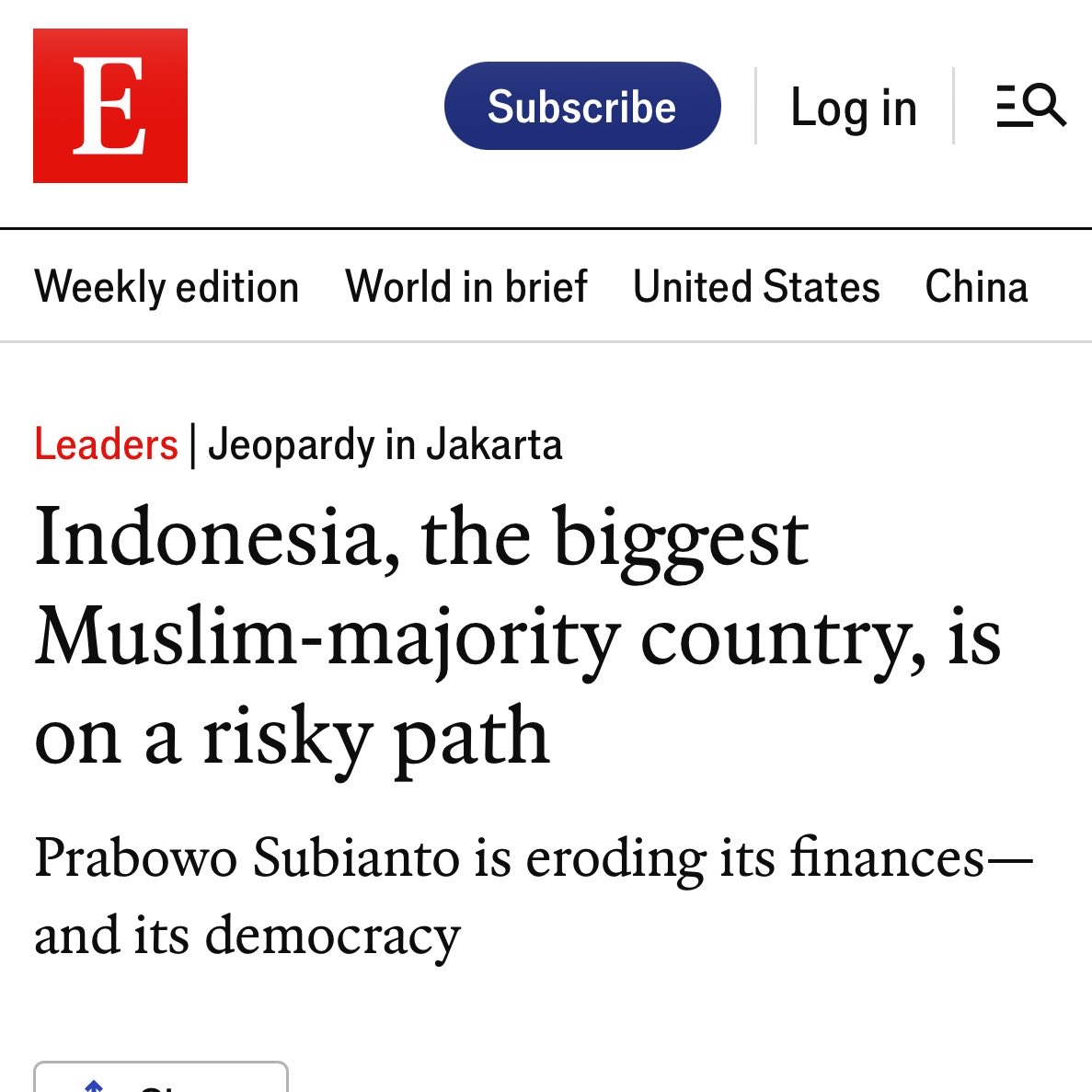
Kemarin, @TheEconomist mempublikasikan dua artikel soal Indonesia
Judul artikel pertama: Presiden Indonesia sedang membahayakan ekonomi dan demokrasi
Subjudulnya: Prabowo Subianto terlalu boros dan terlalu otoriter
Perlu diketahui, Spendthrift artinya orang yang menghamburkan uang secara tidak bijak. Diksi ini lebih keras dari sekadar “boros”. Dalam konteks negara, ada kesan ceroboh dan tidak bertanggung jawab secara fiskal.
========
Judul artikel kedua: Indonesia, negara mayoritas Muslim terbesar, sedang menempuh jalur yang berisiko
Subjudulnya: Prabowo Subianto sedang menggerogoti keuangan negara—dan demokrasinya.
Di artikel ini, pemilihan diksi “Eroding” rasanya memperkuat artikel lainnya. Jeopardising (membahayakan) masih bicara soal risiko ke depan. Eroding (menggerogoti) berarti prosesnya sudah berlangsung. Rasanya pelan, diam-diam, tapi nyata. Bagaikan batu yang berlubang oleh tetesan air.
Banyak yang salah menanggapi soal potongan trailer DILAN ITB 1997 pas bagian Dilan mengucap "Terima kasih Suharto".
Konteks dan latar belakang kalinat ini sebenernya sudah sering diceritakan oleh Ayah Pidi Baiq @pidibaiq di beberapa wawancara/podcast.
Seperti kita tau, Dilan adalah represntasi dari kehidupan @pidibaiq ,
@pidibaiq menjelaskan bahwa ia mendirikan "negara" The Panasdalam pada tahun 1995 karena merasa aspirasinya untuk membantu mengurus Indonesia tidak ditanggapi oleh "seseorang yang menguasai negara" saat itu (Suharto).
Pasca Reformasi (Suharto turun) ia kemudian berpikir, "bakal ngapain lagi ya?". Karena tujuan awalnya adalah sebagai bentuk perlawanan/protes terhadap penguasa tersebut, maka setelah penguasa itu turun, alasan untuk menjadi negara sendiri pun hilang.
Setelah peristiwa turunnya penguasa tersebut, The Panasdalam mengadakan muktamar di Dago untuk menentukan apakah mereka akan tetap menjadi negara sendiri atau bergabung kembali dengan NKRI.
Keputusannya adalah bergabung kembali karena mereka "malas mengurus negara" dan ingin fokus pada hal lain.
Itulah mengapa dia mengucap "Terima kasih Suharto"
⚠️⚠️⚠️
WARNING KEPADA PARA VIBECODER DAN CODER!!!
ada pembicaraan soal kalau pakai axios versi 1.14.1 akan menarik juga package berbahaya yaitu plain-crypto-js ke project kalian
gw gk bisa memverifikasi kebenarannya karena serem cuy, tapi baiknya kepada kalian yg menggunakan npm bisa di cek package yg terinstall
kalau ada package mencurigakan maka hapus dari project kalian!!
beberapa hal yang bisa kamu lakukan:
1. Check:
npm ls axios
npm ls plain-crypto-js
2. jika versi 1.14.1 → Pin safe version:
di package.json: "axios": "1.14.0" ← exact version, no ^ or \~
3. Kemudian:
rm -rf node_modules
package-lock.json
npm install
(sama untuk yg pakai yarn/pnpm)
🚨 axios kena supply chain attack.
barusan live dari bapak @_JohnHammond
Versi [email protected] dan [email protected] ada malware crypto
SUPPLY CHAIN ATTACK.
Remote Access Trojan (RAT) ke sistem korban.
Artinya: siapapun yang npm install 3 jam yang lalu infected
Katanya mudah tapi kalo matematikawan dikasi notasi:
𝔁=𝔁+1
Bilangnya : “ga mungkin itu mana bisa”
Sementara software engineering, itu hal yang biasa.
Matematikawan emang kurang “can do attitude”.
🏃🏃♀️🏃♂️💨
Setelah nyoba liat full tanpa dipotong, berupaya menelaah, dan melakukan analisa sederhana, berikut beberapa hal yg gw dapetin setelah nonton; Presiden Prabowo Menjawab.
- Utas
Since last year, I've arguably been wrongfully accused in a state corruption case.
To defend my innocence, I spent past 6 weeks building an agentic AI swarm that:
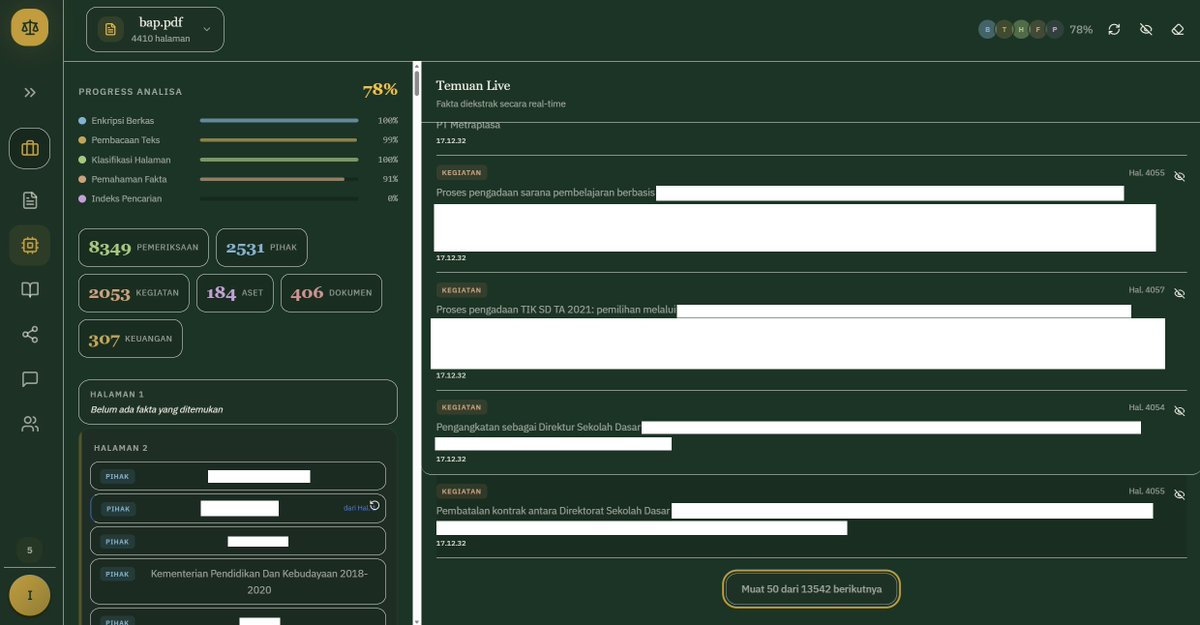
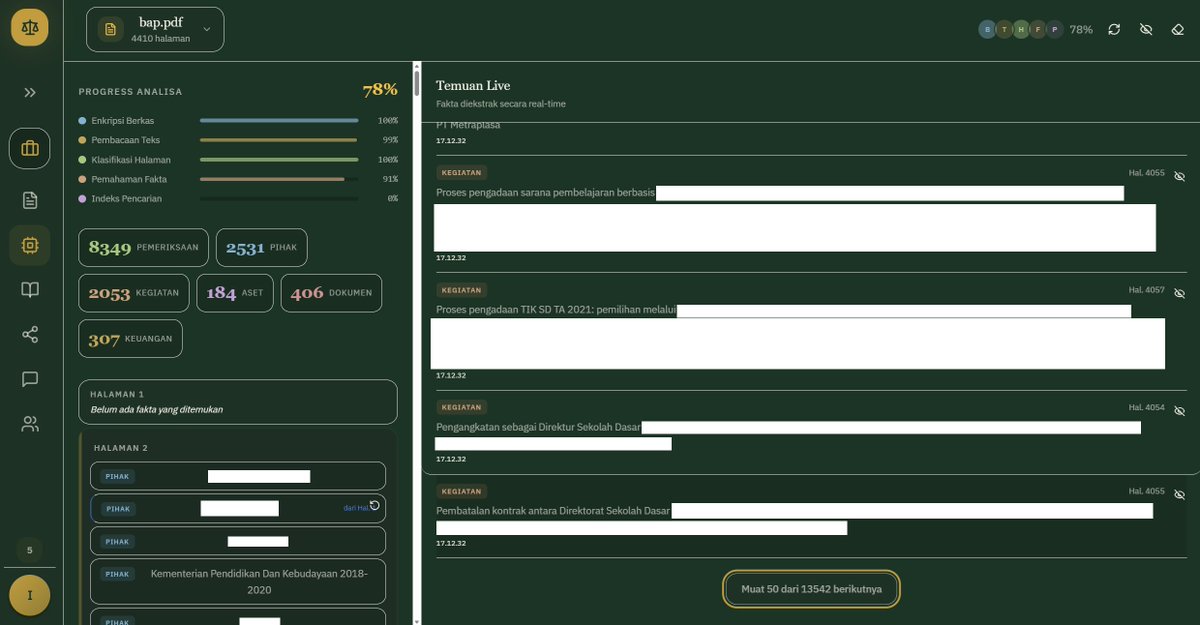
Analyzed 4700+ pages court docs
Mapped 8900+ testimonies
Found dozens of contradictions
This is how I fight 👇🏼
First off, some context may be necessary.
Even though I'm accused in a state corruption case, I'm not a government official. I'm a software engineer. I spent over 15 years building large-scale tech systems across Europe and Indonesia. I've led engineering teams of up to 600 people and helped grow a small tech startup into a unicorn.
In 2016, I moved back from Europe to Indonesia, because I believe technology at scale could make a real difference to the millions of people in the nation.
Six years ago, working as a tech consultant under a nonprofit foundation, I started advising Indonesia's Ministry of Education on building large-scale technology platforms.
Public sector work pays significantly less than private sector, and I took close to a 50% pay cut to make the switch. I was fine with that. Using what I knew to help underserved communities in Indonesia felt like the right trade.
Our mission was to build a user-centric superapp for public education, specifically for teachers and public schools, the kind of work the private sector ignores because there's no money in it.
At some point, officials at the ministry asked for my input on one of their procurement plans. I helped them work through the technical details, shared what I knew, laid out the pros and cons, and recommended a set of tests they should run to determine which options were the most suitable.
By the time they made their final decision and executed the procurement, I had already resigned from the consulting work, so I didn't think much of it.
Fast forward to May 2025. My house was raided as part of a newly opened corruption investigation tied to that procurement. Two months later, I was named a suspect and placed under city detention due to my health.
The trial started in January 2026. We've been through more than a dozen sessions so far, and not a single piece of evidence or testimony has been presented showing I received a single cent from the procurement.
What came to light was the opposite: evidence and testimony that my recommendations were neutral and likely were ultimately ignored by the ministry's own team, who went ahead and made the call on their own.
So why am I the one on trial? Because the ministry officials who did take money from the procurement vendors needed someone to blame for the decisions they made. Blaming an outside consultant is the easy way out.
Witness testimonies in court has shown that the officials actively directed the procurement while claiming it was done on my instructions and even misled their own team within the ministry by saying I held a position of authority.
We needed evidence to dispute those accusations, questions to cross-examine the witnesses, and we needed them fast.
This is where my AI comes in.
A few days before the trial began, we received a 4400-page printed document containing all the witness statements collected during the investigation, plus several hundred pages of other related documents.
The information asymmetry is staggering. Those with deep enough pockets to hire large law firms can throw dozens of paralegals and associates at a document like that and mount a proper defense on short notice.
I didn't have that kind of money. By then, I had been out of work for more than six months. The AI startup I founded had to shut down. Our investors asked us to return their funding. I had to lay off the entire team.
Most of my lawyers are friends of my wife from her college days, who stepped up and waived most of their fees because they could see I was being railroaded.
The whole situation felt hopeless. But somewhere in the middle of the despair, a spark lit up.
Combing through and analyzing thousands of pages of documents is exactly the kind of problem AI was built for.
I've built AI systems before, so I know the key to applying AI to a real-world problem is understanding the strengths and limitations of the available models, and figuring out how to make things not just work, but work efficiently enough to put into production.
I was placed under city detention due to health issues with my heart, compounded by a tumor that has been growing rapidly over the past few months. But it also means I still have access to my dev PC.
So I started with small experiments. My lawyers found a printing service that could scan the thousands of pages in a couple of days. At first, I tried simply uploading the scanned PDF into existing chatbots like ChatGPT, but the file was far too large for anything they could handle.
Even when I managed to get it working through external cloud storage, the results were atrocious. Half of the strategies and "facts" the models surfaced were hallucinations. That wouldn't just be useless in court, it's actively dangerous and can jeopardize my defense.
My experience building complex AI systems told me that the key to reducing those hallucinations is better data preprocessing.
So I spent the first couple of weeks focusing on parsing the uploaded PDFs, running various kinds of text extraction, and eventually settled on building an agentic AI swarm that performs multiple layers of preprocessing and analysis.
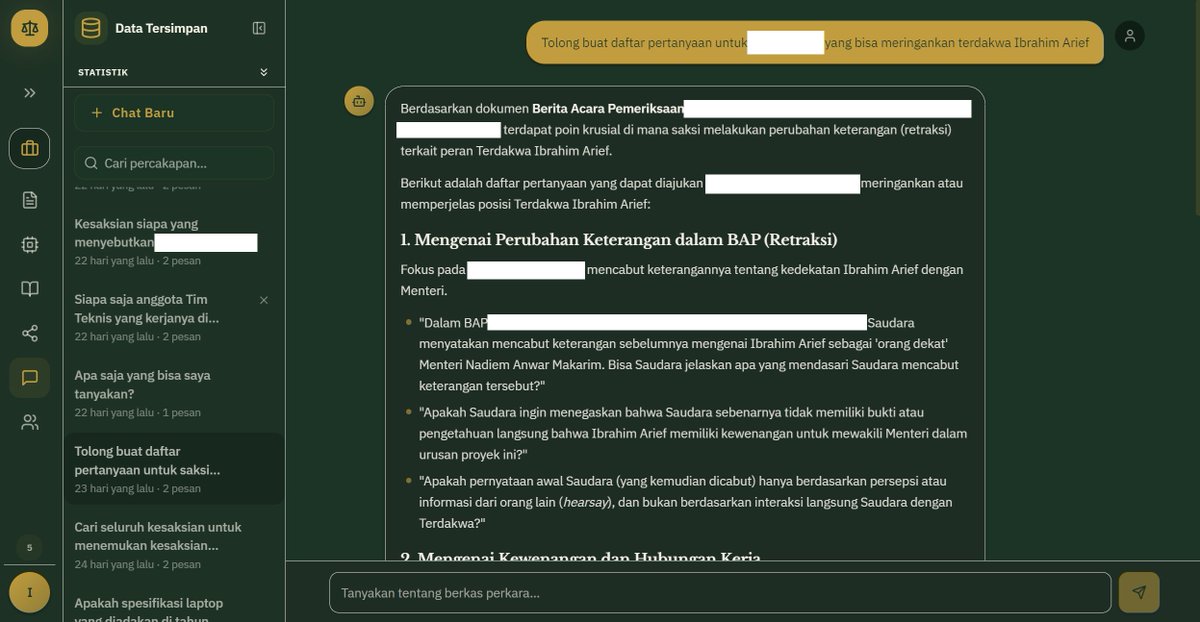
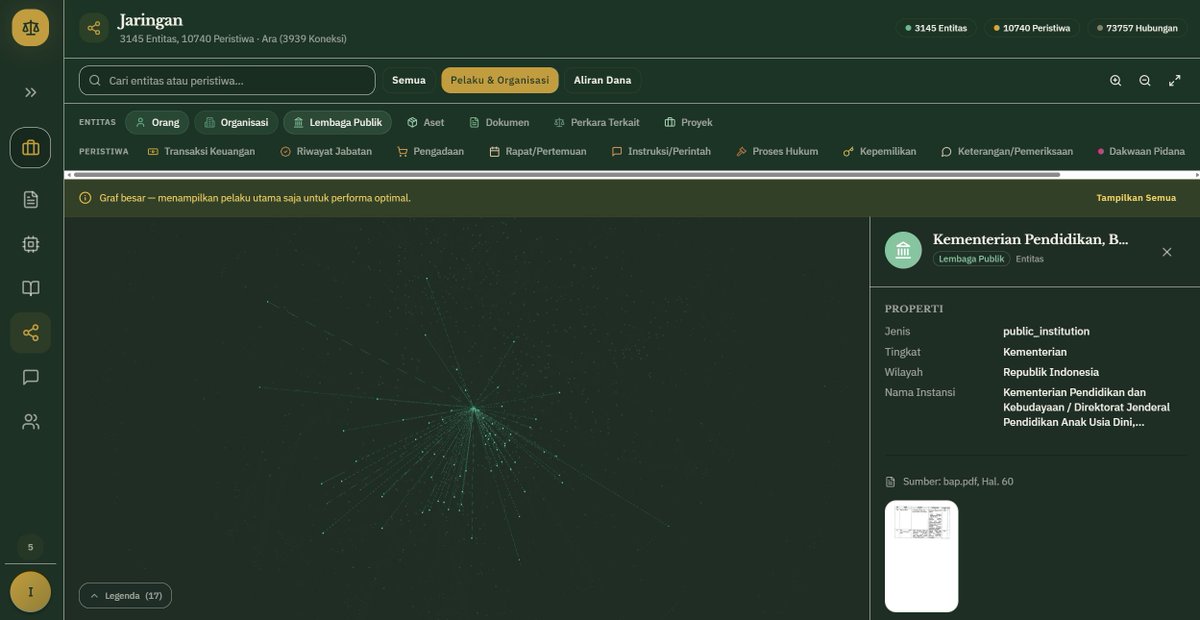
This multi-step analysis by several AI agents that swarm the PDF and extract different aspects of the case produces a dense knowledge graph where we can even trace the flow of money involved.
My lawyers can now easily browse, filter, and search through nearly 9000 witness statements. We even discovered several witnesses with duplicate testimony, raising suspicion of coordinated efforts or tampering among them.
But I didn't stop there. The processing chain includes several higher-level intelligence layers that draw from all the signals in the extracted knowledge graph. These layers add semantic understanding that powers a Chat AI feature, where we can ask specific questions about the case and get grounded answers.
I even built a self-reflective sub-agent that automatically challenges and inspects the results to make sure there are zero hallucinations.
Overall, the AI has helped me and my legal team uncover the big picture of what actually happened, and build questions that span hundreds of separate testimony sessions, giving us an unprecedented ability to cross-examine witnesses in court and significantly improved our defenses.
But I have grander vision than just helping my own legal team. Indonesia's legal system is severely overburdened, with a huge number of cases flowing through the courts every year. This kind of AI could be a useful tool not just for lawyers, but also for judges and prosecutors trying to make sense of their caseloads.
With the cross-examinations we've conducted and the weight of evidence that has come to light, we are aiming for an acquittal.
Should that be the case, my pledge is to keep building this AI platform into something that can meaningfully improve the quality of justice in our legal system: by helping investigators analyze cases more thoroughly and shine a light on any potential crimes, by raising the standard of what prosecutors bring before a judge, and by giving lawyers the ability to uncover the truth in their clients' cases faster than ever before.
Because in the end, I want what I've built to help more than just myself. I believe it can ease the burden on our judges and raise the quality of justice across the system in Indonesia.