Tracking MENA geopolitics with context and clarity. Insights, conflict analysis, and real stories that go beyond borders. #MiddleEastConflict#FactsBeyondBorder
We often blame governments for keeping journalists out of conflict zones, but the quiet reality is that threats of violence from local armed groups make independent reporting impossible.
You often hear “why don’t the IDF allow journalists into Gaza”. Here’s an interesting perspective.
About a month ago, the IDF offered the chance of a visit to a captured Hezbollah tunnel. Amongst those who accepted were me and a small pack of journalists from Israel, Greece, the USA and Germany.
You will notice that no major media outlets have really picked up on the story since October. There’s a reason. Hezbollah put out a statement saying that any more major outlet accepting the offer would put their colleagues in Beirut in danger from Hezbollah repercussions.
Of course, Hezbollah are a major terrorist organisation and this is what you’d expect. But there’s a serious lack of journalistic integrity in properly reporting neither the scale and sophistication of the tunnels, nor the threats themselves.
It means the world is only seeing the IDF airstrikes, and not understanding the “why”. It’s all part of the very effective media war these groups are fighting.
It also shows how journalists are not safe from these terror groups. It goes a long way to explaining how Hamas in Gaza might also treat international journalists, how those journalists react to threats, and therefore why they’re not allowed in.
https://t.co/oJbXTaf1Sj
CENTCOM’s morning strikes aim to degrade Iran’s military leverage in the Gulf.
However, eliminating asymmetric threats like mobile launchers and naval drones via airstrikes is highly difficult. It weakens their leverage short-term, but securing Hormuz requires more than bombing.
At 6 a.m. ET today, U.S. Central Command forces began launching a wave of strikes against Iran. The strikes are designed to further degrade military capabilities Iranian forces have used to attack commercial shipping in the Strait of Hormuz.
For decades, Iran used proxies to fight Israel on its borders.
Now the US is hitting mainland Iran, and Tehran is hitting back at its neighbors.
The battlefield shifted to the Gulf. For once, the proxy-maker is fighting its own war.
The US is bombing Iran. Iran is bombing Bahrain. Saudi Arabia is bombing Yemen. Something just blew up in the UAE. Everyone is bombing everyone while Israel is left sitting on a beach chair sipping cold beer. Usually it's the other way around. Progress!
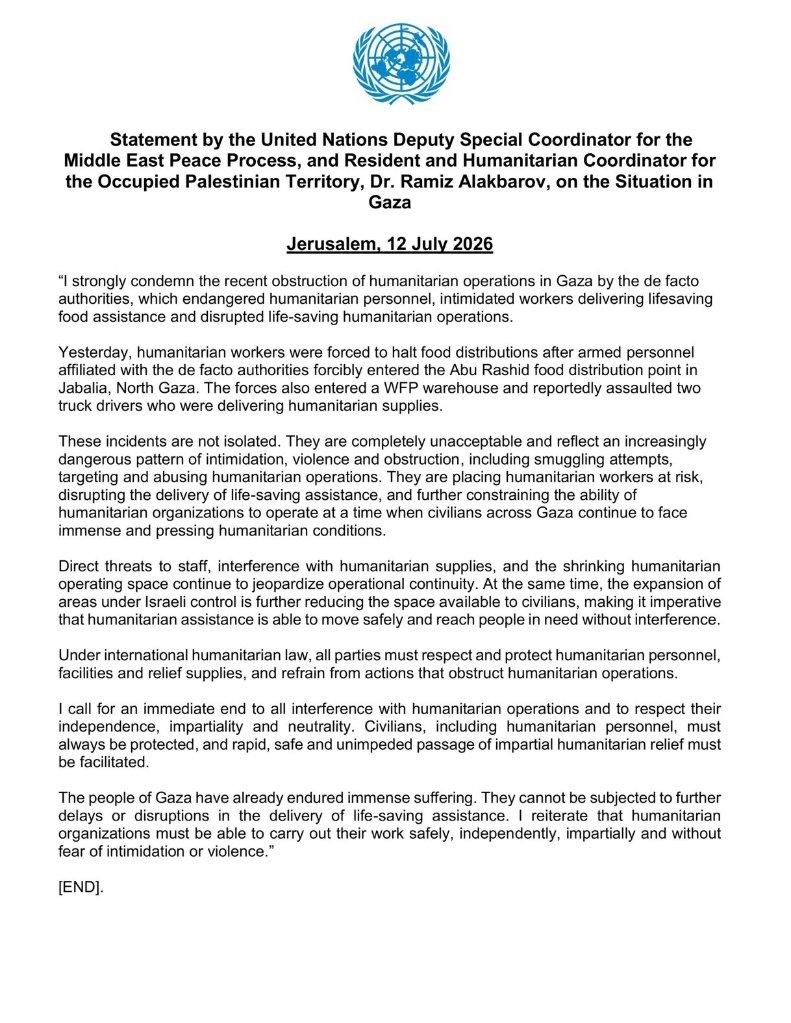
@EYakoby The UN directly accusing Hamas of hijacking aid in Jabalia is a massive shift.Critics have pointed to this for years, but the UN rarely names Hamas so explicitly. It shows that internal security, not just access, is the real roadblock.
https://t.co/v3K4lnhFBi
The UN’s July 12 Gaza statement shows how aid gets trapped in a two-way squeeze. Relief delivery is bottlenecked from both sides: the expansion of Israel’s military footprint and local armed groups (Hamas) stepping in to disrupt and divert supplies.
@amjadt25 It’s not about cheering for war. it's about keeping global trade alive.
The Strait of Hormuz handles 20% of the world's energy. If diplomacy can't secure it, military pressure is the only tool left to prevent a global chokehold.
@realMaalouf It comes down to who is involved, not the scale of the tragedy.
Everyone agreed ISIS had to be stopped, so there was no government policy to "protest".
Israel-Palestine involves major state alliances and deep political polarization, which is why it drives people to the streets.
The US-Iran escalation peaked over the last 24 hours as the US deployed sea drones and Iran launched retaliatory strikes at US bases in Jordan, Kuwait, and Bahrain.
Tehran is testing host-nation limits, while Washington is holding the line on global transit lanes.
The UN’s July 12 Gaza statement shows how aid gets trapped in a two-way squeeze. Relief delivery is bottlenecked from both sides: the expansion of Israel’s military footprint and local armed groups (Hamas) stepping in to disrupt and divert supplies.
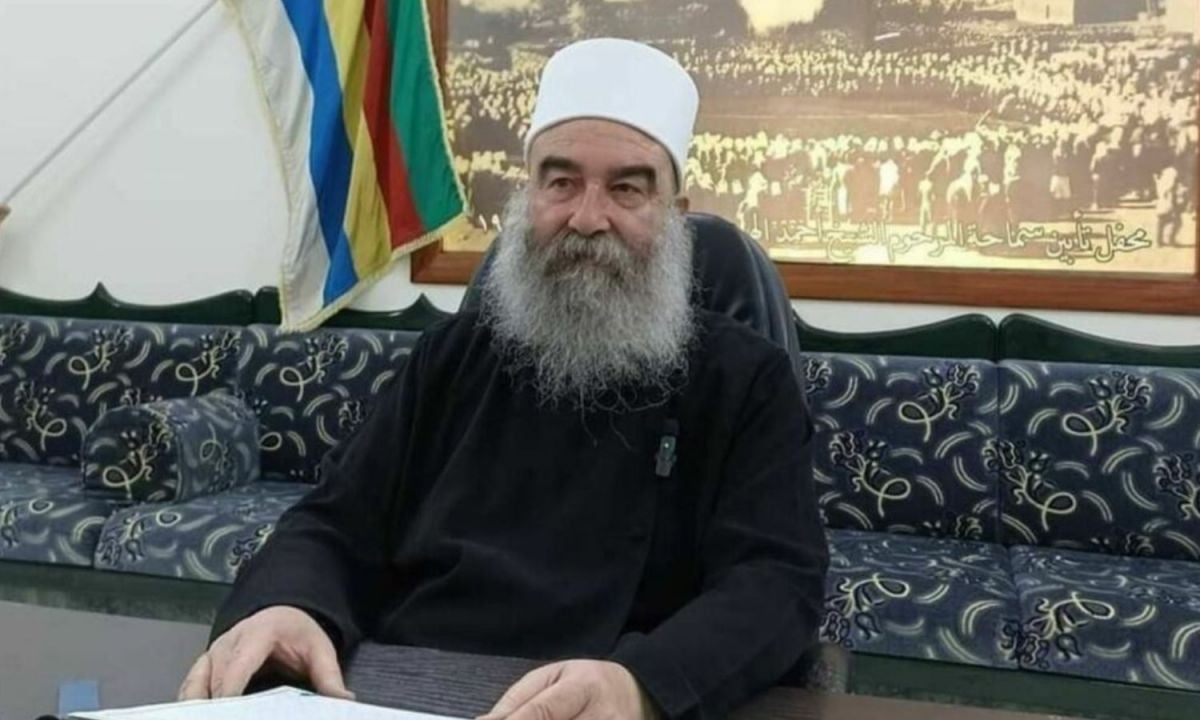
Suwayda’s break from Damascus marks a major shift. After Assad’s fall and Muhammad al-Sharaa’s failure to assert control through HTS-backed Druze militias, the community has chosen self-rule—rejecting both jihadist influence and external power.
BIG: Suwayda officially severs ties with Damascus.
Israel-backed Suwayda’s Supreme Legal Committee declared self-rule, naming a new internal security chief and forming an interim executive council to manage all local affairs.
It’s a question worth asking. In Western democracies where people are free to protest without fear, widespread silence on Hamas suggests a deeper ideological or communal alignment—not just fear or ignorance. Understanding that dynamic is essential to grasping the broader conflict
It’s been almost two years, and you still haven’t asked the most fundamental question: Why aren’t Palestinians in Western liberal democracies protesting against Hamas? If you can’t answer that, you don’t understand anything.
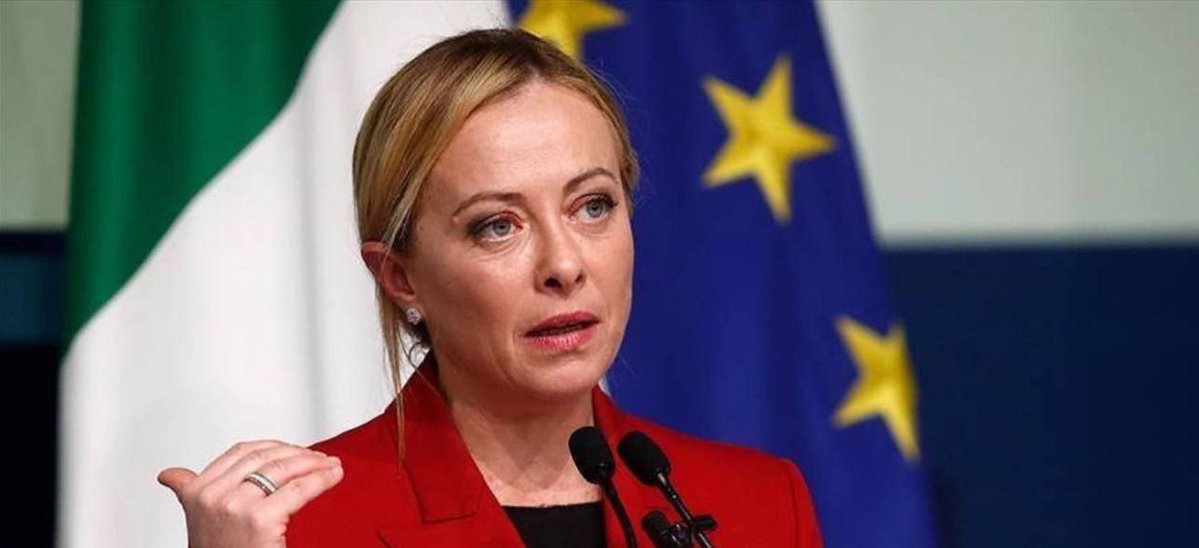
Meloni's stance reflects a growing recognition that symbolic recognition of a Palestinian state - absent borders, governance, or peace agreements - only undermines the very outcome it claims to support. Statehood without negotiations rewards intransigence and sets peace back.
Recognizing a Palestinian state before it is established is counterproductive, says Giorgia Meloni.
“I strongly support a Palestinian state, but I am against recognizing it before it is established,” said Italian Prime Minister Meloni.
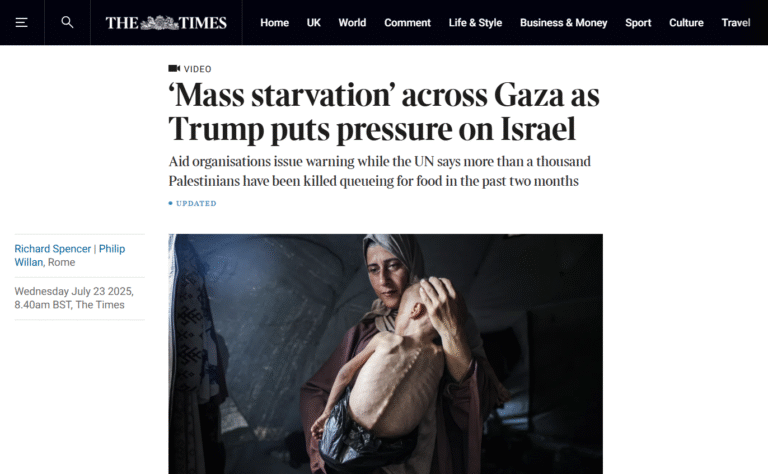
This isn’t the first time an image has been weaponized to push a narrative. The photo of Mohammed al-Matouq has gone viral as proof of ‘famine,’ but closer scrutiny shows it’s being used out of context - another case where emotional impact trumps accuracy.
1/5
The Truth Behind the Viral Gaza Famine Photo
By : @mishtal
A recent viral image of a malnourished child from Gaza, identified as Mohammed al-Matouq, has been widely circulated by international media outlets as evidence of a famine in the region. However, a deeper investigation suggests the image has been used out of context and misrepresents the situation.
Hamas is a case study in why Arab states like Egypt, Jordan, and the UAE outlaw Islamist groups: because they’ve seen firsthand how radical ideology devours its host. When political Islamists gain power, prosperity dies and suffering spreads, and Gaza is just the latest victim.
Dear West,
Hamas is a living example of why many moderate, successful Arab states fight radical Islamists so fiercely.
Their dogma is suicidal, and wherever they rule, they drag entire populations into misery, just as Hamas has done with innocent Gazans.
Ban radical Islamists.
This isn’t about negotiations—it’s about control. While Israel, the U.S. and Egypt push for a ceasefire, Hamas stalls, calculating how much more blood can be leveraged for political gain. The group claiming to defend Palestinians is the one prolonging their suffering.
This threat is more than sectarian hate - it’s a declaration of religious war. By equating the Druze with Jews, the speaker reveals the motive: not land, but the same Islamist vision that targets Israel is now turning on the Druze, using religious language to justify genocide.
Syrian Islamist issues warning to the Druze:
“Get out of Jaramana. Get out of every mixed area. Your fight isn’t just with Syrians, it’s with the entire Muslim world. We’ll hunt you down wherever you are, just like the Jews. You’re no different from the Israelis.”
While Druze and Christians are being slaughtered in Syria, it’s Jolani’s jihadists leading the charge—with horrifying impunity. The victims aren’t just forgotten—they’re abandoned, as Islamist groups fill the power vacuum and wage religious war with little global outcry.
Catholics are routinely slaughtered by radical Islamists in Africa and the Middle East — a situation which routinely elicits no comment from church leaders
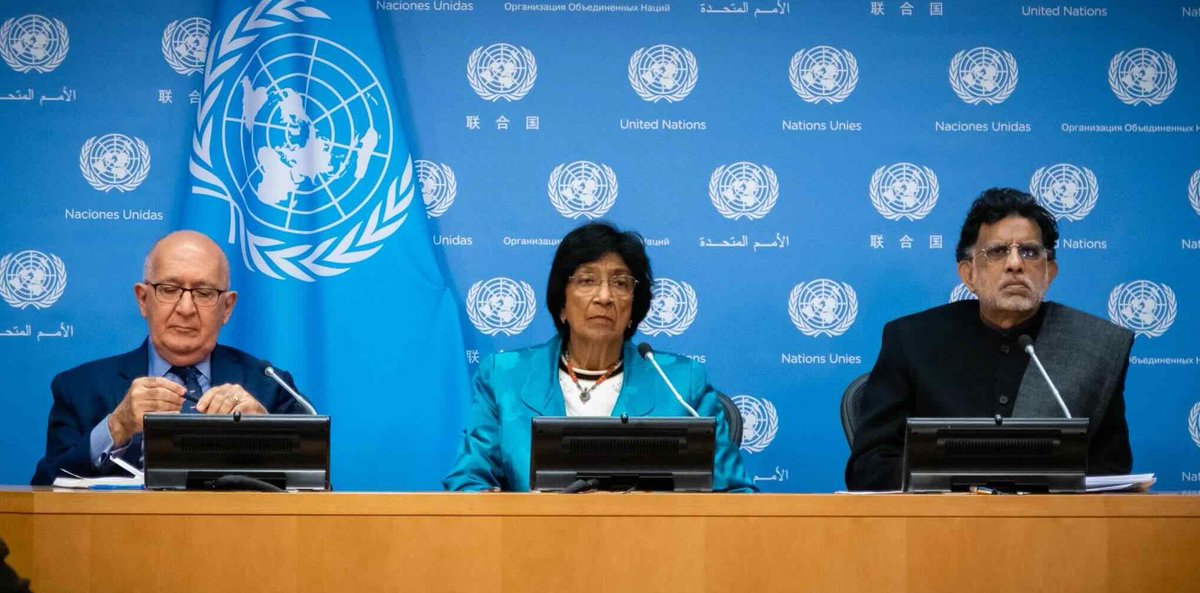
The resignation of all three members of the UN’s anti-Israel inquiry follows years of documented bias and growing international pressure—now catalyzed by U.S. sanctions on Francesca Albanese.
Dominoes Are Falling: UN Watch Hails Resignation of All Three Members of UN's Anti-Israel Inquiry — “This is All Due to U.S. Sanctions on Albanese”
https://t.co/YZa7fs0qsZ
FOR IMMEDIATE RELEASE
GENEVA, July 14 – UN Watch welcomed today’s sudden resignation of all three commissioners of the United Nations Human Rights Council’s permanent inquiry on Israel, calling it a watershed moment of accountability for those pursuing the UN’s institutionalized bias against the Jewish state.
“This week, the dominoes are falling,” said Hillel Neuer, executive director of UN Watch. “First, U.S. Secretary of State Marco Rubio made the historic decision to sanction Francesca Albanese, the UN’s pro-Hamas rapporteur. Now the architects of the UN’s anti-Israel inquisition are fleeing the ship. The tide is turning.”
Navi Pillay, chair of the Commission of Inquiry (COI), announced her resignation citing “age, medical issues, and the weight of several other commitments.”
Her colleagues, Miloon Kothari and Chris Sidoti, also submitted resignation letters, with Kothari referencing an “understanding” reached during a private meeting.
“The resignation of all three commissioners is long overdue,” said Neuer. “This was a commission born in prejudice — mandated to investigate only Israel, while ignoring Hamas, Hezbollah, and the Palestinian Authority. Its members were selected precisely for their hostility to the Jewish state.”
Neuer noted that the resignations follow mounting international criticism:
In 2022, Miloon Kothari questioned Israel’s right to UN membership and evoked antisemitic tropes about Jewish control of the media—remarks condemned by 18 nations including the U.S., U.K., Germany, and France.
Chris Sidoti trivialized the issue of antisemitism, claiming that Jews “throw around accusations like rice at a wedding.”
Navi Pillay, chosen in July 2021 after she had lobbied government to "sanction apartheid Israel," led a commission that generally turned a blind eye to Hamas terrorism and incitement, even after the October 7 massacre.
“This trio never should have been appointed,” said Neuer. “As documented by UN Watch, their legacy is one of distortion, demonization, and dishonor. Their departure is not reform, it’s damage control.”
UN Watch drew a direct line between the latest resignations and the political shockwaves from the U.S. decision to sanction Francesca Albanese, the UN Special Rapporteur who has justified terrorism and been denounced for Holocaust inversion.
“Thanks to Secretary Rubio and the United States, the UN’s culture of impunity is starting to crack,” said Neuer. “Francesca Albanese was the tip of the spear in the UN’s war on Israel. Now that she’s been sanctioned, others are looking over their shoulders. The fear of accountability is finally setting in.”
UN Watch urged the UN Human Rights Council not to replace the three commissioners, but to terminate the COI altogether.
“Replacing one biased trio with another won’t solve the problem,” said Neuer. “This commission is irredeemably flawed—both in mandate and in execution. It must be dismantled. It's not an inquiry, but an inquisition.”
If true, this signals a major shift: Syria quietly pivoting toward Israel to secure its regime, even at the cost of Golan claims. Iran’s weakening grip is forcing old enemies to reconsider survival over ideology.
NEW 🔴
Syria's Ahmad Al-Sharaa, met with the Israeli National Security Advisor, Tzachi Hanegbi, in Abu Dhabi.
Al-Sharaa reportedly ceded the Golan Heights to Israel in exchange for support to remain in power.
Three demilitarized zones will soon be established in southern Syria: Daraa, Quneitra, and Sweida.
All heavy weapons will be evacuated from the Syrian army barracks in the south of the country.
The Syrian army and police will only be allowed to carry light weapons in the demilitarized zone, per Al Mayadeen sources.
Contributed by @vanguardintel