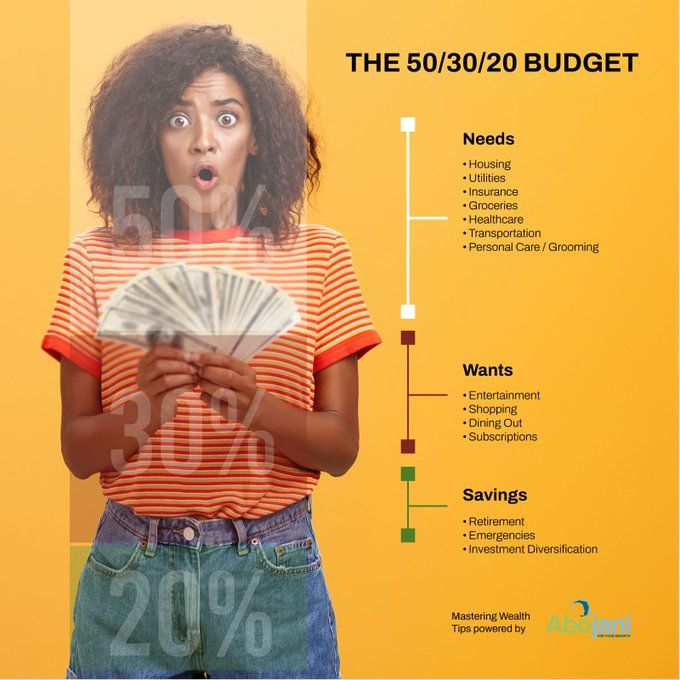
This new month, strive to use your income to,
✓Pay off debts
✓Pay pending bills
✓Build social capital
✓Add to investments
✓Add to emergency fund
✓Elevate your skills for more income
This is the formula to derive job satisfaction and enjoy the journey to wealth as well as the destiny.
#HappyNewMonth
For most people who live paycheck to paycheck, the anxiety is constant. And it is very easy to get into unnecessary and expensive debts within the month as well.
At this point, you are one paycheck away from poverty. Here's what you need to do.
1⃣Create a Realistic Budget
The first step is understanding where your money is going. Start by listing your income and all your expenses. Include fixed costs like rent or mortgage, utilities, groceries, and any debts you’re paying off...
It's the start of the year. What you resolve to begin now will shape your habits and attitudes this year.
Remember to invest 20% of that income, no matter how little.
The best form of investment is investing in yourself and in assets that pay you.
Such assets can be Bitcoin, MMF, dividend stocks, SACCO share capital, etc.
The path to financial freedom is simple if you do it right.
Start with a personal investment challenge.
When your income goes up, increase your investment amount also.
The more you make, the more you can invest.
Wait and watch that money grow to financial independence status.
@wahomethuku Ruto should talk first about those who were abducted and they should be released.
Compensate those who were killed while protesting for their wrights.
Your parents are not your emergency fund.
Your children are not your retirement fund.
Build your own wealth.
Wealth creation is not a 100-metre dash.
It is a self-paced marathon.
If you invest 10% of your income a month, you are doing just fine.
If you invest 15-20% of your income a month, you are financially stable.
If you invest 25-30% of your income a month, you are on the path to financial freedom.
All these depend on where you invest, actually.
ADVICE TO ALL EMPLOYEES
1. Build a home earlier. Be it rural home or urban home. Building a house at 50 is not an achievement. Don't get used to government houses. This comfort is so dangerous. Let all your family have good time in your house.
2. Go home. Don't stick at work all the year. You are not the pillar of your department. If you drop dead today, you will be replaced immediately and operations will continue. Make your family a priority.
3. Don't chase promotions. Master your skills and be excellent at what you do. If they want to promote you, that's fine if they don't, stay positive to your personal.
development.
4. Avoid office or work gossip. Avoid things that tarnish your name or reputation. Don't join the bandwagon that backbites your bosses and colleagues. Stay away from negative gatherings that have only people as their agenda.
5. Don't ever compete with your bosses. You will burn your fingers. Don't compete with your colleagues, you will fry your brain.
6. Ensure you have a side business. Your salary will not sustain your needs in the long run.
7. Save some money. Let it be deducted automatically from your payslip.
8. Borrow a loan to invest in a business or to change a situation not to buy luxury. Buy luxury from your profit.
9. Keep your life,marriage and family private. Let them stay away from your work. This is very important.
10. Be loyal to yourself and believe in your work. Hanging around your boss will alienate you from your colleagues and your boss may finally dump you when he leaves.
11. Retire early. The best way to plan for your exit was when you received the employment letter. The other best time is today. By 40 to 50 be out.
12. Join work welfare and be an active member always. It will help you a lot when any eventuality occurs.
13.Take leave days utilize them by developing yr future home or projects..usually what you do during yr leave days is a reflection of how you'll live after retirement..If it means you spend it all holding a remote control watching series on Zee world, expect nothing different after retirement.
14. Start a project whilst still serving or working. Let your project run whilst at work and if it doesn't do well, start another one till it's running viably. When your project is viably running then retire to manage your business. Most people or pensioners fail in life because they retire to start a project instead of retiring to run a project.
15. Pension money is not for starting a project or buy a stand or build a house but it's money for your upkeep or to maintain yourself in good health. Pension money is not for paying school fees or marrying a young wife but to look after yourself.
16. Always remember, when you retire never be a case study for living a miserable life after retirement but be a role model for colleagues to think of retiring too.
17. Don't retire just because you are finished or you are now a burden to the company and just wait for your day to die. Retire young or whilst energetic to enjoy waking up for a cup of coffee, enjoy the sun, receive money from your business, visit nice place that you missed and spend good time with family. Those who retire late, spend about 95% of their time at work than with their family and that's why they see it difficult to spend time with their family when they retire but end looking for another job till they die. If they don't get another job, they die early.
18. Retire at your house than at government accommodation so that when you retire you can easily fit into the society that raised you. It's not easy to adjust to live in a location after spending more years at company house or at government house.
19. Never let your employment benefits make you forget about your retirement. Employment benefits are just meant to make you relax, get finished whilst time is moving. Remember when you retire no one will call you boss if you don't have a viable business.
6 Personal Finance Rules
1️⃣ Debt - avoid high-interest debt
2️⃣ Save - create a safety cushion
3️⃣ Taxes - reduce taxable income
4️⃣ Insurance - protecting your assets
5️⃣ Retirement - invest for your old age
6️⃣ Budget - learn where your money goes