Problem feminisme di Indonesia bukan sekadar bagaimana membuat perempuan "setara" dengan laki-laki.
Masalahnya lebih rumit: perempuan sering diminta merdeka, tetapi tetap harus memenuhi daftar panjang tentang bagaimana perempuan "seharusnya" hidup—cara berpakaian, menikah, menjadi istri, menjadi ibu, bekerja, bahkan bagaimana menggunakan tubuhnya sendiri.
Di satu sisi: "Perempuan bebas menentukan hidupnya."
Di sisi lain: "Asal pilihannya sesuai dengan nilai yang kami anggap benar."
Di sinilah paradoksnya.
Emansipasi menjadi setengah hati ketika kebebasan perempuan masih harus mendapat izin dari masyarakat.
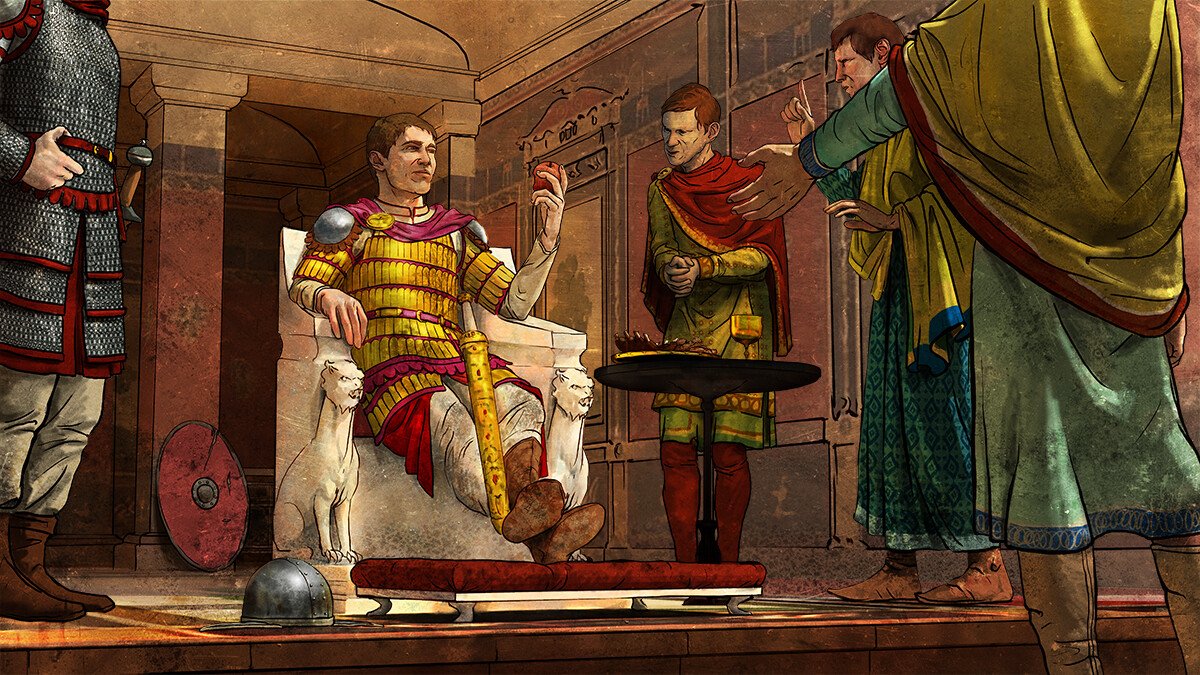
Justinian was the most visionary Roman Emperor.
When he took the throne in 527 AD, the Roman Empire had already lost its western provinces.
- Italy belonged to the Ostrogoths.
- North Africa belonged to the Vandals.
- Gaul belonged to the Franks.
Worst of all, however, the Roman Empire no longer controlled the city of Rome.
Justinian looked at this diminished empire and decided that decline was not inevitable.
He would rebuild it.
What followed was one of the most extraordinary bursts of activity in Roman history.
Justinian reorganized the government and reformed the tax system.
He embarked on a staggering construction program.
He built fortifications across the empire.
He commissioned the Corpus Juris Civilis, the great codification of Roman law that would eventually become one of the foundations of European legal systems.
After the Nika Riots destroyed much of Constantinople, he rebuilt the city on a monumental scale.
The greatest product of that building spree was the Hagia Sophia, still one of the wonders of the world today.
One of Justinian's most underappreciated talents was identifying people of exceptional ability and putting them in positions where they could use their talents.
Belisarius became one of the greatest Roman generals of Late Antiquity.
Tribonian was the brilliant jurist who supervised much of the codification of Roman law.
John the Cappadocian, however unpleasant his reputation, was a gifted administrator and fiscal reformer.
And beside Justinian stood Theodora, one of the most formidable empresses in Roman history.
For a while, at least, the results were astonishing.
In 533, Belisarius invaded the Vandal Kingdom of North Africa.
Within roughly a year, the Vandal kingdom was destroyed.
Then came Italy. Belisarius took Sicily, captured Rome, and eventually entered Ravenna.
For the first time in generations, the possibility of restoring Mare Nostrum was within sight.
It looked achievable.
Then everything started to unravel.
In 541, plague struck the Roman Empire. Justinian became infected, and it looked like he might succumb to it. He survived.
Countless Romans did not.
The level of devastation wrought by the plague is still contested today.
But the timing could not have been worse.
Justinian's project required money, soldiers, taxpayers, and a functioning economy capable of producing the necessary goods.
The empire was already beset on all sides, and the extraordinary momentum Justinian had built began to dissipate.
By Justinian's death in 565, Roman territory stretched farther across the Mediterranean than it had in generations.
But the Romans paid dearly for it.
Italy had been devastated. The treasury was strained. The frontiers were under continuous pressure.
Which leaves one of the great questions of Roman history:
Was Justinian actually good for the Roman Empire?
The notion that Justinian's "warlike spirit" had dimmed as he aged and that his armies had stopped campaigning in his final years is partly an invention of East Roman sources written in the reign of his successors seeking to explain their failures.
The Roman army was constantly evolving to any emerging threat.
In the Late Empire, army replaced javelin with a plumbata, a small lead weighted dart, which was usually carried inside the shield, and could be thrown to a great distance with lethal impact
📷Marcia Mummia Fannia
Wild thing about the Greek gods: the Greeks themselves basically knew their gods were invented, and they even knew by who.
Around 430 BC the historian Herodotus wrote that Homer and Hesiod, two poets from roughly 700 BC, were the ones who gave the Greeks their gods. He said these poets fixed the gods' names, sorted out their family trees, handed out their jobs, and described what they looked like. In other words, a religion millions of people believed for over a thousand years was largely edited into shape by two bestselling authors.
Before them there was no system. There was no holy book dropped from the sky. Greek worship was local and messy. Every town had its own gods and its own versions of the stories, and the same god could have a totally different personality one valley over. A farmer-poet named Hesiod took that chaos and organized it into one giant family saga called the Theogony, starting from Chaos itself and building down through the Titans to Zeus and the gods everyone knows.
And here is the part that really messes with people. A lot of those gods were not even originally Greek.
Zeus goes back thousands of years before Greece existed, to a Stone Age sky father the early Indo-Europeans worshipped. His name comes from an ancient word for the bright daytime sky, and the same root shows up in the Roman Jupiter and the Hindu Dyaus. Same ancestor, different branches of the family tree.
Aphrodite looks a lot like she was imported from the Near East, modeled on eastern love goddesses like Ishtar and Astarte, and she likely arrived through the island of Cyprus, which is exactly where myth says she was born from the sea.
We even have receipts. Clay tablets from the Mycenaean palaces, written centuries before Homer, already list names like Zeus, Hera, Poseidon and Dionysus getting offerings. The gods were real to people long before anyone wrote the famous stories.
So the Greek pantheon was not handed down. It was inherited from ancient ancestors, borrowed from neighbors, argued over town by town, and finally packaged into a hit series by two poets whose work went on to outlive their entire civilization.
They did not have scripture. They had a canon in the literary sense, and we still know the characters three thousand years later.
Agamemnon had provoked the wrath of the goddess Artemis by killing her sacred deer, resulting in the goddess causing a calm sea so that the fleet of the Achaeans could not sail from Aulis to Troy. They asked the seer Calchas what they should do, and he replied that the goddess's wrath would only subside if Agamemnon sacrificed his daughter Iphigenia. Initially, Agamemnon refused to do it, but he was pressured by Menelaus and Odysseus, and as the months passed, he summoned his daughter from Mycenae under the pretext that he would arrange her marriage to Achilles. Iphigenia arrived at Aulis, and then Agamemnon handed her over to Calchas to sacrifice her to Artemis.
The scene in the video is from the Greek film "Iphigenia" of 1977 by Michael Cacoyannis. The entire film and its dialogues were exclusively based on the work of Euripides without any additional exaggerations or nonsense.
The ancient text writes:
IPHIGENIA: "Look, mother, how rightly I speak; upon me great Greece casts its eyes; from me depend the sailing of the ships and the destruction of the Phrygians; from me, the prevention of future barbarian attempts to abduct women from wealthy Greece henceforth, the payment for the abduction of Helen, whom Paris has stolen. Such is the salvation my death brings, and immortal fame I shall have; they will say I liberated Greece. And it does not befit me to be so fond of life; you bore me for the good of all Greeks and not for yourself alone. Thousands of shield-bearers, thousands of oarsmen, seeing their homeland wronged, will strike boldly at the enemies, and will die for Greece’s honor, and shall all this be hindered by one life, mine? Where is the justice in that? How could I oppose them? And another thing: for a stranger to enter war with all the Argives and die for one woman is unjust. The life of one man is more valuable than that of ten thousand women. And if Artemis wishes to take my body, shall I, a mortal, become an obstacle to the goddess? How could that be? I give my body to Greece; come, sacrifice me, take Ilion. These things will be my memorials for years to come: my marriage, my children, and my glory. It is right for Greeks to rule over barbarians, and not barbarians over Greeks; because barbarians are slaves, and Greeks are free."
ACHILLES: "Some god would have made me blessed, if I were to take you, daughter of Agamemnon. Fortunate is Greece, which has you, fortunate are you, being Greek. You spoke well and in a manner worthy of your homeland; you do not wage war against the goddess who rules you; your mind turned both to reason and to fate. I saw your character, and thus my desire to unite with you is even greater; for you are a noble soul. And consider this: I want to help you and make you my wife; it will be a great burden for me, I swear by Thetis, if I do not fight the Argives to save you. A terrible evil is death, know that."
IPHIGENIA: "I speak clearly before everyone. Helen ignites battles, and blood flows for her body; let her suffice; you, stranger, do not get killed for me and do not kill; and let me, if I can, save Greece."
Source: Ἰφιγένεια ἡ ἐν Αὐλίδι (1402-1432)
"Iphigenia at Aulis" was written by Euripides, which was performed in the year 405 BC, one year after the death of Euripides in 406 BC, by his son. It was written in the year 407 BC during the poet’s stay at the court of King Archelaus in Macedonia. It formed one part of a trilogy, along with the works "The Bacchae" and "Alcmaeon in Corinth", which won first prize.
Amid all this, this text is yet another proof that the Greeks always knew where the limits (borders) of Greece reached and who belongs within them as well as who is Greek.
Films based on the works of the Greeks promote patriotism, heroism, glory, and emphasize that everything revolves around the nation (έθνος) and religion (θρησκεία), around values and sacrifices for your country and your people.
Modern society is afraid of these films.
Those who control the "arts" hate them.
Do you know why?
1984 short film Orpheus and Eurydice by animator Lesley Keen🏺
The entire film is masterfully animated in the exact style of ancient Greek red-figure and black-figure pottery. Without a single word of dialogue, characters glide across the screen like a rotating classical vase.
Rome conquered Greece in 146 BC when they burned Corinth to the ground. And then the strangest thing in ancient history happened. The winners spent the next few centuries desperately trying to become the losers.
It actually started before the final conquest. When the general Marcellus sacked Syracuse in 211 BC, he shipped boatloads of Greek statues and paintings back to Rome, and the city went crazy for it. Suddenly every rich Roman had to have Greek art in his house. Decades later Cicero built an entire court case around prosecuting a governor named Verres for looting Greek masterpieces, and Romans ate it up.
Then came the schools. Wealthy families started buying Greek slaves specifically because they were educated, and handed them the job of raising their children. So the sons of the men who crushed Greece grew up speaking Greek, memorizing Greek poetry, and learning philosophy from Greeks. The elite eventually sent their teenagers abroad to Athens and Rhodes to finish their education, the way people today send kids to study overseas. Cicero did it. Julius Caesar did it.
Their gods were Greek gods wearing name tags. Zeus became Jupiter. Hera became Juno. Aphrodite became Venus. Ares became Mars. Same myths, same family drama, mostly just relabeled.
Their entertainment was borrowed too. The first big Roman playwrights, Plautus and Terence, basically adapted Greek comedies into Latin. Their doctors were Greek. Their architecture leaned on Greek columns, the Doric and Ionic and Corinthian orders you still see on bank buildings today.
And the art obsession left a strange fingerprint on history. Romans loved Greek bronze statues so much that they mass produced marble copies of them. A huge chunk of what people walk past in museums today and call "Greek sculpture" is actually a Roman copy. The Greek originals melted down or vanished long ago. The knockoffs are what survived.
Not everyone was thrilled. Cato the Elder spent his whole life warning that Greek culture would rot the Roman character. He sneered at Greek philosophers, distrusted Greek doctors, and wanted them kept out of the city. And then, as an old man, he quietly sat down and learned Greek anyway. Even the loudest hater caved.
The trend went all the way to the top. Virgil wrote the Aeneid, Rome's national epic, by openly modeling it on Homer. The emperor Nero competed in Greek games and toured Greece like a superfan. Hadrian was so obsessed he grew a Greek philosopher's beard and poured money into rebuilding Athens. And Marcus Aurelius, master of the entire Roman world, wrote his private journal not in Latin but in Greek, because that was the language of serious thinking.
The poet Horace nailed it in a single line: captured Greece took her savage conqueror captive. Rome won every war on the battlefield and then handed its whole soul to the people it had beaten.
@Hammermarr1102@Ogaman888 Wajibnya cuma pas di gereja doang. Itupun jelas cuma menutup kepala dan rambut ya. Ga ada namanya konsep aurat kayak di Islam. Tapi di luar gereja ga ada ketentuan mereka harus menutup kepala dan rambut. Adanya karena kebiasaan dan tuntutan dari masyarakat agar perempuan modest
@Ogaman888 Lagian Emelia juga ngehek. Bilang only one of them is blamed and mocked, tapi yang dimaksud malah selfie😂
Sementara dua yg lain, biasanya kalau ga hidup di biara ya bener-bener cara hidupnya strict. Ga hedon karena bisnis syariah…upss🫢
‘This decades long Punic War revealed why the Romans were so consistently successful in conquest. They were prepared to sacrifice as many lives, to spend as much money, and to keep fighting as long as necessary.
Staying loyal to their traditional values, they never gave up, whatever the cost.’
- Thomas R. Martin, ‘Ancient Rome From Romulus to Justinian’
𝐁𝐞𝐥𝐢𝐬𝐚𝐫𝐢𝐮𝐬 was one of the greatest Roman heroes!
> Redeemed the martial valour of the Roman Empire by smiting the Goths and Vandals!
> Defeated led the dreaded Sassanian Persians at Dara.
> Destroyed the Vandal Kingdom in a lightning fast campaign in matter of months.
> Recaptured Sicily.
> Recaptured Rome from the Goths and defended it in a year-long siege ‘for as long as Belisarius lives, it is impossible for him to relinquish this city!’
> Arrested and deposed a Pope.
> Dragged the Vandal king to Constantinople to display in his triumph.
> Feigned acceptance of recognition as western emperor from the Goths to gain entrance to Ravenna and then just took it for the empire.
> Took his troops into the Hippodrome to crush the Nika Sedition.
> Captured Carthage, Rome, Naples, Syracuse and many other great cities of antiquity.
> Came out of retirement to lead a ragtag band of veterans and civilians to defeat an enormous Bulgar army outside of Constantinople.
> ‘After defending old Rome in his prime, he saved New Rome in his old age.’
> Died in luxurious retirement as a hero to his people.
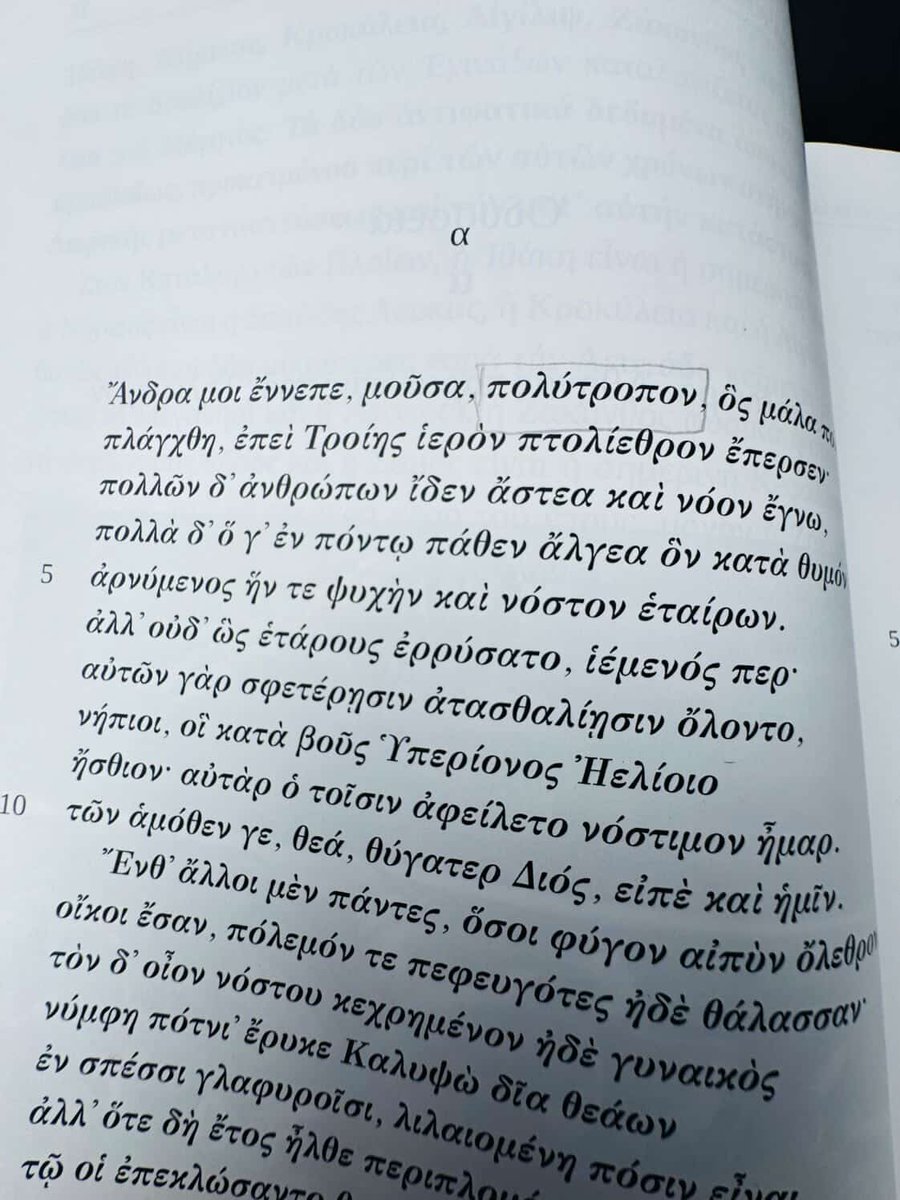
It is truly mysterious how Christopher Nolan, who insists on "accuracy" in his films, chose the feminist Emily Wilson, who actively supports cultural Marxism and the woke agenda, and her one of the worst translations of Homer’s works as a guide for his new movie.
So, I opened up the original ancient Greek text and started comparing it to her translation. It is literally a translation aimed at idiots. I’m not joking. It is full of errors, and the simplifications she makes under the excuse that "it is addressed to a modern society" are ridiculous. It literally targets uneducated people who couldn’t read Homer because they found him either boring or too difficult. Yes, Homer is difficult, but that’s exactly what makes the journey beautiful. I don't care if you can't read him. Not my problem.
As a Greek proverb, which goes back to Homer and Plato, says: "χαλεπὰ τὰ καλά", beautiful and excellent things are difficult.
I'm not even going to write about her translation. It's disgusting and I don't even care to educate anyone who wants to read her. It's your own problem. But.
This lady comes along to convince us that all previous translators were pushing a misogynistic and patriarchal translation that belonged to another era. In her own words from an interview: "she found that many men before her added sexist or misogynist terms that never existed in the original Greek."
I'm telling you this. Don't pay to watch the movie "The Odyssey". Show them that their agenda is dead. Hollywood is dead. Woke culture and marxism are dead. They belong to the past.
Naturally, this criticism bothers those who have never managed to read Homer in their lives, those whose profiles are full of pronouns like he/him and they/them, and those wannabe communists who carry hammers and sickles, because that is exactly the audience this woman represents.
A loud minority of uneducated people who want to destroy everything that contributed to the creation of Western civilization. They are annoyed by anything beautiful and full of values. Since they cannot create anything of their own, they defile and tarnish all the achievements of the past.
These uneducated neo-Marxists have embedded themselves in academia, the arts, cinema, schools, news outlets, politics, and music. Everywhere.
Wherever there is an opportunity to promote something great that develops the mind and helps with intellectual growth, they are there to stop you from evolving spiritually.
But the time has come for us to take matters into our own hands. First step: We take Classical Studies back. They do not belong to them. Do not be afraid to express your opposing opinion just because a community of uneducated people attacks you to silence you. Resist.
Learn Greek and evovle spiritually. Awake your soul. Don't be manipulated by those who want to destroy you.
An academic who writes "PhD" in their profile no longer means anything at all. It used to be a sacred career. Now some of these academics have destroyed their own credibility, and now the public neither respects nor trusts them.
They will lie in the bed they made.