@ItJknc Today I visited there for my treatment, I was prescribed medicines that were available in the hospital pharmacy. However, staff refused to dispense them. Despite requesting, I was forced to buy the same medicines from the outside private pharmacy.
@ItJknc Today I visited there for my treatment, I was prescribed medicines that were available in the hospital pharmacy. However, staff refused to dispense them. Despite requesting, I was forced to buy the same medicines from the outside private pharmacy.
In the Name of God, the Compassionate, the Merciful
Among the faithful are men who fulfill what they have pledged to Allah: there are some among them who have fulfilled their pledge, and some of them who still wait, and they have not changed in the least (Holy Quran 33:23).
@DrDeepakKrishn1@hyderabaddoctor Yes.
We are adopting globally demanded varieties like Gala,Jeromine and Fuji to match market trends. Same world-class varieties — grown on Kashmiri soil, with our climate and care.
Kashmiri growers are upgrading, not lagging.❤️
@DrDeepakKrishn1@hyderabaddoctor Actually sir,the best and authentic Kashmiri varieties u cant find easily in any store or fruit vendor as they are meant for export.
📸:Gala apples is from my farm.
Crisp and sweet.
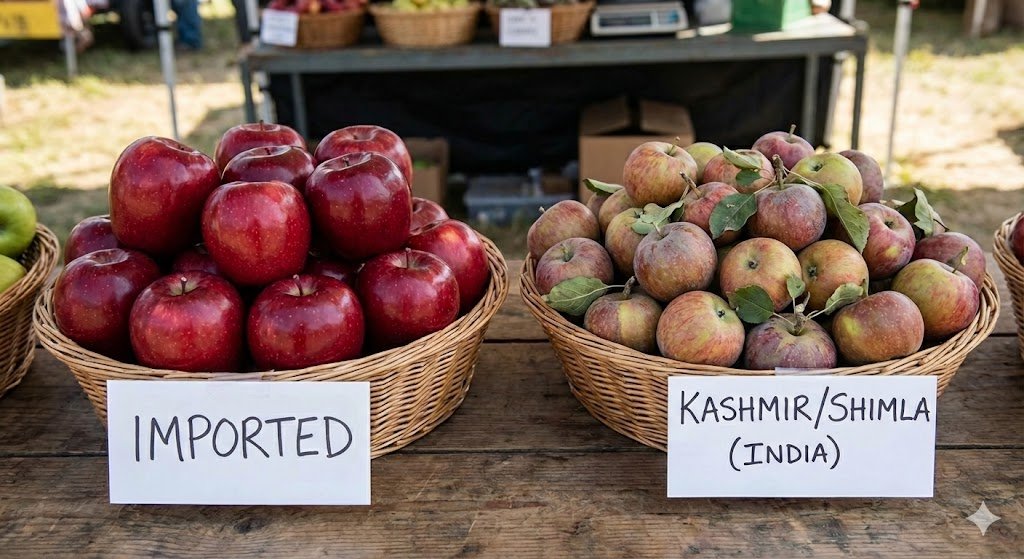
@hyderabaddoctor I appreciate your words on this,but on a lighter note i would say this as an apple grower from Kashmir that Kashmir apples are among the brightest red apples grown anywhere. Color depends on variety and climate — not ‘imported’ vs ‘Indian’.
Photo: 2025 Sep Produce
#localapple
Premium apples often come with a premium price tag, but does the "Imported" label actually mean better nutrition?
If you are paying more for imported apples assuming they are "healthier" than our home-grown Kashmiri or Himachali varieties, the science suggests you might be paying a premium for a less nutritious product.
Here is the evidence-based breakdown:
1. The "Freshness" Gap
Apples are often harvested and then kept in Controlled Atmosphere (CA) storage. While this keeps them "crunchy," it doesn't stop nutrient degradation.
🔸Vitamin C Loss:
Research shows that Vitamin C is highly unstable. Apples can lose 40% to 85% of their Vitamin C content during 5–9 months of cold storage.
🔸The Travel Factor: Imported apples travel over 10,000 km to reach India, spending weeks in transit. Indian apples from the Himalayas reach your plate much faster, preserving more of their heat- and light sensitive nutrients.
2. Antioxidant Powerhouse: The Himalayan Advantage
Indian apples, particularly the Royal Delicious and Starkrimson varieties from the Western Himalayas, are nutritional heavyweights.
🔸Phytochemicals: Studies on Himalayan apples have found high concentrations of phloridzin, quercetin, and catechin-powerful antioxidants that support heart health and help regulate blood sugar.
🔸Skin Health: The deep red colour of many Kashmiri/Himachali apples is a sign of high anthocyanin content, which helps fight oxidative stress.
3. The Hidden Cost: "Food Miles"
When you buy imported, you are not just paying for the fruit; you are paying for the massive carbon footprint of long-distance shipping.
🔸Environmental Impact: Importing fruit that is already grown in abundance locally is one of the biggest contributors to unnecessary "food miles."
🔸Support Local: Choosing Himachal or Kashmir apples directly supports Indian farmers and the local economy, ensuring that the "premium" you pay actually helps the community rather than just logistics companies.
The Bottom Line:
An apple a day is great, but a fresh, local apple is even better.
Don't let the shiny wax and "imported" sticker fool you; the real nutrition is in the hills of Himachal and the valleys of Kashmir.
#EatLocal #VocalForLocal #NutritionFacts #KashmiriApples #HimachalApples #HealthyLiving
Dr Sudhir Kumar
@hyderabaddoctor