Our Engineering Decision: We moved fee math to the frontend for speed, but never let it have the final word on money.
Where should fee math live in a crypto withdrawal form? We put it on the frontend so users see fixed + percentage fees instantly, no round trip. The backend still recalculates on submit and has the final say. Downside, after an admin changes fees the UI can lag a bit.
Our rule, the client calculates for UX, the server decides for money.
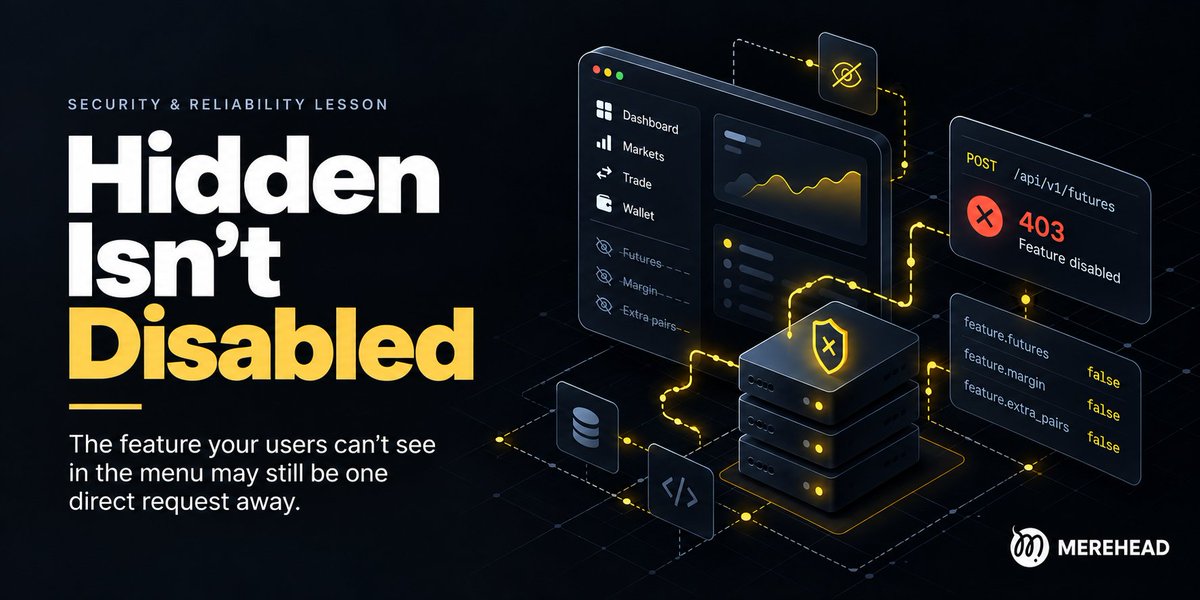
Our Security & Reliability Lesson.
Hiding a feature in the UI doesn't turn it off. On a crypto exchange launch we hid futures and margin to ship faster, but the code stayed.
So the backend also rejects any direct call to a disabled feature with a controlled error, driven by one shared list. A hidden button with a live endpoint is still exposed. If the server doesn't know it's off, it isn't.
P.S.
The lesson flips a common shortcut (just hide it in the UI before launch) into a clear security boundary question, which almost every team cutting scope for an MVP runs into. Our treats access control as a server-side responsibility even under deadline pressure.
Your Own Crypto Nodes vs. Third-Party APIs?
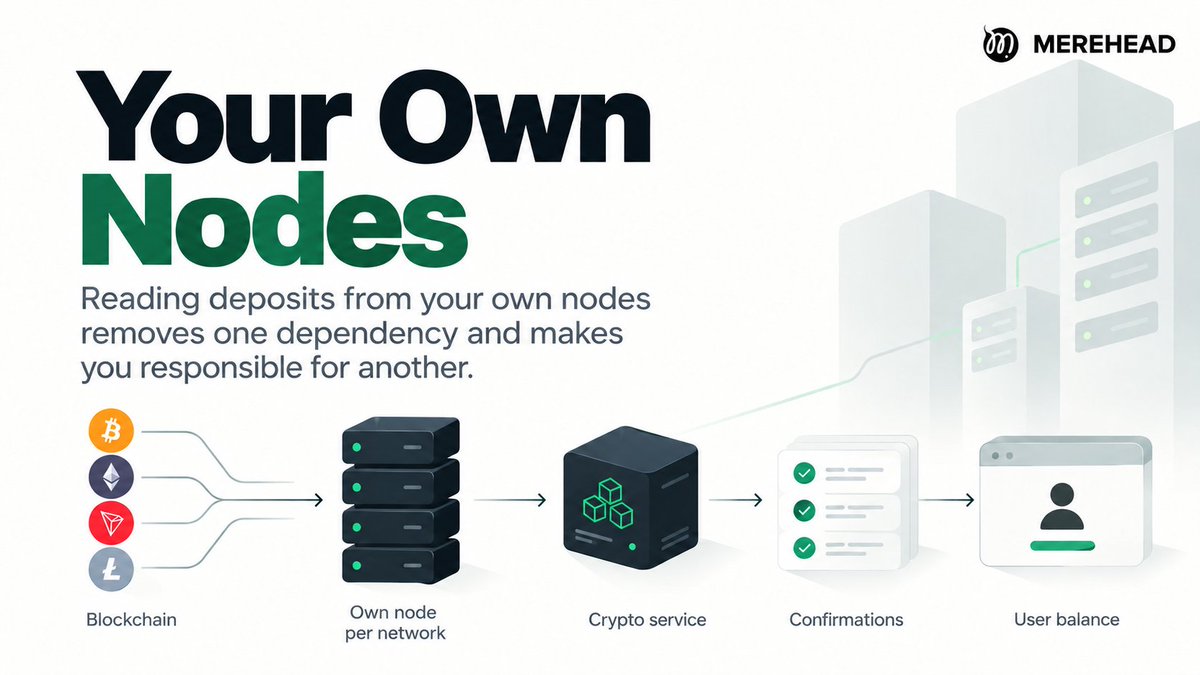
Reading deposits through a third-party blockchain API is quick. It also ties your users' balances to someone else's uptime.
We run our own node per network instead. The catch is that the uptime becomes yours, and every chain behaves differently.
Our rule now. A payment system is only as stable as its weakest node.
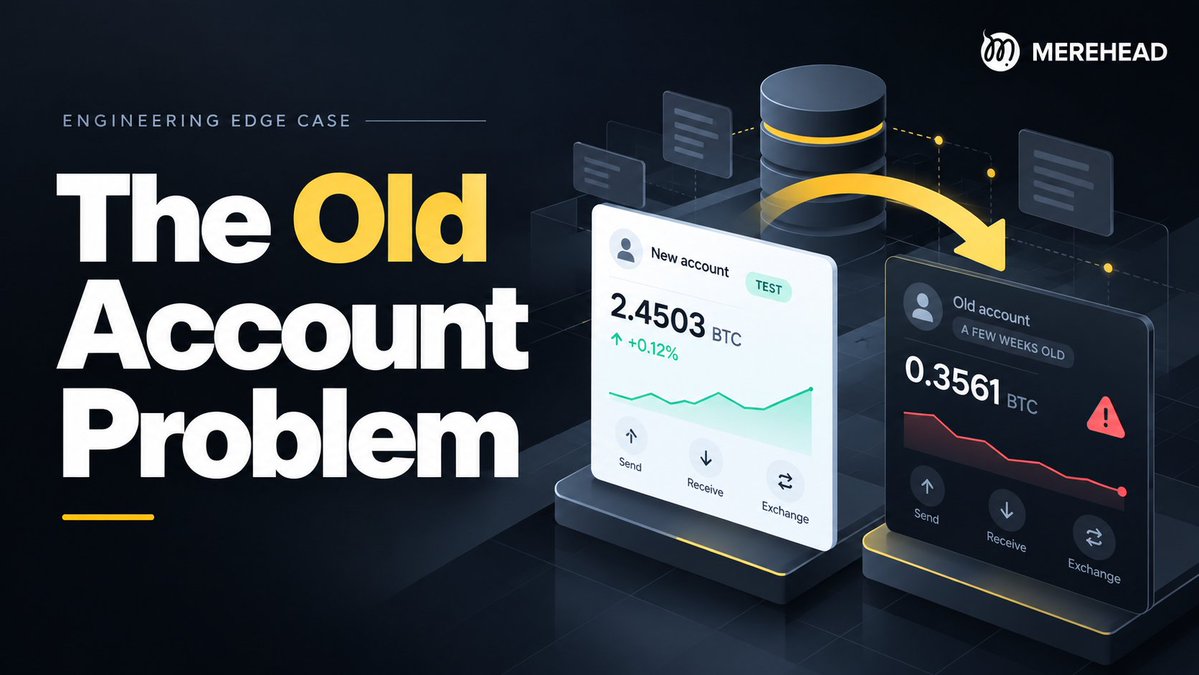
Our Engineering Edge Case. Balance inconsistency on older accounts after a data migration on a crypto exchange.
On an exchange we tested, new accounts showed correct balances after a swap. Accounts a few weeks old showed them late or wrong. The backend was fine, the frontend was getting stale data.
My rule now. Old accounts are their own test scenario, not just more users.
Our Engineering Decision: Launching a crypto exchange without a pre-production environment
We tested a crypto exchange launch straight in production. On purpose.
The deadline was tight, and staging can't show how real nodes behave under live transactions. So we cut the scope to one pair on three chains, hid everything else behind feature flags and went live.
The price is that every fix hits users instantly. Honestly, skipping staging isn't a strategy. It's a loan.
A few things that stood out in our engineering work this week:
1. Empty is worse than down.
An external data aggregator returned empty values for most providers. No errors, no timeouts.
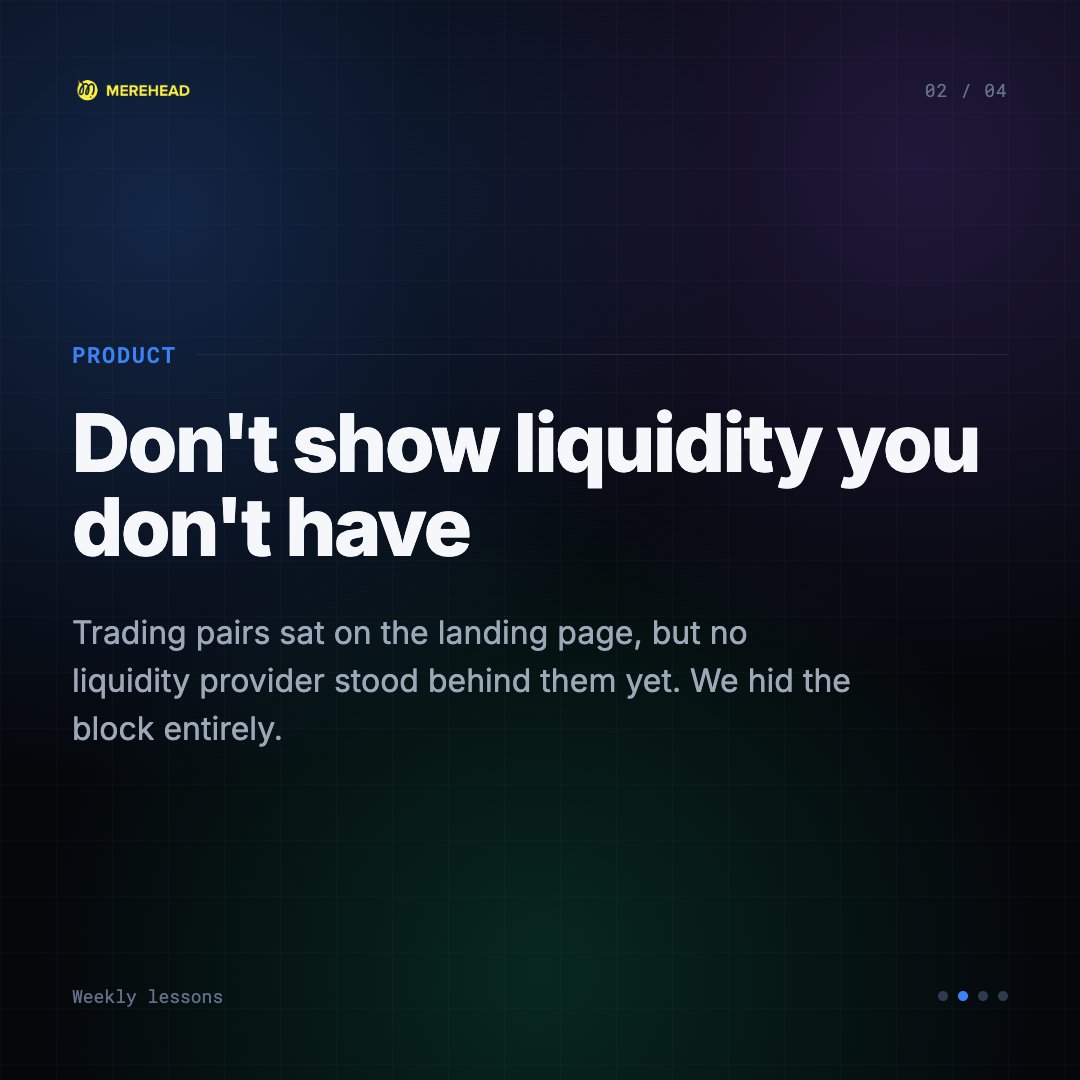
2. Don't show liquidity you don't have.
Trading pairs sat on the landing page, but no liquidity provider stood behind them yet.
3. New testers don't touch balances.
Scaling QA before a deadline, newcomers get auth and simple CRUD.
4. Batched bug reports are a blind spot.
Holding bugs until a module is fully tested means fixes can't start in parallel.
Real talk on crypto wallet costs.
MVP for 1-2 chains? $40K-80K.
Full multi-chain product with swaps + compliance? $100K-250K+.
Plus ongoing: $3-10K/month support, $5-20K/year for security audits.
Most founders underestimate this. The ones who get the architecture right early save way more down the line than they spend upfront.
Building a wallet app? Happy to talk numbers — https://t.co/LtQPXElpqO
Our Engineering Edge Case
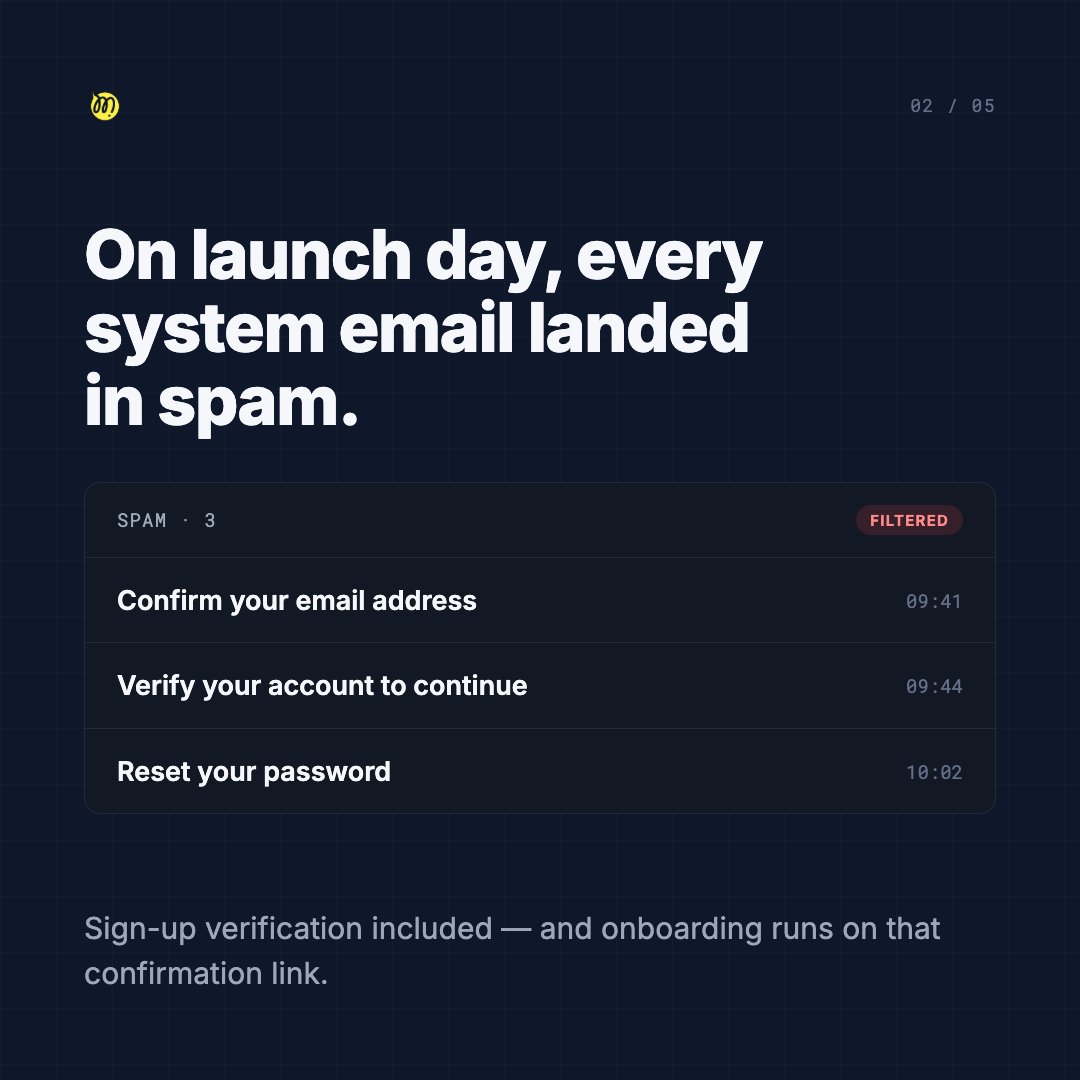
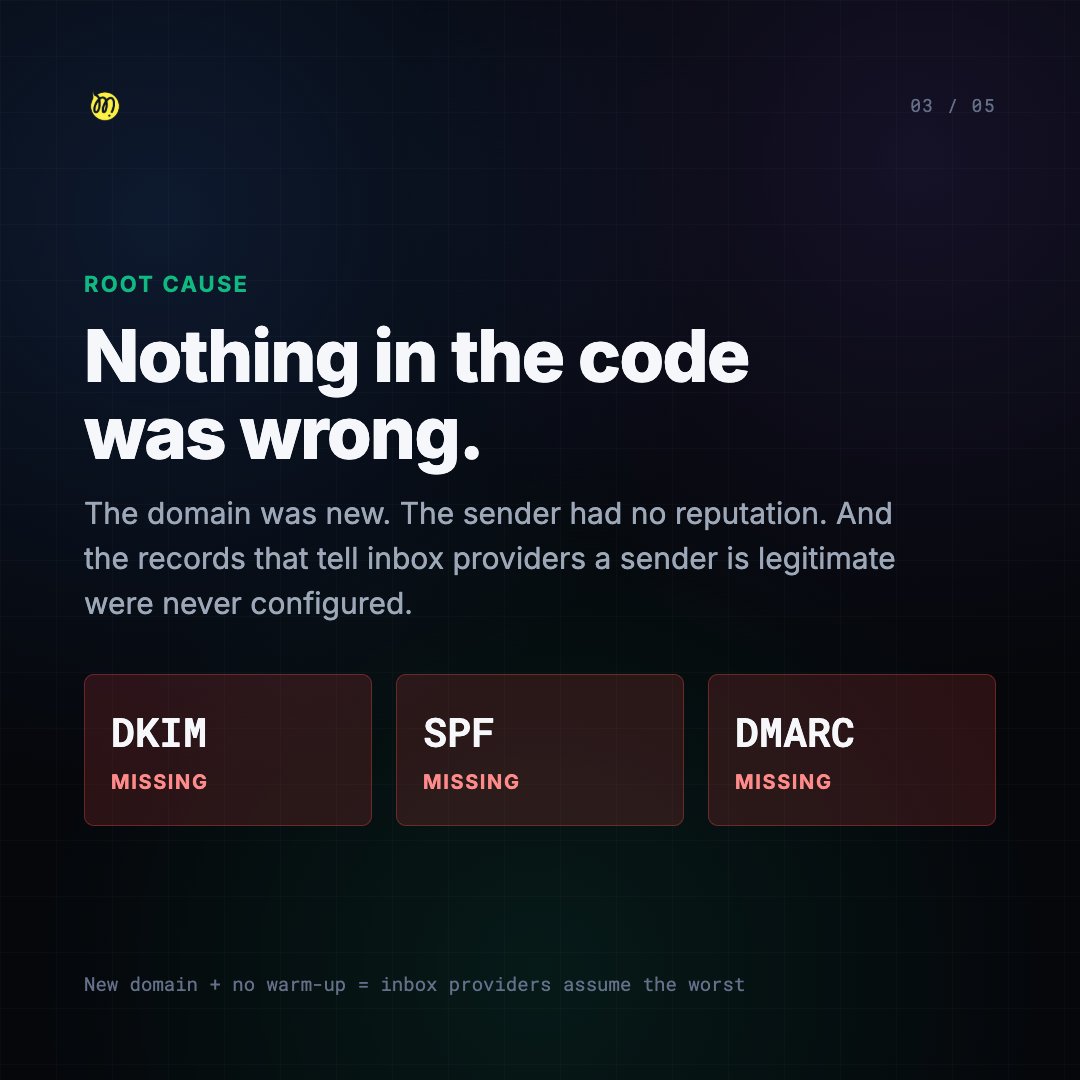
Production system emails (registration, verification) landing in spam due to a new, unwarmed domain and missing email authentication records.
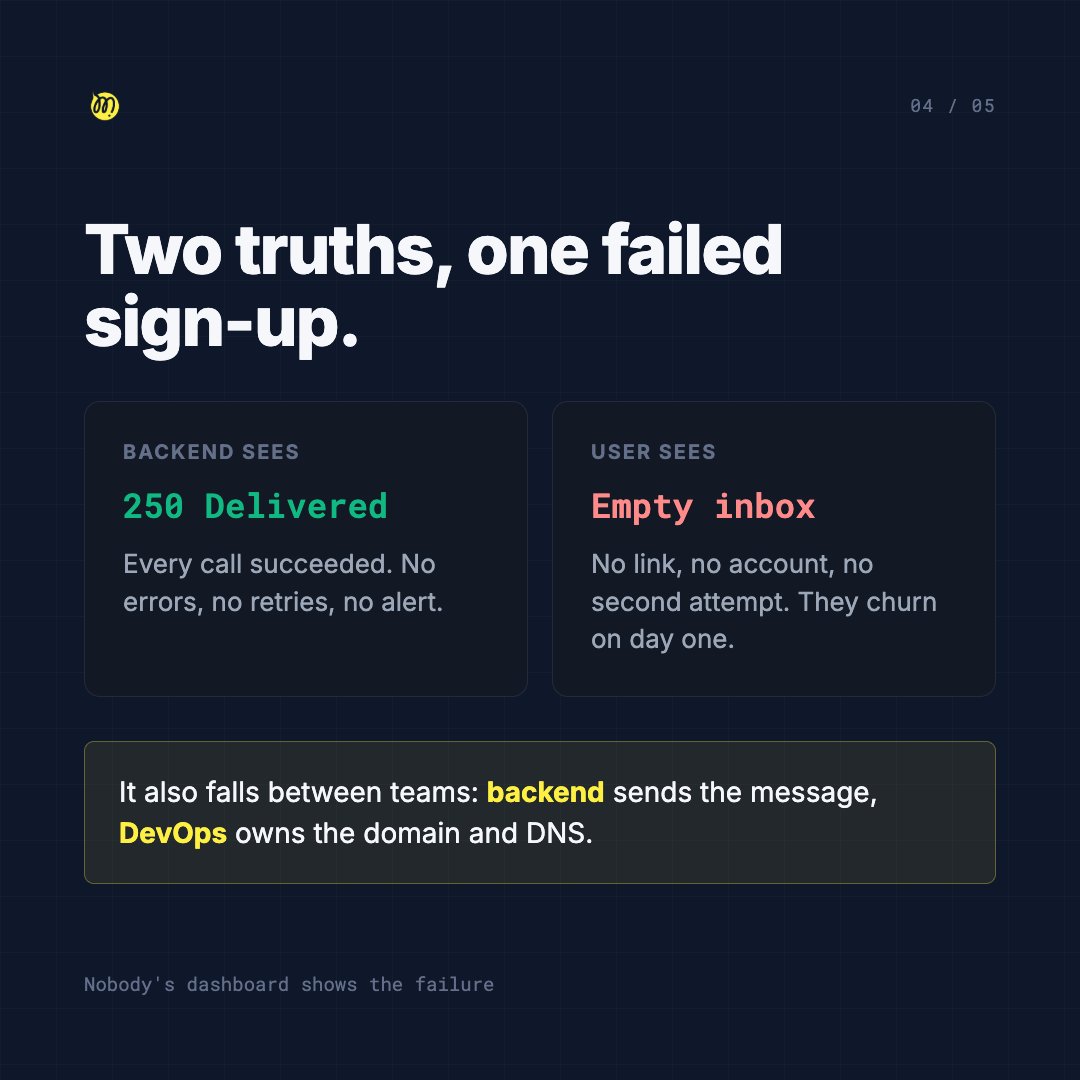
Edge case: The application sends every email correctly, yet users never receive verification links because a new production domain has no sender reputation and no DKIM/SPF/DMARC configuration.
The edge case is compelling because every component reports success while the product fails at its very first step, and the root cause sits outside the codebase entirely. It demonstrates production-launch experience: knowing that onboarding reliability depends on DNS, sender reputation, and a clear split of ownership between backend and DevOps.
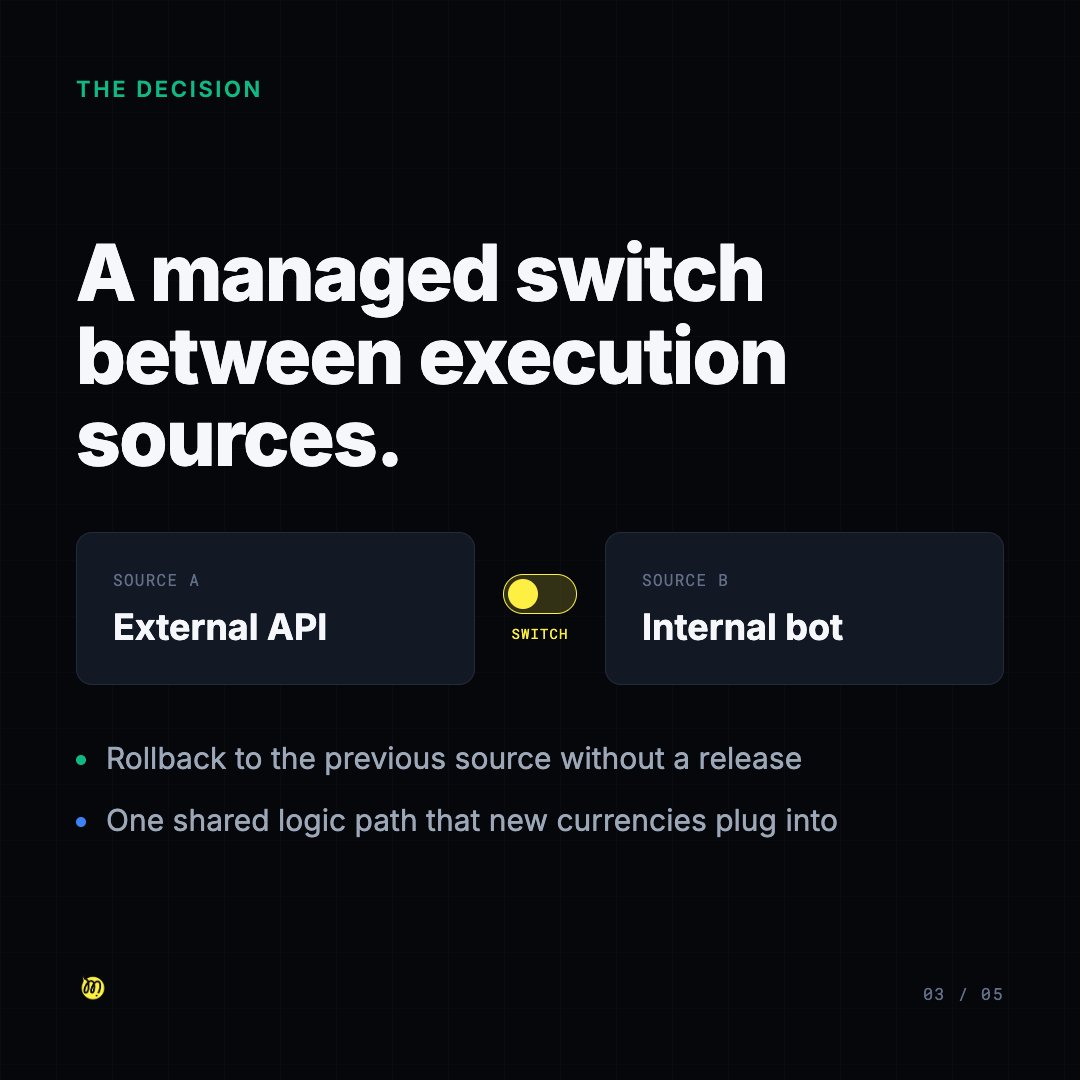
Adding a managed execution-source switch (external API - internal bot) with rollback on a trading platform.
Instead of relying on a single external API as the only execution path, the team decided to introduce a controlled switch between the API and an internal bot, with rollback and one shared logic path for future currencies.
How do crypto exchanges secure 60–70 cryptocurrencies at once? Isolated hot-wallet circuits, each with its own risk profile. Manual approval for large withdrawals in the back office. It's the same key-security principle as a regular wallet — just scaled for enterprise.
Merehead has built crypto wallets and exchange infrastructure since 2015, across 130+ projects. Planning an exchange-grade product? Submit a request at https://t.co/LtQPXElpqO — you'll get a free breakdown within 48 hours.
A few things that came up in our engineering discussions this week:
1. Risk should be scored on the flagged portion of a transaction, not the full amount — and the skip rule belongs on deposits only, never withdrawals.
2. Frontend and backend can disagree on financial limits while both "work"; the mismatch shows up as broken validation, not as an error.
3. Balance snapshots break under concurrent deposits — "balance before" is a race condition waiting to be found.
4. If logs aren't in stdout, centralized logging doesn't have them, and a container restart erases the evidence.
5. Autoscaling multiplies an inefficient query instead of absorbing it.
How to Create a Crypto Wallet App. Most crypto wallet budgets break in week six, not week one.
Custody model, deposit address model, node strategy, chain scope: decide these before design, or rewrite your accounting layer later.
Inside: real hour breakdowns, Bitcoin node sync risks, KYT architecture, and $62k–$74k for a 10-chain non-custodial build.
https://t.co/3huaNAwrfm
We built a custodial mobile wallet supporting six blockchains - Bitcoin, Ethereum, BNB Chain, Solana, Litecoin, and Tron - in just 5 months, with a team of 6 specialists. The key move: a fallback RPC setup through Alchemy, so no single node provider could ever take the app down.
Merehead has built crypto wallets and exchange infrastructure since 2015, across 130+ projects. Planning your own multi-chain wallet? Submit a request at https://t.co/LtQPXElpqO - you'll get a free breakdown within 48 hours.
#CryptoWallet #MultiChain #Web3Development #Blockchain #FinTech #CryptoStartup #CaseStudy
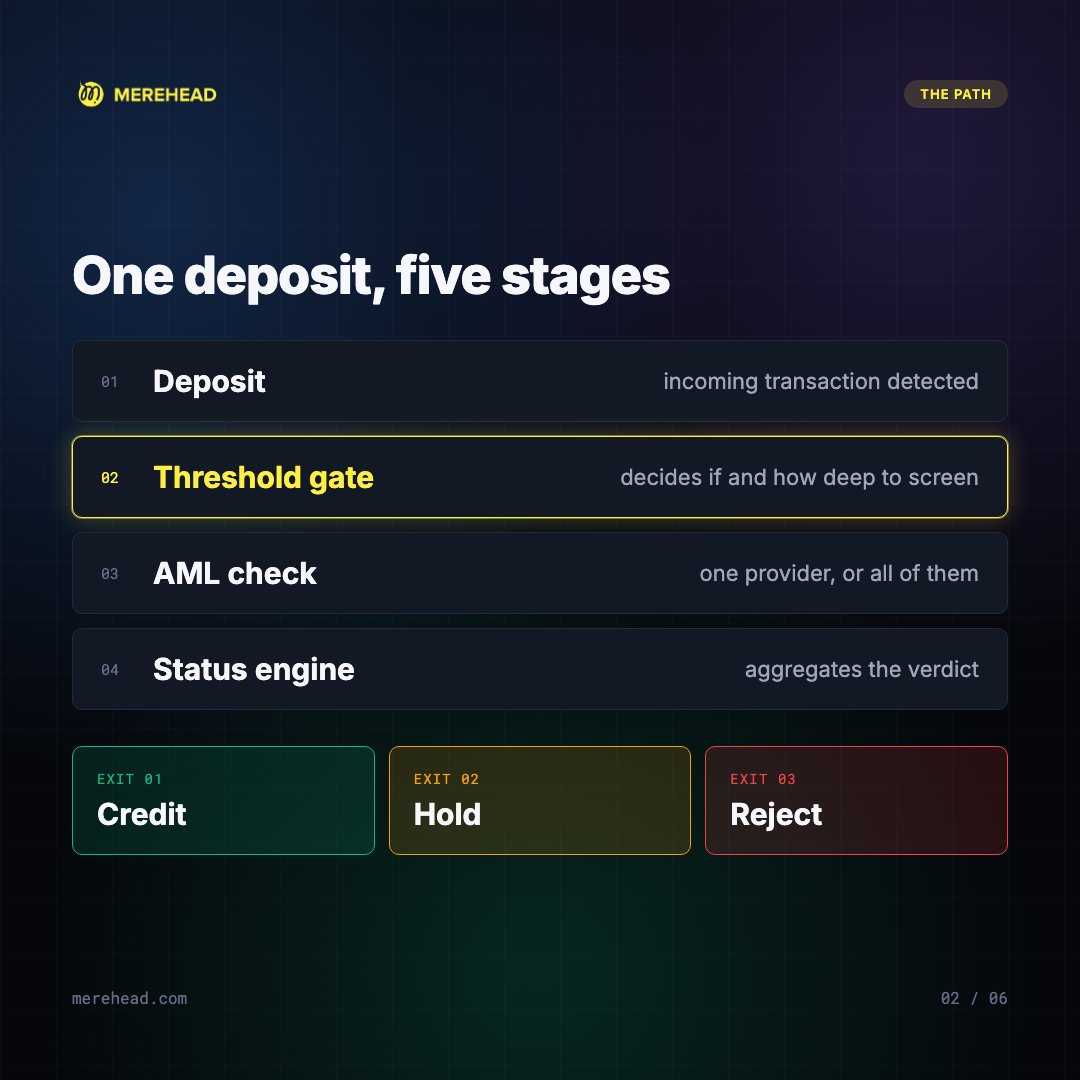
A threshold gate decides whether and how deeply to screen a deposit before any AML provider is called, with risk policy held in two configuration layers instead of in code.
What does it actually cost to build a crypto wallet app? An MVP runs $40K–80K. A full multi-chain product with swaps and compliance starts at $100K and can go past $250K. Add $3K–10K a month for support and $5K–20K a year for security audits.
Instead of screening every transaction, the team built a three-threshold AML pipeline that scores risk on the flagged portion of a transaction rather than its full amount and deliberately applied the "skip" rule to deposits only.
A containerized service can be running perfectly, writing detailed logs, and still be completely invisible to the central logging stack - because those logs go to a file inside the container rather than to stdout.
NFT marketplaces are becoming an increasingly popular way to sell digital art and collectibles.
Explore the predictions and trends for NFT marketplaces in 2023 here: https://t.co/mk6YX8D1zd
#NFTCommunity#NFTProjects#nft