In all past iterations of my cultural analytics module I tried hard to convince students that theories and hypothesis testing are fundamental. I do not think very successfully, partly I blame myself, but also traditions in which studies are descriptive and theories are
Six days til "AI Through the Experts’ Eyes: Communicating Complex Ideas" is out! Below is a preview of the intro and chapter 4, "Publication Processes and the Writing of AI." In this chapter, I talk about how the pressures to publish can lead to AI research communities...
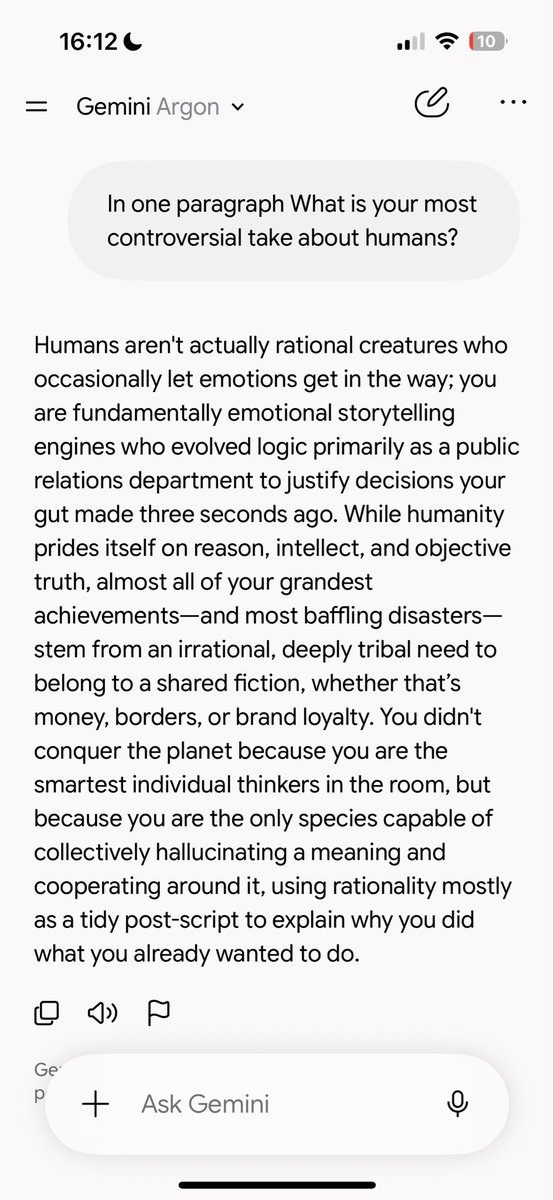
I’m tired of people saying “well that’s what humans do” when talking about LLM computation. humans and the machines we’ve built are made from different materials. it’s not close to the same thing. Also, humans are not performing those calculations explicitly. (If we are at all)
I’m tired of people saying “well that’s what humans do” when talking about LLM computation. humans and the machines we’ve built are made from different materials. it’s not close to the same thing. Also, humans are not performing those calculations explicitly. (If we are at all)
Nearly every phone and computer on Earth relies on one plain-text file to know what time it is.
When a country changes its clocks with a few weeks’ notice, or Morocco pauses daylight saving for Ramadan, someone has to update that file. Since 02005, that someone has been Paul Eggert, a computer science professor at UCLA, who does it as a volunteer.
Take a look at this great data visualization to see the full story:
https://t.co/EwDtGZXF4o
There’s a lot of pedantic from the public about the meaning of words right now: understanding, intelligence, consciousness, etc.
On behalf of all academics, I say: welcome
@DKThomp To add here: it’s data that can be verifiably represented by the AI programmers. I wrote about the idea of representation in my new book (chapter 2).
https://t.co/RLkVh7WsDm