Cognitive anthropology / cultural evolution / digital media / cultural analytics. Associate professor sociology @UniTrento - more info in the pinned tweet.
Website: https://t.co/lc6NTkFntM
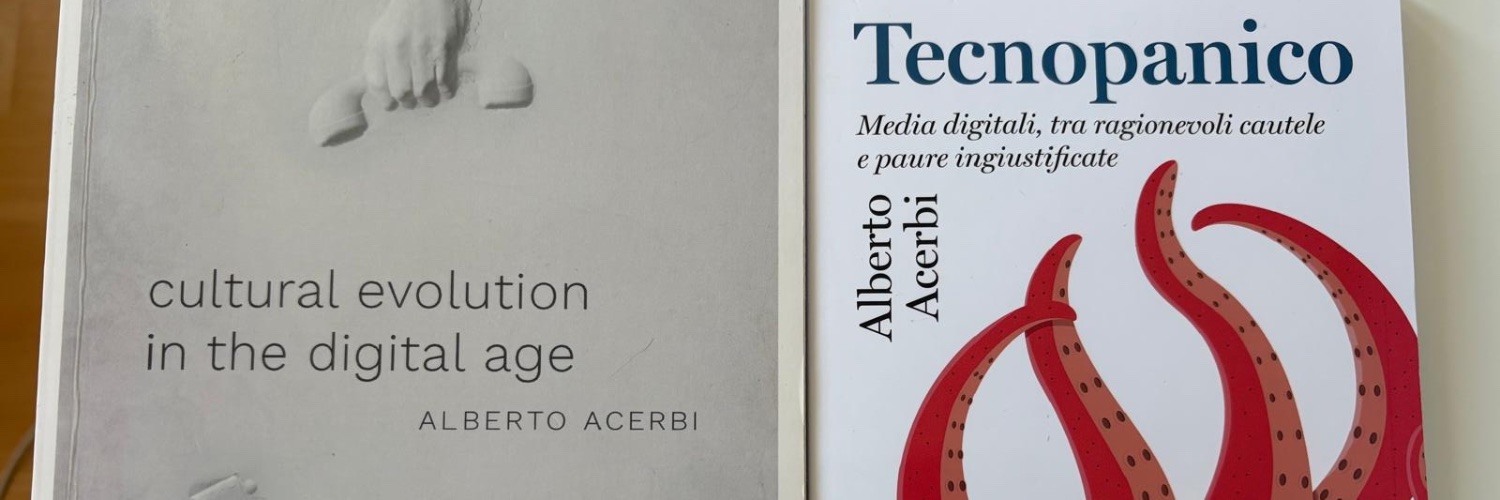
"Cultural evolution in the digital age" (OUP): https://t.co/ODfneg48hV
"Individual-based models of cultural evolution. A step-by-step guide using R" (Routledge): https://t.co/Bq5oZtxoPt
Substack (free - in italiano): https://t.co/59Ys7AgjWR
I had missed this one (preprint from December 2025)!
For years I used the same exact example of residential segregation of voters as an armchair argument in lectures and in "Technopanic", but they actually ran the numbers: offline is more segregated than online.
Offline partisan segregation exceeds online echo
chambers in the U.S.: "while social media users do tend to form politically homogeneous online networks, these levels of partisan sorting are significantly lower than those found in their geographical offline settings"
Le scoperte scientifiche "fortunate" sono davvero frutto del caso?; i divieti dei social per i minori; perché non ci sono storie sugli starnuti; Pangram è davvero "razzista"?; è Natale?
https://t.co/jtgx5vI0Cb
Intervista a radio 24 per parlare di GTA VI, in qualità di esperto di cose di cui ci preoccupiamo troppo.
I videogiochi sono un vecchio tecnopanico (prove che rendano violenti, nel mondo reale, non ce ne sono) e sono anche uno dei mezzi culturali più importanti del nostro tempo.
#GTAVI, un fenomeno che va oltre il gaming
🗣️Ne parliamo con @lucatremolada, Il Sole 24 ORE e Alberto Acerbi, professore associato del dipartimento di sociologia e ricerca sociale dell'università di Trento
SEGUI LA DIRETTA▶️https://t.co/zDR0Ggzley
I gave yesterday a presentation at the Evolution & social cognition lab meeting in Paris (online, unfortunately...). I presented some work in progress empirical research in social media analysis, so feedback is welcome!
Slides at the link: https://t.co/s30gMfV90Z
Call for papers of the annual conference of the Association for Digital Humanities and Digital Culture (Salerno, Italy, 8-10 June 2027 - deadline 20 January 2027).
https://t.co/r9iFUSNny8
Food for thought for cultural evolutionists!
In fact, in (rightly) pushing back against the intuitive idea that human agency is behind everything, we can err on the opposite side.
My first column for Works in Progress!
Science isn’t a series of lucky accidents.
I’ve been investigating stories of scientific discoveries for a while and it’s surprising how much the popular retellings flatten the real stories; some are entirely made up.
Alexander Fleming’s discovery of penicillin most likely didn’t come from an open window.
His colleagues testified the window was seldom, if ever, opened. The sequence hasn’t been replicated as he described, because penicillin would have needed to be present on the plate before the bacteria grew, as it blocks bacteria from building their cell walls, rather than killing them once they’ve grown.
Louis Pasteur’s discovery of the chicken cholera vaccine – the second-ever vaccine – is often said to be accidental too.
But historians have found the key experiments were done deliberately by Émile Roux, his assistant at the time, while Pasteur was away for his daughter’s wedding.
Wilhelm Röntgen’s accidental discovery of X-rays? The story was just a hypothesis by others later on.
Röntgen had his notes burned after his death, so it’s unclear what really happened. He had also long been in a dispute with Philipp Lenard over credit for the discovery, so there are reasons to be suspicious.
**
But what really happened? How did Fleming actually discover penicillin? Why burn or hide your notebooks? And most of all, why credit chance events instead of hard work?
For the first time, I’ve decided to come up with some half-cooked theories. Read them here and tell me what you think:
https://t.co/i2iQYNk27u
AI models keep improving, but audience get more picky. 1.26M blind votes on "models battles": “both are bad” remain stable (blue line panel B) and increases for the same frozen AI models (orange line panel B)
https://t.co/2mY6H0yOv2
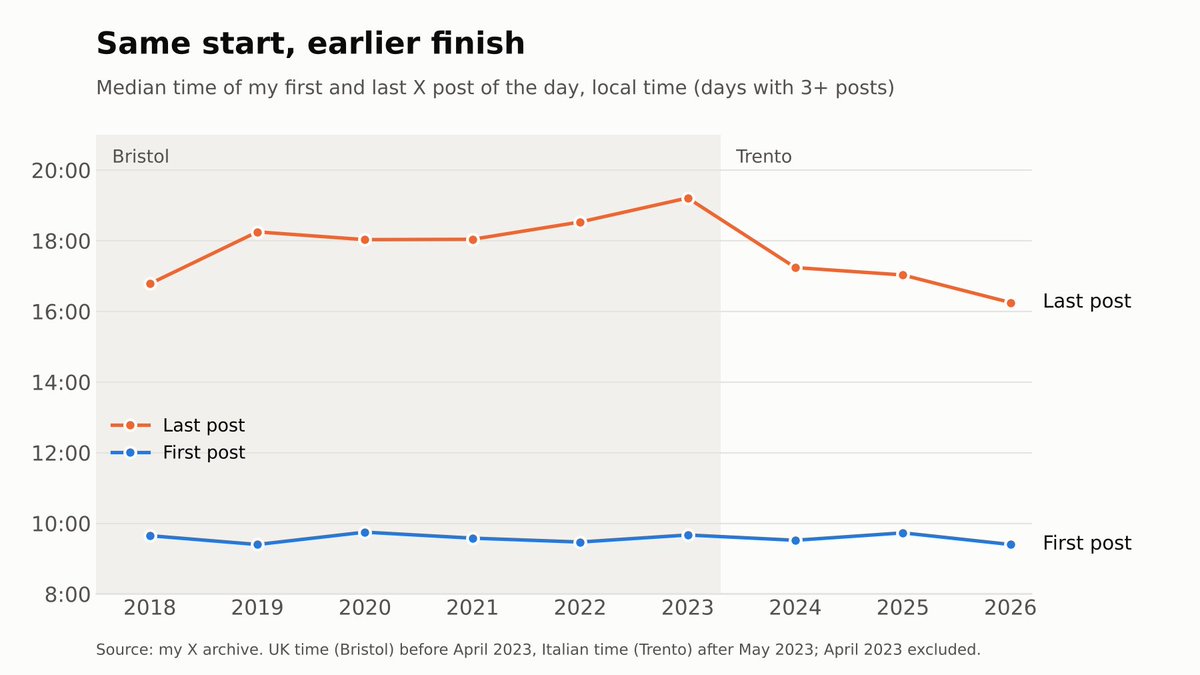
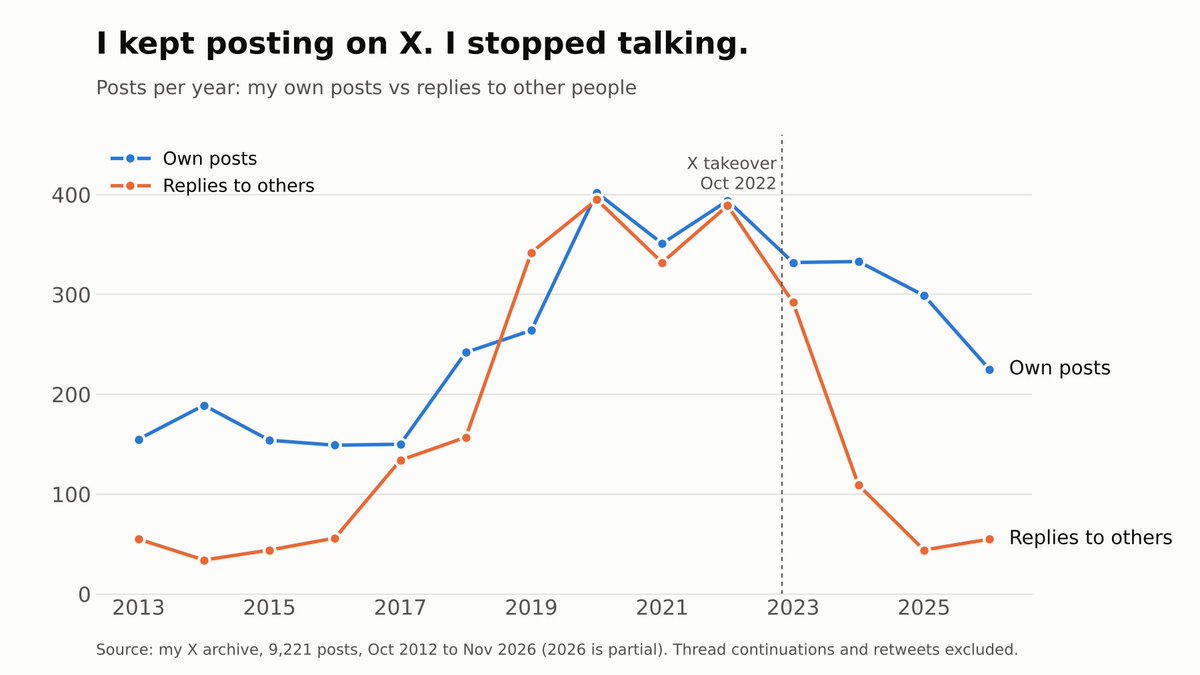
I downloaded my X archive: 9,221 posts since 2012, and gave it to Claude.
My first post of the day is at ~9:30, every year, first in Bristol and then in Trento. My last post moved from ~18:00 to ~16:15. (Of course plots' titles are Claude's...)
Bigger change: I post about as much as before, but I almost stopped replying to people. Replies to others went from ~390 a year in 2022 to ~50.
The drop starts around Musk acquisition, but it also coincides with my move to Italy.
La salute mentale dei giovani sta migliorando?; il divieto australiano dei social non sembra funzionare; i libri scritti con l’IA si moltiplicano, ma pochi li leggono; a favore dello slop; i robotaxi di Waymo fanno meno incidenti dei guidatori umani.
https://t.co/Tox6DfGJt7
Sociologists of culture proposing a Cultural Attraction Theory approach! And on AJS! And on hard data (macroevolutionary birth-death models to ~30k metal bands)!
https://t.co/u1YsMkyF93
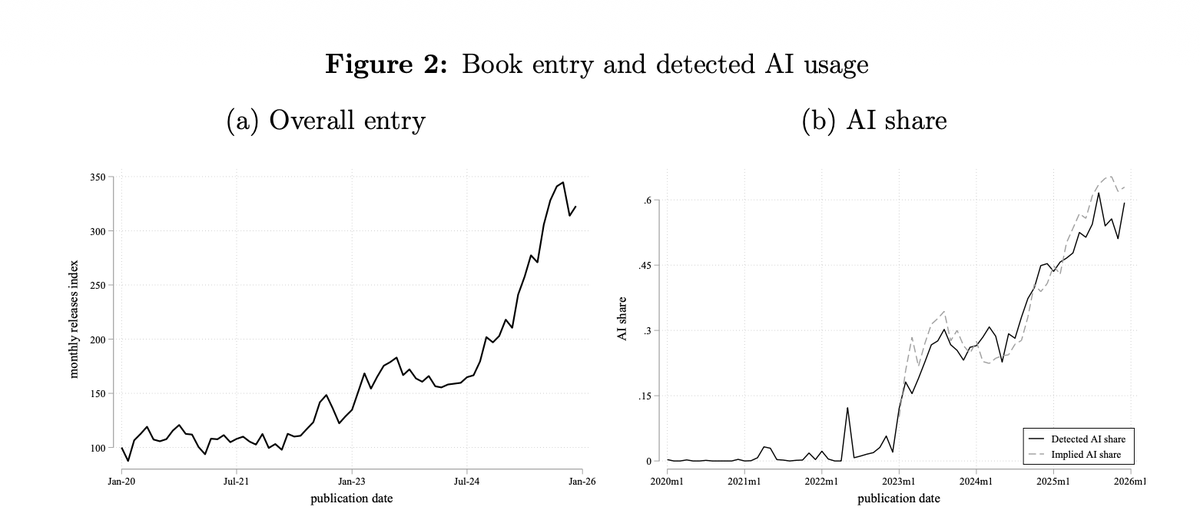
Amazon book releases *tripled* 2022-2025; over half of 2025 releases contain AI text. However, it adds little to what readers actually choose (AI books get few readers). Jan 2026 preprint https://t.co/Xoq2LJoewM