@mathemetica No, definitely not in general. For instance, your stated law number 4 is only true if the fluid flowing between positions 1 and 2 is incompressible, steady state, one-dimensional, and on a macroscopic level a continuum, and mass is conserved.
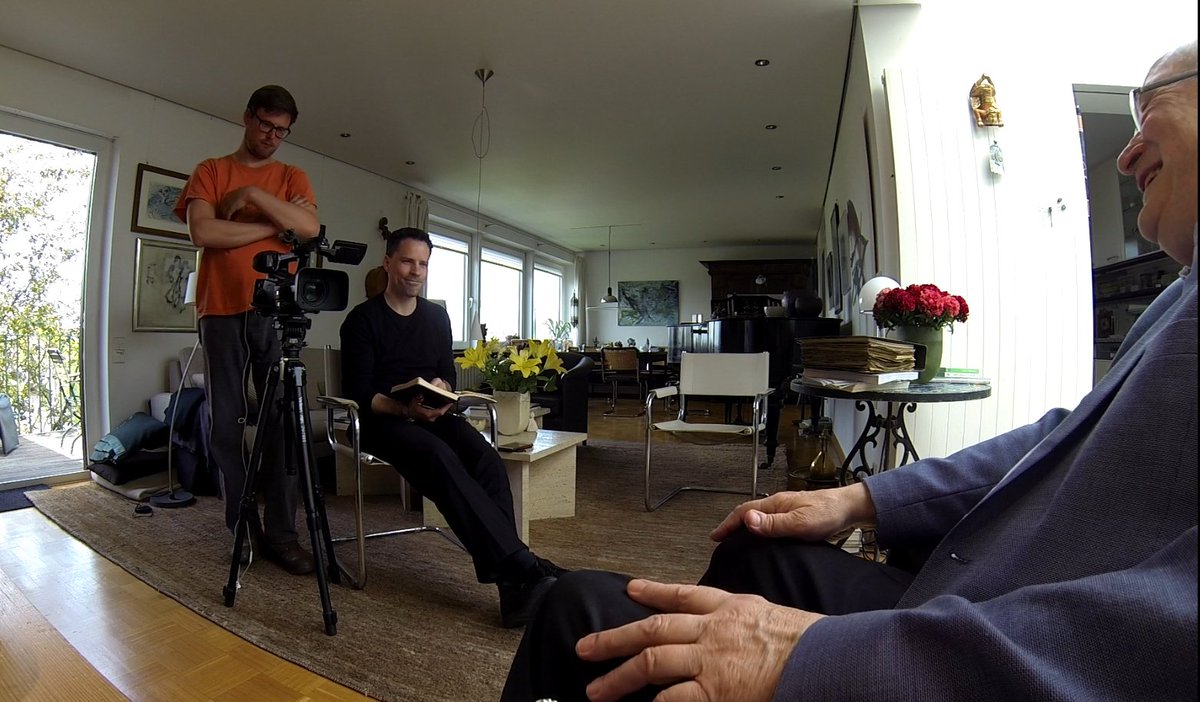
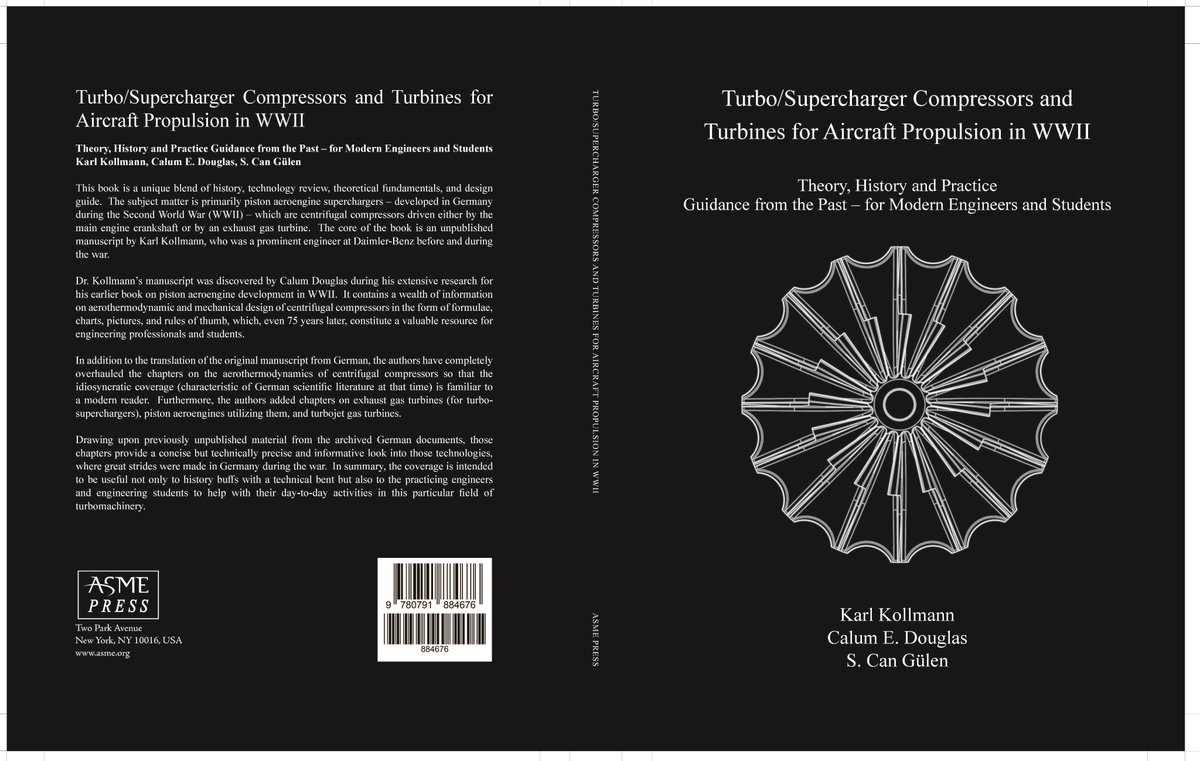
You can find answers to this type of question in my translation of the WW2 German university professors memoirs, Prof. Dr-Ing Kollmann (thats his son in the photo, the book you can buy from ASME.)
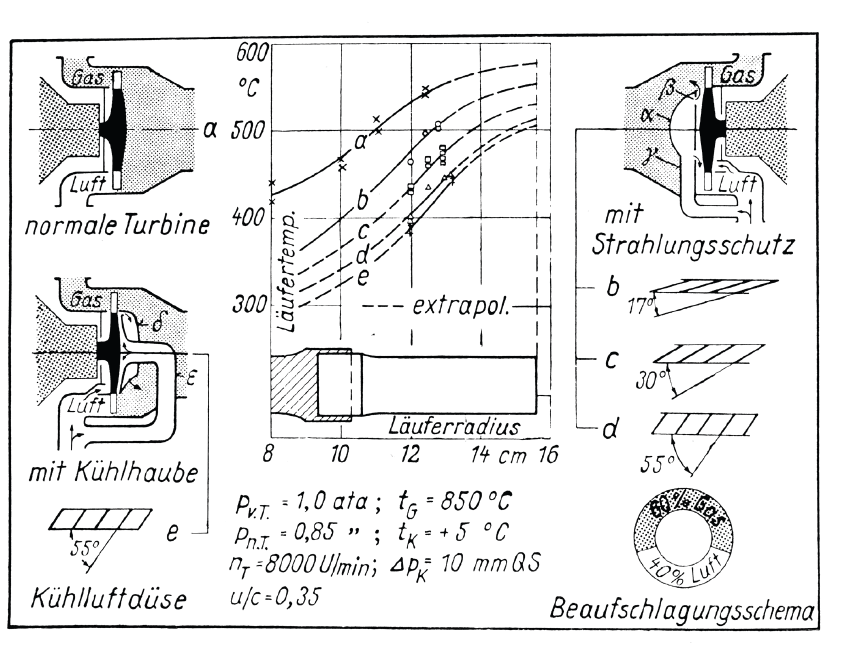
In a turbine with separate blades the tensile stresses peak at the root.
So the stresses near the tip are low but the blade temperatures high (mostly because the heat has a long way to conduct itself out the blade at the tip), at the blade root difficult problems with attaching the blade occur and so on, so ductility is important and temperatures are lower.
Ceramics are brittle but strong at high temperatures and metals are ductile but weak at high temperatures.
So, how to approach the problem is obvious once you understand the materials and the stresses.
More ceramic near the tip, more metal near the hub.
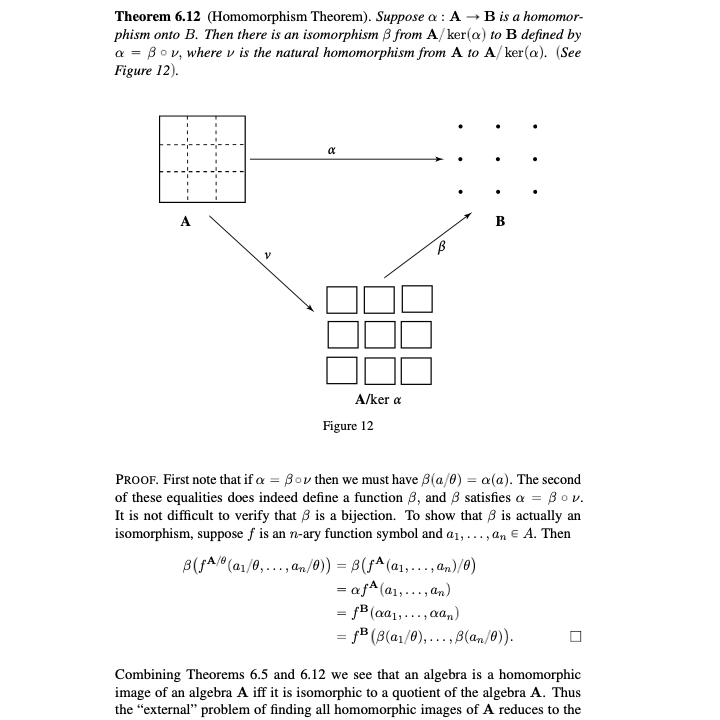
"A Course in Universal Algebra" by Stanley Burris and H. P. Sankappanavar is a classic mathematics textbook first published by Springer in 1981, exactly 45 years ago.
The book provides a rigorous and comprehensive introduction to universal algebra, covering lattice theory, algebraic structures, homomorphisms and isomorphisms, congruences, direct products, free algebras, Birkhoff’s theorem, Boolean algebras, equational logic, connections with model theory, finite-state automata, and much more.
As I mentioned, this is a classic that I find particularly well written, rigorous, and useful for anyone interested in understanding the fundamental structures underlying abstract algebra. The complete book is available for free in an updated edition (2012).
https://t.co/IYQ5SyyfAM
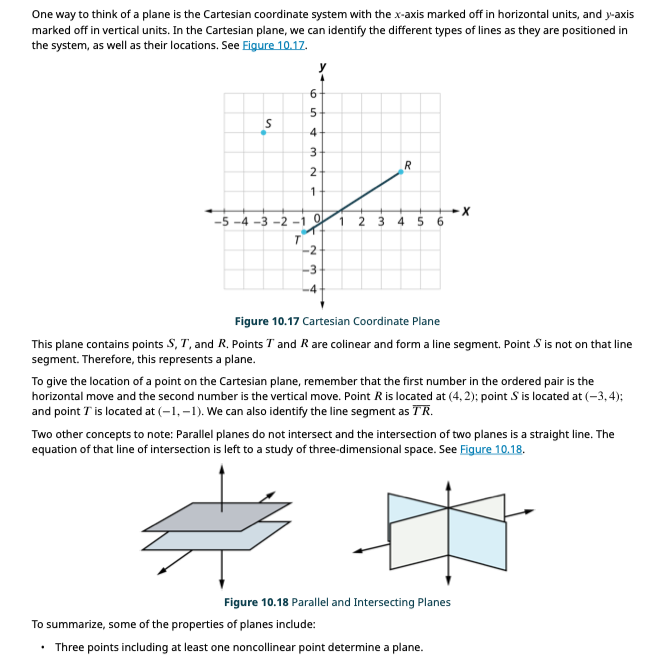
"Contemporary Mathematics" is a free textbook that introduces fundamental mathematical concepts over nearly 1,900 pages through clear explanations, numerous worked examples and exercises.
The book covers set theory, logic, Venn diagrams, mathematical statements and proofs, De Morgan’s laws, number systems, elementary number theory, prime numbers, rational and irrational numbers, arithmetic sequences, geometric sequences, numeral systems, calculations in different bases, and many other topics, providing a broad overview of foundational mathematics.
It is particularly useful for high school students, and I recommend keeping it if you have children studying mathematics at that level. The book is well structured, accessible, and enjoyable to browse, making it a valuable resource for both learning and reviewing mathematical concepts.
https://t.co/QK3RHNInkq
@MIT Margaret Hamilton should be known by every American in the same way they know about MLK, JFK, Thomas Jefferson, George Washington, etc.
This lecture explains, in layman's terms, the brilliance of the Apollo Guidance Computer & Hamilton's software.
https://t.co/6uGX3woeFJ
Some people help write history. Margaret Hamilton helped write the software that got us there 🌖
Today we learned that Margaret Hamilton, one of the true pioneers of computing and software engineering, has passed away at the age of 90.
Last year I made this video about the Apollo Guidance Computer, and especially about Margaret and the incredible team she led at MIT. It feels appropriate to share it again tonight in her honor.
During Apollo 11’s descent to the Moon, the Guidance Computer suddenly began throwing the now-famous 1201 and 1202 alarms. It was overloaded at one of the worst possible moments.
But it didn’t simply crash.
The software Hamilton and her team had designed recognized what was happening, discarded lower-priority work, and kept the tasks necessary to land the Lunar Module running.
That wasn’t luck. That was engineering.
Margaret helped pioneer ideas like fault-tolerant software, asynchronous processing and priority scheduling at a time when “software engineering” itself was barely recognized as a discipline. She fought to change that too.
We remember the astronauts because they walked on the Moon. We should also remember the engineers who made sure the computers could get them there.
Margaret Hamilton was one of the greatest. I am always deeply honored when someone tells me I resemble her, which is a regular occurrence ☺️
Rest in peace, Margaret. And thank you for helping humanity make one giant leap 🌙💻
Music Piano Pill (YouTube).
Thanks but its VERY important to remember, that "I" didnt do anything persuasive.
The fact you changed your mind is simply because the archive files present you with a picture that demands it.
I wasnt even looking for material on Chamberlain, I just happened to be researching RAF rearmament in the 1930`s.
Hopefully this will encourage others to research and write about the Committee of Imperial Defence.
Kew National Archives, files:
CAB 16/109 to 113 are where to start.
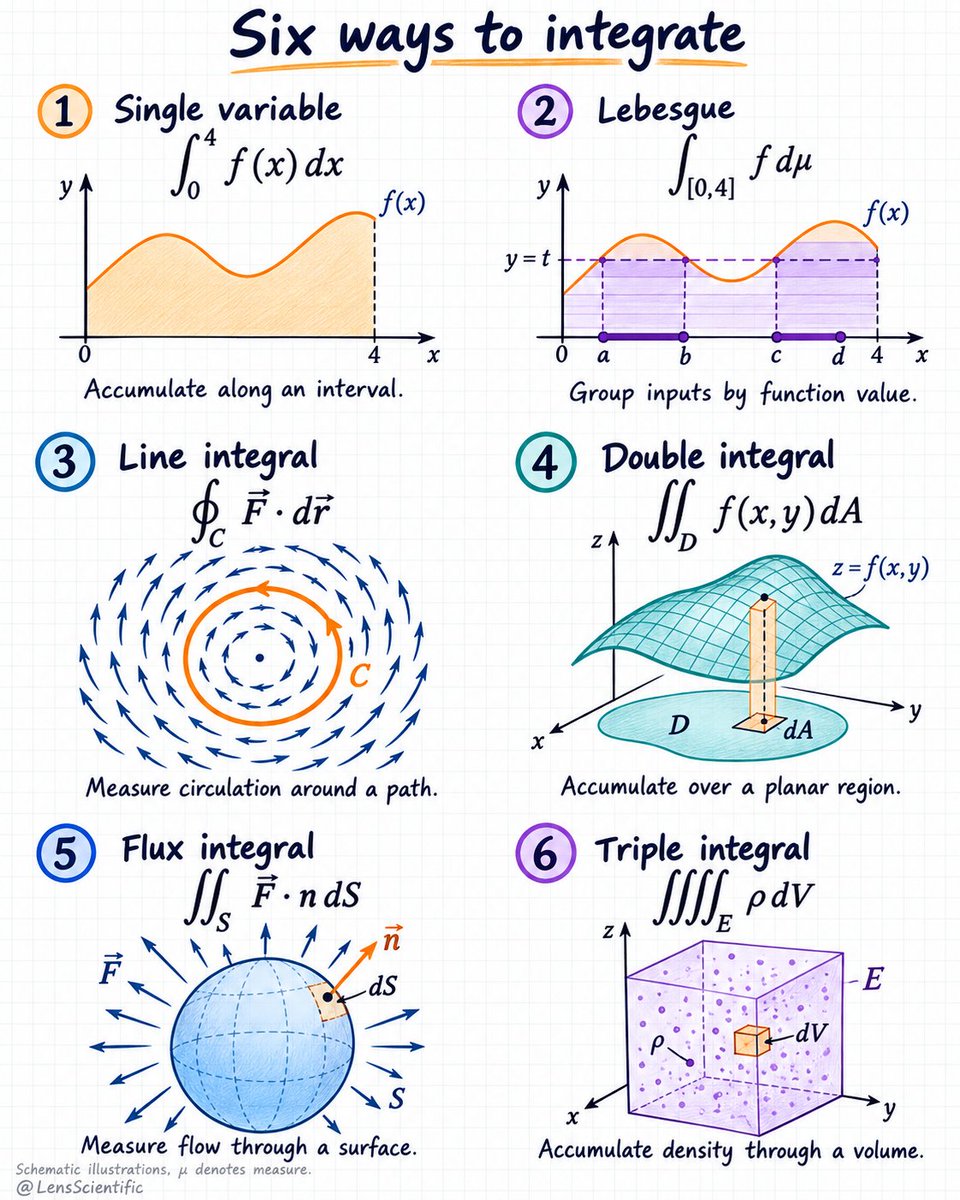
Adding density across a volume gives mass. Adding force’s contribution along a path gives work. Adding the perpendicular flow through a surface gives a flow rate. The geometry determines what gets added, and how.
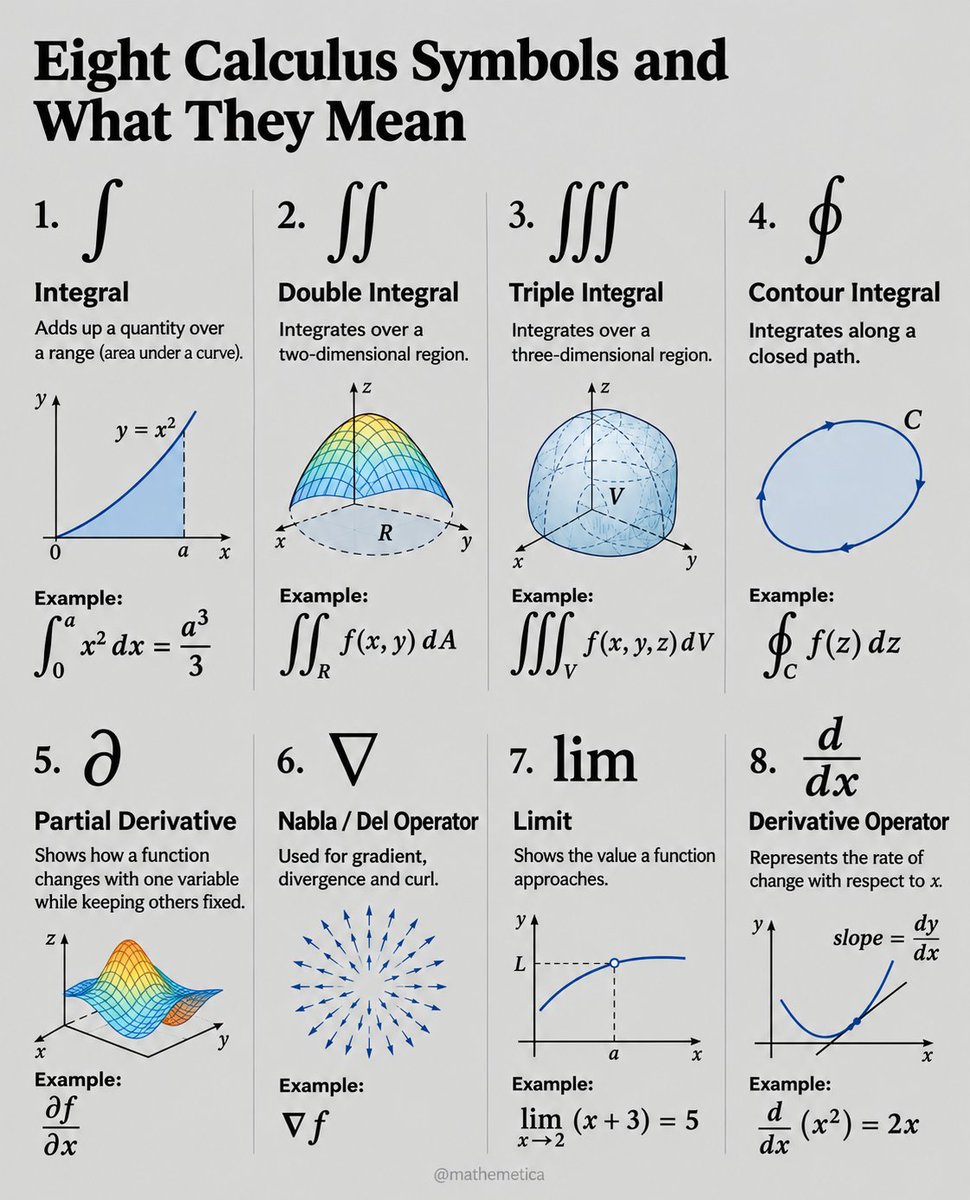
Calculus is the alphabet of a universe in motion.
At its heart lies a single revelation: smooth change can be measured, and infinite pieces can be assembled into whole truths. From instantaneous rates to curving spaces, these symbols give form to movement.
@dcjvz To a fellow New American: we made the right call. 3 weeks into my new job in Georgia — at one of the companies making the AC that keeps you cool in Texas 😄 BofA account open, first car bought, earning and contributing in our new safe and free country. Enjoy those braais! 🇺🇸
@CalumDouglas1@hoyer_kat@WeAreTripsmiths Can you expand more about the wind tunnel? Low subsonic? Purpose? Method of operation? The purpose of the series of openings around the rim of the large opening behind you?
It is difficult to find such things as top WW2 engineers hand calculation notebooks, but you can get a rough idea because during my research for THE SECRET HORSEPOWER RACE, I ended up at a house in Stuttgart, the owner of which was the son of the Chief Designer at Daimler-Benz aero engines in last period of WW2.
He had his fathers technical memoirs, which I translated and were themselves eventually published as a book, by the American Society of Mechanical Engineers.
I then returned to his home some years later to interview him, the interview is on my website.
Dr Kollmann (Jr) is himself an engineer, former Director at Daimler-Benz and an engine designer. I have not spoken with him in a few years now, after I got no reply one year to my Christmas-card to him, I suspect that he may either be now invalided or perhaps passed away.
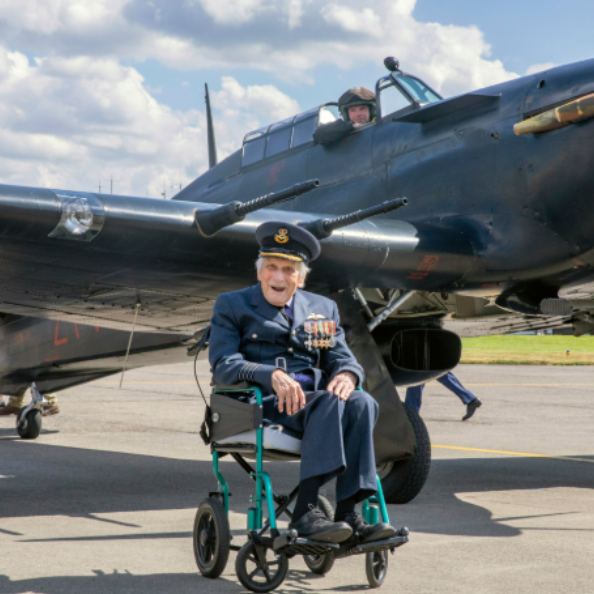
In March 2025, the last surviving pilot of the Battle of Britain died at the age of 105.
He had been shot down four times. He survived a burning cockpit, the sea, a parachute that snagged in a tree, and a fall behind enemy lines.
When he died, the last of Churchill's "Few" was gone forever.
This is the story of Paddy Hemingway..🧵1/6
My daughter graduated with a Ph.D in cancer research from the University of Stellenbosch earlier this year and got a post-doc position at the UBC cancer research centre. Today she proudly presented her first poster presentation. She lives for the lab work!!
@CalumDouglas1 Brilliant. As a kid I devoured books on WW2 aircraft and the South African connections to the Battle of Britain, notably "Sailor" Malan who flew Spitfires from AFB Biggen Hill at the time if I understand correctly. It will be interesting to see if any of the Ultra notes pertains.