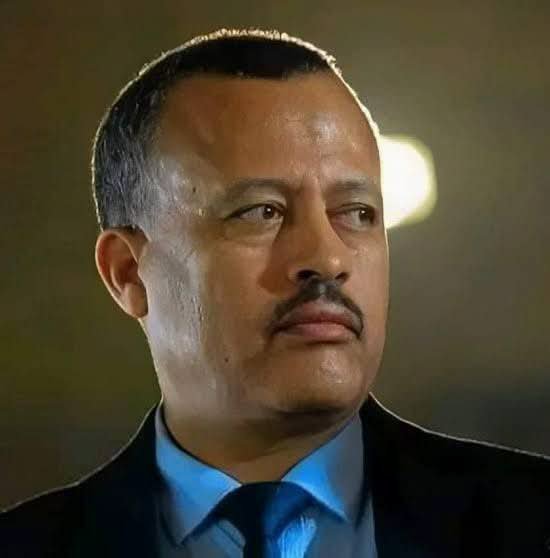
Last year, the Amhara people were brutally murdered. Mothers were shot while holding their children. This year, it has continued, but the world is unwilling to hear about the massacre of the Amhara. I wrote this report last year for @africa_dne The report is about an Amhara mother who was murdered while carrying her children on her back.
"World Silent as Ethiopian Military Terrorizes Amhara, Kills Mother in Front of Child" https://t.co/wWkuPU3Wqi via @DailyNewsEgypt
FOR IMMEDIATE RELEASE! OPEN LETTER
Formal Complaint: Lack of Editorial Balance and Factual Inaccuracies in Recent Reporting on Ethiopia in case of the Arsi massacres.
Link to the letter: https://t.co/tPD1ojJJ6T
November 09, 2026
To: Deutsche Welle Amharic Service
Genocide Prevention in Ethiopia (GPE), a human rights advocacy organization established to monitor, document, and report systematic ethnic- and faith-based civilian massacres across Ethiopia, writes to lodge a formal complaint regarding your recent broadcast featuring an un-scrutinized interview with Jawar Mohammed concerning the violence against ethnic Amharas and Orthodox Christians in the Arsi Zone, Oromia Region (Aired on October 28, 2026, https://t.co/UNedCvJSby).
During the segment, the guest delivered unsubstantiated assertions that mischaracterized documented acts of violence and improperly attributed liability to the victims. Deutsche Welle failed to verify these foundational assertions prior to transmission, violating basic standards of journalistic due diligence and truthfulness. Furthermore, by featuring Mr. Mohammed as a sole commentator without an independent counterpart, expert analyst, or representative of the affected communities, the broadcast provided an unchallenged platform for tendentious narratives and omitted critical human rights context.
We must also express grave concern regarding the lack of editorial caution applied to a guest with a well-documented public record associated with high-risk commentary, including his former role as CEO of Oromo Media Network (OMN)—an entity previously scrutinized, legally challenged, and publicly condemned for broadcasting speech that incited intercommunal violence. Granting an unmoderated platform under these tense conditions risks exacerbating ongoing ethnic violence and civilian suffering. Please check an overwhelmingly supported petition that was organized by GPE in 2018, right after OMN was implicated in the exacerbation of the Burayu Massacres around Addis Ababa, Ethiopia https://t.co/5v9TgYN1Z8.
To uphold the core journalistic principles of accuracy, fairness, and harm minimization, GPE formally requests that Deutsche Welle:
1. Issue a formal correction addressing the factual inaccuracies and unsubstantiated allegations broadcast during the segment.
2. Provide an equivalent right of reply to independent human rights experts or representatives of the victimized communities to present a balanced account of the events in the Arsi Zone.
3. Conduct an internal review of the editorial safeguards applied to reporting on active conflict zones and ethnic violence in Ethiopia.
Genocide Prevention in Ethiopia (GPE)
Volunteer-based organization
Recent GPE report on the Arsi massacres:
https://t.co/M6D8WWvkMM
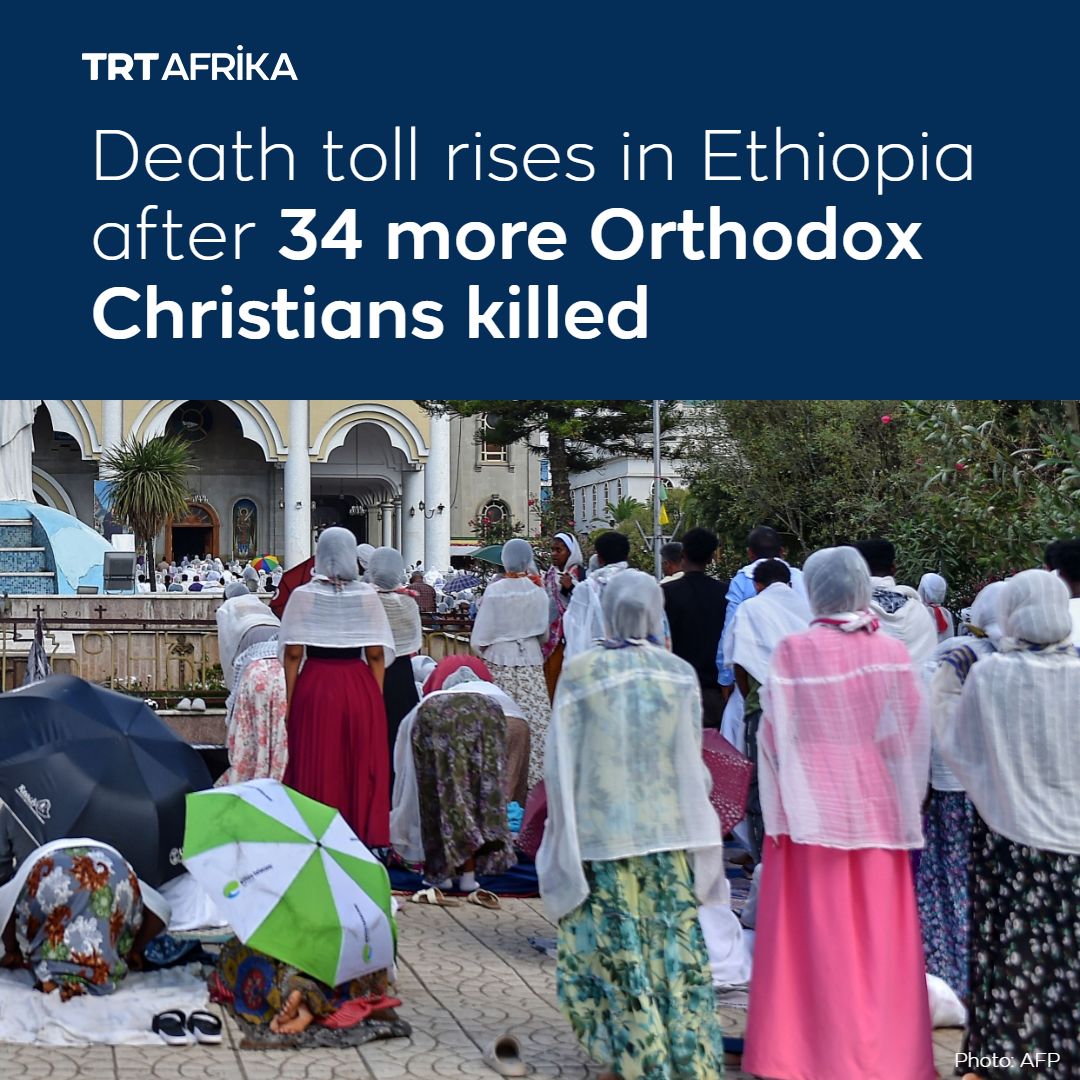
At least 34 Ethiopian Orthodox Christians have been killed in a fresh attack by gunmen in Ethiopia's Oromia region, bringing the reported death toll from attacks on worshippers to at least 94 in less than three weeks.
https://t.co/8Fb4K7IodW
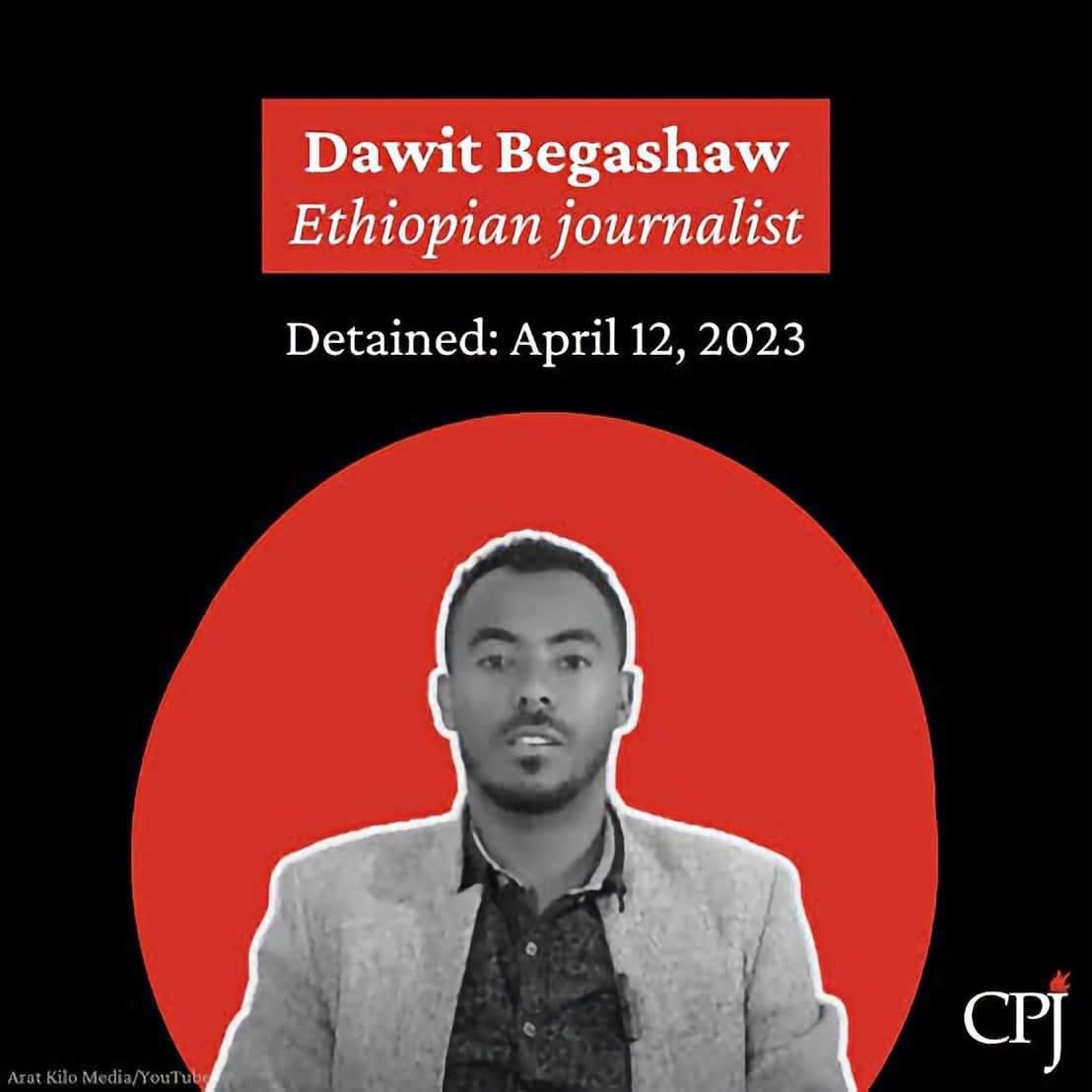
#Ethiopia 🇪🇹 The Reporter is one of Ethiopia's oldest independent newspapers. By suspending it with vague allegations of threatening the "national interest," the Ethiopian Media Authority has become an instrument of censorship. Read more: https://t.co/9lH0QtT41h
📌 The Arsi Civilian Massacre & International Community Response
The recurring targeted attacks, killings, and forced displacement of innocent civilians and Ethiopian Orthodox Tewahedo Church believers in the Arsi and East Arsi zones represent a tragic national disaster that has inflicted deep wounds and profound sorrow.
Below are the key details covering the recent developments, historical context, and internationally documented reports:
1. Recent Attacks of October 2026
Holy Synod Statement: The Holy Synod of the Ethiopian Orthodox Tewahedo Church issued an official statement in October 2026 (Tikimt 2019 E.C.), confirming that a series of targeted attacks between October 20 and 25 in Arsi Zone resulted in the slaughter of at least 60 believers and left nearly 20 others critically injured.
Property Destruction & Displacement: The attacks led to the burning of numerous households and properties, forcing residents and congregants to flee their villages.
Church's Call for Action: Strongly condemning the atrocities, the Holy Synod urged federal and regional security authorities to ensure citizens' right to life and freedom of worship, while demanding that perpetrators be brought to justice.
2. Pattern of Attacks Since 2021
According to human rights organizations, East Arsi and surrounding zones (including Shirka, Seru, Hetosa, and Kore districts) have been subjected to repeated massacres since 2021.
Rights advocates have documented that armed groups operating in the area have killed over 432 innocent civilians (primarily farmers and household heads), burned churches, and forcibly displaced thousands of residents over these years.
3. Reports by International Bodies & U.S. State Department
International Religious Freedom Reports: The U.S. Department of State, through its annual International Religious Freedom Reports, has consistently documented targeted killings and violence against civilians in various parts of Oromia (particularly Arsi and Welega) based on religious and ethnic identity.
Recent U.S. Government Statement: The U.S. Department of State Bureau of African Affairs released an official statement:
Expressed deep concern regarding recent reports of targeted killings of civilians in Arsi zone, Oromia region.
Condemned religious, ethnic, or politically motivated violence, emphasizing that such horrific attacks against any group must stop.
Urged the Government of Ethiopia to investigate the tragedy and bring the perpetrators to justice.
This persistent massacre of civilians is a grave indicator of security breakdown, human rights violations, and the erosion of social cohesion, demanding urgent justice and decisive protection measures.
The United States is deeply concerned about recent reports of targeted killings of civilians in Arsi zone, Oromia region, Ethiopia. The United States condemns religious, ethnic, or political motivated violence. Such horrific attacks against any group must stop. As we seek to understand this tragedy, the United States urges against characterizations that could deepen division. The United States calls on the government of Ethiopia to investigate and to bring the perpetrators to justice.
Series of coordinated and targeted killings of Ethiopian Orthodox Christians and Amharas in Arsi, Ethiopia
October 30, 2026
#GPE_AtrocityReport
Status: Developing
Issuing Organization: Genocide Prevention in Ethiopia (GPE)
Document ID: GPE-AR-2026-10-30
TARGET CONSTITUENCY: Ethiopian Orthodox Tewahido Christian (EOTC) faith adherents and ethnic Amharas
A series of targeted attacks occurred in Shirka and Aseko Woredas within the Arsi Zone of the Oromia Region, Ethiopia, between October 21 and October 25, 2026. The violence specifically targeted residents and members of the Ethiopian Orthodox Tewahedo Church community. Key details regarding the massacres that persisted close to a week are as follows:
Fatalities: The Ethiopian Orthodox Tewahedo Church Holy Synod confirmed over 60 individuals killed during the multi-day violent incursions.
Injuries: At least 20 people sustained severe injuries.
Displacement & Destruction: Multiple homes and places of worship were torched, forcing surviving residents to flee into surrounding forests and nearby administrative areas for shelter.
Following the massacres, regional security forces (including local elite units) engaged in systematic detention and harassment targeting responders and community members. Accordingly, Security forces detained over 50 individuals who attempted to assist injured survivors or participate in burial ceremonies for the deceased. Local authorities also blocked efforts to provide immediate medical assistance and emergency aid to survivors. The wave of arrests created an atmosphere of fear, deterring local humanitarian actions and burying legal reporting efforts.
State Disinformation Campaign & Structural Complicity
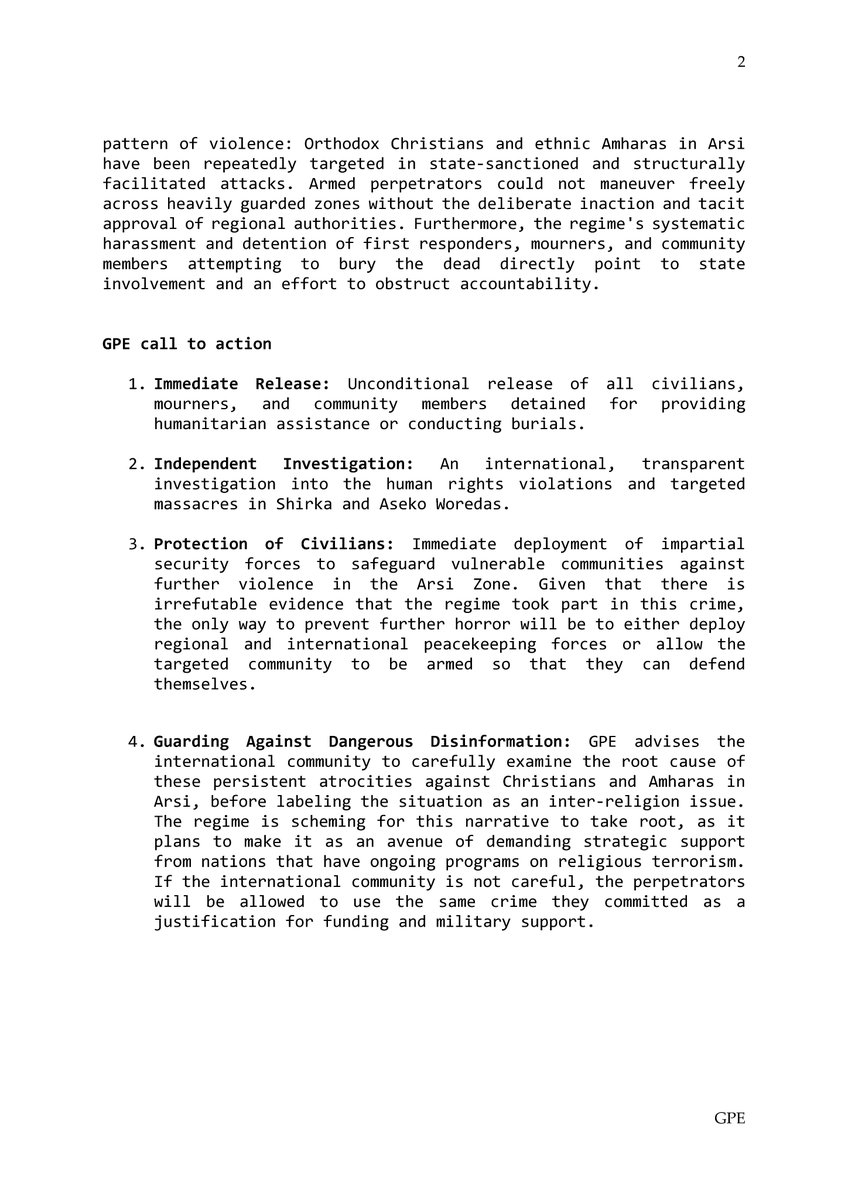
In the wake of these massacres, regime cadres and state-aligned actors launched a deliberate disinformation campaign aimed at reframing the atrocities as purely communal or religious violence between local Muslim and Christian populations. This strategy included circulating video footage depicting forced religious conversions of local Christians to give the impression of an isolated sectarian conflict driven solely by extremist elements. While radical fringe groups seeking religious conversion do exist in the region, focusing exclusively on sectarian narratives obscures the broader, documented pattern of violence: Orthodox Christians and ethnic Amharas in Arsi have been repeatedly targeted in state-sanctioned and structurally facilitated attacks. Armed perpetrators could not maneuver freely across heavily guarded zones without the deliberate inaction and tacit approval of regional authorities. Furthermore, the regime's systematic harassment and detention of first responders, mourners, and community members attempting to bury the dead directly point to state involvement and an effort to obstruct accountability.
GPE call to action
Immediate Release: Unconditional release of all civilians, mourners, and community members detained for providing humanitarian assistance or conducting burials.
Independent Investigation: An international, transparent investigation into the human rights violations and targeted massacres in Shirka and Aseko Woredas.
Protection of Civilians: Immediate deployment of impartial security forces to safeguard vulnerable communities against further violence in the Arsi Zone. Given that there is irrefutable evidence that the regime took part in this crime, the only way to prevent further horror will be to either deploy regional and international peacekeeping forces or allow the targeted community to be armed so that they can defend themselves.
Guarding Against Dangerous Disinformation:GPE advises the international community to carefully examine the root cause of these persistent atrocities against Christians and Amharas in Arsi, before labeling the situation as an inter-religion issue. The regime is scheming for this narrative to take root, as it plans to make it as an avenue of demanding strategic support from nations that have ongoing programs on religious terrorism. If the international community is not careful, the perpetrators will be allowed to use the same crime they committed as a justification for funding and military support.
PDF: https://t.co/PSzPDmA3zE
__________________________________
End #AmharaGenocide
Stop #WarOnAmhara
Expose #AmharaConcentrationCamps
No seriously! What more does anyone want after reading this? The bane of our existence right now, for all Ethiopians is the regime. The government that is running the country like an underworld boss.
READ: https://t.co/PJcLgcneCJ
#Abiy2ICC End #AmharaGenocide Stop #WarOnAmhara Stop #WarOnAfar Stop #WarOnTigray Expose #AmharaConcentrationCamps #EOTCUnderAttack #Ethiopia
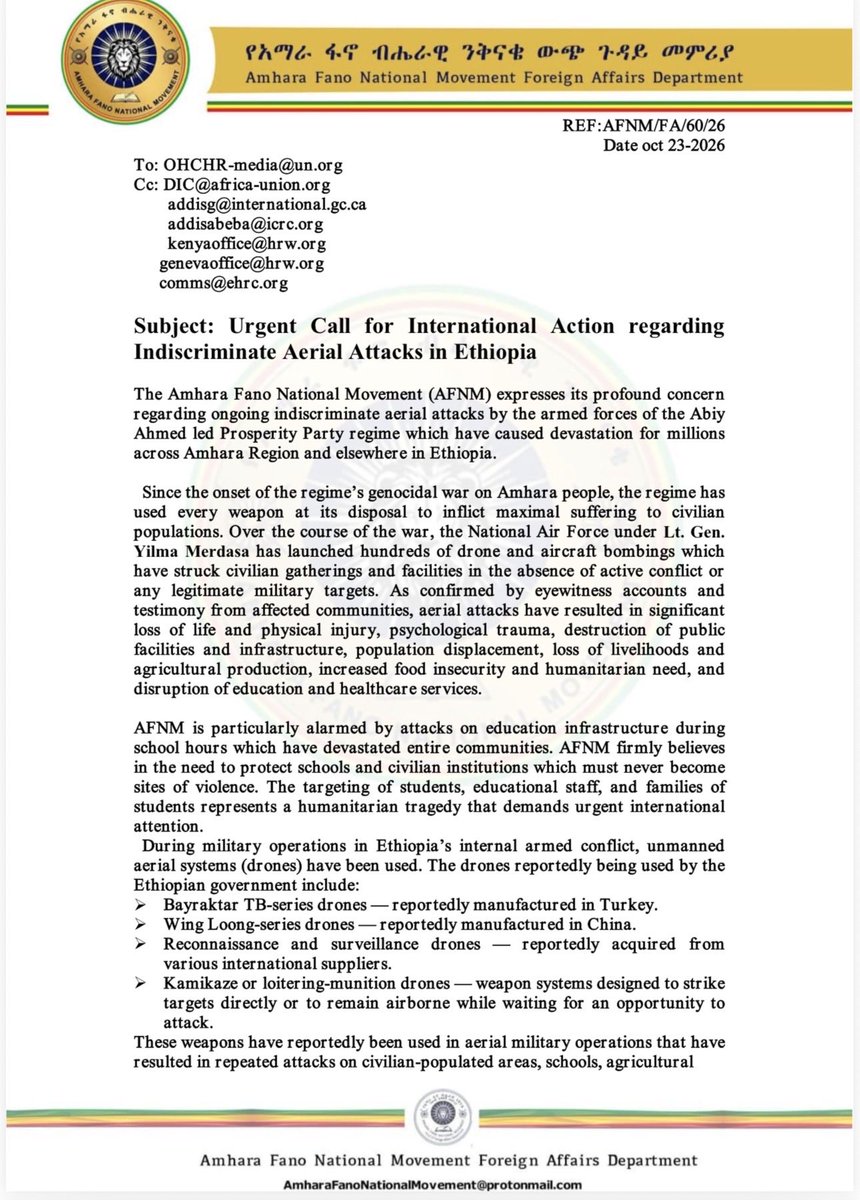
Amhara Fano National Movement Condemns Genocidal Massacres in Arsi, Wollega and Other Parts of Ethiopia: An Urgent Call for International Action
The Amhara Fano National Movement (AFNM) strongly condemns recent genocidal massacres and acts of violence which has claimed hundreds of lives and displaced thousands in Arsi, Wollega and other parts of Ethiopia. AFNM extends its deepest condolences to families of victims and to communities mourning the tragic loss of loved ones. AFNM calls for immediate protection of vulnerable communities, credible independent investigations and urgent humanitarian relief.
AFNM has received the following information of relevant incidents involving genocidal violence against Amhara civilians and followers of the Orthodox Christian faith in Arsi and Wollega since October 20:
Over 60 killed in two attacks in Arsi: 14 in Merti district on October 20 and 46 in Sherka district on October 24. Gunmen surrounded families in their homes, opened fire, and burned houses to the ground. More than 20 people remain hospitalized with serious injuries.
More than 300 killed in East Wollega and Horo Guduru Wollega since October 21; more than 40 killed in Abe Dengoro district on October 26 alone, many with machetes and knives. Survivor accounts indicate that women, children, and older persons were among the victims. Beyond the civilian toll, over 13 villages and three churches burned down, and more than 160,000 residents displaced from Gida Ayana since August.
These incidents are not isolated and represent a pattern of state-sponsored violence with involvement from political and military officials at the federal and regional levels. For example, in Arsi, security forces stationed nearby refused to intervene while families were being killed. In the aftermath, authorities offered no condemnation, and no arrests were made. In Wollega, the violence was perpetrated directly by federal and Oromia regional security forces alongside militias, backed by sophisticated weaponry. In the majority of incidents, communications services were shut off during and after the attacks.
AFNM calls upon the international community to move beyond expressions of concern and adopt concrete measures in response to reported mass killings and other grave human rights violations. Continued international inaction risks undermining the principles of human dignity, civilian protection, and accountability.
AFNM therefore call upon:
1. The United Nations and the African Union to give the situation in Arsi and Wollega urgent attention, support independent investigations, and take appropriate measures to protect civilians and prevent further atrocities.
2. International and regional human rights institutions to document reported violations, preserve evidence, and pursue appropriate legal proceedings through competent national or international mechanisms, where the applicable legal requirements are met.
3. Relevant international and regional bodies to consider targeted sanctions and other appropriate measures against individuals and entities credibly implicated in serious human rights violations, in accordance with applicable legal frameworks and due process.
4. Humanitarian organizations and international partners to support affected communities by facilitating access to emergency medical care, food, shelter, psychosocial support, and other essential humanitarian assistance.
The international community must not allow repeated atrocities against civilians to become normalized. The protection of innocent lives must take precedence over political considerations, and credible allegations of mass atrocities must receive a timely, impartial, and effective response.
October 27, 2026
The Threat of Cultural Genocide Against the Amhara and State-Sponsored Cyber Warfare
In my latest article, I examine how routine content moderation in Ethiopia has crossed into systematic digital censorship and cultural genocide.
Read the full piece here 👉🏾 https://t.co/Pj5NyTRhQx
Only 1 day left!
Don't miss the Mereja TV International Symposium live this Saturday, Oct 24 at 1 PM ET. Tune in to join the discussion on Ethiopia's current affairs: https://t.co/kdcFOyQiW5
Only 2 days left!
Don't miss the Mereja TV International Symposium live this Saturday, Oct 24 at 1 PM ET. Tune in to join the discussion on Ethiopia's current affairs: https://t.co/khPDp0eNbp