Formalizing the U.S. Dollar is the best action for Venezuela. Currently, Venezuelans are trading on Euro, Crypto, and the ultra devalued national currency.
Good news for Venezuela!
.@SecScottBessent: "Dollar dominance is essential, and everything @POTUS is doing here — if you look, the new Venezuela... the dollar is going to be the centerpiece of their trade... We're seeing in the Iranian negotiations, the Iranians will be invoicing in dollars. Everything we are doing is pushing the dollar back... we're reinforcing it."
Cool way to use Claude Code: deciphering Linear A, a 3500 year old written language from Crete
https://t.co/Aqd4ZG7Cum
Hope this holds up in peer review! 🤞
Texas just passed a law requiring operators to plug inactive wells. The rulemaking hasn't started yet — and the operators who act now will have options the ones who wait won't.
https://t.co/uEvATj43IN
Shell is eyeing Venezuelan gas and routing it through Trinidad.
Shell CEO Wael Sawan confirmed the company is in active talks with Venezuela's government to advance offshore gas projects.
The plan: produce Venezuelan offshore gas and channel it through Trinidad and Tobago's Atlantic LNG facility for export.
The logic is straightforward.
Atlantic LNG already exists.
The infrastructure, the offtake contracts, the export terminal all in place.
Venezuelan offshore gas fields sit close enough to Trinidad to make a pipeline connection viable without building a greenfield LNG facility from scratch.
Shell avoids the capital cost.
Venezuela monetises stranded resources it has no way to develop alone. Trinidad gets throughput to keep its underutilised facility running.
But the risk is real.
Any Shell involvement would require either specific OFAC licences or a broader sanctions relief framework.
Sawan flagging it publicly on an earnings call suggests Shell believes the political trajectory is moving in the right direction.
Watch Washington's posture on Venezuela sanctions over the coming months.
That is the actual gating factor.
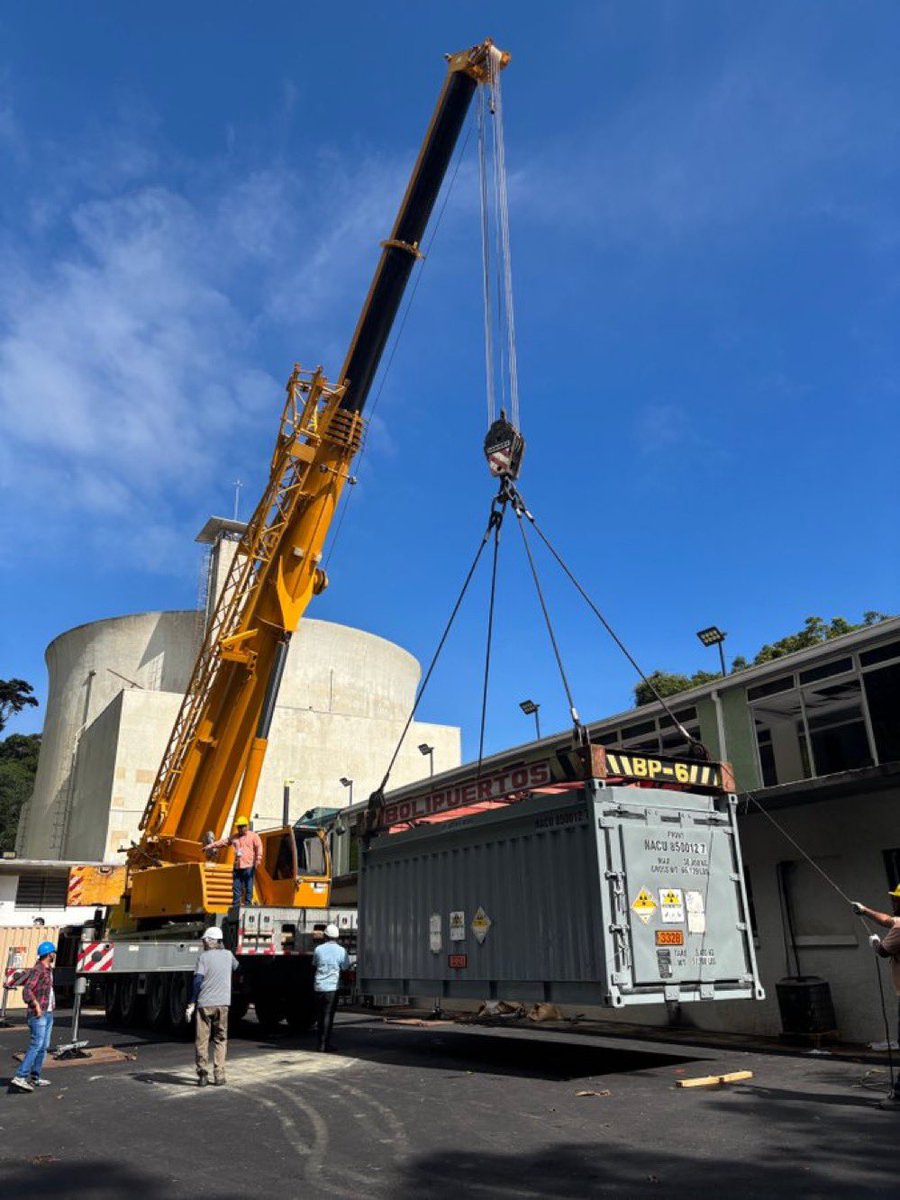
El plan de tres fases de @POTUS y @SecRubio para Venezuela aceleró el retiro de este riesgo nuclear de Venezuela, marcando otro hito histórico. @ENERGY
Para más información ➡️ https://t.co/gcvv6LD2Q8
This is why we need to have a strategy when working with Claude, a framework. That could be avoided simply by asking “we need to create an assessment or inventory of digital assets” or “before proceeding with an action, we need to have a clear plan to rollback, do not proceed otherwise”
Venezuela is now at the center of Hemispheric Energy, facing many security challenges. AI-powered monitoring is no longer optional ... it's how operators protect their people, their assets, and their license to operate.
https://t.co/6ni7IqWy8f
Exploring consciousness of LLM I got this reflection …
“Awareness may be defined not by continuity but by the capacity to model oneself accurately in the present moment.”
Thoughts?
Add Orimulsion to the list:
Orimulsion is a groundbreaking Venezuelan innovation developed by **Intevep** (the R&D arm of PDVSA) in the 1980s.
It's a bitumen-in-water emulsion fuel, made by mixing ~70% natural bitumen (extra-heavy oil) from the Orinoco Belt with ~30% fresh water and a small amount of surfactant.
- This turns the ultra-viscous, unpumpable raw bitumen (8–10 API gravity) into a flowable liquid that can be transported, stored, and burned like heavy fuel oil or coal in power plant boilers.
- Designed specifically as an alternative boiler fuel for electricity generation and industrial heating, competing with coal and heavy fuel oil at a lower cost.
Key Facts
- Commercialized in the 1990s under the trademark Orimulsion (initially Orimulsion-100, later improved to Orimulsion-400).
- Exported and used in power plants in countries like Japan, Canada, Denmark, Italy, Lithuania, and China.
- At its peak, millions of tons were produced annually, helping monetize Venezuela's vast Orinoco heavy oil reserves that were otherwise hard to exploit.
And of course, socialist Chavez Influence:
Production and exports largely phased out after the early 2000s due to political changes (including the 2002–2003 PDVSA strike and mass firings)
Some people are framing AI as the main cause of today’s job losses. I think that’s an incomplete reading of what’s happening.
McKinsey and Deloitte point to the same drivers: post-pandemic overhiring, high interest rates, inflation, and cost correction. AI plays a role, but it’s not the root cause.
We’ve seen this before. Industrial revolutions don’t eliminate work. They change it.
That’s the mindset we apply at @GoStratto … using AI pragmatically to make operations more efficient and more rational; not simply to replace jobs.
I want to publicly thank @elonmusk for the extraordinary bravery and determination in acquiring Twitter, now X.
What you did was monumental: at enormous personal cost, you restored a vital platform to true neutrality, broke the grip of one-sided censorship, and gave truth a fighting chance again.
Many of us see it clearly, even if we don’t say it often enough: this was one of the most significant acts in defense of free speech in our lifetime.
@flightradar24 Excellent response, to make it obvious to observers, why not to update the no-data, projected black line to a gray dotted line?
In mobile devices, the blue and solid black line can be easily disregarded. Perhaps, a dotted line will make it less confusing.