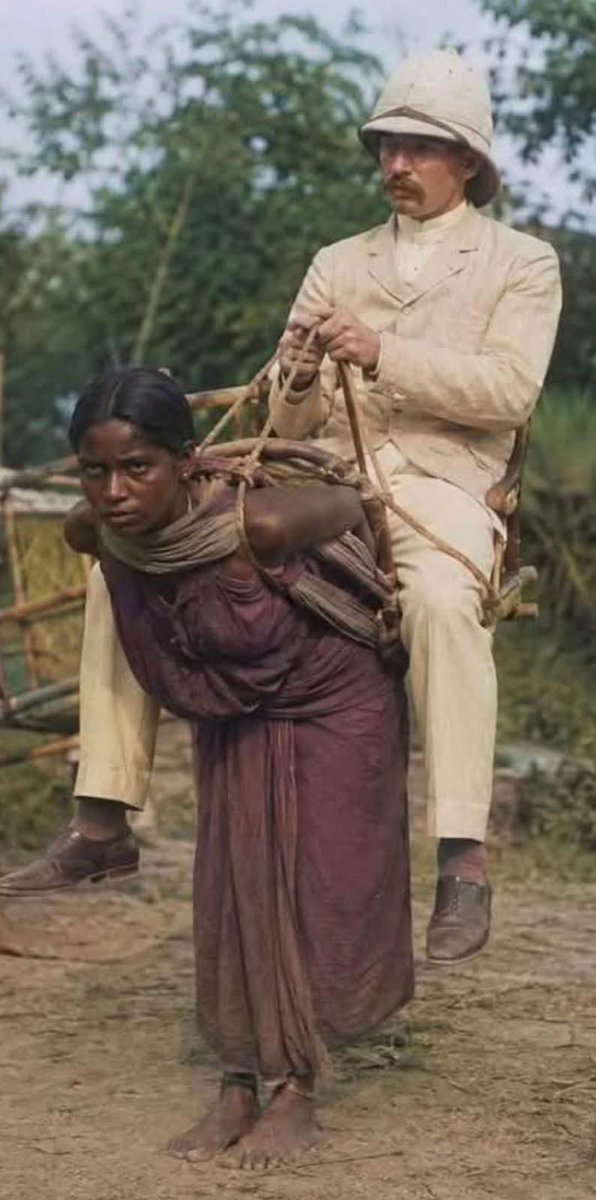
Shoji Yamasaki is a performance artist behind the ongoing project Littered Mvmnts. He studies trash caught in the wind and translates its erratic movement into precise, choreographed performances.
So I spent some time studying the new Twitter/X algorithm today since the latest version was published about a week ago on Github (https://t.co/3jzdav3Ywp).
My goal was to answer why so many people have seemingly seen such a dramatic drop in their posts' reach.
The first answer, which is actually somewhat unrelated to the ranking algorithm on Github, is the auto-translate feature, rolled out worldwide on April 7, 2026 (https://t.co/YtGomG9RGz).
Before that date, if you wrote in English about, say, the Trump-Xi Beijing summit, you were competing for attention with maybe 5,000 other English-language accounts writing on geopolitics.
After that date, your post is competing for attention with other posts on the same topic IN EVERY LANGUAGE ON EARTH. For some topics that do command global attention like geopolitics, that's a very brutal multiplier: you used to be one of 5,000, you're suddenly one of 50,000 (something of that order): MUCH more difficult to stand out.
Secondly, the number of followers you have matters far less than it used to: each post now has to earn its audience reader by reader, on the predicted engagement of the post, and how its topic matches what each reader has recently been engaging with.
Here is how the algorithm works, in simple terms: when you, as a reader, open your feed, the algorithm doesn't load "posts from accounts you follow." Instead it runs a 2-stage prediction of what posts you're likely to engage with in that very moment.
The first stage is the retrieval stage. The system narrows billions of posts on X/Twitter that day down to roughly 1,500 candidates by matching the semantic content of each post - what it's about - against what you as a reader have recently engaged with. Some candidate posts come from accounts you follow; others are pulled from across the platform by pure topic similarity to your recent interests.
You can test this retrieval stage easily: start disproportionally engaging with - say - Brad Pitt videos and you'll bit by bit see your timeline flooded with Brad Pitt content, most of it from accounts you've never followed and never heard of.
Then there's the ranking stage. Each of these candidate posts for your feed is fed through a Grok-based model that tries to understand if you'll engage with the post.
It looks at 15 engagement metrics:
1) P(favorite) — the reader likes the post
2) P(reply) — the reader replies to it
3) P(repost) — the reader reposts it
4) P(quote) — the reader quote-tweets it
5) P(click) — the reader clicks a link in it
6) P(profile_click) — the reader taps through to your profile
7) P(video_view) — the reader watches the video
8) P(photo_expand) — the reader expands an image
9) P(share) — the reader shares it (DM, off-platform, etc.)
10) P(dwell) — the reader stops scrolling and lingers on the post
11) P(follow_author) — the reader follows you after seeing it
12) P(not_interested) — the reader marks "not interested"
13) P(block_author) — the reader blocks you
14) P(mute_author) — the reader mutes you
15) P(report) — the reader reports the post
Fifteen predicted actions, each multiplied by a weight, summed: that sum is the score that determines in which priority a post will be seen among other candidates.
Please note that posting something with a video or an image can give your post an advantage as 2 actions are specifically for these: video_view and photo_expand. No video or photo and you don't get a score for these. Also, naturally, having a video maximizes the chance that a user will "dwell" on your post to watch it.
Also note that 4 of these actions carry negative weights (not_interested, block_author, mute_author and report): meaning that if the model expects a post to generate a lot of negativity, it'll get de-boosted quite dramatically.
But note, first and foremost, what's NOT in there: none of the things that, naively, one might think a serious information platform would weigh. There is no P(this post is true and well-sourced). No P(the author actually knows what they're talking about). No P(this person has spent a decade building a body of work that has held up). No P(this account has earned the right to be taken seriously on this topic). No P(the author has a large following from credible people). The model does not seem to care - at all - about any of that.
Every post starts from zero. You could have ten years of rigorous, well-sourced analysis behind you - or you could be just an uneducated rando who registered yesterday. To this algorithm, you're both just a bag of engagement probabilities.
Now, sure, to be fair, there is a "brand" effect that's not covered by the algorithm: someone who has in fact built a brand will naturally have better engagement metrics because people recognize their account. But that's an indirect, second-order effect. And crucially, it's legacy: those "brands" were built under earlier versions of the algorithm that gave followers and reputation more weight.
Lastly, several other features of the new algorithm compound the dilution, none of them visible from outside but all consequential.
The May 15 update added an "impression bloom filter," tightening the rule that once a reader has been served a post, the system won't serve it to them again. Before, a strong post could marinate in someone's feed across multiple refreshes and accumulate engagement on the second or third pass. Now it basically gets one shot.
Also, your own posts compete with each other. An "Author Diversity Scorer" inside the ranking stage attenuates the score of every subsequent post of yours that ends up in a reader's candidate pool. In plain terms: if multiple of your posts land in a reader's candidate pool, the system shows one at full strength and dampens the others. So don't post several times consecutively on the same topic.
And, last but not least, another huge impact on reach is that, in the old algorithm, when someone reposted or quote-tweeted you, your post was broadcast to their followers' timelines - a repost from an account with 100,000 followers was a huge boost.
In the new algorithm, that mechanism is vastly demoted: reposts - like every post - need to go through the retrieval and ranking stage mentioned above, so a repost from a big account is a long way from the boost it used to be.
This is especially brutal for low-effort quote tweets, which used to function as cheap amplification: now they often can't even clear the retrieval stage - they simply don't contain enough novel semantic content for the system to match them to anyone's interests.
So, putting it all together, the reach collapse comes from many forces stacking at once:
- Auto-translate makes your posts compete for attention against an order of magnitude more content
- The retrieval stage matches posts by topic, not by who follows you
- The ranking stage scores purely on predicted engagement with no weight for credibility, expertise, or track record
- The bloom filter narrows every post's window to one strong shot
- The diversity scorer penalizes prolific posting
- Reposts no longer carry much distribution power
Each of these alone would dent your reach. Combined, they amount to a complete reset: your audience that you built painstakingly over years basically doesn't matter much anymore, and it's much - much - harder to stand out even if you're a big account.
People structurally rewarded by this algorithm are folks who:
- Post visually (videos/images)
- Post on globally popular topics because they clear the retrieval stage easily
- Provoke strong emotional reactions - likes, replies, reposts
- Don't care about accuracy or seriousness because the algorithm doesn't measure it
- Don't care about their existing audience because every post is judged in isolation anyway
In short this new algorithm, like so many on social media, is all about maximizing whether people will engage with something - not about whether they should.
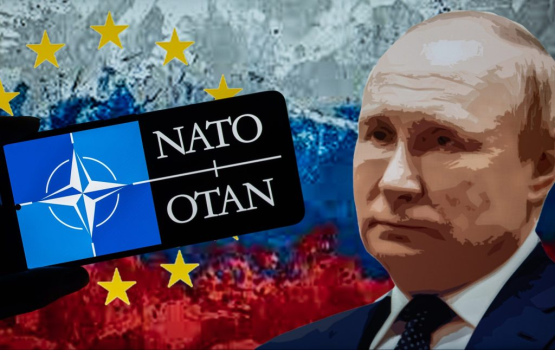
UKRAINE AND THE END OF NATO
I have been invited to speak at a conference in Istanbul on "World Security and the NATO Conference., hosted by the Global Civilizations Initiative Research Center. These are my prepared remarks.
As the conflict between Russia and Ukraine enters its fifth year, it is high time that the nations that comprise the North Atlantic Treaty Organization (NATO) take stock of the situation and what it means for the future of a trans-Atlantic alliance that has been in place for some eight decades. Western mainstream media and its social media echo chambers promote a narrative centered around the notion of Russian fatigue, Ukrainian resilience, and western resolve, and take delight in highlighting talking points premised on a Russian-generated quagmire that has dragged on longer than the Great Patriotic War of 1941-45. This narrative parallels that of the officially held positions of most of the nations that make up the membership of NATO, which is no surprise, given the hand-in-glove relationship between corporate-controlled media and governments possessing a revolving door relationship with these same corporations.
Read more: https://t.co/hsw3tI87mZ
The counterterrorism police of @ediramaal Zionist regime have begun detaining and charging protesters on a large scale. A wave of mass arrests and police crackdown on Albanians is expected. The charges began one day after former French President François Hollande visited Albania.
This Guardian article doesn’t once mention that he supported the Iraq War or that he is the former chair of Labour Friends of Israel.
Very interesting omissions.
If you sell clothes, you need customers.
An economy where the poor have money is good as then you will have customers. Poor people need clothes.
An economy where the Billionaires have everything may mean you'll struggle to have customers.
Çin artık başka bir boyutta. Geçen ay misafir öğretim üyesi olarak görev yaptığım Renmin Üniversitesi’nde bir gün öğle yemeğini görmek için öğrenci yemekhanesini götürmelerini rica ettim. Çin’deki öğrenci yemekhanelerini çok severim, her geldiğimde mutlaka uğrarım. Adamlar yeni bir sistem kurmuşlar, çipli tabldot tepsisini alıyorsunuz, envai çeşit açık büfede seçiyorsunuz, her bir yemeğin önünde durup tepsiyi tezgaha koyup istediğiniz kadar gram ekliyorsunuz, isterseniz sadece bir kaşık alın otomatik hesaplıyor, tepsinin çipine işliyor, en son kasaya koyuyorsunuz tepsiyi bütün aldıklarınızı birleştiriyor, ödemeyi ise qr kod ile kolayca bir saniyede yapıyorsunuz.
The Kunpeng Trail No.1 Bridge in 🇨🇳Shenzhen is an eco-bridge made for wildlife!
It crosses a highway and connects two mountains, letting local animals travel safely and find food. The bridge is covered in native plants to give animals a natural habitat!
Our new UNU report explores what it takes for AI systems to qualify as Digital Public Goods. Advancing the SDGs requires AI that is open, trustworthy, accountable, and inclusive.
Read the report: https://t.co/iEf6QOi1T0
#AI#DigitalPublicGoods#AIGovernance#UNU
During the 1941 Lvov pogroms perpetrated by Nazi Ukrainians, a Jewish woman was seen fleeing through the streets. Some accounts posted photos of her with an Israeli flag alongside a Ukrainian flag, asking: if you are so in love with your executioner, why is this woman screaming then ?