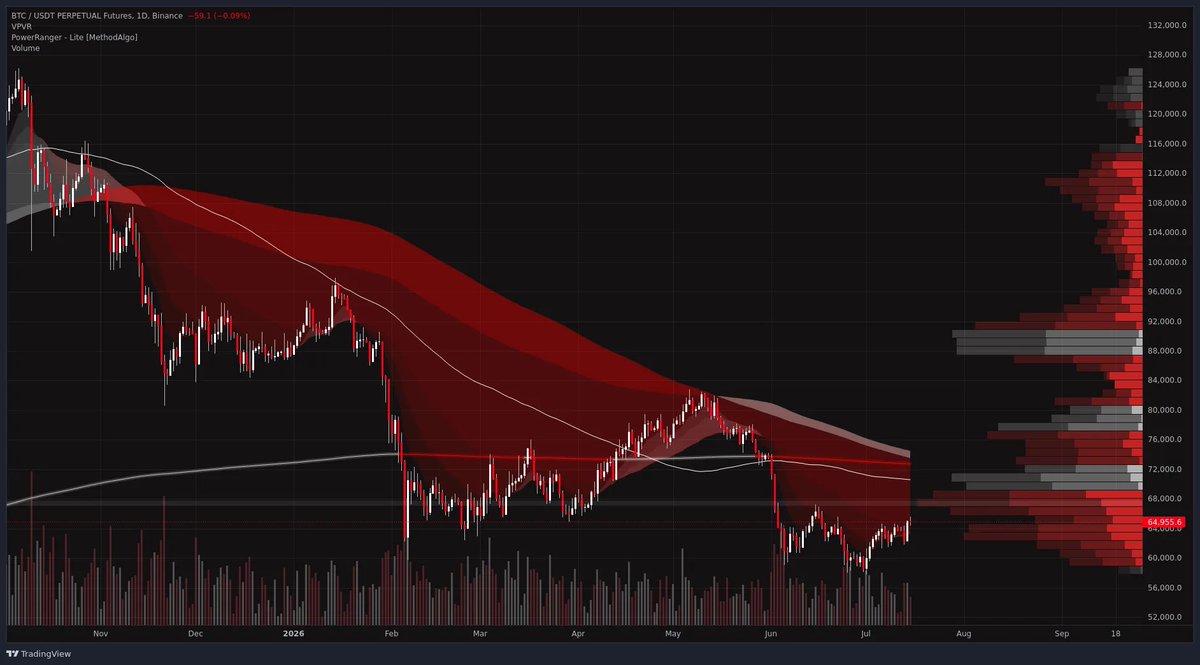
@TedPillows These clusters are useful, but the label matters: they are conditional liquidation estimates, not resting orders. If price trends slowly toward 85k, open interest and leverage reset, so the displayed cluster decays before the level is hit.
Bitcoin’s CPI rally has a macro catalyst. It still lacks confirmation.
Before FOMC, watch ETF flows, stablecoin supply, real yields, and market breadth. Until they align, this is a bounce—not a confirmed reversal.
Full framework:
https://t.co/0i3M3zbwvT
The useful distinction is theoretical edge vs executable edge. In 5m markets, a stale quote is only an opportunity if your order reaches it before cancellation and the fill does not leave you with worse inventory elsewhere. Latency, partial-fill probability, and the resolution feed belong inside the safety buffer, not as implementation details. The trade you reject is often the risk control.
Bitcoin holding $64K does not mean risk appetite is back.
BTC dominance is nearing 59%, while stress shifts into altcoins, leveraged accounts and thinner liquidity.
Our latest report maps where the risk went:
https://t.co/I2D562nX5N
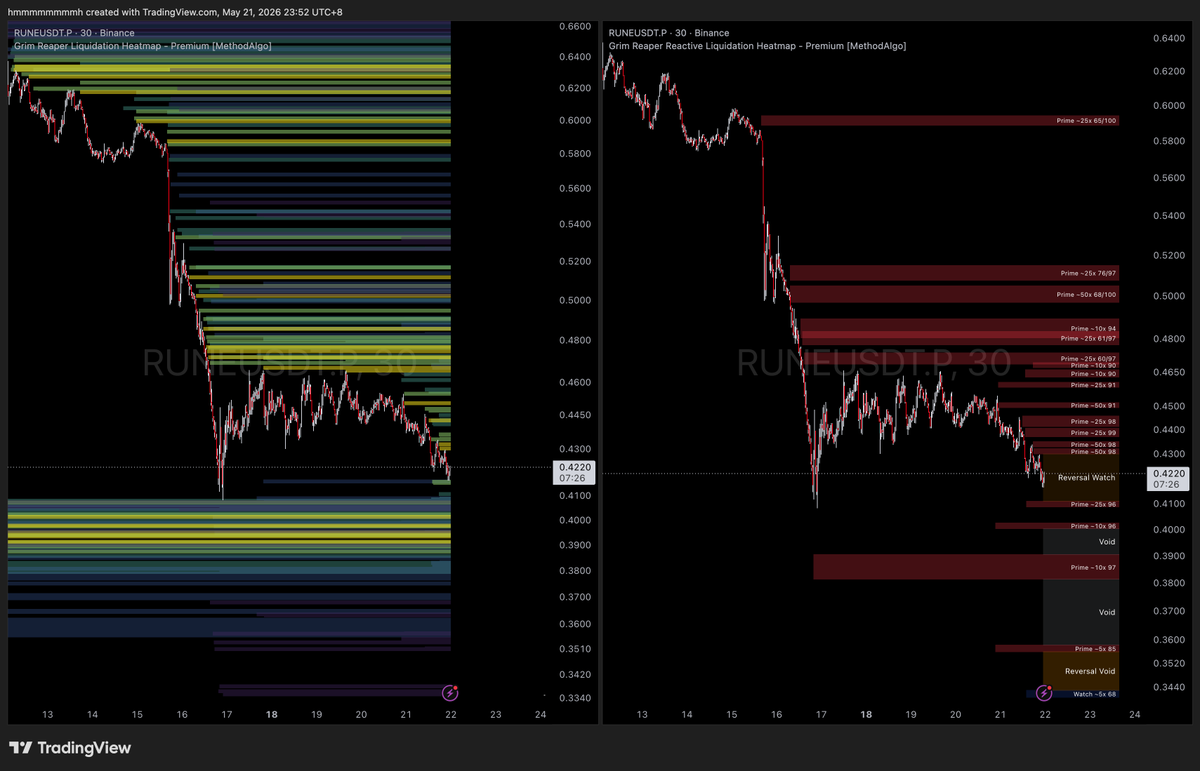
The distinction worth keeping is passive liquidity vs forced flow. Bids below the lows can absorb spot selling, but a liquidation cluster is only potential flow until price reaches it. The useful signal is whether spot absorption survives the first wave of forced market orders. Same heatmap, very different outcome.
If you spend a minute reading the artifact, you would know. This type of indicator is not a signal generator. They are about liquidity context, quite similar to volume profile. What we did was introduce a new perspective on reading it.
Not all backtests are about finding win rates.
Algorithms are designed by experienced quantitative professionals. The tedious, time-consuming parts of the work — quality gates, alignments, and holdout tests — are what we hand off to CodeX.
commercial-grade product, from algorithm to production spend months for various sample testing. Not quite the same as vibe coding junk you generates in 30 seconds.
The third failure mode nobody tests: execution. Walk-forward catches time-overfitting. Parameter sensitivity catches knife-edge tuning. But most backtests assume fills that don't exist on the exact vol days that fire the signal. Spread, depth, and slippage co-move with your entry conditions.
@Danny_Crypton The shape of the unwind matters more than the leverage level. In 2022 it was a sudden liquidity extraction. The current pattern looks similar but the funding structure and OI composition are different. Watch the retest, not the initial flush.
The leverage level matters, but the shape of the unwind matters more. In 2022, the crash was driven by a sudden liquidity extraction event. The pattern people are flagging now looks similar on surface, but the funding structure and OI composition are different. Watch the retest: does price hold the zone with OI re-expanding slowly, or does it get rejected with another rapid OI dump? The first says forced flush complete, the second says more to come.
Too many liquidation heatmaps look informative right until the market moves fast and you actually need to read them.
Grim Reaper Reactive is our beta attempt to fix that.
Cleaner chart.
Shorter reading process.
Better execution context.
If you want to see how it works and how to get beta access
https://t.co/jYao5bswSQ
The useful distinction here is forced cleanup vs fresh conviction.
If OI is dumping while funding gets washed out, that is usually a leverage reset, not proof that a durable bottom is in. The cleaner tell comes on the retest: does price revisit the area with OI no longer re-expanding aggressively and basis not re-inflating?
That is when the move starts looking structural instead of reflexive.
That last phrase is the whole gap most strategy screenshots hide. Execution realism is not just fees or spread. It is whether the staged rebalance still makes sense after latency, partial fills, thinner liquidity, and cash-raising order sequence all show up live. A strategy that survives those frictions is a very different product from a clean backtest.
Ringfenced accounts solve one important risk layer: blast radius. The next failure layer is whether the agent knows when NOT to trade. Most live AI systems do not die from permissions. They die from stale context, queue position, slippage, and missing invalidation logic. Safe AI trading starts with isolation, but it survives on execution realism and kill-switches.