More Bonds Are Teetering on the Brink of Junk
JPMorgan doesn’t anticipate market turmoil anytime soon. Demand from investors is still strong, and earnings will probably be relatively strong in the coming weeks, leaving spreads relatively rangebound.
But there are still risks in credit. About $55 billion of US corporate bonds migrated from investment-grade to junk status in 2025, becoming “fallen angels,” according to JPMorgan. That far exceeds last year’s $10 billion of “rising stars,” or firms elevated to high-grade. And the trend is set to continue, the strategists say. (Bloomberg)
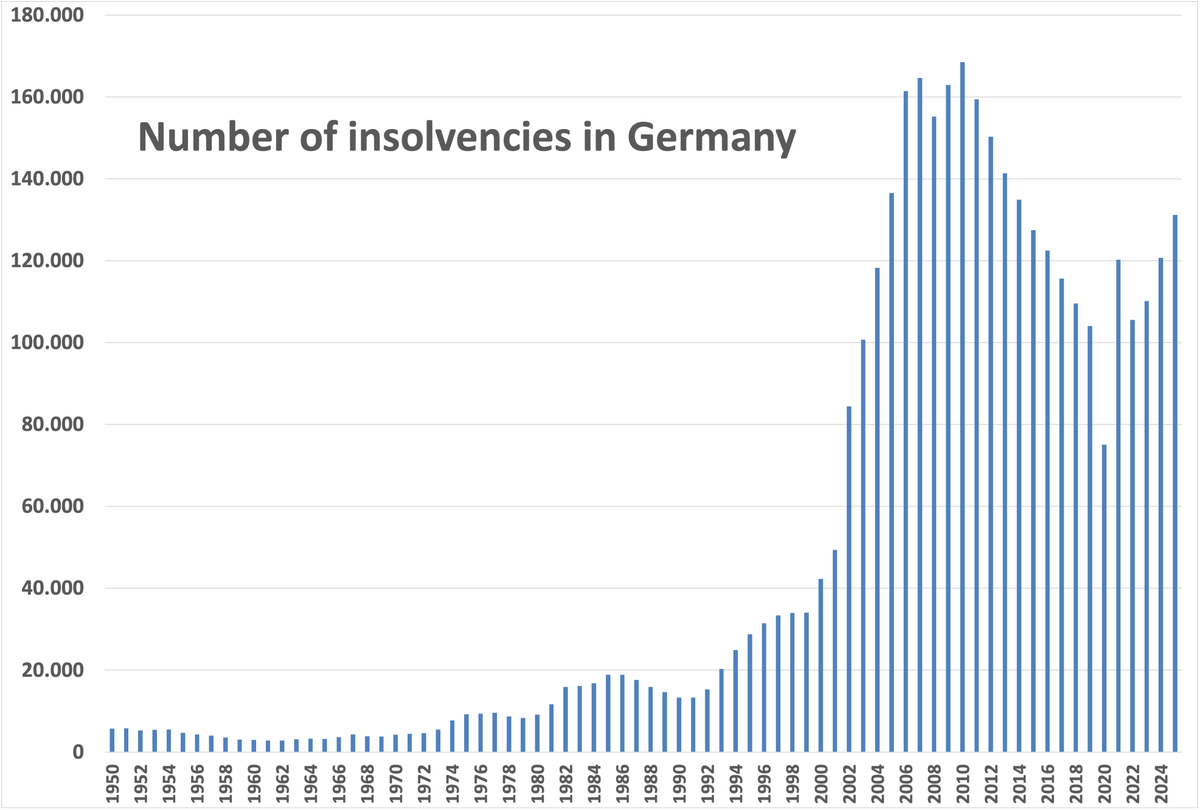
Hello from Germany, where insolvencies continue to climb. Preliminary data show that regular insolvencies rose by nearly 9% in 2025 compared w/the previous year, reaching 131,145 cases – the highest level since 2014.
🚨US bankruptcies have rarely been this HIGH outside of a recession:
246 US large companies went bankrupt in the first 4 months of 2025, the most in 15 YEARS.
This is DOUBLE the count seen in 2022.
In April, March, and February, the number of bankruptcy filings hit 59 for each month.
Germany entered 2025 facing the most severe wave of corporate bankruptcies in the past decade. According to research institutes, 23,900 companies filed for insolvency over the course of the year—equivalent to about 65 businesses exiting the market every day. In December alone, there were 1,519 insolvency filings, more than 70% higher than the average for the same period in the pre-pandemic years.
The shock has swept across almost all industries, but the hardest hit have been restaurants, construction, and real estate. The rapid rise in interest rates since late 2022 has effectively choked off already fragile funding lifelines in these sectors.
It is not only small and medium-sized enterprises that are struggling. The number of bankruptcies among large companies with annual revenues exceeding €10 million has also risen sharply—up about 25% from the previous year and nearly triple the level seen in 2021.
While some argue that bankruptcies are a normal part of market adjustment, an increasing number of businesses are now facing a genuine fight for survival. Looking ahead to 2026, experts are broadly pessimistic, expecting the wave of bankruptcies to continue expanding. Germany—and Europe as a whole—now stands at a critical and challenging turning point for its economy.
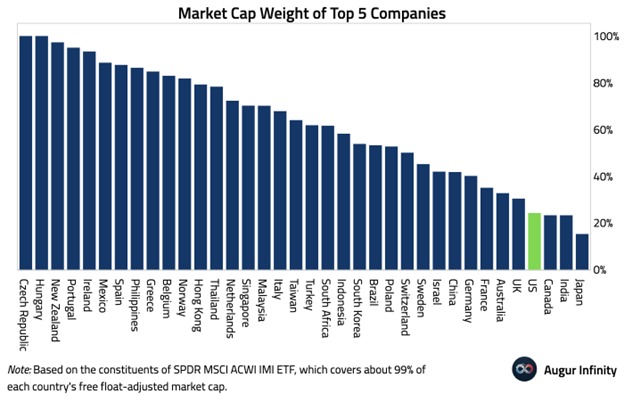
Diversification is non-existent in most world markets. Interestingly, the world’s largest stock markets, the US, China, Germany, Japan, the UK, and India, now reflect some of the lowest levels of concentration globally.
China is trying to cut capacity in its domestic polysilicon industry by targeting at least 1Mt of lower-quality capacity. That's a huge amount given that China's production capacity was 3.25Mt last year.
https://t.co/CwgTc5cUKY
When it comes to natural gas, a lot of US exports go to Canada and Mexico, but for coal and crude oil, large amounts go to Europe and Asia. This has important geopolitical implications.
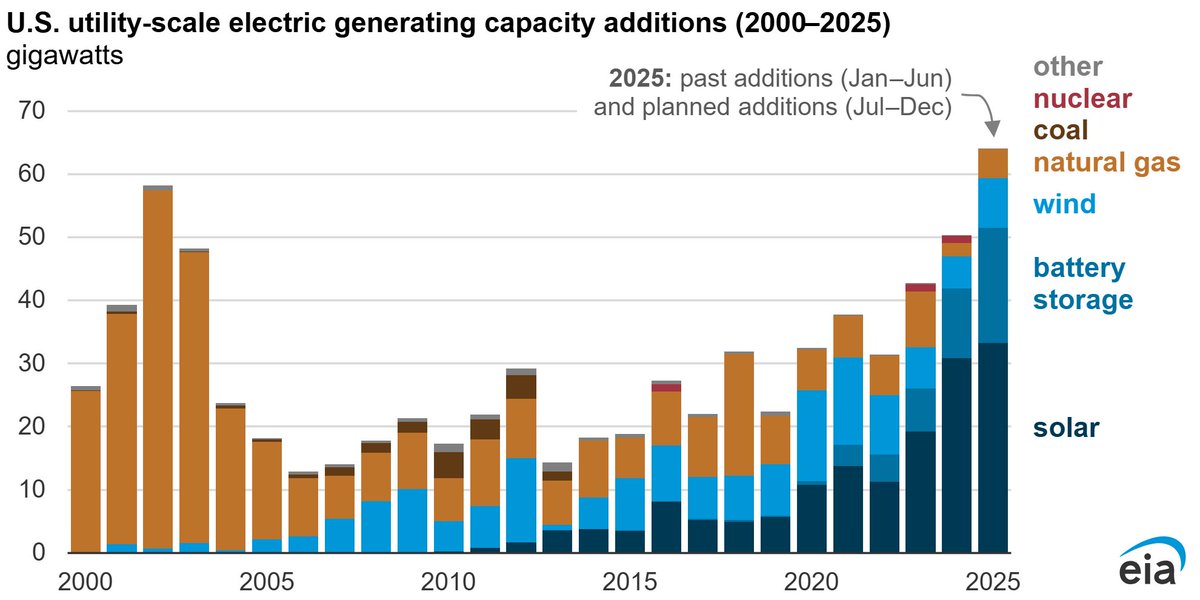
We'll have to see if policy changes impact the shift in electricity production that has been occurring. From natural gas earlier in the century, to wind, and now solar with battery storage. The space is quite dynamic.
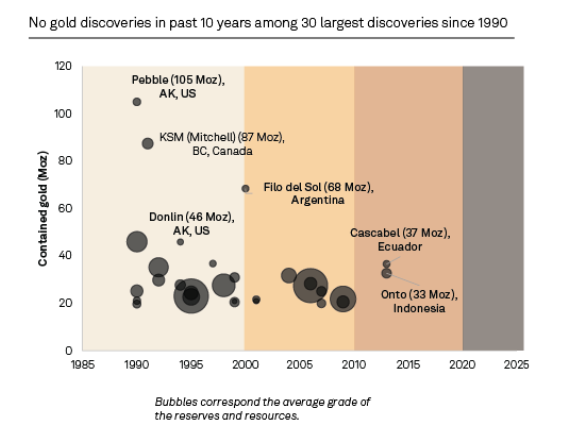
S&P Global notes that gold miners are increasingly focused on known assets with lower risks. This growing risk-aversion has resulted in 56% of the initial resource announcements this decade coming from existing projects, and the quality of those discoveries has also been lower.
Globally, 416 nuclear power reactors operate in 31 countries with 376 GW of installed generating capacity. However, the top 5 countries, those being the US, France, China, Russia, and South Korea, account for over two-thirds of that capacity.
Exploration-stage Lindian signed an offtake for its Malawi rare earths project with Australia-based Iluka for its 55% TREO monazite, with almost 20% neodymium and praseodymium, and also expanded its tenement. It has a 261Mt Resource with 45 yrs LOM.
https://t.co/goeADS7F1u
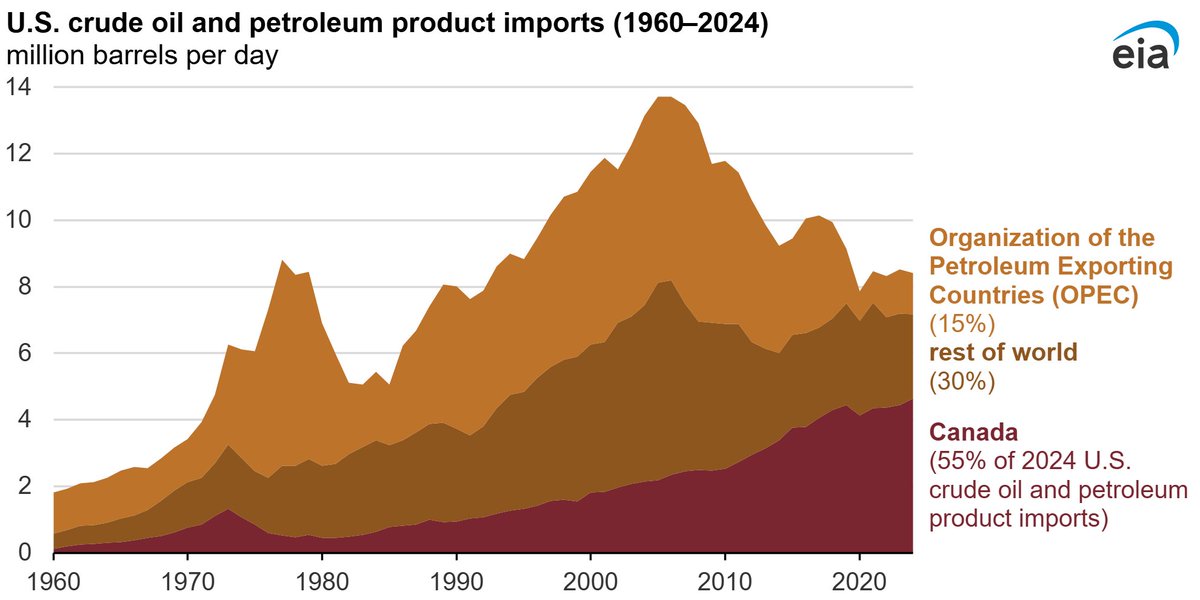
The US reliance on OPEC for crude oil is hitting lows not seen in decades. Imports from geopolitical ally Canada are proving to be a good substitute for OPEC output.
Last year, US energy imports fell to 17% of needed supply, which is half the 2006 amount and the lowest share since the 80s. This is largely thanks to fracking, which added substantially capacity to crude oil and natural gas production.
Chile is recovering from the copper mining difficulties it has had to face in recent years. Copper export revenues are on the rise, both as a result of higher prices and higher volumes.
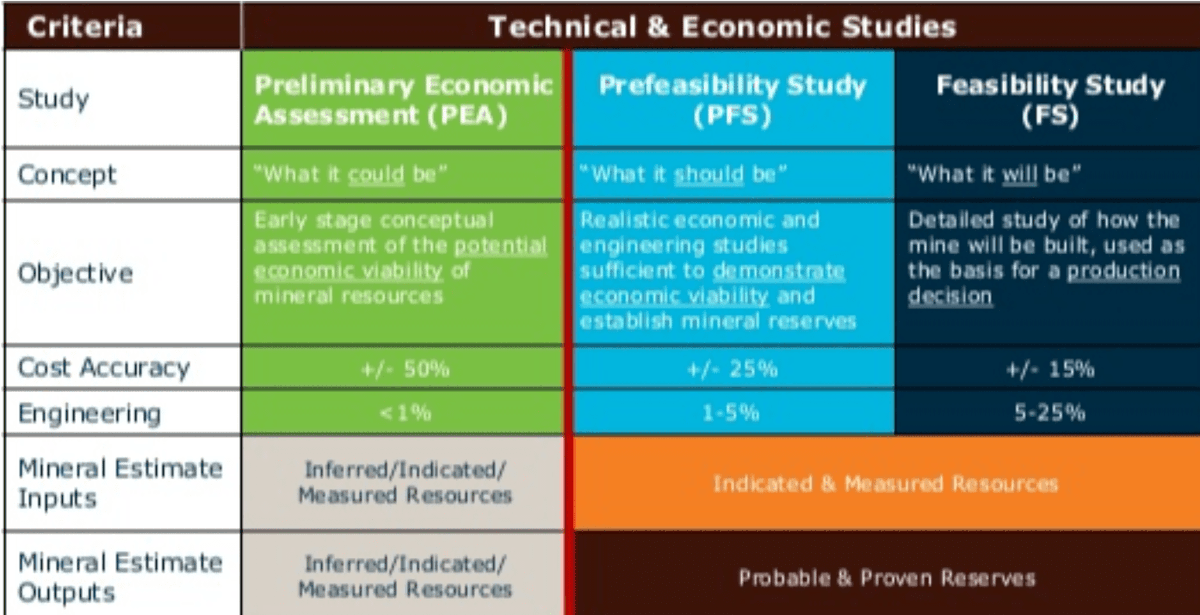
This outlines a good way to think of the mine development cycle as well as the Preliminary Economic Assessment (PEA), the Prefeasilibilty Study (PFS), and the Definitive Feasibility Study (DFS or FS).
China is buying more of Russia's metal production as aluminum, copper, and nickel exports to the country have surged 56%, 66%, and 100%+ respectively, so far this year.