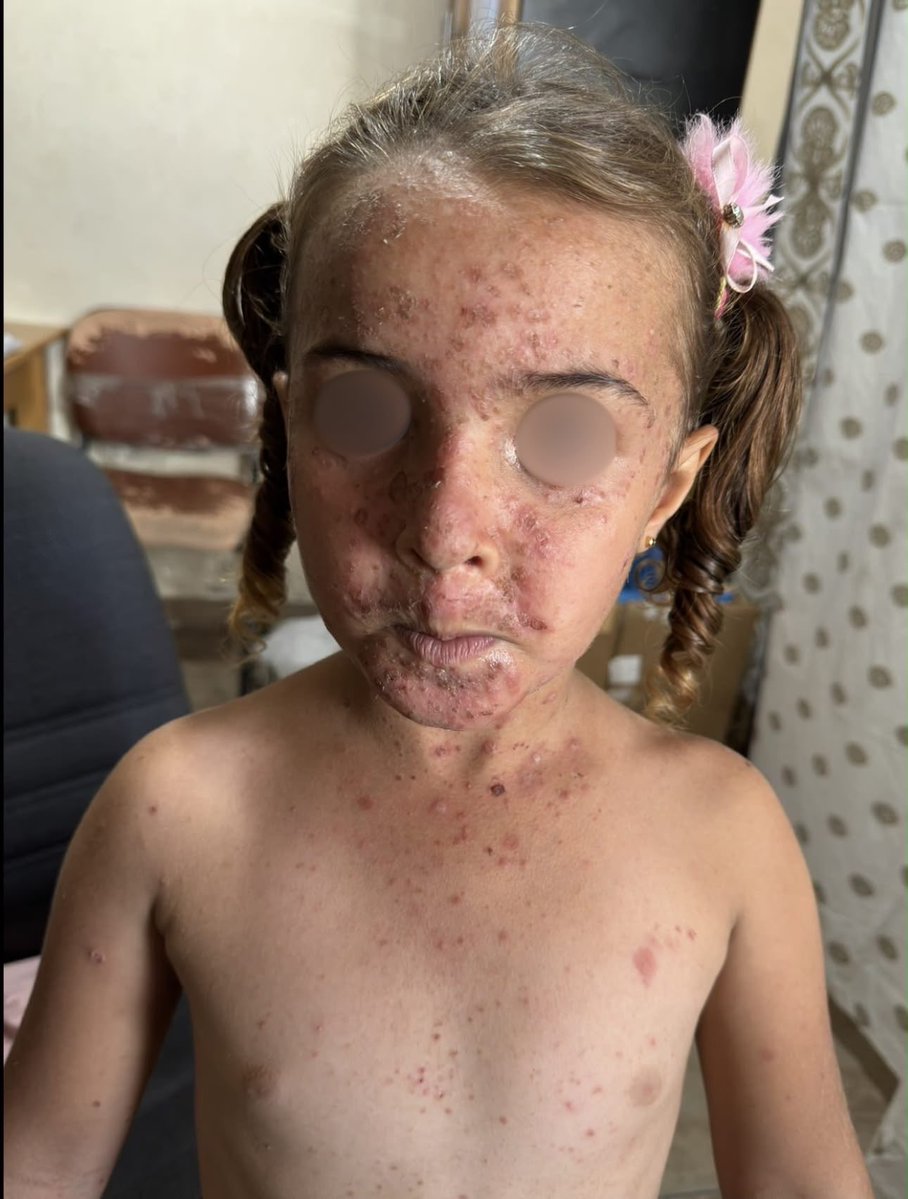
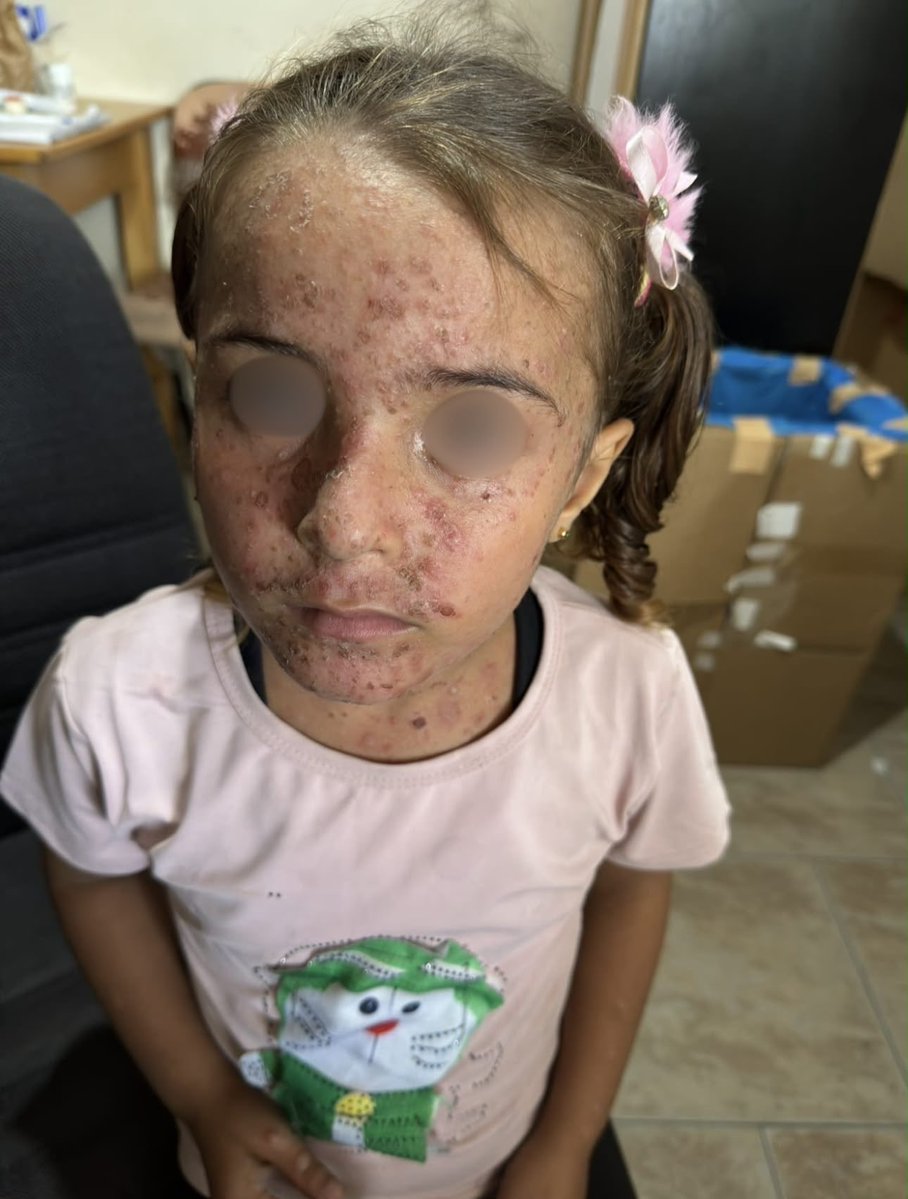
No ten-year-old girl should be ashamed of her own face.
She lives with her parents in a tent, in a neighborhood where almost every home has been destroyed. The tent was supposed to be temporary, a shelter for a few weeks until they could return home.
Instead, it has been their home for more than two years.
Since the beginning of summer, the relentless heat, severe water shortages, poor sanitation, and harsh living conditions in the camp have taken a toll on her skin. Painful lesions began appearing across her face and body, gradually worsening and spreading.
When she came to our clinic, one of my colleagues examined her. Her parents had already done everything within their means to help her. They had managed to buy a single tube of the prescribed cream, but as her mother quietly explained:
“There wasn’t even enough to apply it twice.” The lesions continued to spread.
Then her mother lowered her voice and said something that revealed a different kind of suffering: “She doesn’t want to leave the tent anymore. She doesn’t want anyone to see her.”
At ten years old, she has begun hiding from her friends. She has learned to fear being seen.
To believe that isolation is easier than facing the eyes of other children.
What hurts her now is no longer only the physical pain of the lesions. It is the shame they have created around a face she should never have learned to hide.
Her mother summed up their reality in one heartbreaking sentence: “We can’t afford to buy her a tube of cream every day.”
This little girl did not choose any of this. She did not choose to spend her childhood in a tent. She did not choose to live through extreme heat without reliable access to clean water, adequate sanitation, or the basic conditions necessary to stay healthy. She did not choose to watch a treatable skin condition slowly take away her confidence and push her into isolation.
We were able to provide the medication she needs, and we will continue to monitor her condition and provide follow-up care. But every doctor working in Gaza is confronted with the same painful reality: medicine can treat the consequences, but it cannot remove the conditions that keep producing them.
No medication can compensate for years spent living in a tent. No clinic can prescribe adequate sanitation, safe housing, dignity, or the childhood these children have been denied. The real treatment she needs extends far beyond the walls of our clinic.
It is clean water instead of contaminated water. A safe home instead of a tent. Dignity instead of humiliation. A childhood instead of survival.
Until those things exist again, we will continue doing what we can: treating the infections, dressing the wounds, relieving the pain, and trying to protect what remains of our patients’ health and dignity.
But we must never allow ourselves to mistake treating the consequences for solving the cause.
And perhaps the greater failure belongs to a world that has watched children live without the most basic conditions of human dignity for so long that their suffering risks becoming ordinary.
#SurvivalTestimony
A newborn Palestinian, murdered by Jewish supremacists, wrapped in the Palestinian flag. Even our babies carry Palestine with them. This is how fierce our attachment is; the flag stays with us in life and in death.