Mètode Science Studies Journal is a #PeerReview journal published by the University of Valencia @UV_EG, indexed in SCOPUS and JCR-ESCI, among others #SciComm
📊 Metode SSJ, 16(2): «Exercising critical thinking»
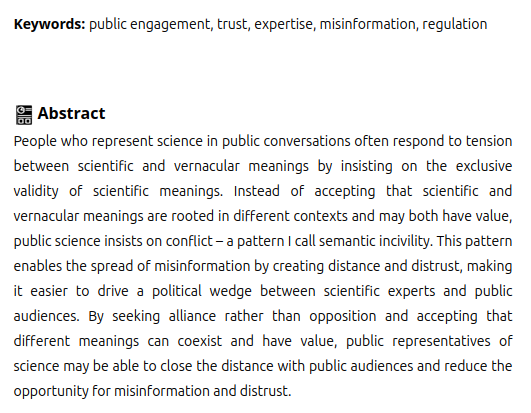
«Tomatoes are fruit and your food is made of chemicals: Public science, semantic incivility, and the problem of misinformation»
✍️ @NoahWeethFeinst (@UWMSTP).
https://t.co/dtrY5K95Lf
📊 Metode SSJ, 16(2): «Exercising critical thinking. Addressing challenges to science and democracy»
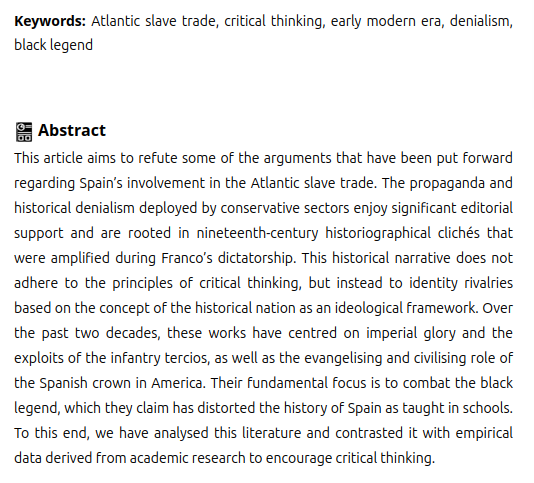
«Against historical denialism and propaganda: The Atlantic slave trade», by Cosme Jesús Gómez Carrasco (@UMU) and @Felixgonchicote (@iesmsalas)
https://t.co/8MuBjXsca9
✍️By @focdencenalls (IES Foramontanos) and @rfacalR (Universidade de Santiago de Compostela)
«Social media is one of the main sources
of information for teenagers. (...) Paradoxically, younger generations, who grew up as digital natives, have limited digital literacy skills»
📊 Metode SSJ, 16(2) «Exercising critical thinking. Addressing challenges to science and democracy»
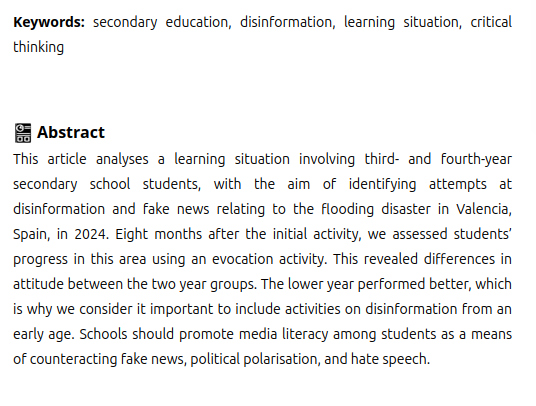
«Educating against disinformation: Identifying fake news in secondary education»,
https://t.co/Q7M05WROD9
✍️By Alma Adrianna Gómez Galindo (@cinvestav) and Alejandra Garcia Franco (@lauammx)
«Education systems perpetuate structural inequality. In the field of education, Western knowledge is privileged»
📊 Metode SSJ, Vol. 16 No. 2 (2026): «Exercising critical thinking. Addressing challenges to science and democracy»
«Critical thinking, social justice, and cultural diversity
Reflections for intercultural education in natural sciences»
https://t.co/c18HTLEDSf
We are back from the summer with the introduction to the latest monograph: «Exercising critical thinking»
By @MarilarAleix
«Critical thinking is always necessary, but confronting irrationality is all the more urgent in an age of fake news and post-truth»
Critical thinking is always necessary, but confronting irrationality is all the more urgent in an age of fake news and post-truth.
Five documents on the development of critical thinking in the current context and how to promote its learning. Coordinated by @MarilarAleix
📊 Metode SSJ, Vol. 16 No. 1 (2025): «Everlasting. The challenge of ageing»
��Well-being and quality of life in older adults: A new approach to technical longevity analysis»
By @AyusoMercedes (@UniBarcelona)
DOI: https://t.co/ThTcUG7Pru
📊 Metode SSJ, Vol. 16 No. 1 (2025): «Everlasting. The challenge of ageing»
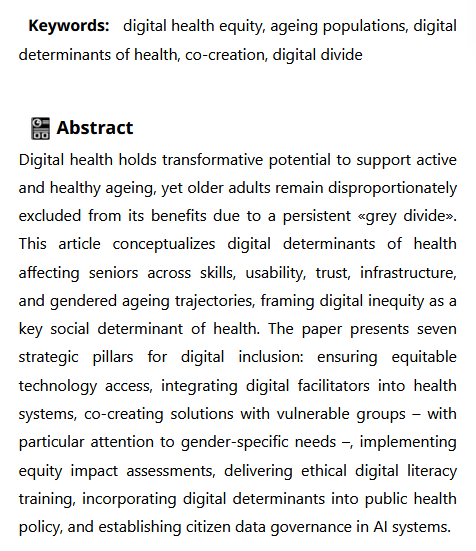
«Bridging the grey divide: Inclusive digital transformation in healthcare in ageing populations»
By @MartaAymerich et al. (@UOCuniversity)
DOI: https://t.co/KQ6LZHlP4I
📊 Metode SSJ, Vol. 16 No. 1 (2025): «Everlasting. The challenge of ageing»
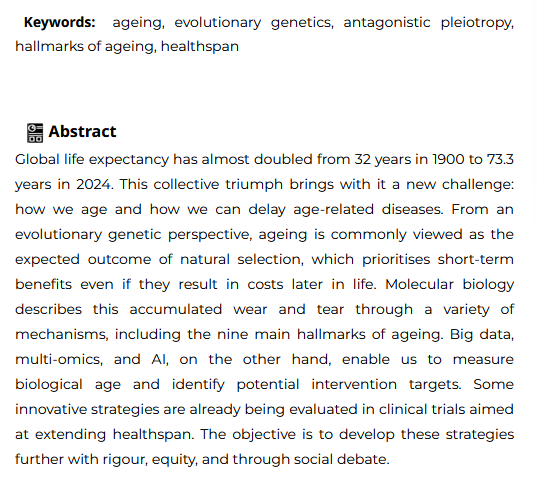
«Epigenetic clocks: Now pianists wear watches»
By @ManelEsteller (@IRSantPau) and @EloySantosPujol (@BarcelonaBeta)
DOI: https://t.co/PHGPsw5Z4x
Proust created imagery and arguments to normalise the amorous inclinations of his characters and depicting the complexity and variety of sexual diversity in nature. 🌼
✍️ A document by @MartiDominguezR
https://t.co/KhxpRLAfYX
📊 Metode SSJ, Vol. 16 No. 1 (2025): «Everlasting. The challenge of ageing»
«We will never be young again. Or will we?
Science, evolution and the quest for a longer, better life»
By @ArcadiNavarro (@UPFBarcelona)
DOI: https://t.co/O5S2avRUvF
«Growing old is a natural process. It is simply another stage in the cycle of life. Or is it?»
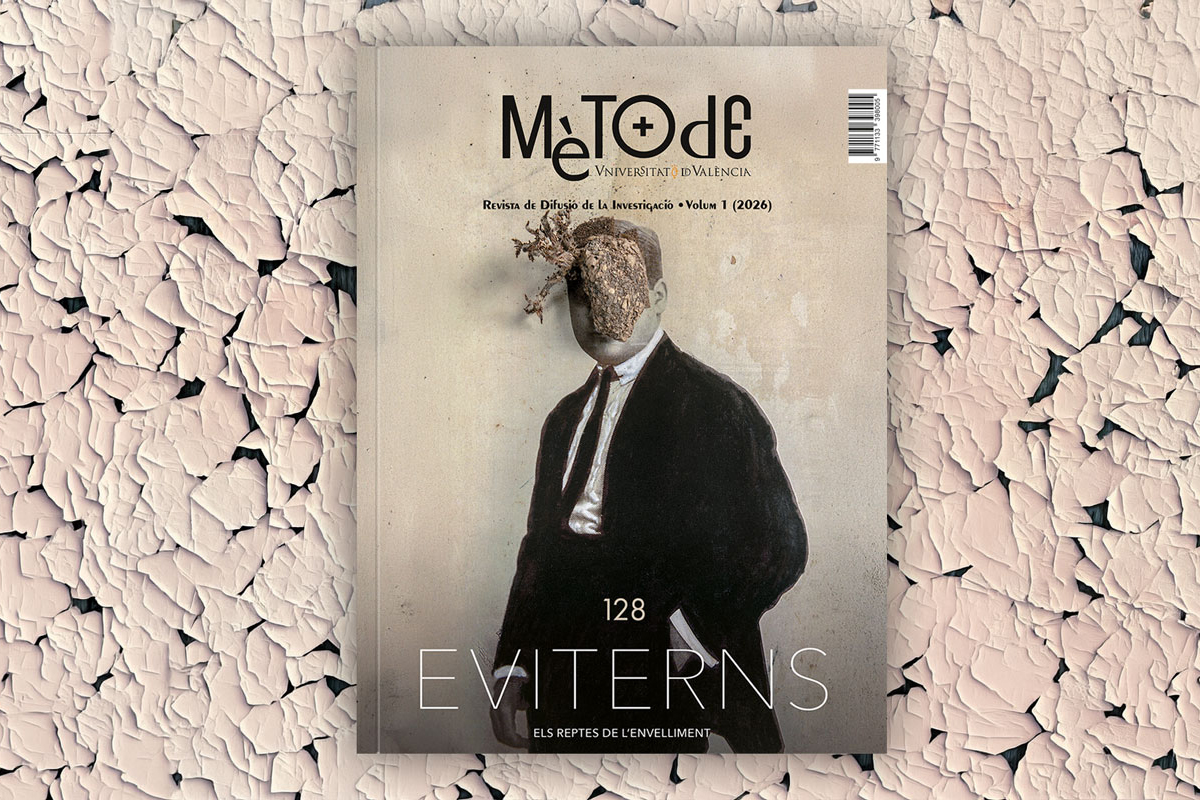
Already available in the Open Journal System platform: «Everlasting», with five texts on different perspectives related to the challenge of #ageing.
https://t.co/sB6J6BGVfl
In our interview with William DeGrado, we discussed the role of major scientific journals and the peer-review system. 🧪📄
DeGrado emphasises the importance of rigorous, independent review processes, and highlights the dangers posed by political agendas masquerading as science.
Last summer, William DeGrado was awarded an honorary doctorate by the University of Valencia. During this event, we discussed his career and outstanding chemistry challenges.🔬
✍️ Interview by @IsmaelMingarro
https://t.co/t30mJ0UKBb
Accoding to DeGrado, the United States has played an important role in the development of international science, but they are not starting to knock down their science system. He argued that the country needs to continue to open their borders to the very brightest minds 🌍🔬